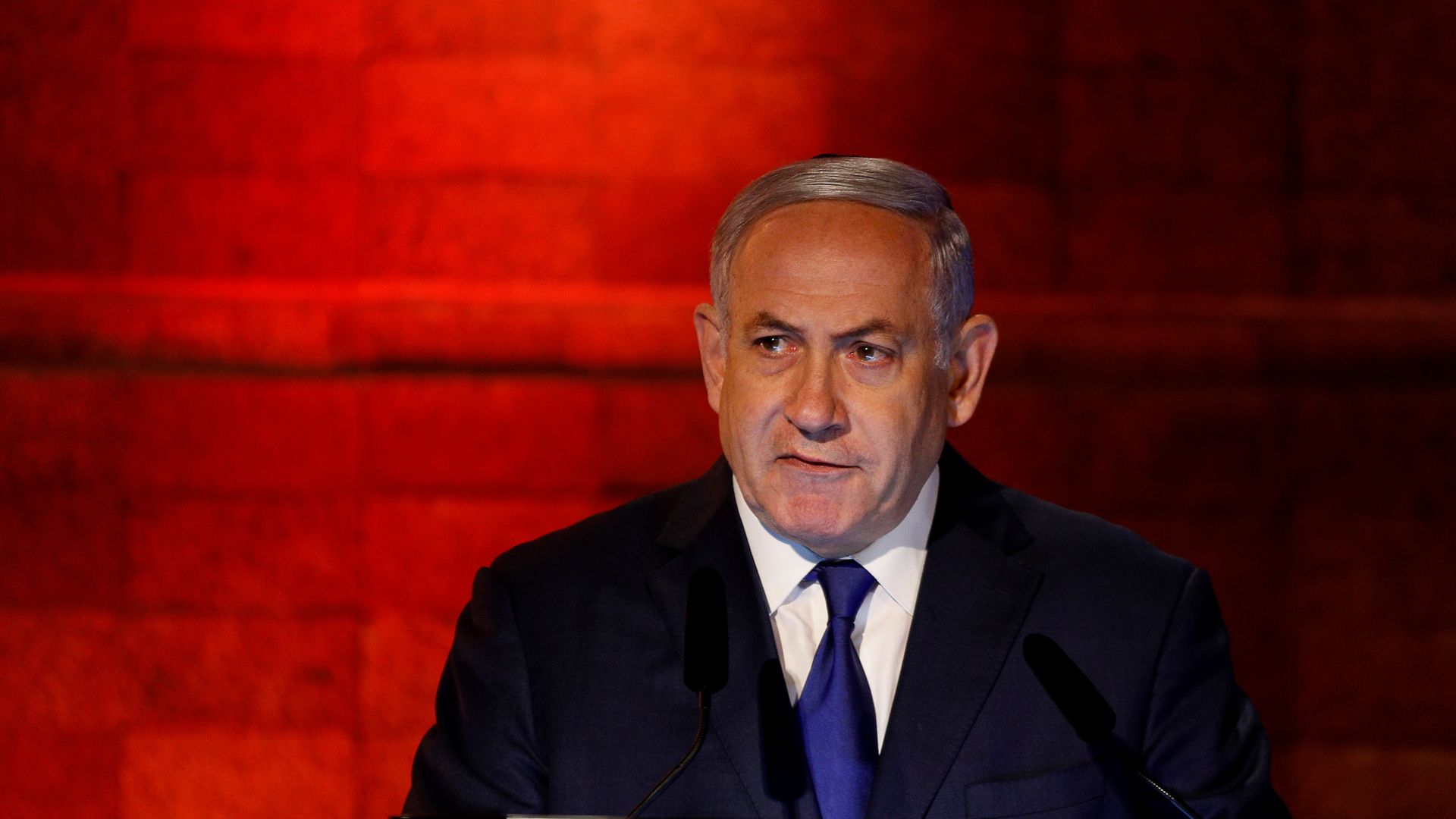
Israel’s Parliament passed a law this week that allows just the prime minister, Benjamin Netanyahu, and his defense minister to declare war, under “extreme circumstances,” the NYT’s Isabel Kershner reports.
Why it matters: Although the law doesn’t define what those circumstances are, it’s much easier for Israel to go to war now. This comes after several recent strikes in Syria believed to have been shepherded by Israel.
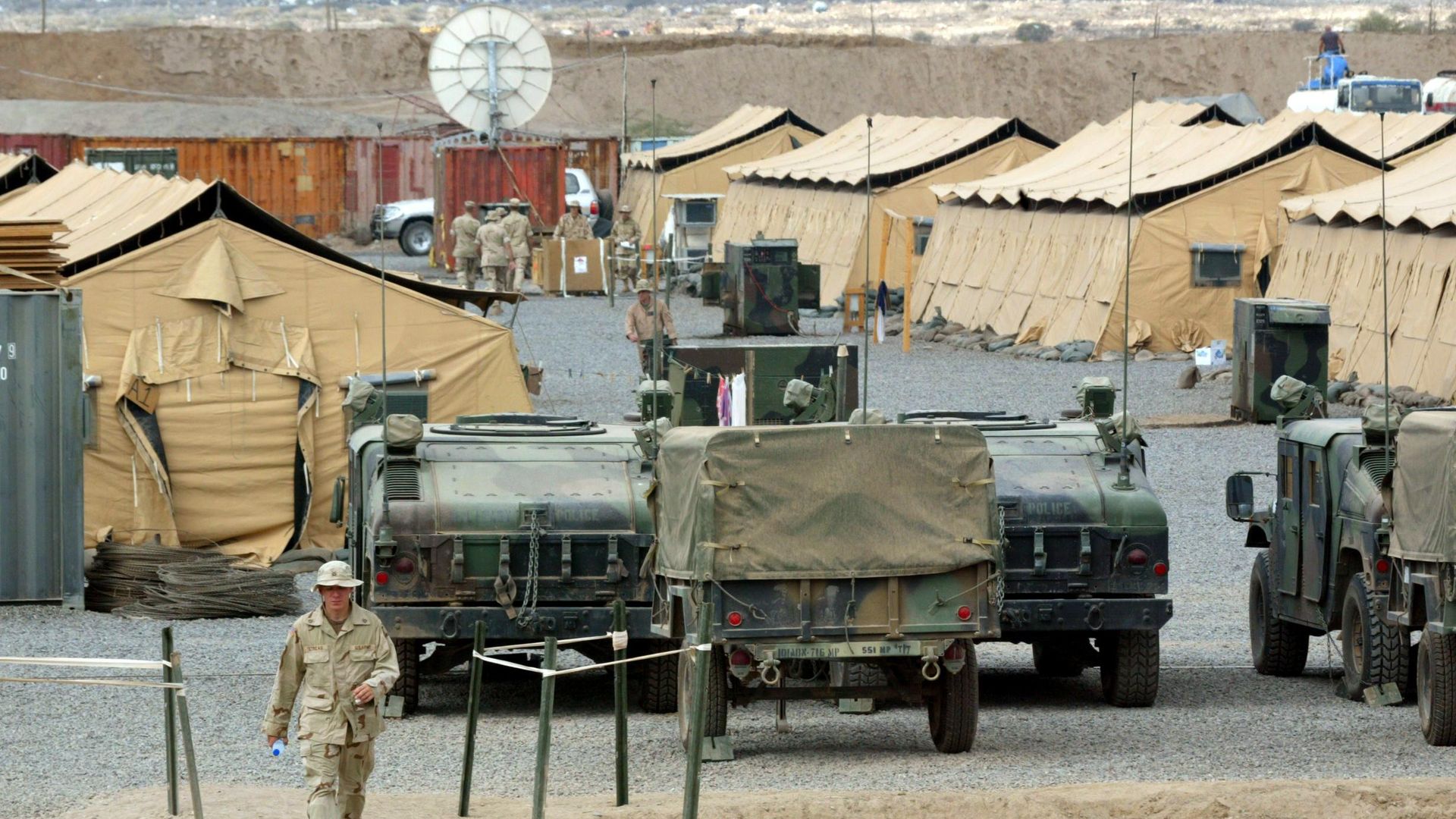
The U.S. has issued a formal complaint to China following the use of military-grade lasers by Chinese nationals in an effort to interfere with U.S. military aircraft stationed at an American base in Djibouti, per the AP. The incidents were first reported by CNN and confirmed by the Pentagon.
The details: The activity, which the Pentagon claimed came from a nearby Chinese base, caused two eye injuries to American pilots. Pentagon spokeswoman Dana White added that the U.S. has asked China to investigate the incident.
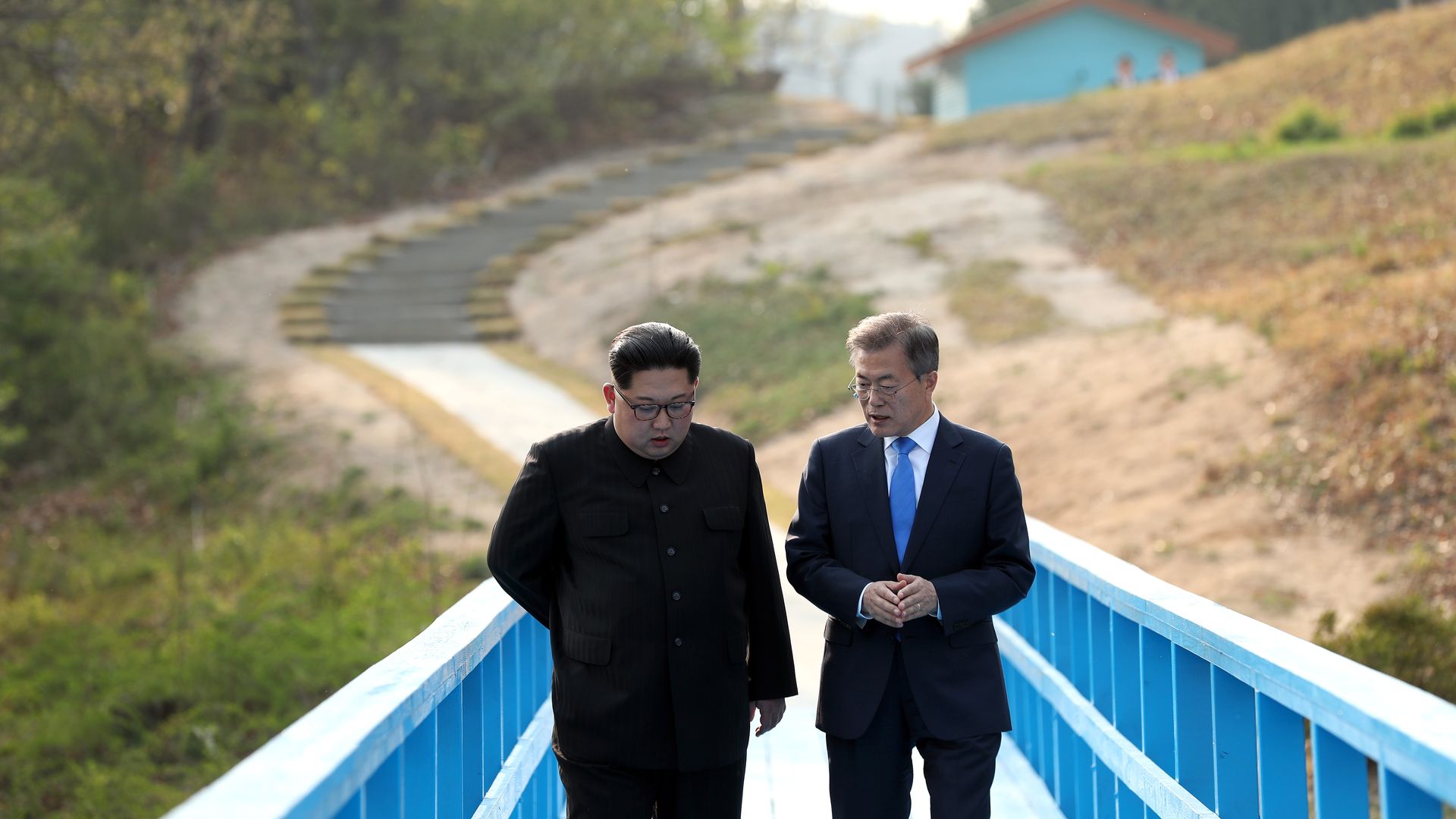
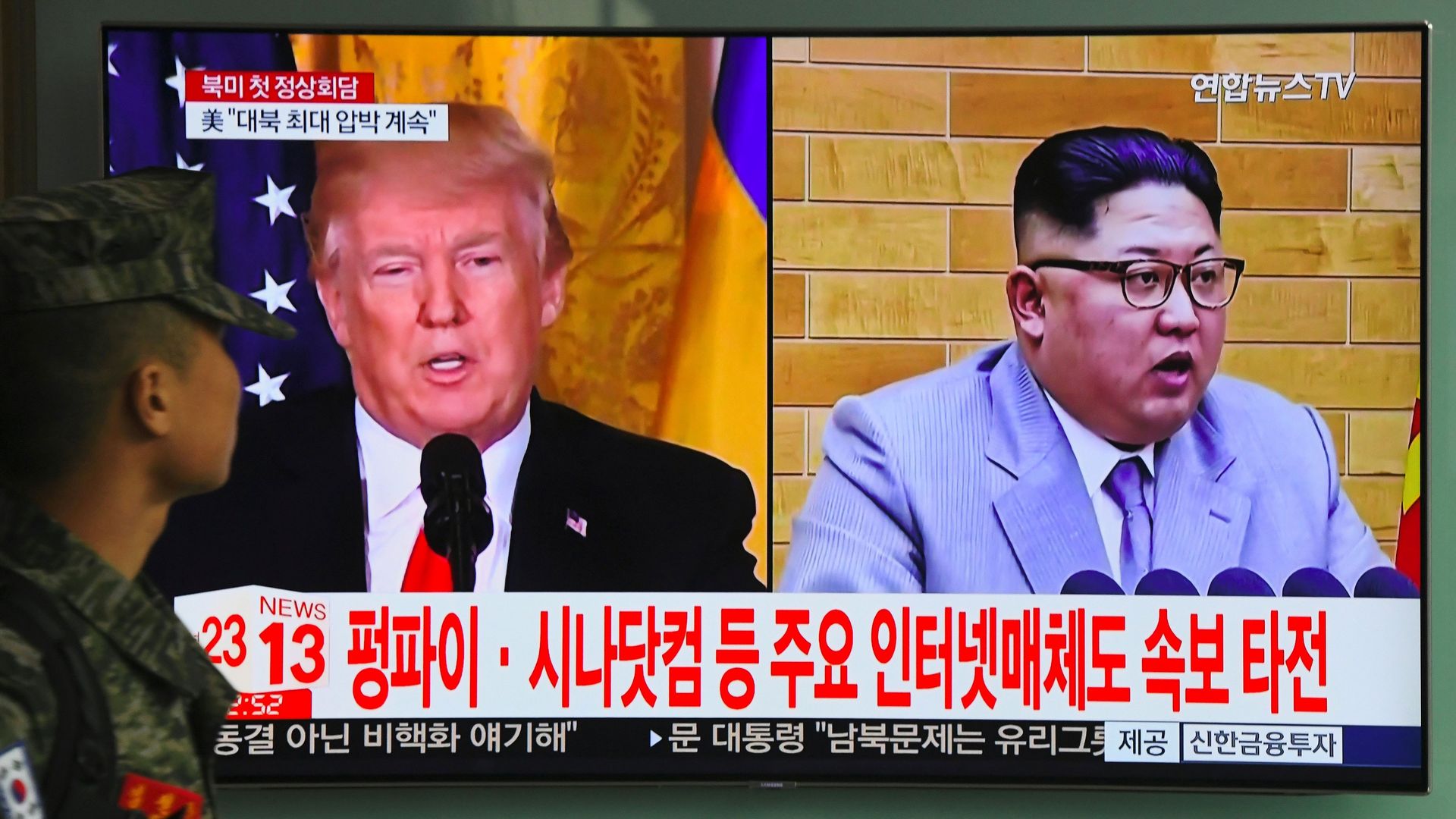
A face-to-face meeting between North Korea’s Kim Jong-un and South Korea’s Moon Jae-in has been the centerpiece of a process in which the countries have exchanged concessions and promises in order to lay the ground work for a potential peace deal.
The big picture: Diplomacy with North Korea has failed several times before, and we're a long way from any denuclearization deal. But from stopping propaganda broadcasts to getting on to the same time zone, concrete steps have already been taken.
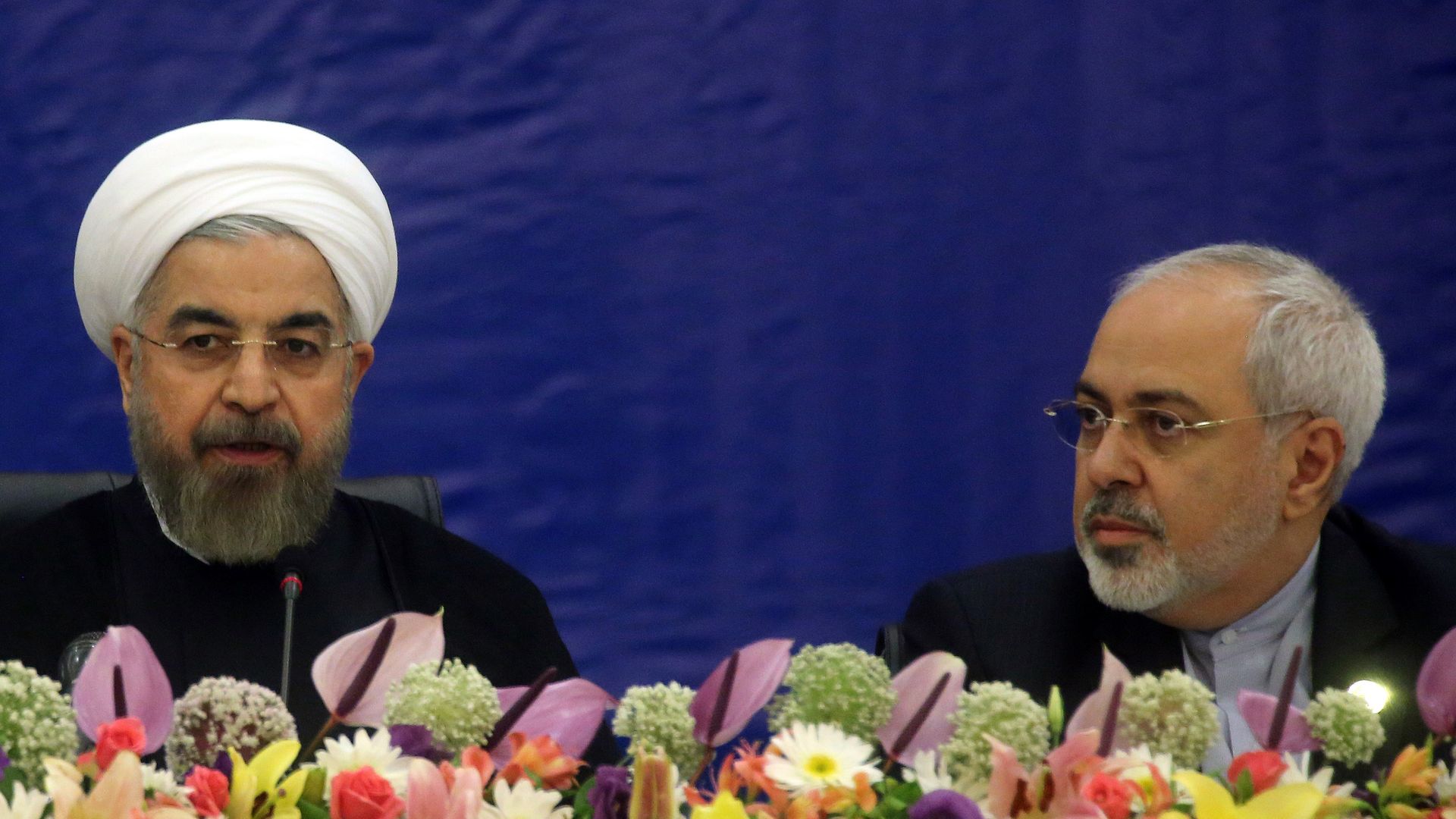
As much as President Trump would like credit for solving the Iran nuclear problem, he will not get far trying to replicate the approach his administration has taken toward North Korea. The facts on the ground in each country are simply too different.
The bottom line: Torpedoing the nuclear deal will not intimidate Iran into talks. Iranian Foreign Minister Javad Zarif reiterated the country's position Thursday morning: "We will neither outsource our security nor will we renegotiate or add onto a deal we have already implemented in good faith."
Armenia's opposition leader has called for protests that have swept through the country to be suspended after the ruling party signaled it would pave the way for him to become prime minister.
Why it matters: After three weeks of demonstrations, the old order in Armenia is wobbling. "The crisis in Armenia, which has a population of only about three million people and a Russian military base on its territory, is being closely watched in Moscow," per the AP, which notes that protesters are up against "a ruling elite which is determined to hold on to power and still controls the security apparatus."
Why it matters: Air pollution is one of the world's leading causes of death. Fine particulate air pollution (PM2.5) is linked with a wide range of health issues, especially heart and lung disease but also diabetes, hyperactivity and autism. Per Lancet, these health issues are on the rise in rapidly developing middle- and low-income countries, with the largest increases occurring in India and Bangladesh.
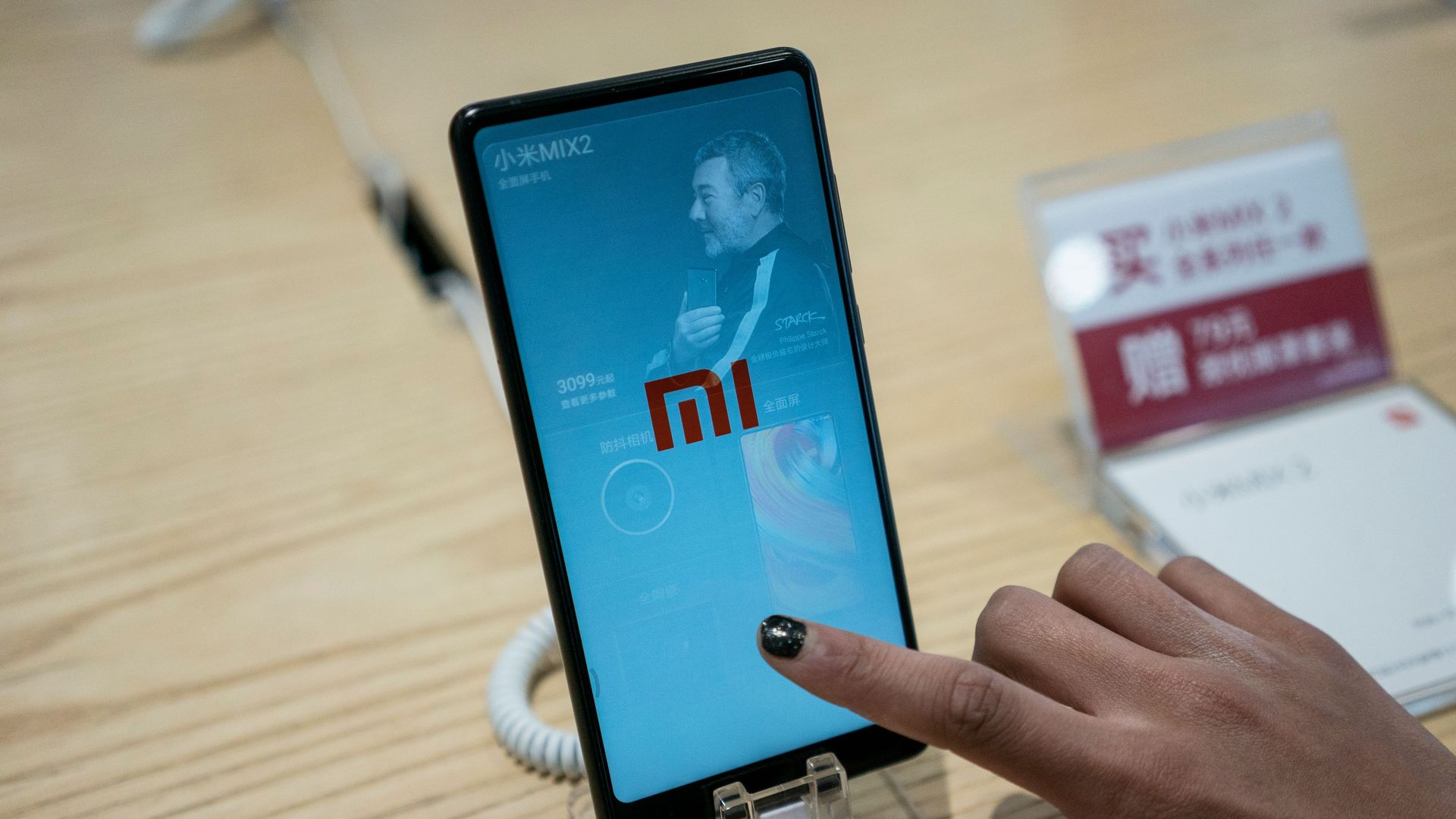
Xiaomi, a Chinese maker of smartphones and other personal electronics, has filed to go public in Hong Kong with expectations that it will seek to raise at least $10 billion.
Why it's a big deal: This would be the world's largest IPO since Alibaba went public in September 2014. It's also a massive win for Hong Kong, which recently relaxed rules to permit dual-class share listings.
In TIME's cover story, Eric Lichtblau reports on internal FBI problems that could jeopardize the agency’s credibility.
Why it matters: Many within the organization are concerned that credibility questions will threaten the cooperation of informants, police officials and allies overseas.
Three Americans being held in North Korea have reportedly been released from labor camps and are "getting health treatment and ideological education" ahead of a planned summit between President Trump and North Korean dictator Kim Jong-un, per the Financial Times. However, a State Department official told Axios they can not confirm the reports.
The details: Kim Dong-cheol, Kim Sang-deok, and Kim Hak-seong were reportedly released in early April, according Choi Sung-ryong, the country’s "most vocal campaigner for South Korean abductees," per FT. Secretary of State Mike Pompeo is also "believed to have discussed the issue" when he traveled to North Korea on Easter weekend.
Editor's note: This story has been updated to reflect a statement from the State Department.
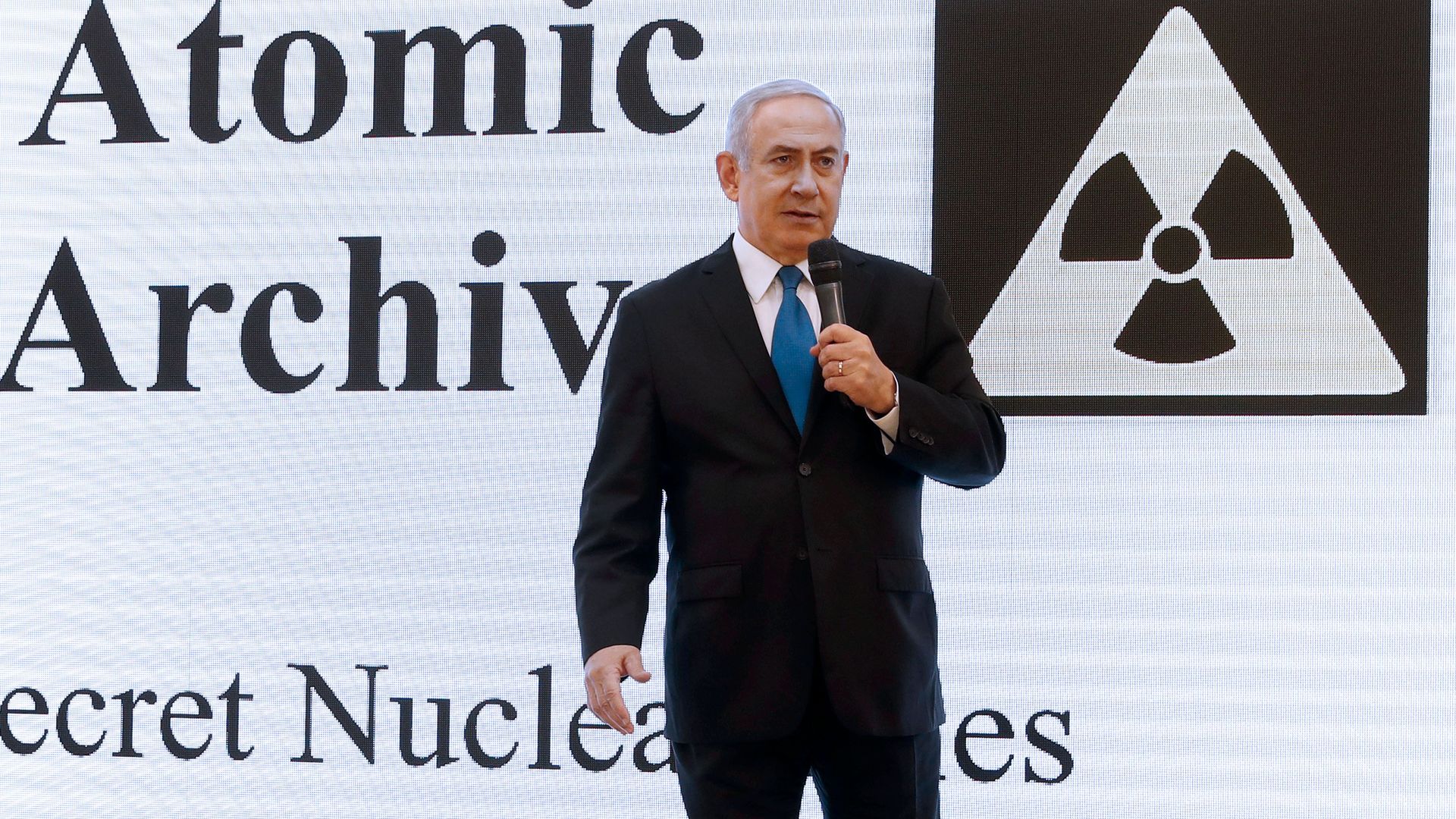
U.S. policy has long strived to prevent an Israeli–Iranian war. This is largely what motivated nuclear diplomacy with Iran, culminating in the 2015 nuclear deal, formally the Joint Comprehensive Plan of Action (JCPOA).
So when Israeli Prime Minister Netanyahu took to the cameras on Monday to denounce Iran and its past behavior — something he has done for nearly two decades — it was, in the words of Yogi Berra, déjà vu all over again.
Why it matters: Although talking about Iranian nukes could bolster Netanyahu’s domestic support as he navigates corruption scandals, his maneuver is fraught with risks. If Netanyahu succeeds in his gambit to persuade President Trump to terminate the JCPOA, the guardrails preventing the development of an Iranian bomb — and further Israeli–Iranian confrontation — will disappear, too.
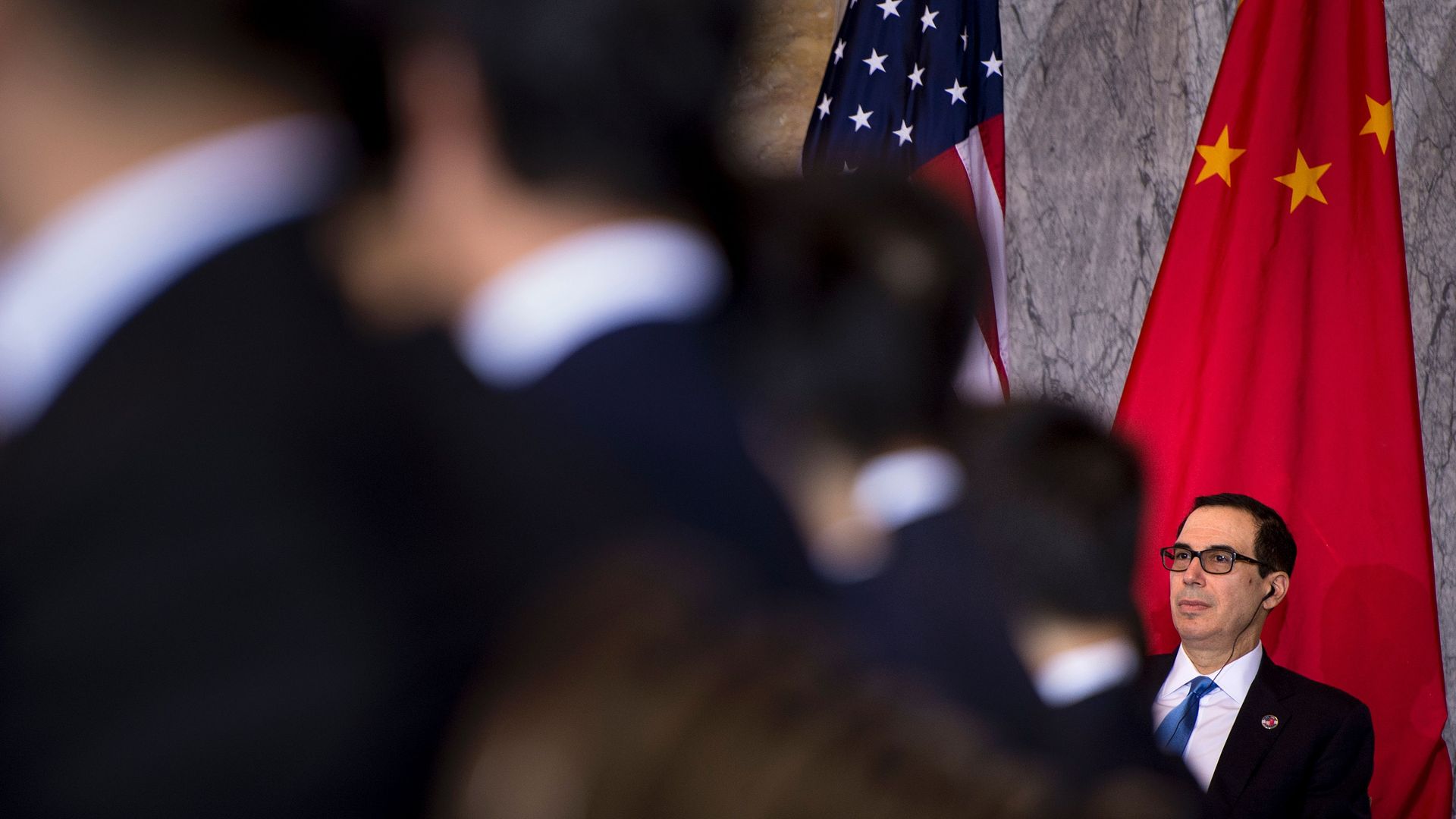
Tomorrow, a seven person U.S. trade delegation will arrive in Beijing to begin discussions over the U.S.-China trade imbalance and its concerns with China’s state-led push to dominate advanced technology.
The bottom line: With the threat of $150 billion in U.S. tariffs looming, the stakes for both sides are high, and no clear path exists toward a negotiated settlement. Both the U.S. and Chinese leaders see trade as a question of national renewal and preeminence. It’s America First meets China, Inc., and something’s gotta give.
A Defense Department spokesman said Wednesday that certain stores serving American military personnel will no longer sell electronics from ZTE and Huawei, two major Chinese telecom manufacturers, the Wall Street Journal reports.
Why it matters: The Journal reports that Pentagon officials fear the Chinese government could use Huawei or ZTE devices to track troop movements. The move comes as both companies are facing an aggressive campaign in Washington to keep their products out of American hands over concerns they could be too close to China's government. Huawei said in a statement it was committed to security.
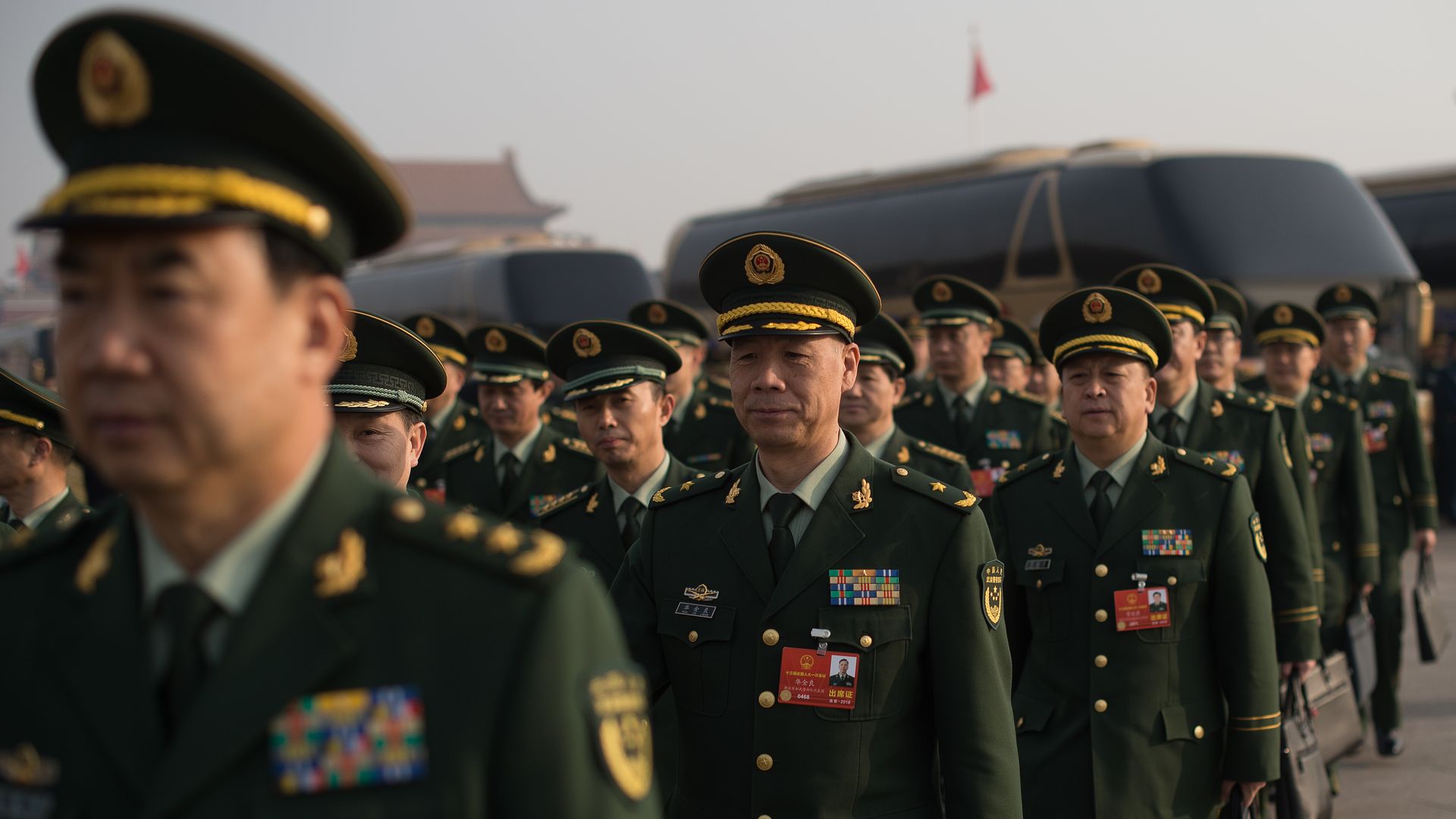
Global military spending rose by 1.1% in 2017 to $1.739 trillion, per ABC News, with military spending now accounting for 2.2% of worldwide GDP. The United States, China, Russia, Saudi Arabia and India together accounted for 60% of the world's overall military budget expenditures.
The big picture: This year's hike was fueled by increased spending in Asia — especially by China, India, and Saudi Arabia — highlighting the tensions as major regional players attempt further expand their spheres of influence.