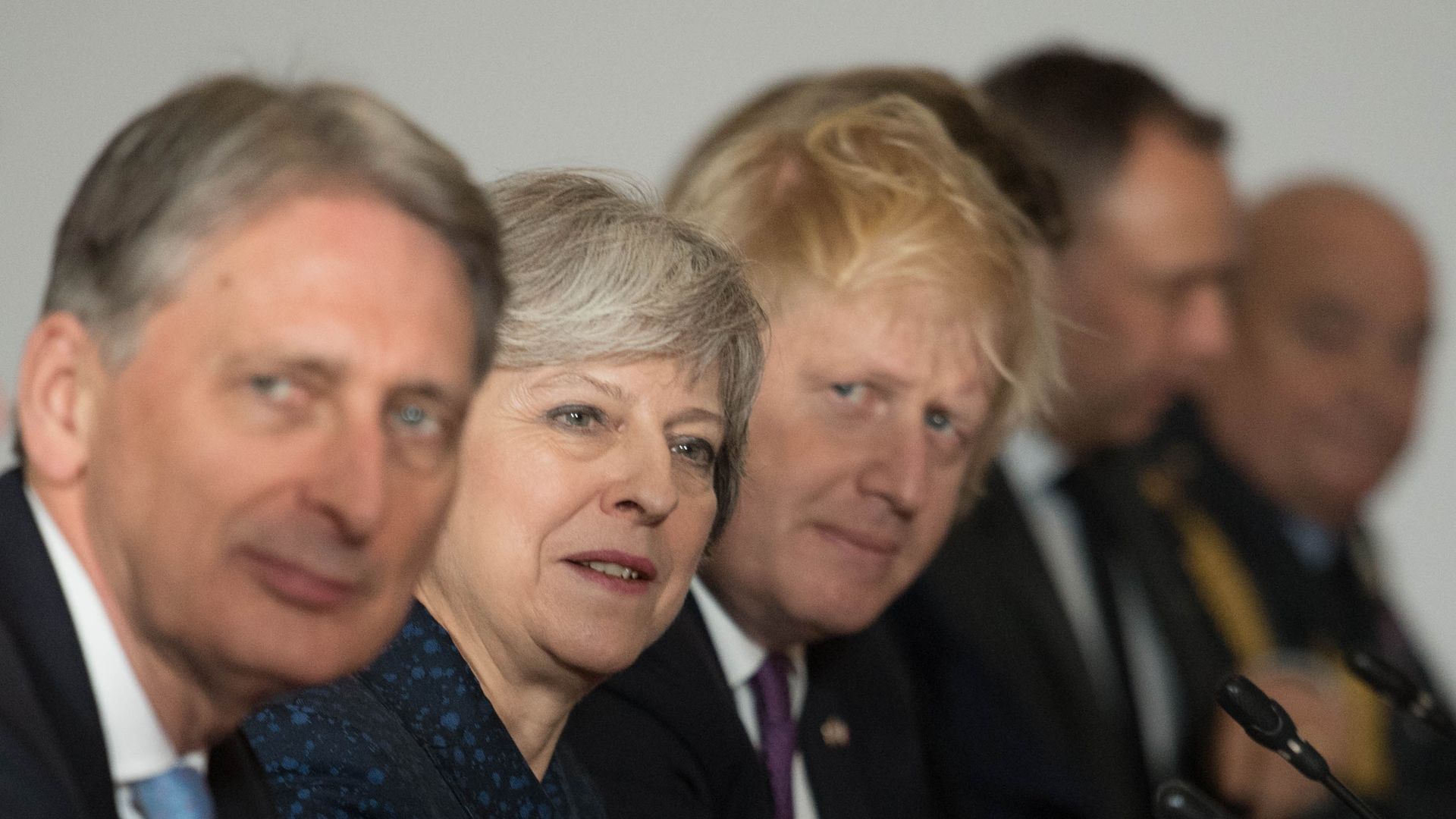
An analysis from the U.K. government anticipates entirely negative economic impacts from Brexit regardless of the terms of the exit deal, Buzzfeed News, which got its hands on the analysis, reports.
Top-line figures: Growth would fall by 8% over 15 years under a "no-deal Brexit," 2% under a "soft Brexit" and 5% under a middle course. Nearly every economic sector would be hurt, with the exception of agriculture, along with every geographic region.
The bottom line: The British government is going to spend the next year or so in intense negotiations over a process its own analysis suggests will bring entirely negative economic consequences.
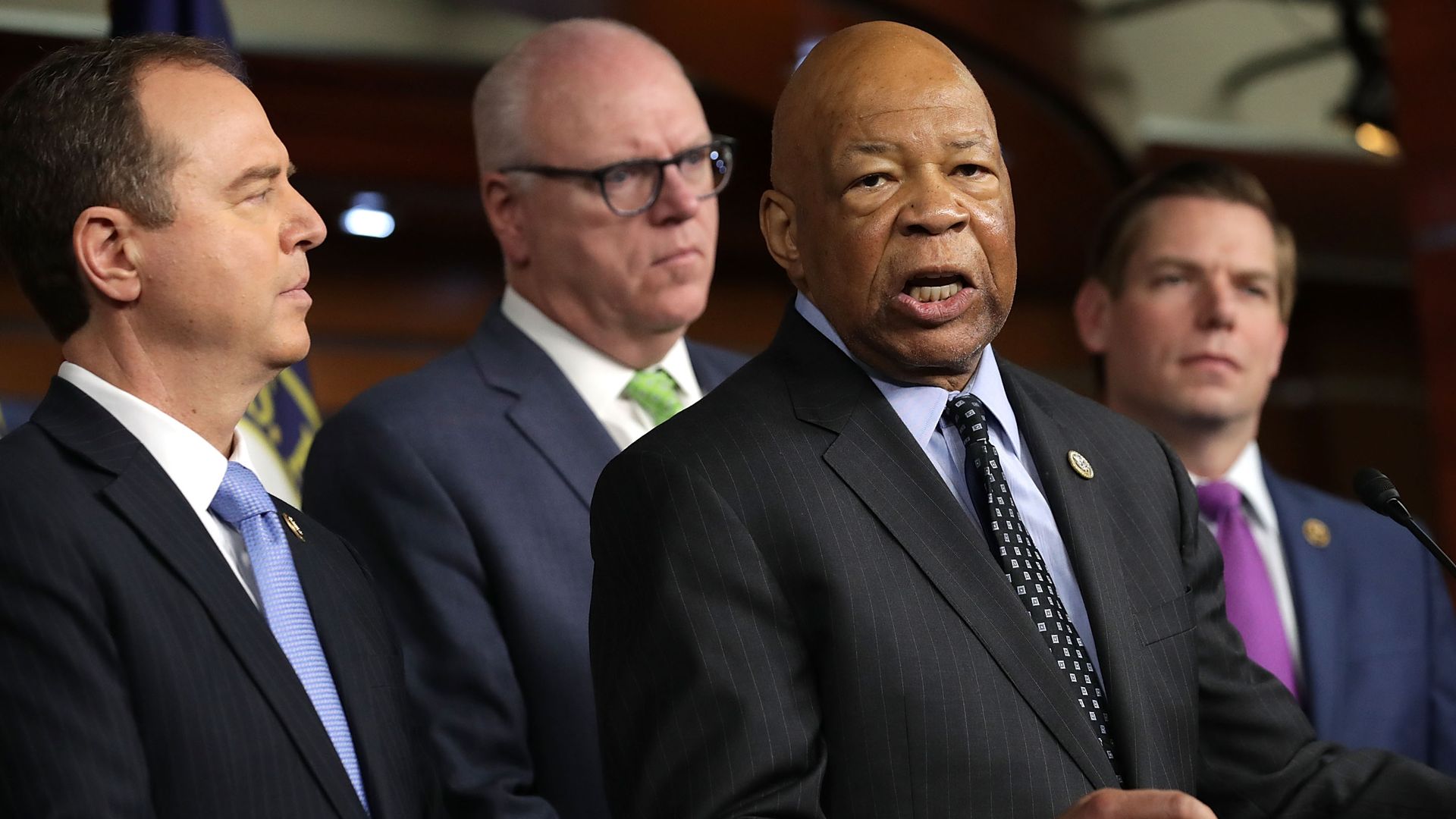
Democrats on the House Oversight Committee have sent a letter asking chairman Trey Gowdy to subpoena the Department of Homeland Security for documents related to the hacking of election systems, reports CNN's Manu Raju.
Why it matters: DHS informed 21 states last September about Russian government-backed efforts to hack into their election systems, but has reportedly refused to share that information with congressional committees. Having been warned by the intelligence community about Russia's continued efforts to interfere, Oversight Dems are calling it their responsibility to adequately prepare for future attacks.
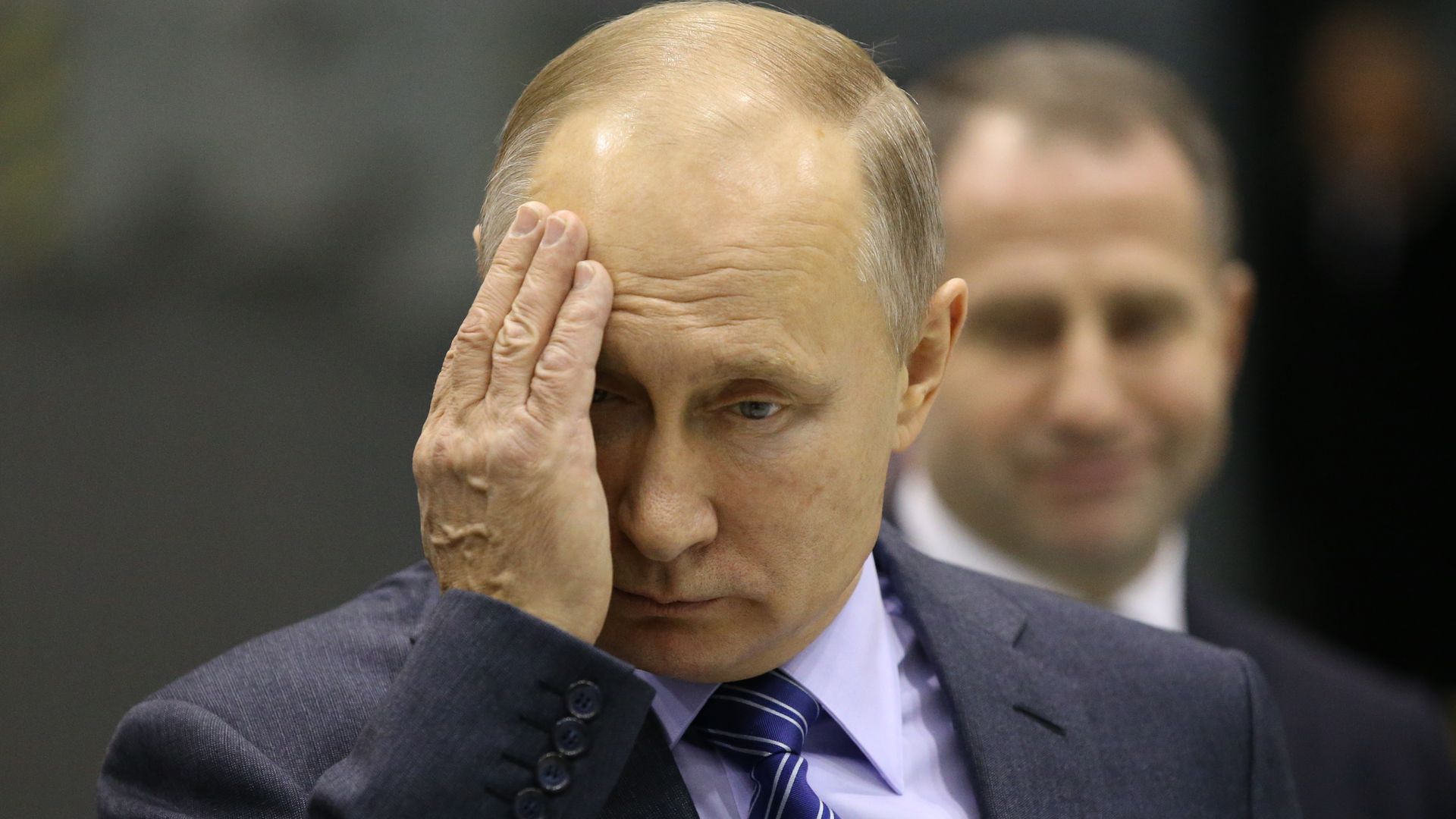
A forthcoming Treasury report on the close ties between Russian oligarchs and Russian President Vladimir Putin has been branded a "direct and obvious attempt to influence [March's Russian presidential] elections" by Putin's spokesman, per the BBC. The report was part of last year's package of sanctions against Russia, designed to "name and shame" members of Putin's inner circle in retaliation for Russia's interference in the 2016 election.
Why it matters: The report won't pose any political problems for Putin, who will win reelection handily in March, but it could create other structural issues for his regime. The report is expected to out the corrupt sources of income for some of his biggest — and richest — supporters and could, in turn, prompt additional economic sanctions from the U.S. against prominent Russian individuals.
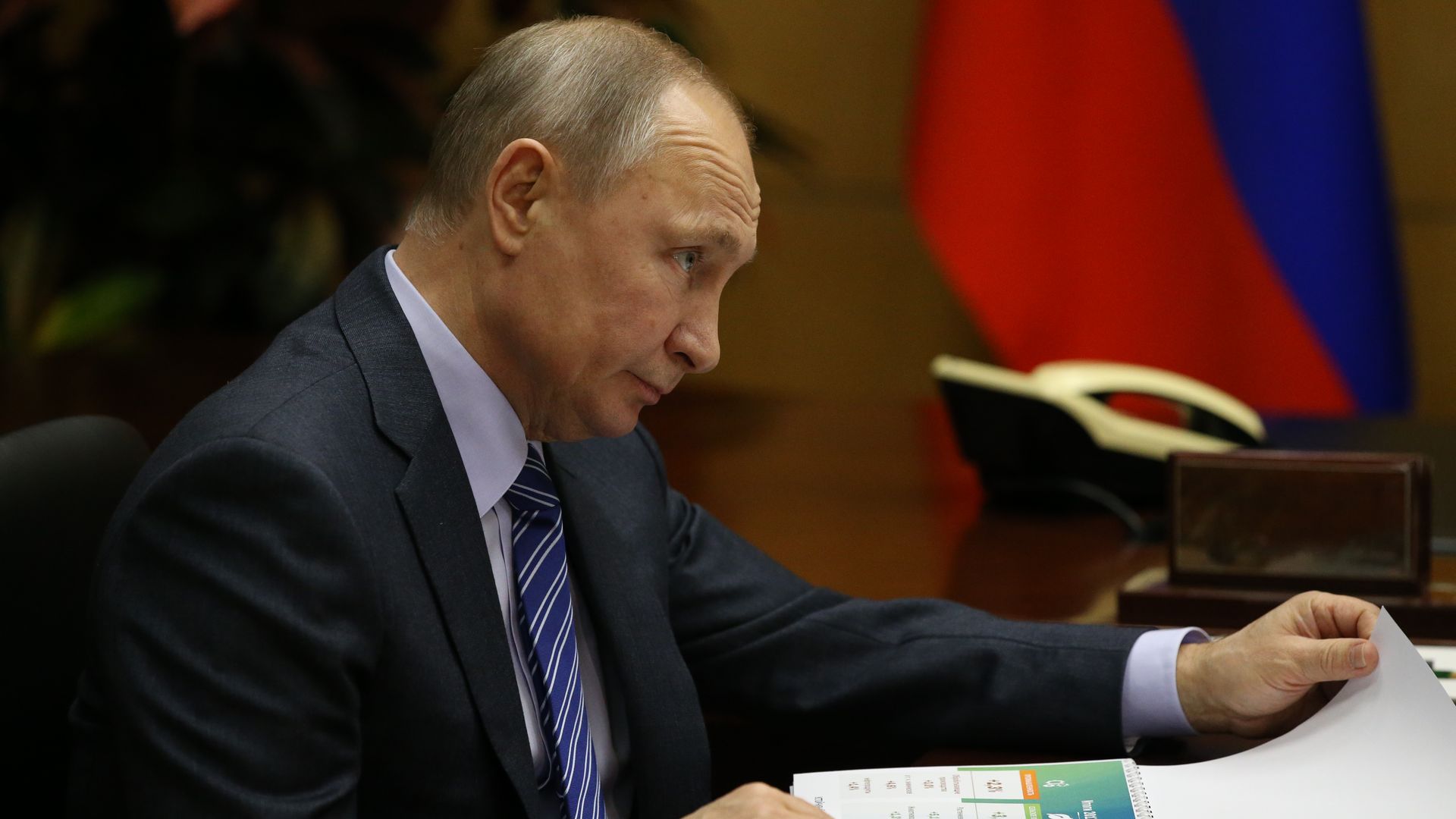
Events this weekend in Russian President Vladimir Putin's sphere of influence serve as a reminder his power: a top political opponent was arrested, an ally in the Czech Republic won re-election, and the leader of Crimea reiterated support for its links with Russia.
Big picture: Each of these instances shows Putin's reach within his own government as well as his ability to exert power in eastern Europe. These are just a few ways Putin counters western influences in eastern Europe, or, what Russia sees as its rightful cultural and historical territory.
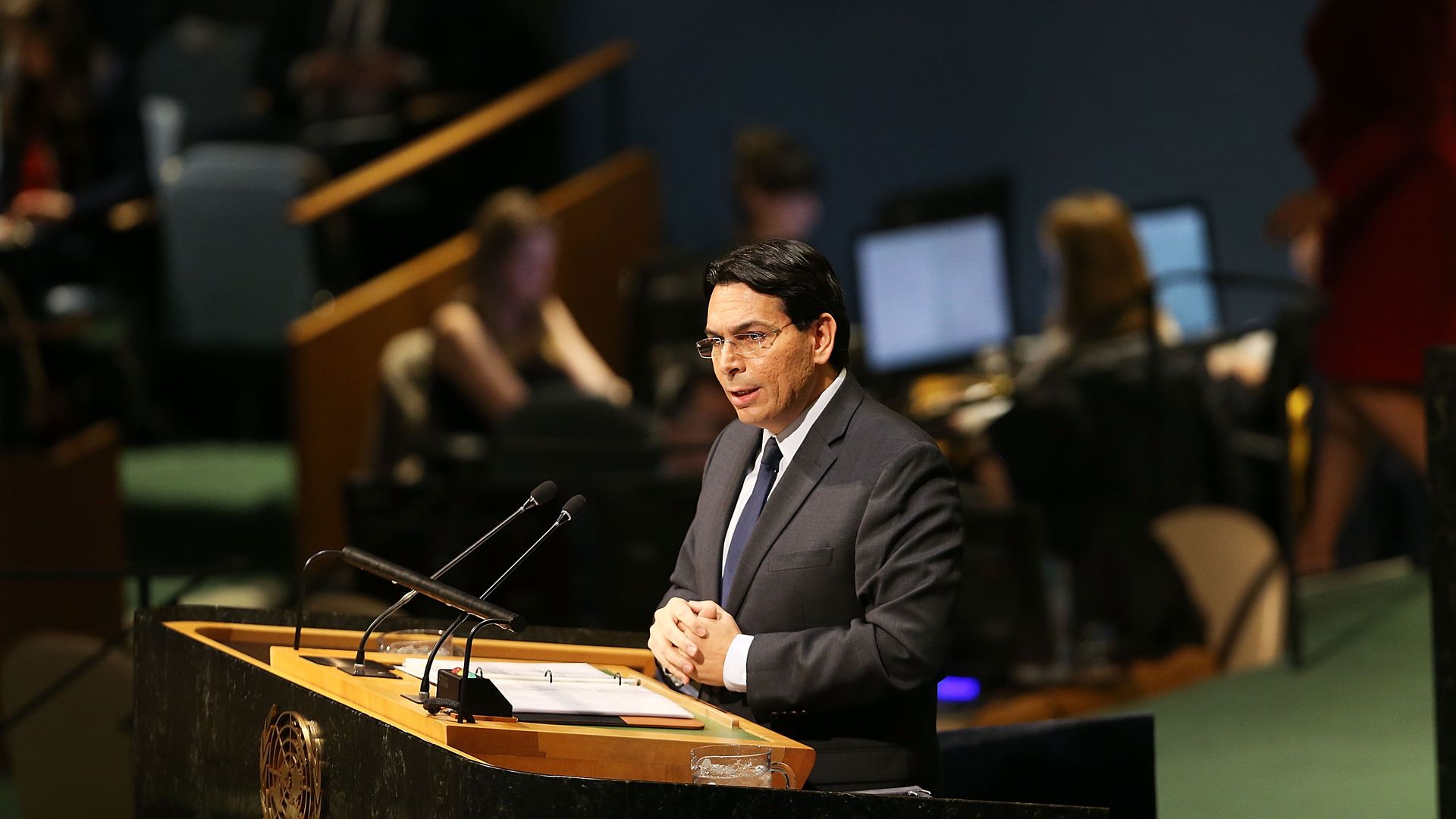
Israel supported and co-sponsored a UN general assembly resolution, initiated by Rwanda, that rewrites the historical narrative regarding the 1994 genocide.
Why it matters: This is against the U.S. government's position. Israel was the only Western country to co-sponsor this resolution.
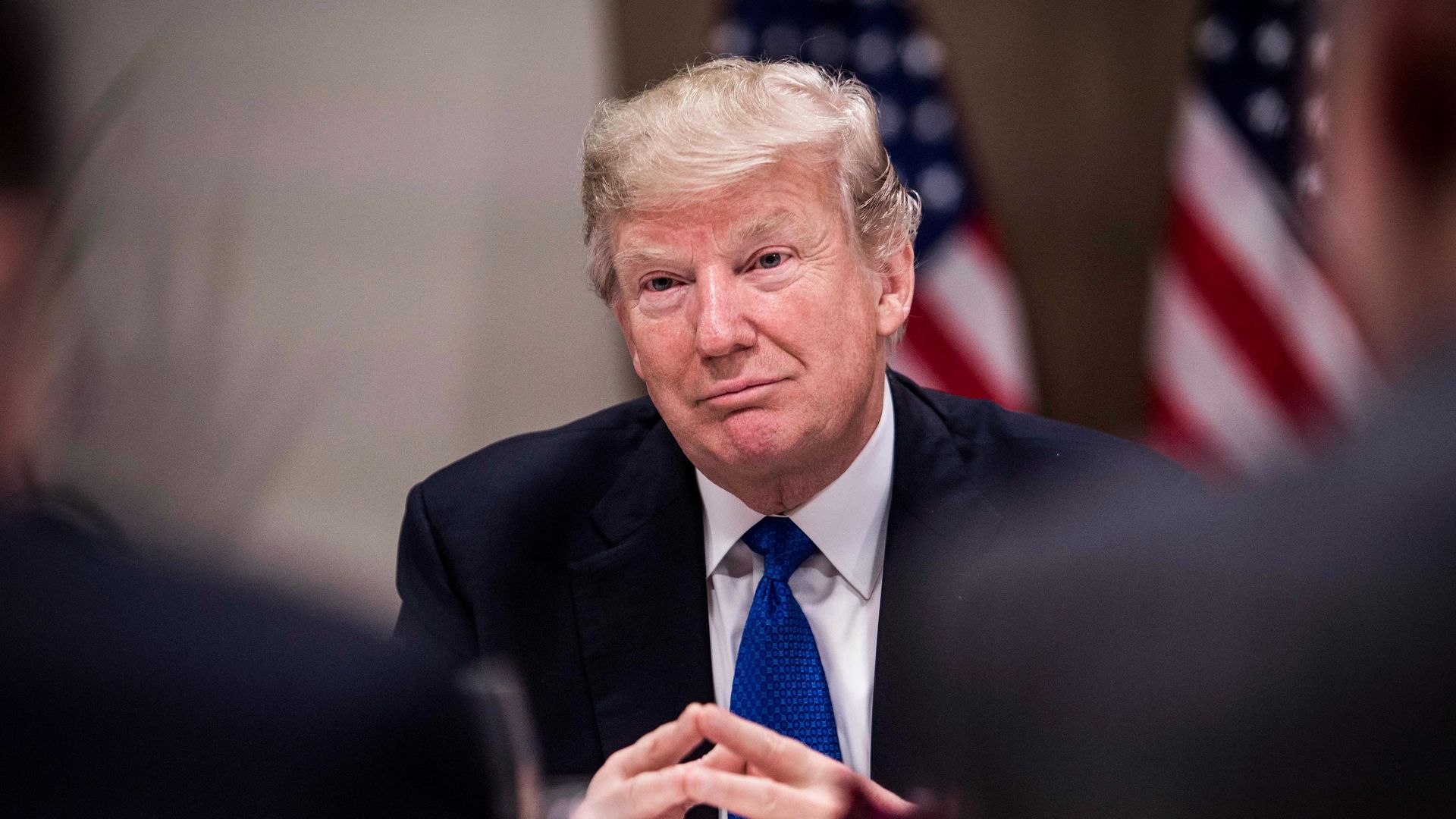
Lawmakers on both sides of the aisle are skeptical about whether Trump will impose sanctions on Russia for its election meddling, per Politico. The deadline is Monday.
Why it matters: Both houses of Congress voted overwhelmingly in favor of this sanctions bill (which Trump ultimately signed as well). If Trump doesn't use this sanction power by tomorrow's deadline, it will send a clear signal to Congress that he's unwilling to be tough on Putin's government and that he's still not convinced Russia interfered in the 2016 election.