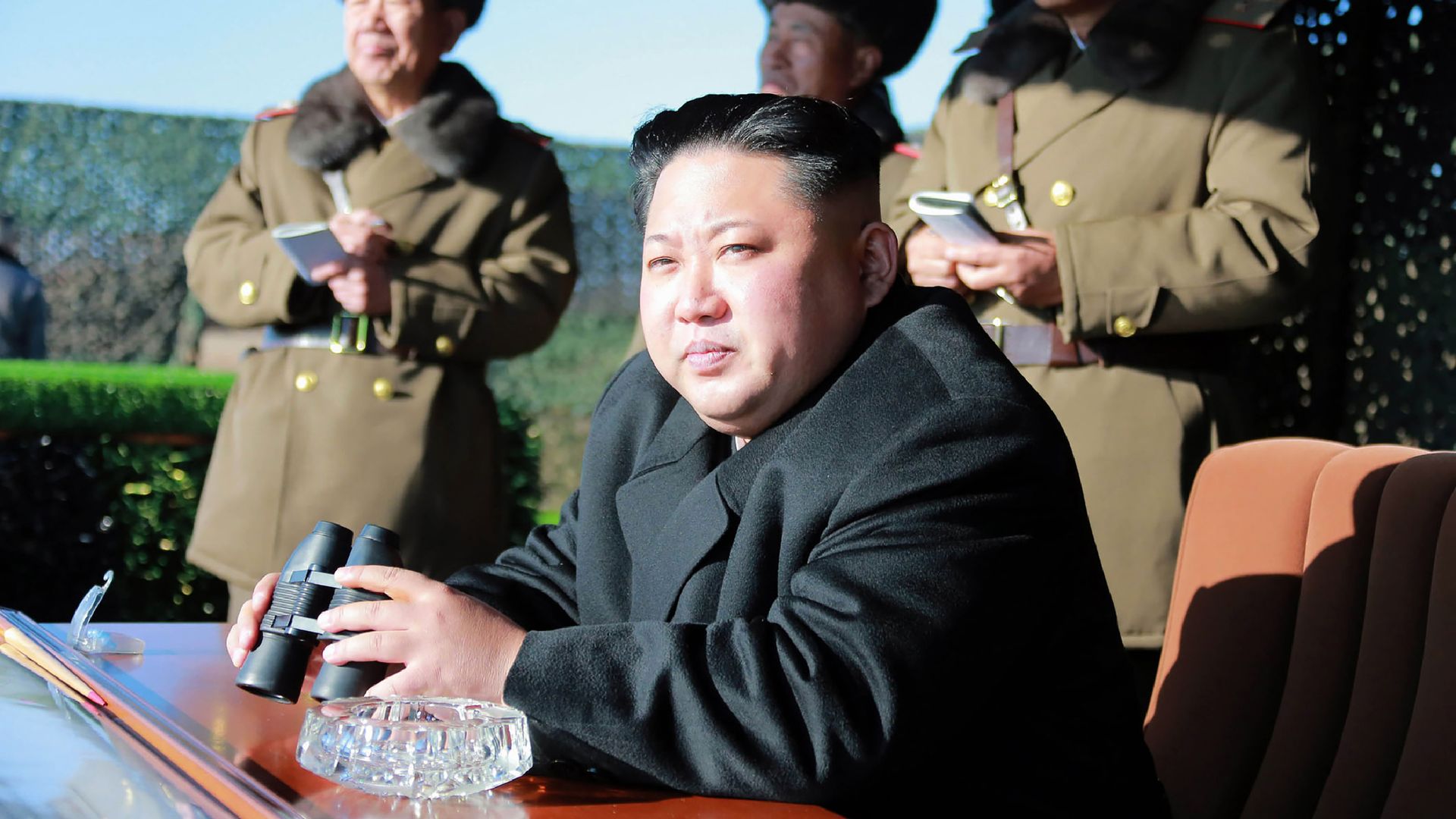
Two Chinese officials with ties to top North Korean government officials told Radio Free Asia that Kim Jong-un’s regime is running low on funds for its nuclear program, Fox News reports.
Why it matters: The North is getting more and more isolated, according to this report. Some experts say when Kim Jong-un is isolated, he comes to the negotiating table to try to get sanctions eased — so this could explain the North’s recent talks with South Korea. But it’s also anyone’s best guess as to what Kim Jong-un wants exactly at any given time.
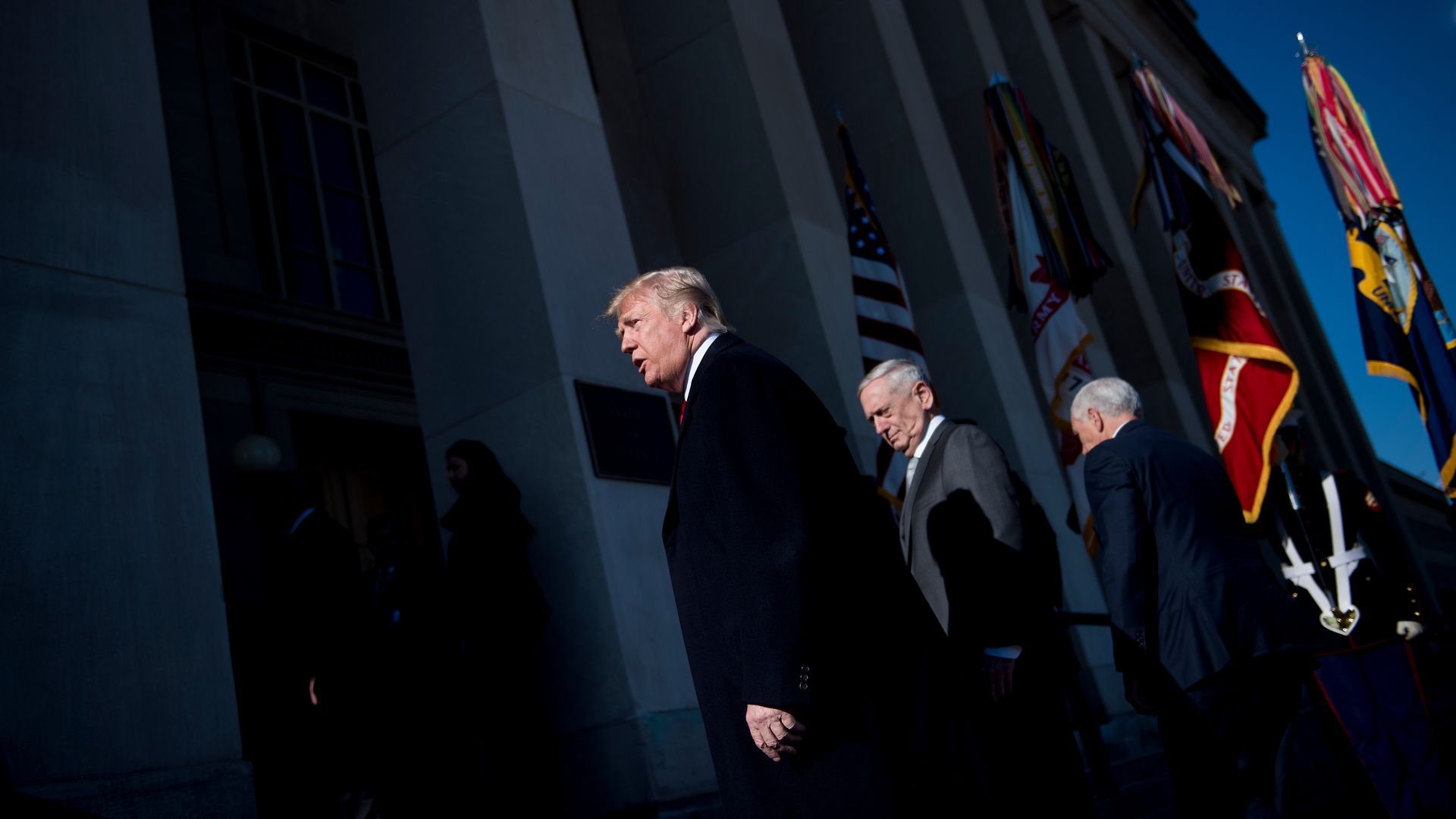
The Trump administration is expected to ask for a major increase of $716 billion in defense spending next month in its proposal for the 2019 budget, officials tell The Washington Post. That’s an increase by more than 7% over the 2018 budget, which still hasn’t made its way through Congress to passage.
Why it matters: U.S. Defense Secretary Jim Mattis said last week that spending caps and continuing resolutions get in the way of the military’s ability to shift spending around to appropriately match defense priorities. But the DoD just released its national defense strategy, which shifts the country’s priorities to countering China and Russia instead of terrorism.
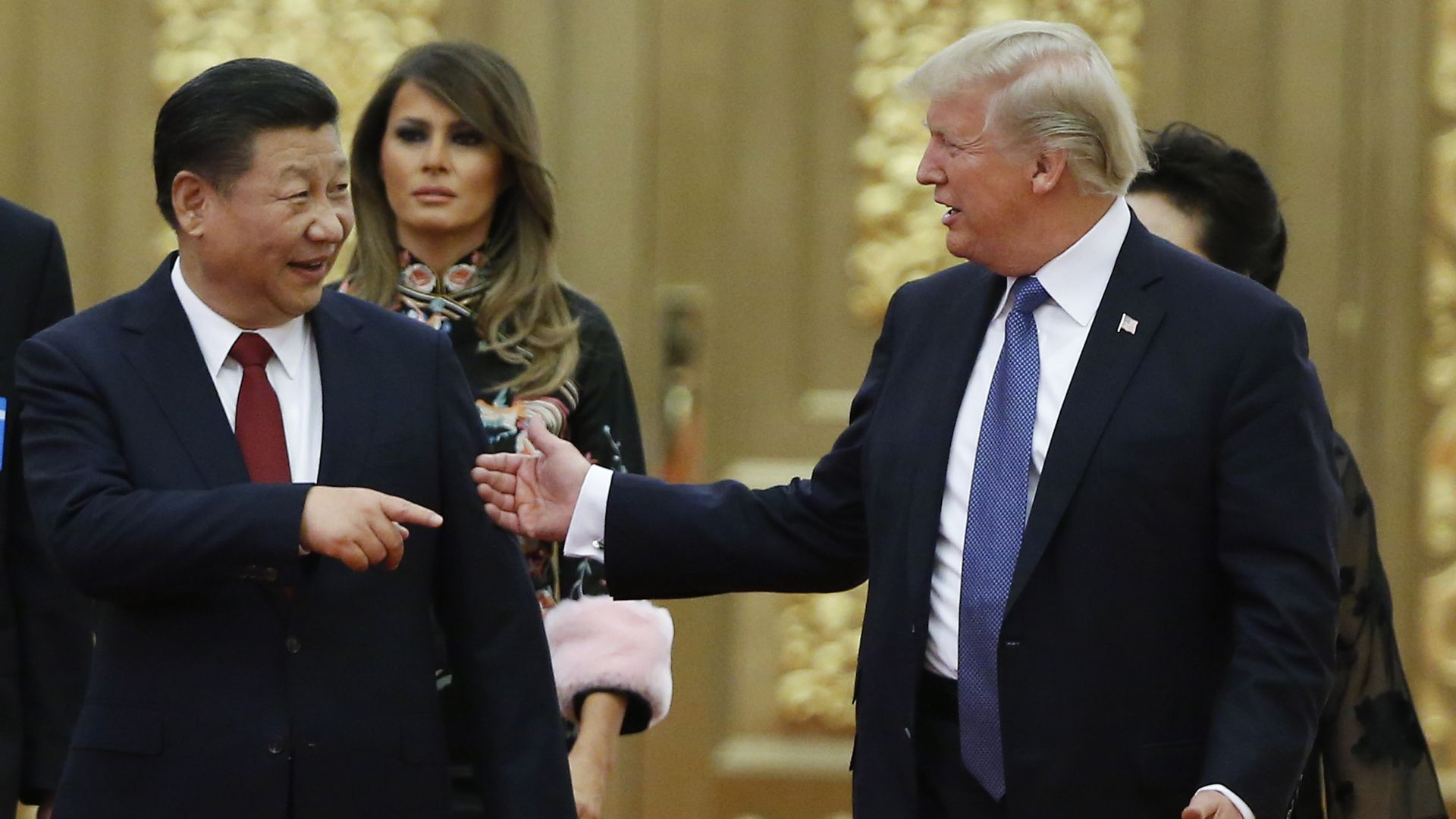
Official media has been in overdrive this week praising Xi's 2017 Davos speech and contrasting the PRC's vision for the world with President Trump's.
Buzz: The propaganda onslaught included a Xinhua commentary, "Shared future or America First," that claims that Davos took this year's theme "Creating a Shared Future in a Fractured World" from Xi's speeches last year about "building of a community with a shared future for mankind and achieving shared and win-win development."
The Trump administration has released 3 key strategy documents in the last month that reframe America's view of China and may indicate there's an emerging approach that's more contentious.
Why it matters: The idea of engagement has underpinned the U.S.-China relationship for decades. Now the U.S. government appears to have declared engagement has failed.
Two biotechnology stories from China captured the world’s attention this past week:
First, the WSJ reported that a group of doctors in Hangzhou have been using CRISPR gene-editing in experiments with cancer patients. Elsewhere, medical scientists are far more cautious about using the technology in humans.
The concern: Clinical trials are not always well regulated around the world. The gene editing activity in China not only flouts the safety-first standard in developed countries and exploits desperate patients, it misses an opportunity to learn from carefully designed clinical trials.
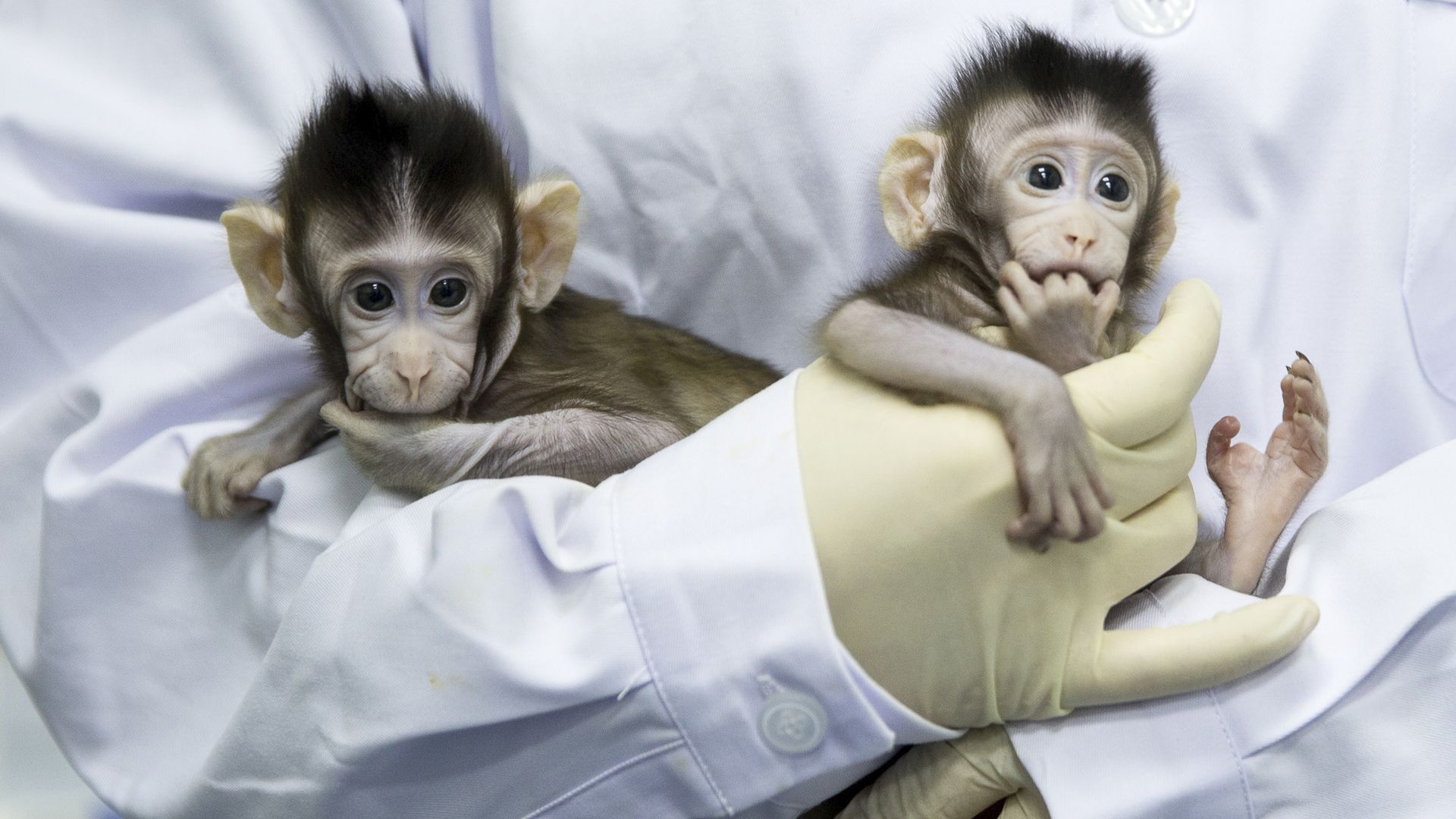
Second, more than two decades after Dolly the sheep was cloned, scientists in China reported they had cloned the first primate. It required new techniques and involved dozens of failures before two infant monkeys were finally born with perfect copies of the genes in their cells, creating enormous opportunities for comparative research.
What it means: These results reinforce the possibility of using human clones for research. Still, the risks involved in cloning for human reproduction are simply too great, as the many failed attempts at monkey cloning make clear.
The bottom line: These developments are a reminder that the U.S. is no longer the sole player. However, science is not a zero-sum game. Along with the need for appropriate regulation, the question now is whether the U.S. is in a position to collaborate and contribute new information. In that sense, the less flashy National Institutes of Health announcement of a $190 million commitment to support work on new tools for gene editing is ultimately the bigger news this week.
Jonathan D. Moreno is the David and Lyn Silfen University Professor of Ethics at the University of Pennsylvania.
The U.S. Treasury Department is issuing sanctions on 21 people and 9 companies over Russia’s actions in Ukraine and its annexation of Crimea, which the U.S. does not formally recognize, the AP reports.
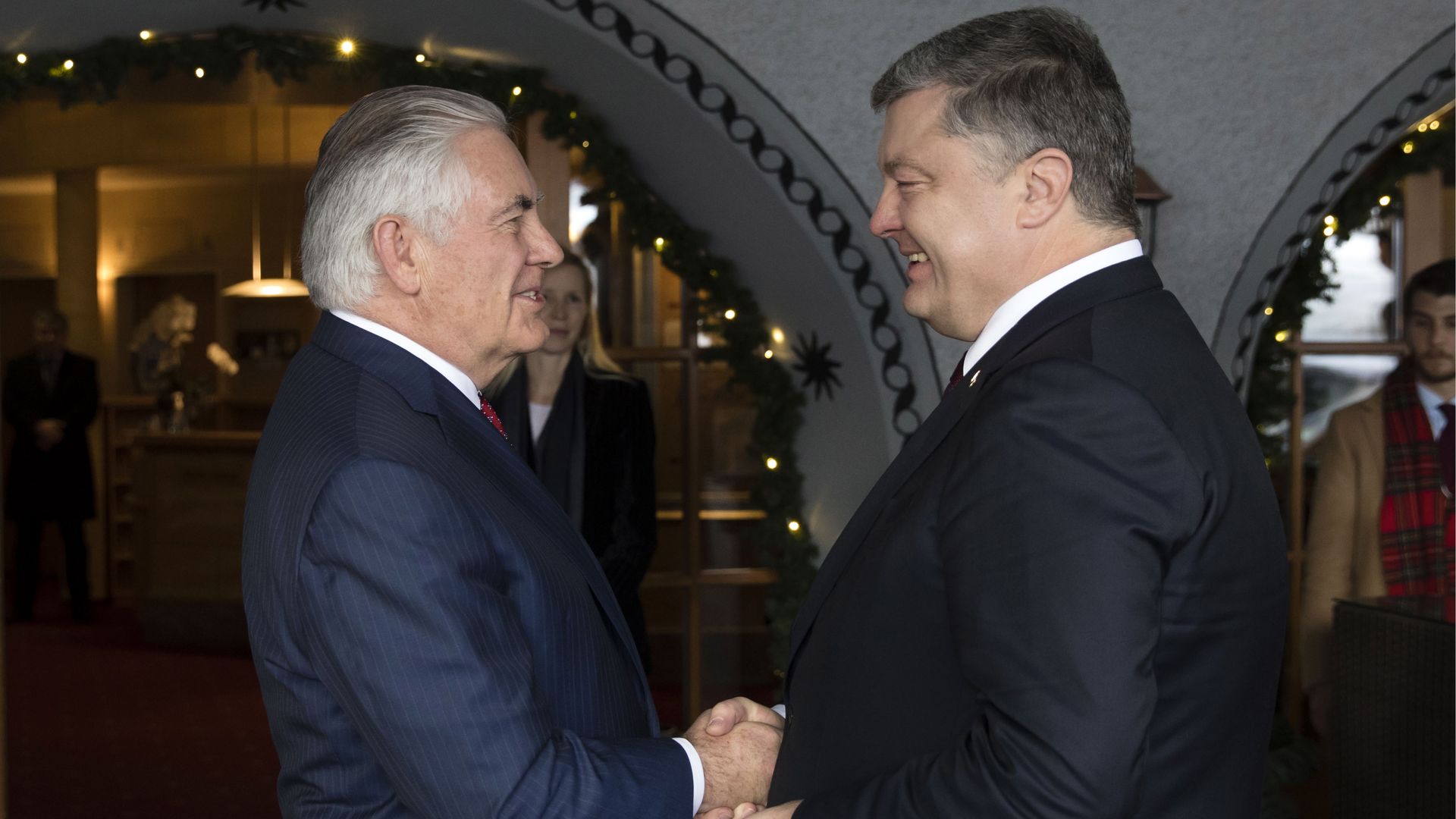
What it means: This could ramp up tensions between the U.S. and Russia — U.S. Secretary of State Rex Tillerson met Friday with Ukraine’s president in Switzerland just a month after the U.S. reportedly approved a lethal arms sale to Ukraine amidst the ongoing conflict last month.
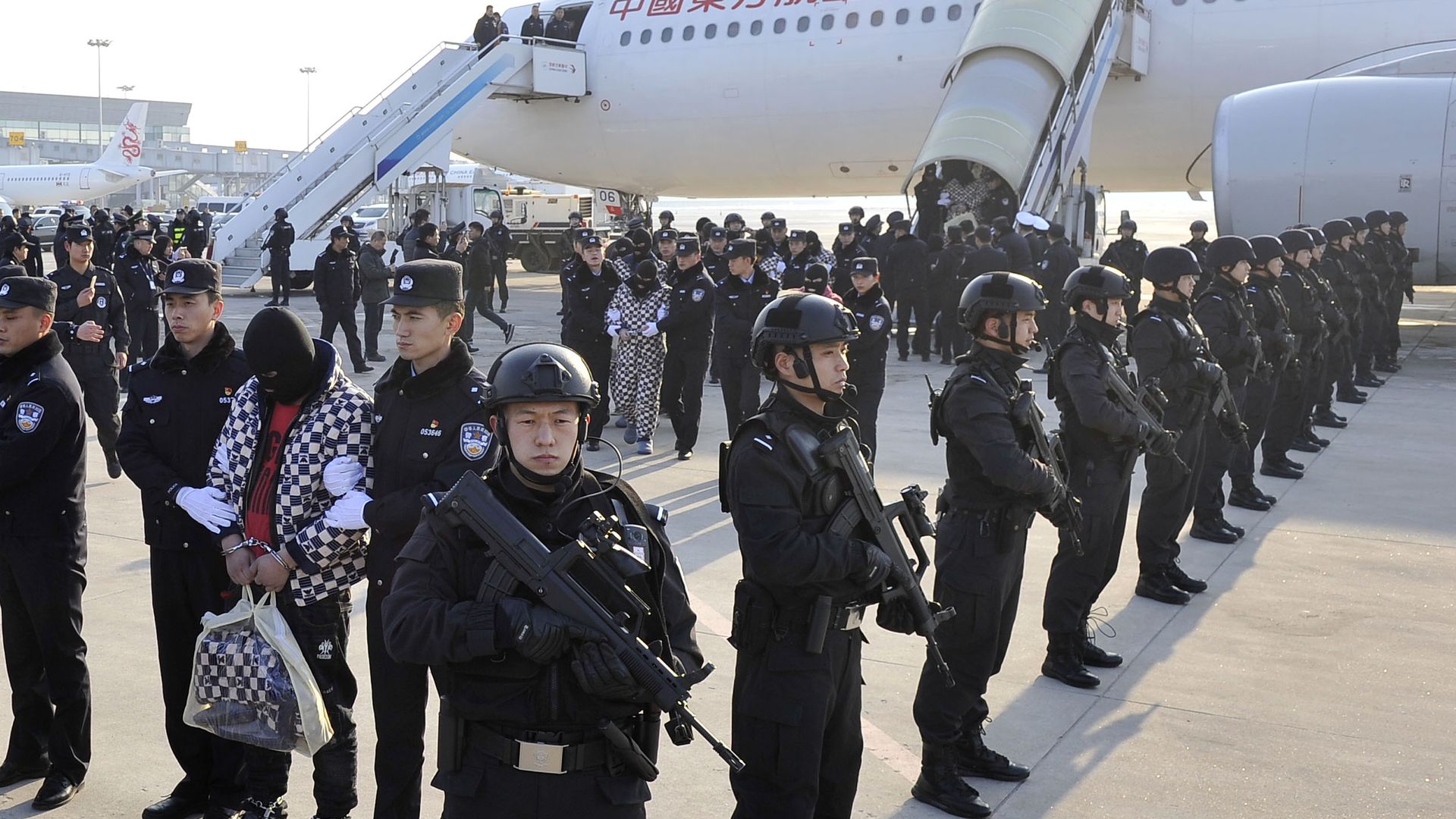
The Communist Party Central Committee and the State Council issued a joint notice (中共中央 国务院发出《关于开展扫黑除恶专项斗争的通知》) announcing the launch of a "dedicated struggle" to root out organized crime and the corrupt local officials who protect them, Xinhua reports.
My thought bubble: China has had these campaigns before, but the use of the word "struggle" in the notice likely indicates this time will be much more expansive and harsh.
The Trump administration has released 3 key strategy documents in the last month that reframe America's view of China and may indicate there's an emerging approach that's more contentious.
Why it matters: The idea of engagement has underpinned the U.S.-China relationship for decades. Now the U.S. government appears to have declared engagement has failed.
Chinese conglomerate HNA Group has agreed to sell an office building in Sydney, Australia to The Blackstone Group for around $161 million, per Reuters.
Why it matters: Because the once-acquisitive HNA is being forced to shrink in response to both its over-leveraged balance sheet and global regulatory scrutiny.
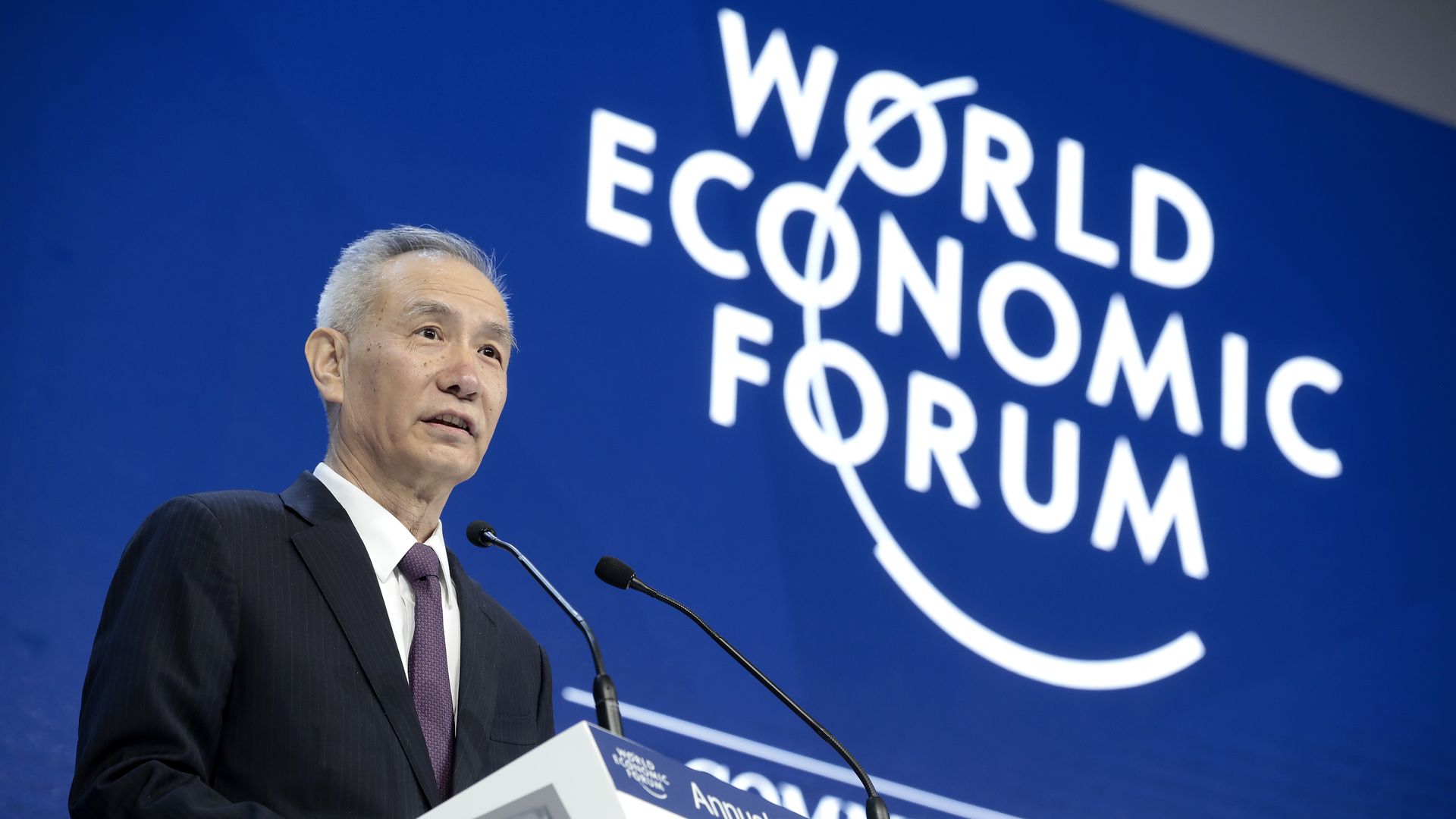
Liu He, a Politburo member who's perhaps Chinese President Xi Jinping's most trusted economic policymaker and likely vice-premier, led the PRC delegation to the World Economic Forum in Davos, Switzerland.
What they're saying: In his speech on day two, Liu reiterated Beijing's focus on cleaning up the financial system and declared that the government would get control of the massive debt problem within three years.
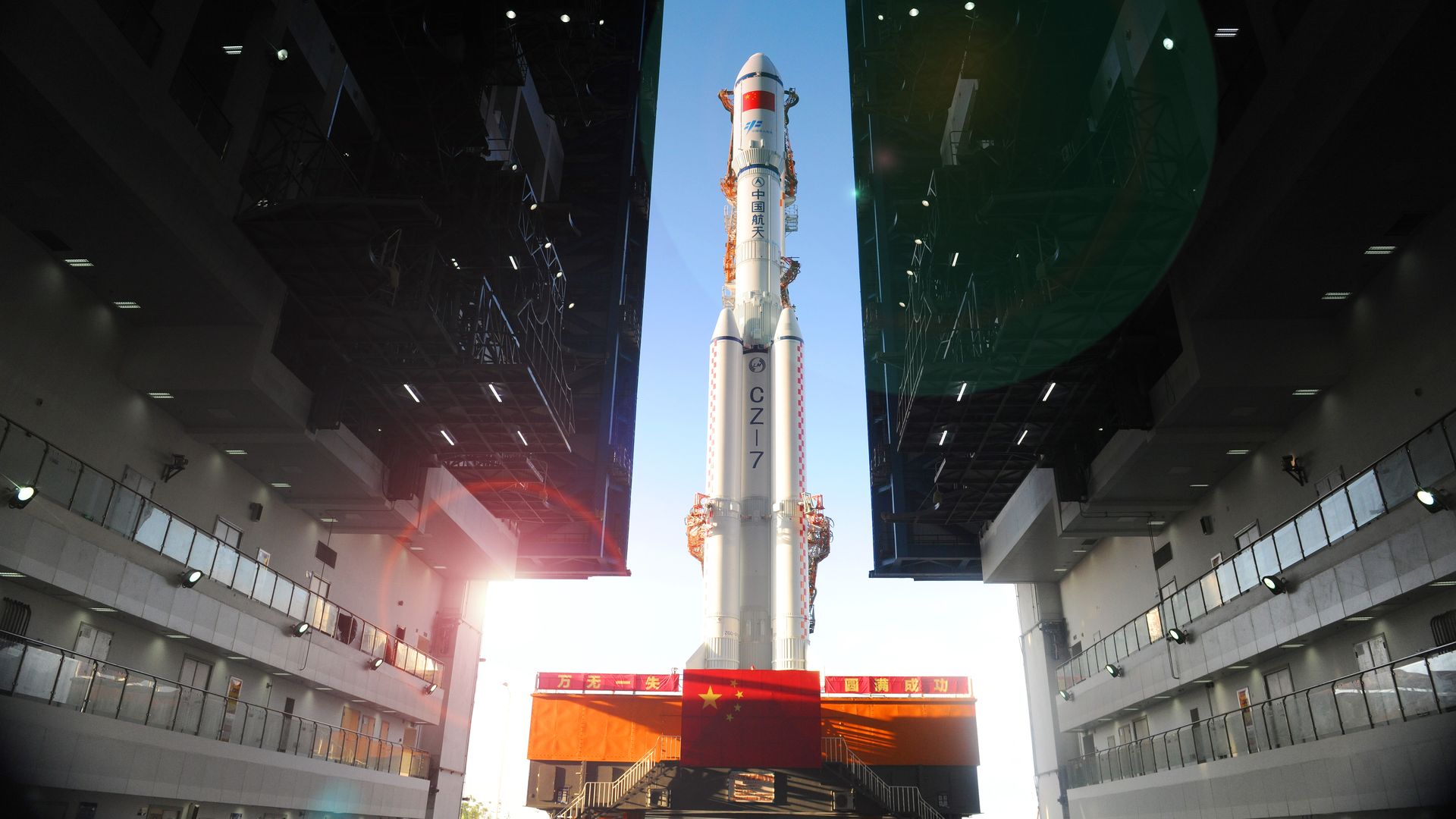
In the past decade, China has steadily poured money into the research and development arm of its national space organization, eclipsing Russia and emerging as the United States' top competitor in the international space race.
The bottom line: The second 50 years of the Space Age will be marked by China's international leadership role in space.