Data centers have become the face of AI backlash, with celebrities, politicians and protesters pushing to slow their growth.
Why it matters: America's sharply rising public opposition to data centers — which fuel our everyday use of the internet — could pose an existential threat to AI's growth.
Many Federal Reserve officials believed that the central bank would have to raise interest rates if inflation did not ease, according to the minutes released on Wednesday from the Fed's July 28-29 policy meeting.
Why it matters: Some of the nation's top policymakers worried that interest rates weren't doing enough to restrain the economy and bring down inflation. They warned that waiting too long to raise rates could mean bigger, more painful increases down the line.
Stripe on Wednesday told investors that January 1st marked the "beginning of the singularity," which it refers to as a major inflection point in longterm trends, according to a letter obtained by Axios.
Why it matters: The payments giant believes that being privately held is the best structure for such a consequential moment, which suggests that any IPO remains on indefinite hold.
Meta on Wednesday said it's debuting a new Mac app to help influencers and small businesses use AI to improve the way they promote products and run their businesses
Why it matters: The move puts Meta's AI tool to work in advertising — where the company makes its money.
OpenAI said Wednesday that it believes a new technique will allow it to safely serve its most advanced models to businesses without needing to retain their data.
Why it matters: Rival Anthropic has instituted a 30-day retention policy for business customers who want to use Fable 5 and Mythos 5.
Rivian's headlights lit up a family of raccoons on a pitch-black Wisconsin road, then reshaped their beam around another car to avoid blinding its driver, without dimming the road ahead.
Why it matters: A decade after shape-shifting headlights changed nighttime driving in Europe, the technology remains remarkably scarce in North America — a case study in how U.S. regulations can slow the arrival of proven safety innovations.
Pennsylvania Gov. Josh Shapiro's (D) newly hard line on data centers says plenty about the evolving politics of AI and the tech industry's challenge to build the energy and computing power it needs.
Why it matters: He's in the 2028 presidential mix, leads a critical swing state, and faces November reelection in one of several governor's races where data centers are taking center stage.
All the online chatter about new AI models is starting to resemble the hype over the next Taylor Swift album or where LeBron James might end his career.
Why it matters: This is far more serious than a sports team or a mixtape. These AI models can fundamentally change how millions of people work, think, and make decisions — with widespread impact on geopolitics, the economy, and international policy.
Stocks have been behaving oddly recently, with downright dull moves for the S&P 500 index, even as companies within it swing like mad.
Why it matters: This dynamic — individual stocks posting large, uncorrelated moves that cancel each other out — is another way the AI boom is reshaping the markets.
The U.S. Missile Defense Agency is on the hunt for mobile radars that can track ballistic, cruise and hypersonic missiles from remote outposts where few troops are stationed.
Why it matters: Static sensors and established bases are easy targets.
Iran in recent months has targeted both, including an RTX-made AN/TPY-2 radar in Jordan.
CenCore Group will on Friday unveil the Integrated Warfighter Ecosystem, a coalition of 150 businesses it has networked to win defense and intelligence-community contracts and arm U.S. troops with the best available gear.
Why it matters: "For me, personally, this really is the culmination of several years of work, to get this in place," CenCore chief executive Adam Fife told Axios.
"When I spent my years downrange, we would get some really cool, engineered shit, but it didn't work."
The Senate GOP campaign arm, in a private memo to top AI companies, warns that toxic views of U.S. data centers are killing the party's chances of holding a vital seat in Ohio.
In the memo, obtained by Axios, the National Republican Senatorial Committee says Democrats have made data centers a "centerpiece" of their campaign to defeat Sen. Jon Husted (R-Ohio) — and that it's working.
"If he loses and data centers get the blame, politicians across the country will take notice — and they will not go near the next one," the memo says. "This has become a sleeper issue for the entire election cycle."
Why it matters: Republicans want the AI companies to do whatever it takes to stem the public backlash.
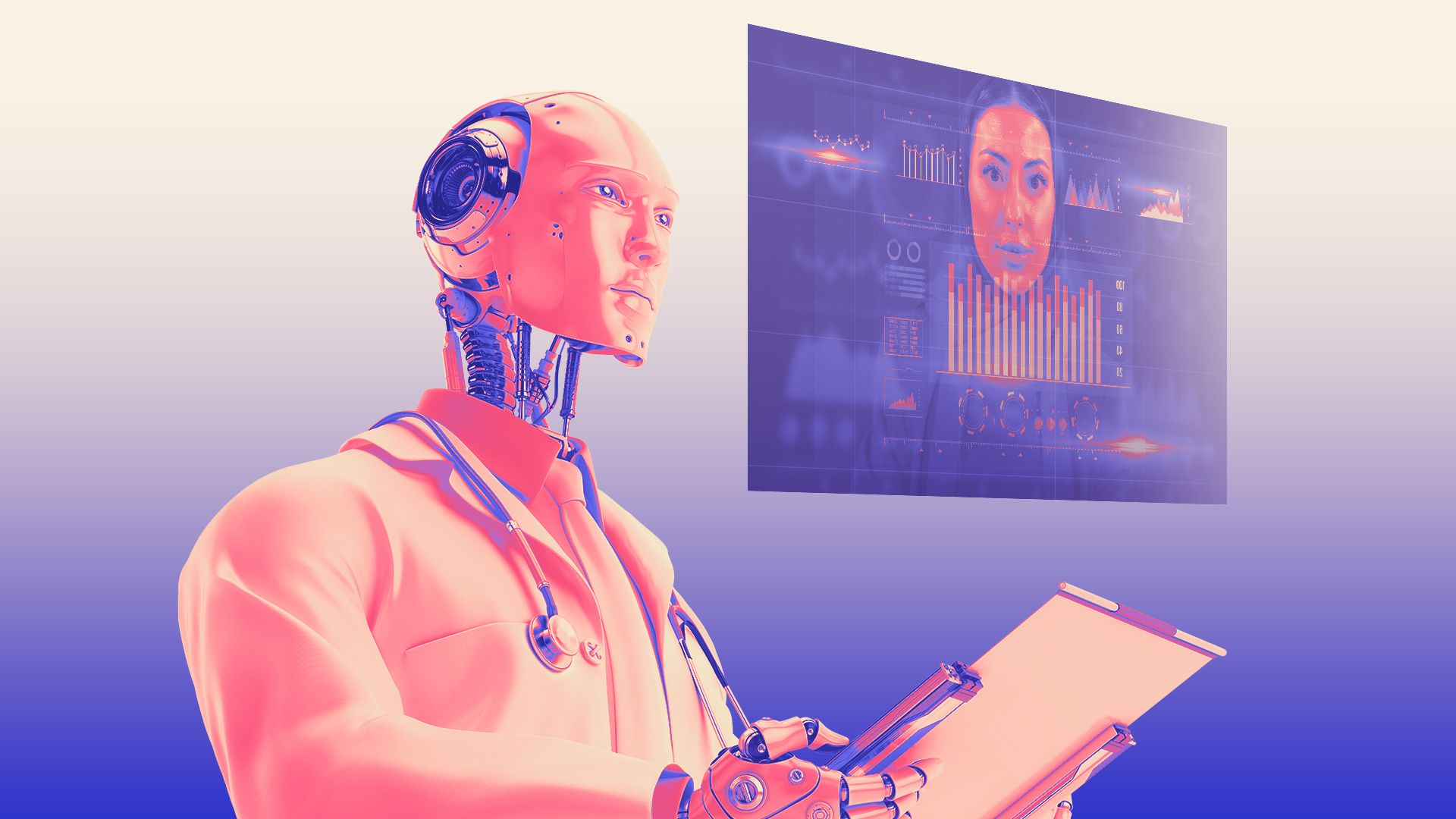
The American Medical Association is out with a new framework for physicians' role in the age of AI, provided first to Axios, that insists doctors remain central to patient care.
Why it matters: The debate over whether AI will supplant doctors in clinical care is heating up, but the AMA has remained adamant that humans not only must remain in the loop but can't be replaced.
OpenAI said Tuesday it is pausing some model work over safety concerns, days after rival Anthropic doubled down on insisting that its own safety measures were solid enough that it didn't need to slow down.
Why it matters: The two leading AI labs are publicly diverging on how to manage safety risks, potentially putting them on different model-release timelines as both prepare for expected initial public offerings.
Forget energy. Forget chips. Forget China. The most clear and present danger to AI and any AI-related economic boom is rapidly rising public opposition to U.S. data centers.
Why it matters: Republicans and AI CEOs are in full panic mode watching politicians and the public turn on the physical engines of AI growth. In private, they tell us they can't find a compelling message to shift opinion fast enough.
New York Gov. Kathy Hochul (D) is turning her attention to AI's impact on workers, launching a series of listening sessions Wednesday that will initially focus on how women will experience job disruptions.
Why it matters: Hochul is trying to balance New York's embrace of AI with concerns about its impact on workers.