The Trump administration is considering requiring banks to collect proof of citizenship from customers via an executive order, multipleoutletsreported on Tuesday.
It's unclear whether these efforts, or a possible ban on holding bank accounts, might apply even to noncitizens authorized to live and work in the U.S.
Warner Bros. Discovery said that Paramount Skydance raised its offer price to $31 per share from $30 and added that the updated bid "could reasonably be expected" to lead to a superior proposal.
Why it matters: It's a signal that Paramount's campaign to acquire all of WBD isn't over, potentially reigniting a bidding war with Netflix.
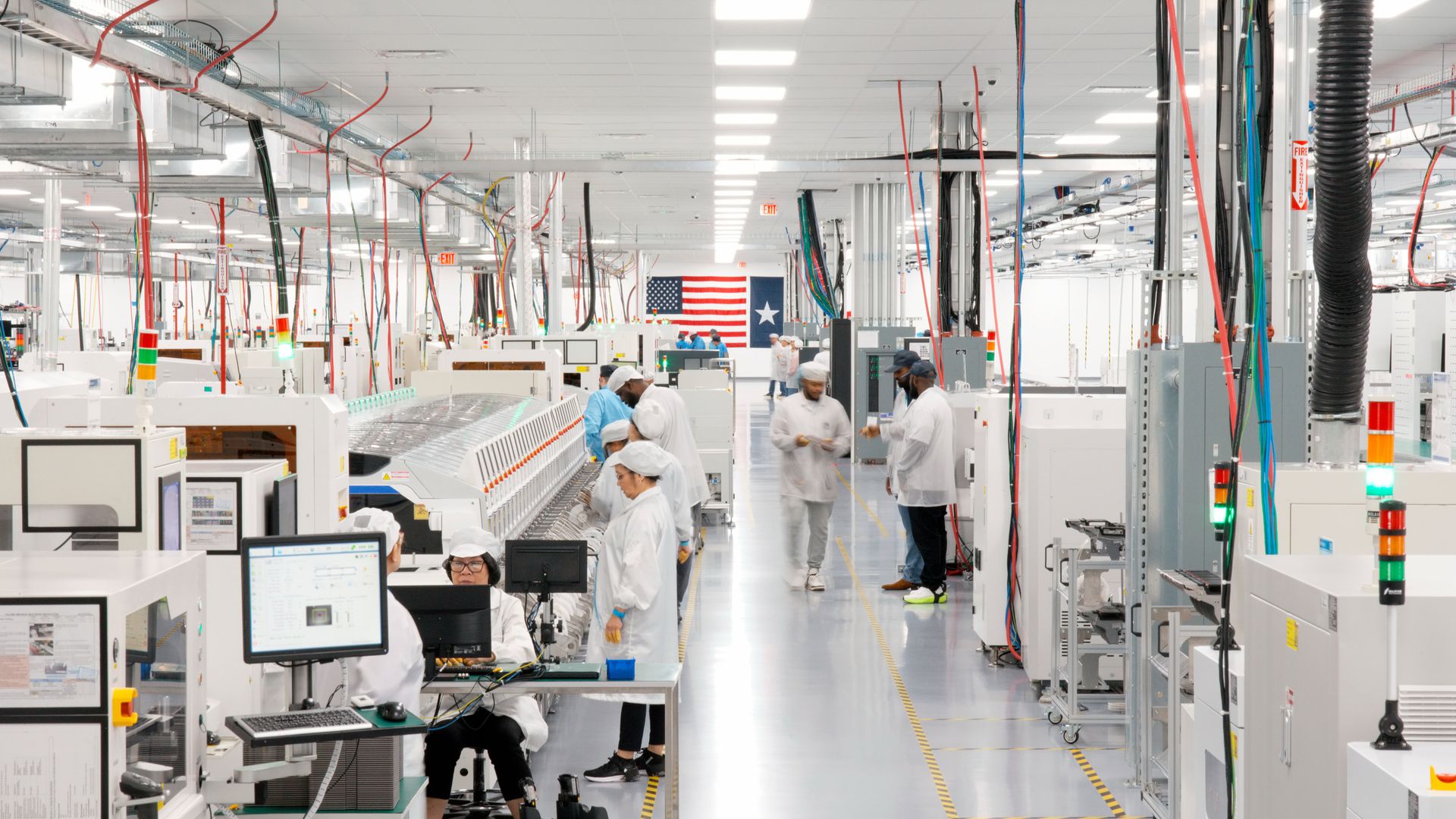
Apple is accelerating its manufacturing footprint in Houston — bringing production of its Mac Mini to the U.S. for the first time, the tech giant announced Tuesday.
Why it matters: The move doubles Apple's Houston footprint and is expected to create thousands of jobs.
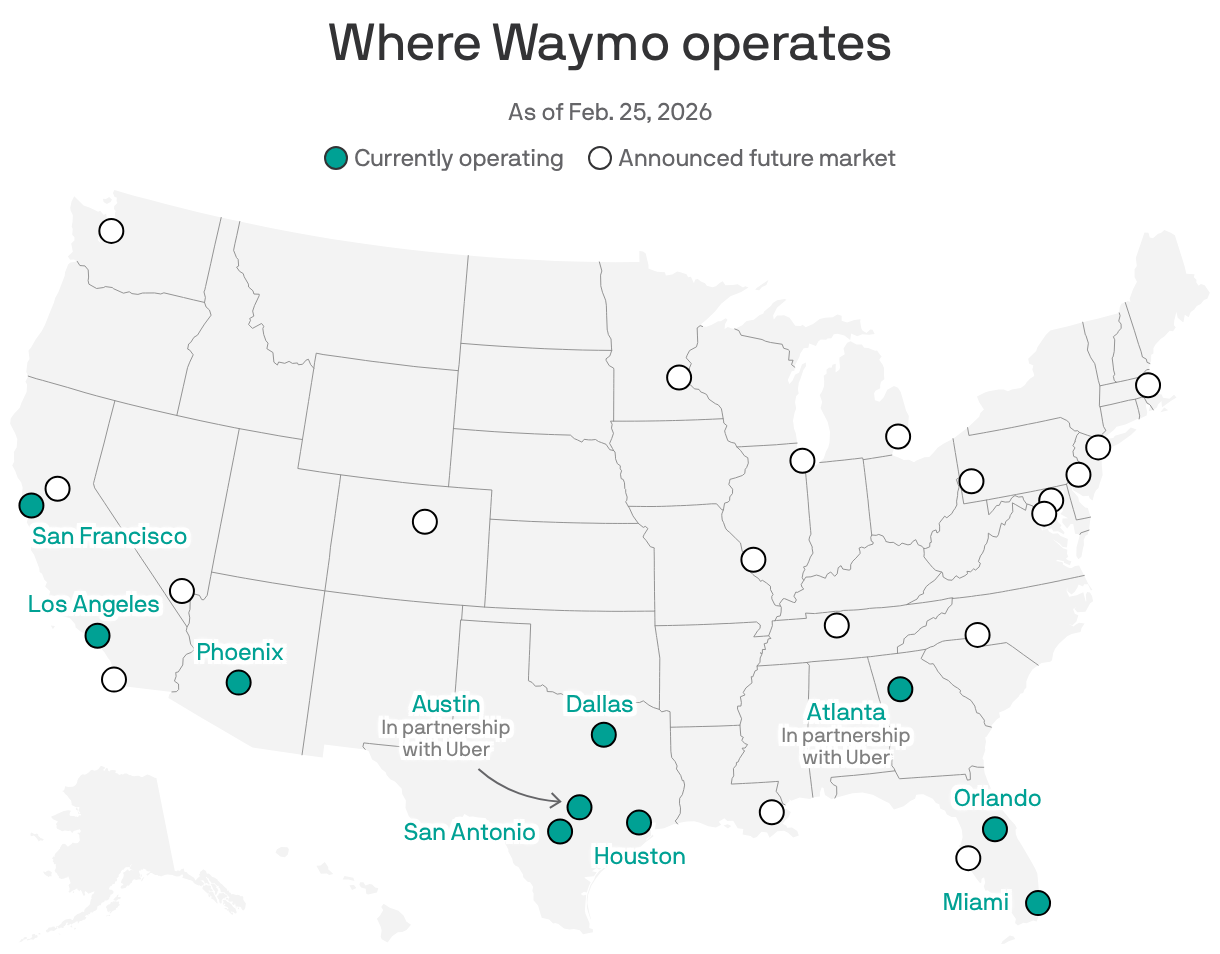
Waymo is accelerating its rollout of robotaxis in the U.S., adding four new cities in Texas and Florida this week as self-driving technology begins to penetrate mainstream America.
Why it matters: Armed with $16 billion in fresh capital from parent Alphabet and others, Waymo is quickly extending its lead over other players like Tesla and Amazon-owned Zoox, which are still mostly in testing mode.
Defense Secretary Pete Hegseth gave Anthropic CEO Dario Amodei until Friday evening to give the military unfettered access to its AI model or face harsh penalties, Axios has learned.
The big picture: Hegseth told Amodei in a tense meeting on Tuesday that the Pentagon will either cut ties and declare Anthropic a "supply chain risk," or invoke the Defense Production Act to force the company to tailor its model to the military's needs.
Amid the current AI obsession, local opposition is the one thing that has the potential to slow the AI boom — and arguably already has.
By the numbers: According to the most recent report from Data Center Watch, 20 projects representing some $96 billion in investments were blocked or delayed in the second quarter of 2025 alone amid local opposition.
Anthropic launched tools Tuesday that companies, teams and even individual employees can customize across business units ranging from human resources to design.
Why it matters: Anthropic is making Claude easier to use for enterprises as it works to become the go-to AI platform for businesses.
Advanced Micro Devices has agreed to sell AI chips to Meta that will enable the Facebook parent to deploy six gigawatts of computing power. The deal will also allow Meta to acquire as much as 10% of AMD.
Why it matters: It comes just a week after Meta announced a deal to buy chips from AMD rival Nvidia and shows that the arms race in AI continues to escalate.
The anything but AI trade is catching on, as investors hunt for companies unlikely to be wiped out by an Anthropic plug-in or ChatGPT — think real things like airplanes or beer or energy.
Why it matters: It's a counter to the AI scare trade, which has been on a bender this year, steamrolling entire industries based on the flimsiest of evidence that the technology is coming for them.
Defeated by Democrats ... Republicans ... and independents.
Why it matters: In the Trump administration, Silicon Valley, and select AI-obsessed homes or businesses, people are euphoric about the fast rise of generative AI tools. These groups see a coming utopia.
Almost everywhere else, the vast majority are indifferent, pessimistic — even downright dystopian.
The politics are shifting so fast against AI that Democratic governors who championed it are in fast retreat.
A new population explosion is loading the internet with AI-powered software agents — chatbots that can take their own actions inside digital systems.
Why it matters: The evolution of life on Earth reached a tipping point in the Cambrian era 500 million years ago, when simple biological systems diversified into a vast array of species. Now it's the chatbots' turn.
The AI revolution may be upon us. But nobody knows for sure what it will mean for measures of overall economic well-being like GDP, unemployment, incomes and asset prices.
The big picture: Will super-intelligent computing unleash stunning growth in output — or will it be more like some previous big advances that created "ghost GDP" that didn't show up much in the economic statistics?
As artificial intelligence accelerates, so does the prospect of a cyberattack powerful enough to shut down hospitals, black-out cities and disrupt core government systems.
Why it matters: Just by scaling and accelerating the cyberwarfare tools adversaries already have, AI can turn manageable intrusions into large-scale crises.
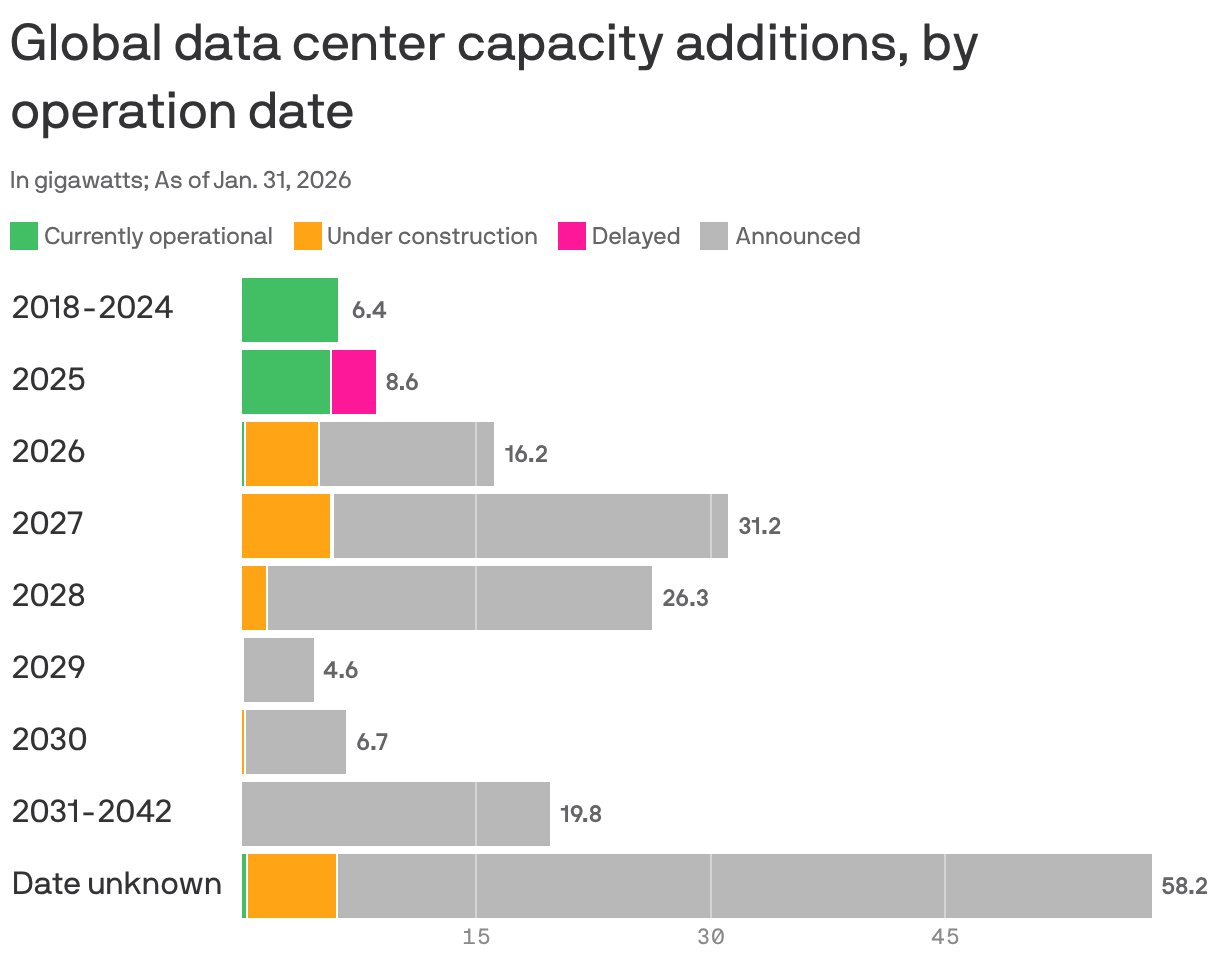
Data: Sightline Climate; Note: Includes 529 large data center projects announced since 2024 that have disclosed capacity; Chart: Kavya Beheraj/Axios
As many as half of the world's data center projects slated to come online this year could face delays, according to a report issued Tuesday.
Why it matters: It's a sign of mounting collisions in the AI race — from power constraints and grid equipment shortages to rising community opposition.
Build American AI — an advocacy group tied to pro-AI super PAC Leading the Future — says it has signed up more than 500,000 supporters nationwide.
Why it matters: The fight over AI policy has been dominated by tech industry money, and pro-AI advocates are now trying to show they have broad public support.