Trump administration bars non-citizens from small-business loans

Add Axios as your preferred source to
see more of our stories on Google.
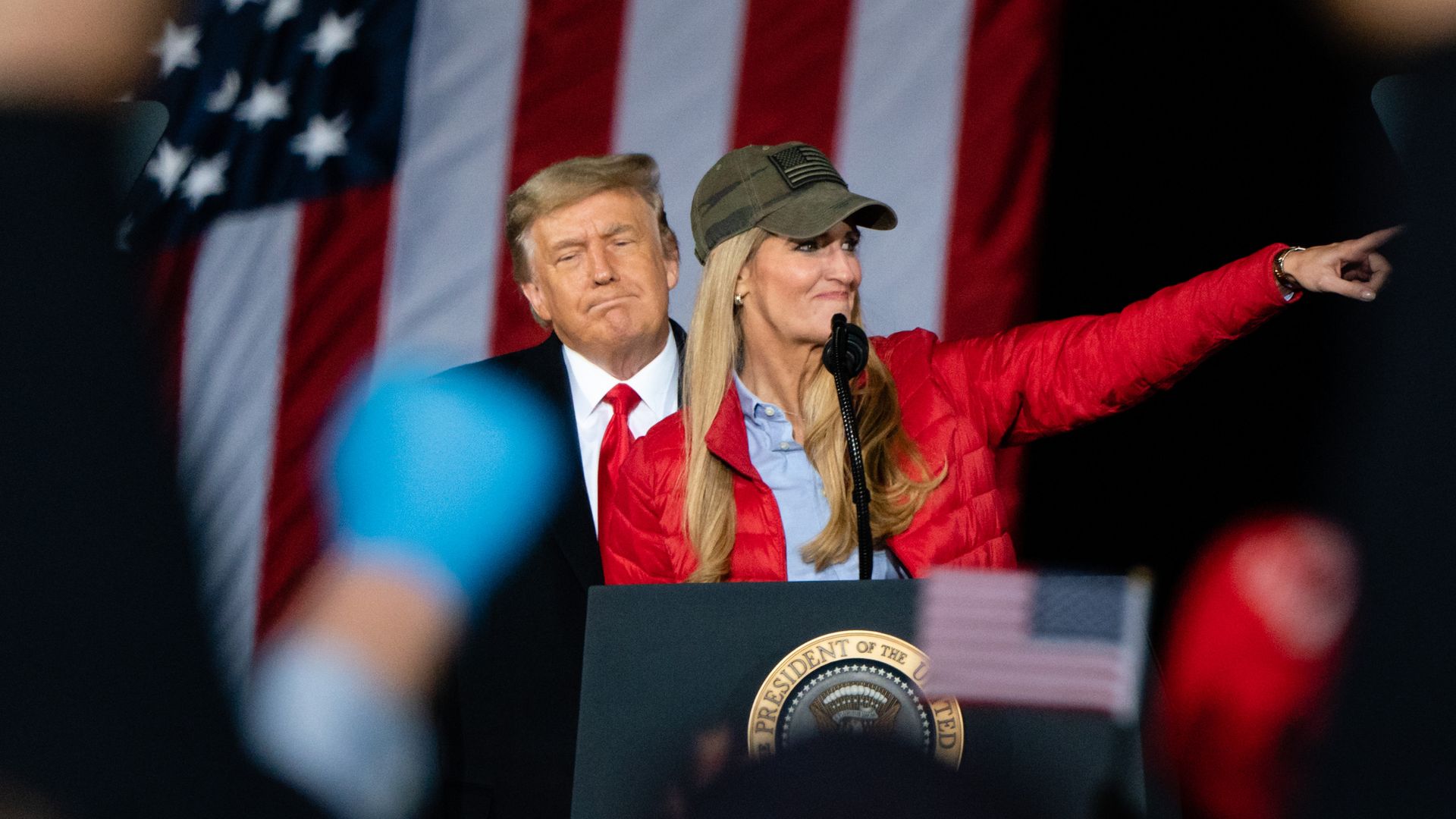
President Trump and SBA administrator Kelly Loeffler. Photo: Elijah Nouvelage/Bloomberg via Getty Images
The Small Business Administration will now block all non-U.S. citizens or nationals from the agency's primary 7(a) loan program.
The big picture: The SBA's move — and President Trump's broader, expansive targeting of immigrants — underscores the administration's attempts to curtail economic opportunities for non-citizens.
Driving the news: The agency on Monday issued new policy guidance rescinding a narrow exception allowing small businesses seeking a loan to have partial ownership by non-citizens or nationals.
- Previously, up to 5% of ownership could be held by foreign nationals or legal permanent residents.
- Legal permanent residents — those with a green card — will now be ineligible to own any percentage interest in a business pursuing an SBA loan.
- The policy goes into effect on March 1.
What they're saying: "The agency will no longer guarantee loans for small businesses owned by foreign nationals," Maggie Clemmons, an SBA spokesperson, tells Axios.
- "Across every program, the SBA is ensuring that every taxpayer dollar entrusted to this agency goes to support U.S. job creators and innovators," she says.
- "To that end, we expect to be able to offer them even more capital in the near future pending legislation to increase SBA loan limits for small businesses that are hiring, building, and producing in America."
The other side: Sen. Ed Markey (D-Mass.), the top Democrat on the U.S. Committee on Small Business & Entrepreneurship, told Axios that the SBA "has also increased fees on small businesses and made it harder for small businesses to obtain SBA loans," leading to significant drops in SBA lending.
- The administration's "draconian citizenship verification requirements are another failure to serve American small businesses," he said.
Markey and Rep. Nydia Velázquez (D-N.Y.), the top Democrat on the House's small business committee, also criticized the change in a joint statement on Monday.
- "Rather than support hard-working legal immigrants to start or expand a business, the Trump SBA is choosing hatred by barring green card holders from receiving an SBA loan," they said.
- "The Administration's message to immigrants is clear: you are not welcome to pursue the American Dream."
By the numbers: Data isn't publicly available for how many businesses are owned or partially owned by permanent residents, but immigrants make up nearly a fifth of U.S. business owners.
- Immigrant business owners consist of roughly 18% of business owners with employees, and almost 23% of business owners without employees, per Annual Business Survey data from 2018.
Between the lines: Removing access to the agency's 7(a) loans means that non-citizens lose one of the best options for small-business owners, as they're frequently cheaper than alternative lenders.
- Xi Huang, a professor at the University of Central Florida studying local immigration policymaking, said that "the added exclusion of legal permanent residents from accessing SBA-backed loans further constrains their growth and expansion potential and could also threaten immigrant-owned small businesses' survival."
- "Ethnic entrepreneurs own a substantive portion of Main Street businesses, which are backbones of our neighborhoods, providing everyday services," she said. "The new policy can substantially limit the services the average American can patronize every day."
Zoom in: Catherine Seitz, legal director of the Immigration Institute of the Bay Area, compared the SBA's rule change to the Transportation Department's targeting of commercial truck drivers, but called it "worse."
- "There they are saying that only LPRs and [citizens] can have a commercial driver's license — excluding lots of people with interim lawful status and employment authorization — but here they are even excluding LPRs."
Context: Around 9,500 truck drivers have been pulled off the road for failing to meet English-language proficiency requirements reinstated by the Trump administration.
Reality check: The Trump administration's targeting of immigrant workers across industries could hurt the economy.
- Limiting immigrants' opportunities for economic advancement also makes the economy more vulnerable, Huang said.
Editor's note: This story was updated with a statement from Sen. Markey.
