Trump considers citizenship checks for bank accounts

Add Axios as your preferred source to
see more of our stories on Google.
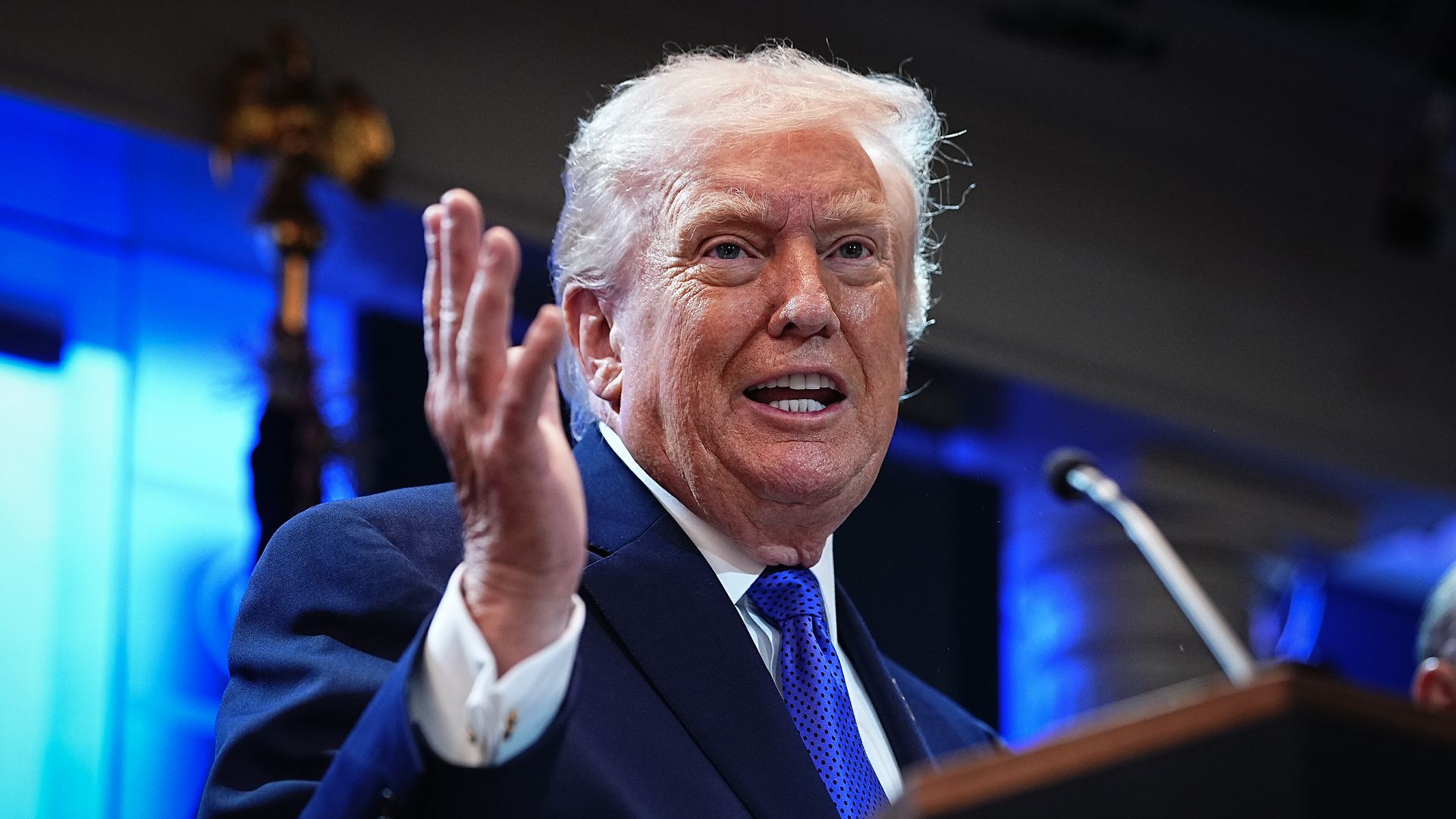
Photo: Aaron Schwartz/Getty Images
The Trump administration is considering requiring banks to collect proof of citizenship from customers via an executive order, multiple outlets reported on Tuesday.
The big picture: In addition to President Trump's expansive deportation efforts, his administration has escalated efforts over the past year to cut off noncitizens from access to jobs, aid and financial services.
- It's unclear whether these efforts, or a possible ban on holding bank accounts, might apply even to noncitizens authorized to live and work in the U.S.
Driving the news: Trump is weighing an executive order or another action requiring the collection of data, the Wall Street Journal, Semafor and CNN reported.
- The policy would require banks to solicit documentation such as passports from current customers and future ones, sources told Semafor.
What they're saying: "Any reporting about potential policymaking that has not been officially announced by the White House is baseless speculation," White House spokesperson Kush Desai tells Axios.
Reality check: Trump likely couldn't unilaterally implement these requirements via an executive order, Chi Chi Wu, an attorney at the National Consumer Law Center, tells Axios.
- Changing the law would require going through Congress.
- The administration would probably instead go through the Administrative Procedure Act (APA), a law that governs how administrative agencies can change regulations, Wu says.
- That process could take a year or two.
The Right to Financial Privacy Act has a baseline rule that "the government can't just ask a bank to give over financial records," Wu notes. "They have to have some sort of reason for it," such as a subpoena.
How it works: Under the "know your customers" rule, financial institutions are required to collect certain information to prevent money laundering.
- Those rules don't require the verification of citizenship.
- There is no rule preventing banks from opening accounts for noncitizens in the U.S.
- Some banks require a Social Security Number to open an account, but several major ones don't, including JPMorgan Chase, Bank of America and Wells Fargo.
Zoom in: Banks would likely push back against any such move, Wu says.
- "Any requirement that a deposit holder has to be a U.S. citizen, [banks] wouldn't be happy about, because that would mean they lose some business from foreign nationals, and it might be valuable business," she says.
- The Consumer Financial Protection Bureau under former President Biden tried to institute regulations through the APA, such as limiting credit card late fees, which banks sued over and won, Wu notes.
What we're watching: It's not clear whether the administration would require banks to close the accounts of those who don't have documentation verifying citizenship.
- About half of the U.S. population doesn't have a passport.
Between the lines: Removing access to financial institutions from immigrants would have potential "ripple effects" across several fronts, Xi Huang, a professor at the University of Central Florida studying local immigration policymaking, tells Axios.
- "Banks would probably see a decline in their financial capital too, limiting their ability to make investments to the local economy due to the forgone revenues," she says.
Catch up quick: This is the latest in a series of moves by the Trump administration to restrict the financial access of noncitizens.
- The Small Business Administration will block all non-U.S. citizens or nationals from its primary 7(a) loan program, the agency announced earlier this month.
- The Consumer Financial Protection Bureau and Department of Justice announced last month that they are withdrawing a 2023 warning to financial institutions against relying on immigration status to determine a consumer's creditworthiness.
"Trump himself has criticized debanking, but here they are, trying to debank immigrants," Wu says.
- Emily Peck contributed additional reporting to this story.
- Editor's note: This story has been updated to clarify that it remains unclear whether the possible banking ban would apply even to noncitizens authorized to live and work in the U.S.
