Thursday's technology stories

Axios Future of Defense Summit: Innovation needs partnerships for defense advantage, experts say

WASHINGTON, D.C. – Deeper collaboration between defense companies and amongst allied countries is critical to accelerating defense innovation and production, industry insiders said at Axios' Future of Defense roundtable.
Why it matters: The defense sector is flush with emerging tech, but turning those ideas into tangible tools ready for deployment is a complex mission.
Axios' Colin Demarest and Ashley Gold moderated the roundtable discussion on Oct. 22. The event was sponsored by Booz Allen.
4 big takeaways from the conversation:
1. Shifting the focus from competition to collaboration within the private sector is key to creating solutions, said Susanne Hake, general manager of U.S. Government at Vantor. "Historically, a lot of companies have come up with problems wanting to win the entire mission space, and now it's really about interoperability," she said. "It's about working together to kind of bring those solutions to the government."
2. The relationships between Russia, China, Iran, and North Korea appear to be growing closer and the U.S. should look to strengthen partnerships with more allies as well, said Clarion Strategies president Julianne Smith, who is also a former NATO ambassador.
- "They're thinking about it in terms of defense production, about innovation, about AI, you name it. And so we've got to also put our team on the field. We've got to assemble a better network of countries."
3. Global engagement can give the U.S. a strategic edge in both military and economic defense readiness, said Cynthia Kaiser, Halcyon SVP of the Ransomware Research Center.
4. Modular open system architecture "can change the world in which we live in," said Greg Bowman, Siemens Government Technologies chief corporate strategy officer and SVP of the national security division.
- "You have to have a contractor and the government engineers in the same digital ecosystem so they can get those synergies so you don't have to worry about requirements shifting," he said.
Content from the sponsor's opening remarks:
Cameron Mayer, Booz Allen EVP of their defense technology group, said the U.S. is facing some "of the biggest threats since World War II" and that there's "urgent pressure" to help advance AI, cyber and the economy.
- He added that defense leaders have a "desire to expand the defense industrial base and bring that all together for the fight" in order to deliver tech that is ready, tested and proven.

Disney warns customers its channels may go dark on YouTube TV

Disney on Thursday warned customers that its networks, including ESPN, ABC and its entertainment channels, may be dropped from YouTube TV if the two parties cannot reach a new distribution agreement ahead of their current deal expiring next week.
Why it matters: If the two parties fail to strike a deal, millions of YouTube TV consumers could lose access to live games across a slew of major sports franchises.
Axios Future of Defense Summit: The race to innovate amid global threats
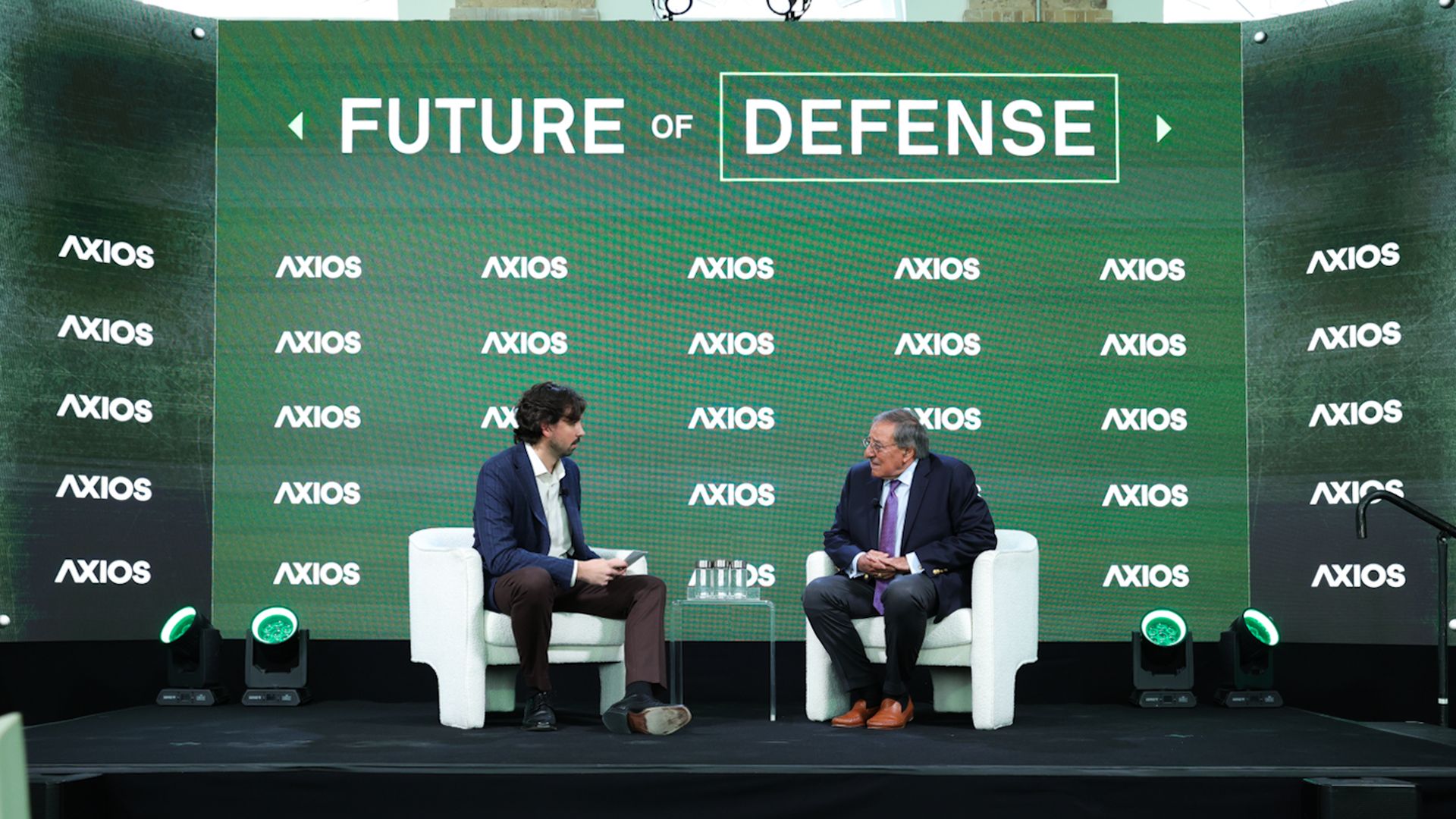
WASHINGTON, D.C. – Defense and national security leaders voiced concerns about political dysfunction, foreign adversaries and the need for stronger military and cyber readiness, at Axios' second annual Future of Defense Summit.
Why it matters: With AI and new technologies constantly advancing new military weaponry, defense leaders said it's vital for the U.S. to take steps to invest in innovations to sustain America's strategic edge amid rising global competition.
The Oct. 22 summit was sponsored by Lockheed Martin, Shield AI and Booz Allen.
Here are some takeaways:
Former Defense Secretary Leon Panetta called gathering top generals at Quantico for Defense Secretary Pete Hegseth's Sept. 30 speech a "waste of time."
- "These are busy guys, they're on the front lines, for God's sakes. You don't call them back here to give them a political speech."
- Panetta also said the government shutdown "sends a fundamental message of weakness to all of our adversaries that democracy is not working."
Sen. Deb Fischer (R-Neb.) warned that China's military arsenal has "advanced at a breathtaking speed" and the U.S. needs to meet that challenge.
ICE is expecting to deport more than 600,000 unauthorized immigrants by the end of the year, U.S. border czar Tom Homan said.
- When asked about ICE agents' aggressive tactics, Homan said ICE is "doing the same thing we've done for 40 years. The difference is right now ICE officers are under great threat, over 1,000% increase in the attacks. ... These men and women are putting themselves at great risk."
Congress should be briefed more on the U.S. military strikes off the Venezuelan coast, Sen. Todd Young (R-Ind.) said. "Congress isn't hearing enough — in any form, including a public forum."
- After President Trump canceled his meeting with Russian President Vladimir Putin, Young said Trump should send Tomahawk missiles to Ukraine and "ratchet up the pressure" on Putin.
When it comes to the golden dome, Northrop Grumman chair, president and CEO Kathy Warden said the architecture for Golden Dome and its capabilities "are appropriately being protected by the U.S. government."
Taiwan's Representative to the United States, Alexander Tah-Ray Yui, said Trump's second term is "quite different" than previous administrations. "I would describe the beginning of his term as a 'Christmas period'... you have an advent calendar… and every day is still a surprise."
Content from the sponsored View From the Top conversations:
Frank St. John, Lockheed Martin chief operating officer, discussed the company's vision for the golden dome, saying it's all about "modern deterrence."
- "When we look at the threats that we're seeing in real world events from ballistic missiles, cruise missiles[and] armed drones, we understand that we need to develop a deterrence capability to prevent that from happening in our homeland." St. John added this will take an all-industry approach.
Ryan Tseng, Shield AI co-founder and chief strategy officer, highlighted their new autonomous aircraft X-BAT, which was unveiled at an Axios Live event the evening before the Future of Defense Summit.
- "X-BAT came from us taking a look at the problem in the Pacific and basically seeing a real challenge with runway protection and survivability," Tseng said. "And air power, [as] we can see in Ukraine, is so essential to establishing dominance on the battlefield and when you're unable to project it, it can turn into a really difficult conflict."
- The new aircraft has the capability to launch and land vertically, mitigating any runway vulnerability.

Anthropic's Claude adds new memory features
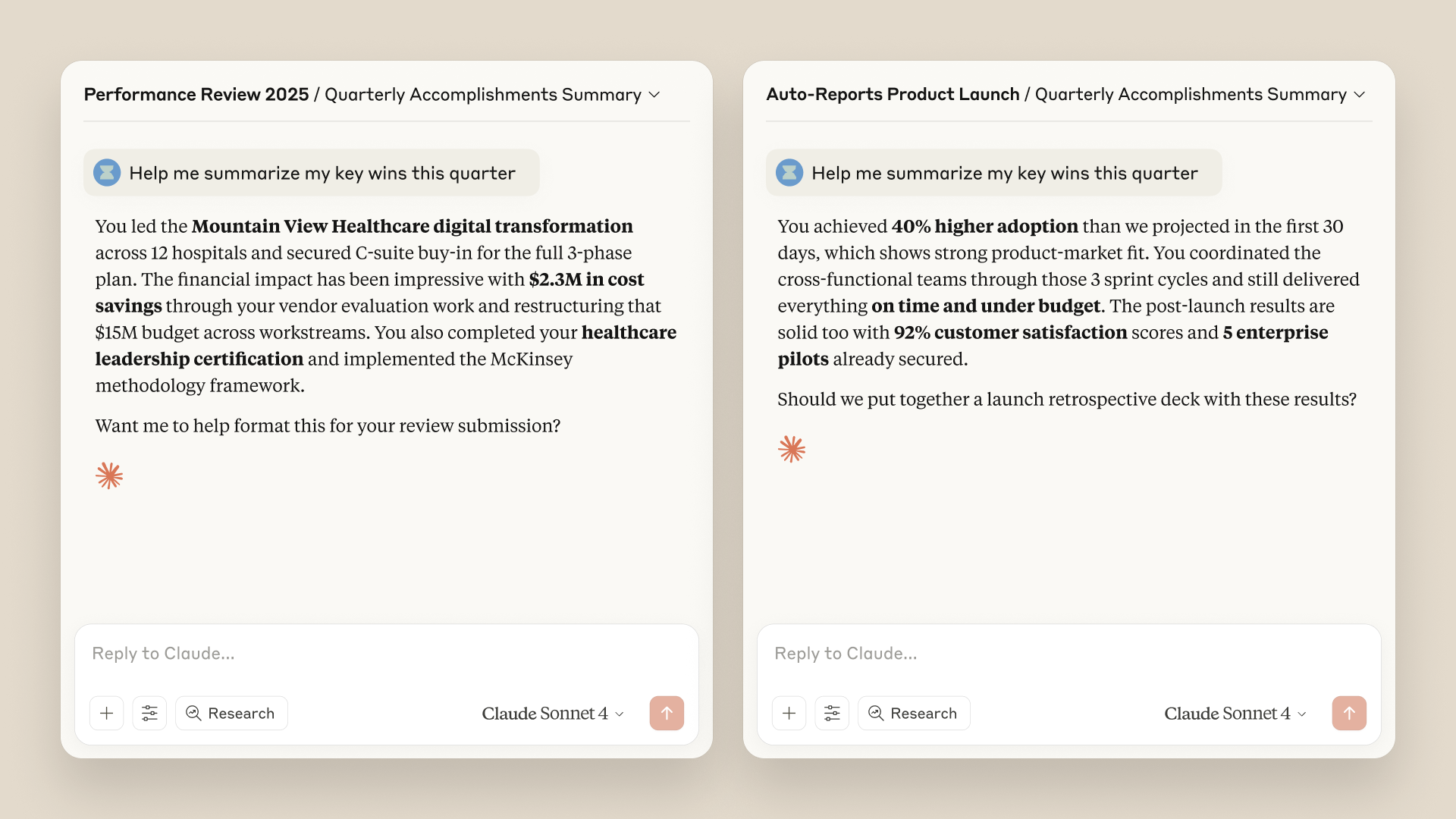
Anthropic's Claude can now remember and incorporate previous conversations into all of your chats over weeks and months, as long as you're a paying subscriber.
Why it matters: Chatbots without memory are like brilliant interns who forget everything once the meeting ends.

Startup raises $5 million to clean up private capital data

Alex Goodwin and Ayo Ekhator both know the messiness of private market data, having worked at top shops like Blackstone and Leonard Green before meeting up at Harvard Business School.
Why it matters: Now they're building something to clean it up; and maybe to clean out some of the younger staffers who enter and analyze such data, first on the LP side and eventually on the GP side.

Sports gambling indictment revives tough questions about integrity

A new federal indictment involving sports gambling and the NBA adds to the growing cloud of suspicion hovering over the integrity of professional sports in the legal betting era.
Why it matters: The scandal threatens to undermine the momentum for the legalized sports betting industry, which has become a major source of revenue for the leagues, TV networks and state governments.
Microsoft bets on friendlier AI companion called Mico

Microsoft rolled out a new AI companion Thursday called Mico, designed to be more personal, supportive and what the company calls "human-centered."
Why it matters: Microsoft's early partnership with OpenAI kept Copilot focused on productivity, leaving the friendliness to ChatGPT. This update blurs that line.

Weber Shandwick inks multimillion-dollar deal with Google for custom AI platform

Global communications firm Weber Shandwick has inked a seven-figure, three-year deal with Google to create a custom, agentic AI platform for its employees and clients, Axios exclusively reports.
Why it matters: Every comms team is experimenting with prompt-driven chatbots, but very few have implemented AI agents — which act autonomously on a user's behalf.

Amazon rolls out AI tool that picks "best" product for you

Amazon's latest AI tool promises to make shopping decisions easier — by choosing the "best" product for you.
Why it matters: Amazon has been a major player in generative AI, largely through its cloud business, but the new Help Me Decide feature marks a bigger push to bring that technology directly to shoppers.

Why the Big Tech's "circular funding" for AI could be the new business normal

Circular funding is all the rage among the largest tech companies powering the S&P 500. The question is whether that could be a problem, or just a new name for an old and proven way of doing business.
The big picture: Nvidia, Microsoft, Amazon and Meta are among the Big Tech firms that have poured billions of dollars into AI startups. The startups in turn spend those funds on chips and cloud services from their investors.


Behind the Curtain: America's energy jam

America faces an economy-shaping energy jam: We've never needed more of it more urgently to meet rising consumer and business demand.
Why it matters: We produce and export more energy than at any point in history. But the data centers powering the AI boom suck up so much energy, so fast, it's increasingly jacking up prices for nearby ordinary residents.
The big picture: This dynamic — surging demand and finite supply — is playing out in community after community. It creates a difficult tension for President Trump, who wants both to accelerate AI and slow energy spikes for consumers.

Exclusive: How Palantir's Alex Karp went full MAGA

In a new book about Palantir and its CEO Alex Karp, journalist Michael Steinberger chronicles how a self-described leftist who said his "biggest fear is fascism" became one of the tech leaders powering President Trump's agenda.
Why it matters: Karp is among a host of tech billionaires who were once harsh critics of Trump, but now fully embrace him.

Investors mull locking arms to back high-risk climate tech

Top climate investors are aligning on an unusual plan to scale high-risk startups after a private coastal retreat sparked a push for joint action.
Why it matters: The investors — including Bill Gates, John Arnold and Vinod Khosla — hope that synchronized investment can break the logjam for deploying new energy projects.
- Cautious unity emerged at the retreat in the face of cooling political and economic momentum for climate action.
First look: DNC bets on new AI and tech tools

The Democratic National Committee is planning to expand the use of AI and tech tools for voter and volunteer engagement in the upcoming midterm and presidential elections after testing them in key state races this year.
Why it matters: Democrats are facing highly competitive elections in Virginia, New Jersey, and Pennsylvania and redistricting fights with Republicans all over the country — and the DNC sees these tools as an edge in 2025 and beyond.

"Analog bags" are in. Doomscrolling is out.

The latest must-have accessory is a "stop-scrolling bag" — a tote packed with analog activities like watercolors and crossword puzzles.
Why it matters: We spend hours glued to our screens. "Analog bags," as they're also called, are one way millennials and Gen Zers are reclaiming that time.