Axios Future of Defense Summit: The race to innovate amid global threats

Add Axios as your preferred source to
see more of our stories on Google.
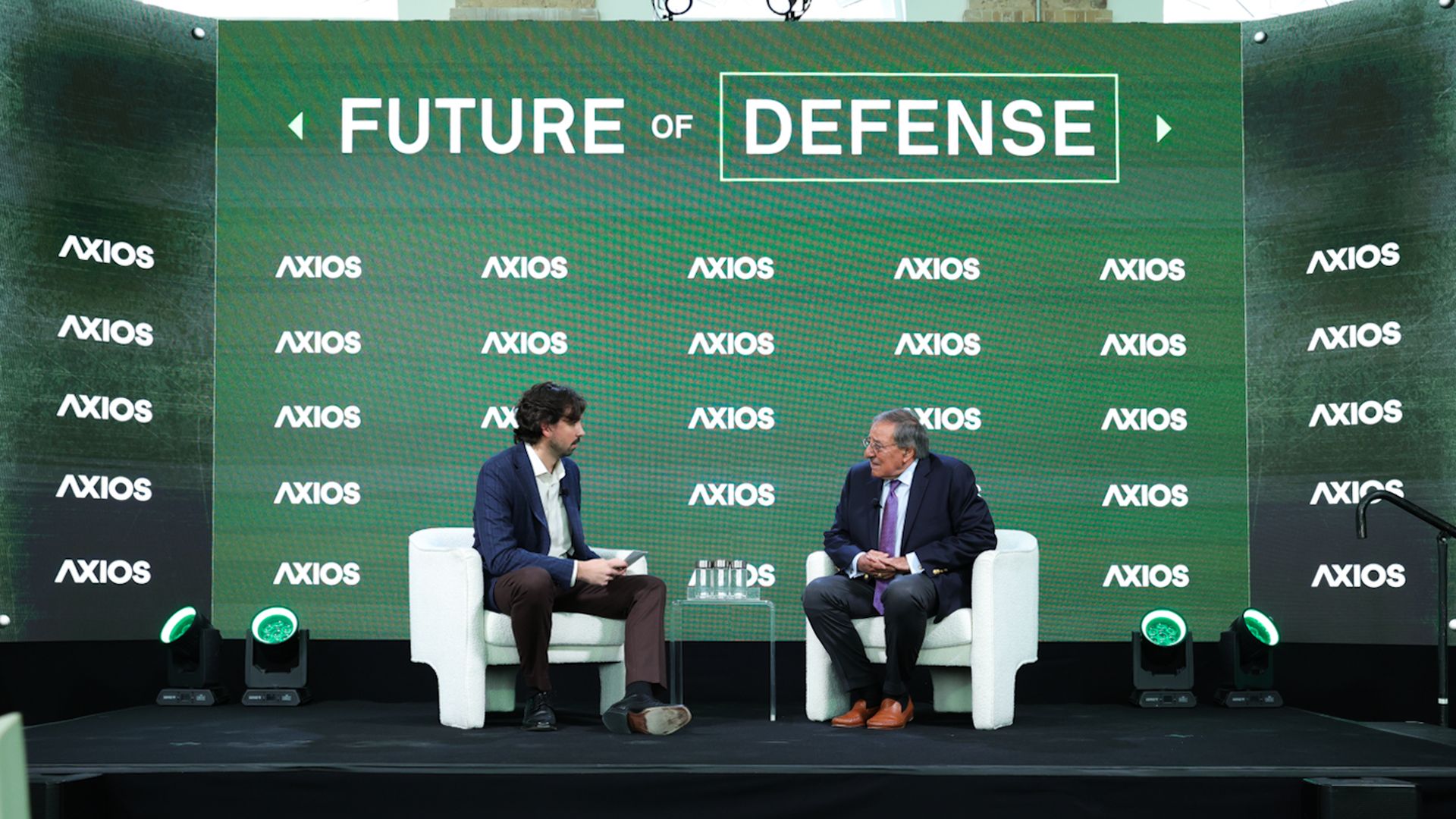
Axios' Colin Demarest and former Defense Secretary Leon Panetta at the second annual Future of Defense Summit in Washington, D.C. Photo credit: Bryan Dozier on behalf of Axios
WASHINGTON, D.C. – Defense and national security leaders voiced concerns about political dysfunction, foreign adversaries and the need for stronger military and cyber readiness, at Axios' second annual Future of Defense Summit.
Why it matters: With AI and new technologies constantly advancing new military weaponry, defense leaders said it's vital for the U.S. to take steps to invest in innovations to sustain America's strategic edge amid rising global competition.
The Oct. 22 summit was sponsored by Lockheed Martin, Shield AI and Booz Allen.
Here are some takeaways:
Former Defense Secretary Leon Panetta called gathering top generals at Quantico for Defense Secretary Pete Hegseth's Sept. 30 speech a "waste of time."
- "These are busy guys, they're on the front lines, for God's sakes. You don't call them back here to give them a political speech."
- Panetta also said the government shutdown "sends a fundamental message of weakness to all of our adversaries that democracy is not working."
Sen. Deb Fischer (R-Neb.) warned that China's military arsenal has "advanced at a breathtaking speed" and the U.S. needs to meet that challenge.
ICE is expecting to deport more than 600,000 unauthorized immigrants by the end of the year, U.S. border czar Tom Homan said.
- When asked about ICE agents' aggressive tactics, Homan said ICE is "doing the same thing we've done for 40 years. The difference is right now ICE officers are under great threat, over 1,000% increase in the attacks. ... These men and women are putting themselves at great risk."
Congress should be briefed more on the U.S. military strikes off the Venezuelan coast, Sen. Todd Young (R-Ind.) said. "Congress isn't hearing enough — in any form, including a public forum."
- After President Trump canceled his meeting with Russian President Vladimir Putin, Young said Trump should send Tomahawk missiles to Ukraine and "ratchet up the pressure" on Putin.
When it comes to the golden dome, Northrop Grumman chair, president and CEO Kathy Warden said the architecture for Golden Dome and its capabilities "are appropriately being protected by the U.S. government."
Taiwan's Representative to the United States, Alexander Tah-Ray Yui, said Trump's second term is "quite different" than previous administrations. "I would describe the beginning of his term as a 'Christmas period'... you have an advent calendar… and every day is still a surprise."
Content from the sponsored View From the Top conversations:
Frank St. John, Lockheed Martin chief operating officer, discussed the company's vision for the golden dome, saying it's all about "modern deterrence."
- "When we look at the threats that we're seeing in real world events from ballistic missiles, cruise missiles[and] armed drones, we understand that we need to develop a deterrence capability to prevent that from happening in our homeland." St. John added this will take an all-industry approach.
Ryan Tseng, Shield AI co-founder and chief strategy officer, highlighted their new autonomous aircraft X-BAT, which was unveiled at an Axios Live event the evening before the Future of Defense Summit.
- "X-BAT came from us taking a look at the problem in the Pacific and basically seeing a real challenge with runway protection and survivability," Tseng said. "And air power, [as] we can see in Ukraine, is so essential to establishing dominance on the battlefield and when you're unable to project it, it can turn into a really difficult conflict."
- The new aircraft has the capability to launch and land vertically, mitigating any runway vulnerability.
