Joe Gebbia — a co-founder of Airbnb who was named by President Trump this week to be the first U.S. chief design officer — tells Axios he wants to update federal websites to an "Apple Store-like experience."
"That means it's beautifully designed," Gebbia told us, "has great user experience, and it runs on modern software" — three strikes when it comes to dealing with today's government.
Why it matters: Airbnb — which over 17 years has become a ubiquitous verb for what used to be a classified-ad section at the back of the newspaper — applied those same three principles to renting a vacation home. "There's no reason why the government can't have that, too," Gebbia said.
Cloud security provider Netskope on Friday filed for an IPO, joining a growing number of tech companies planning to go public after Labor Day.
The big picture: Netskope is losing money, but that's been true of most 2025 tech offerings (minus Figma). What they've also had in common are climbing revenues.
President Trump on Friday told reporters that chipmaker Intel has agreed to sell around a 10% equity stake to the U.S. government. [Update: Intel confirmed the deal after market close]
Why it matters: This is part of Trump's new era of pay-me capitalism.
As Gen Zers move away from alcohol-centric events, a new —quieter — type of partying is on the rise.
The big picture: The "soft clubbing" trend features quieter, less chaotic and earlier events, such as dance parties at coffee shops or wellness-based activities like meditation and yoga, giving 20-somethings a more authentic way to connect with their peers and meet new people.
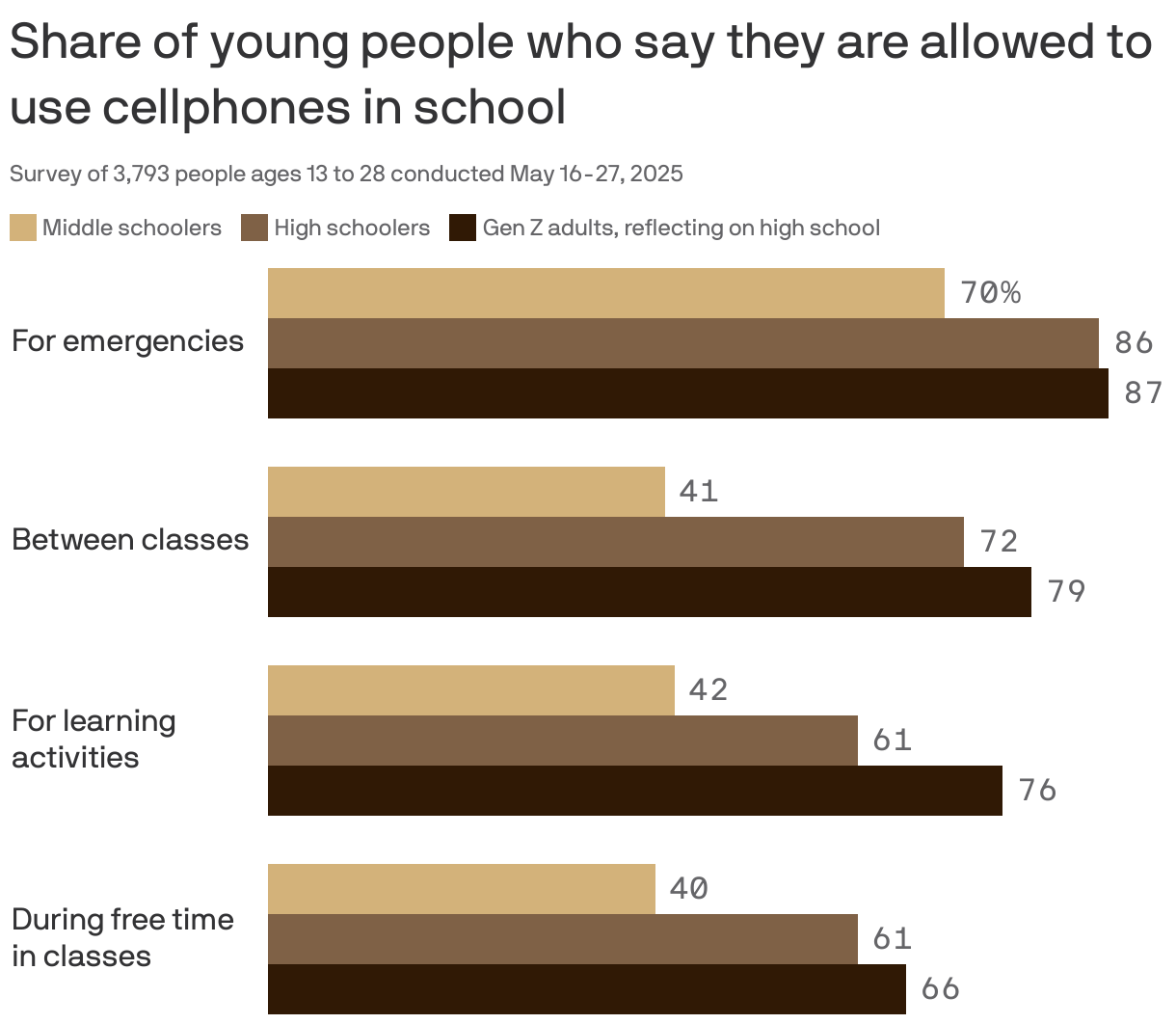
Data: Walton Family Foundation, Gallup; Chart: Axios Visuals
Cellphones aren't on school supply lists as Gen Alpha heads back to class this fall with administrators tightening bans in an effort to combat COVID-era learningloss.
Why it matters: Survey data from the Walton Family Foundation and Gallup shared exclusively with Axios shows attitudes toward phones in schools have shifted drastically in the space of a single generation as educators grapple with distractions and teens' wellbeing.
The world of AI-generated, adversarial disinformation is growing rapidly — and it's already indistinguishable from run-of-the-mill social posts.
Why it matters: Foreign disinformation has become a highly disruptive force in the U.S., with Russia and other foreign powers seeking to influence elections and inflame discord. Generative AI is now making it far more effective and harder for average users to detect.
Bots will overrun humans on the internet in generative AI's next massive disruption.
Why it matters: The internet connected humanity — but an AI-driven shift to a machines-first network will force us to rewrite 30 years of habits, expectations and beliefs about how online life works.