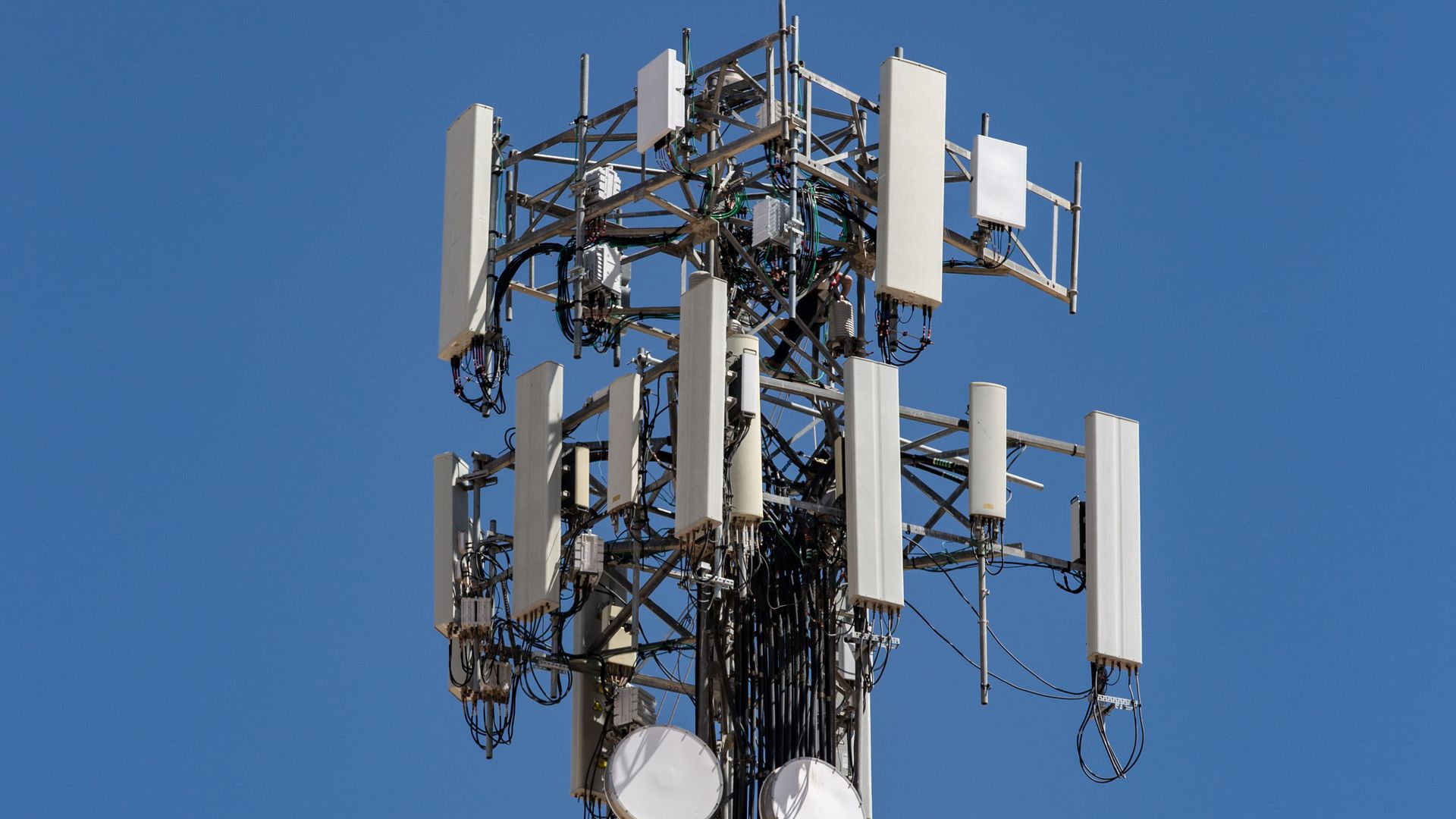
Cell service to thousands of Americans was restored after network outages on Thursday left customers with AT&T and other service providers unable to place calls, send texts or use the internet on their mobile phones.
Why it matters: The disruptions left some people unable to contact emergency services by dialing 911, prompting safety warnings from authorities.
AI makers' desperate need for millions of powerful chips took center stage on Wednesday as the world's most valuable chipmaker, Nvidia, reported another quarter of massive revenue growth and longtime leader Intel reported progress on reinvigorating its manufacturing operation.
Why it matters: Nvidia's fortunes have soared along with demand for its chips to train and run AI systems — but the rest of the semiconductor industry stands to get a major boost from AI, too.
Nvidia's stock popped after hours following its latest earnings report, which showed the AI boom is still booming.
By the numbers: Revenue from the chip maker's data center unit, which fuels AI efforts for thousands of organizations, reached $18.4 billion in its fourth quarter compared to analyst expectations of about $17.1 billion and up about 409% from $3.6 billion last year in the same period.
BuzzFeed has sold Complex, the entertainment media brand it acquired for $300 million in 2021, to livestream shopping platform NTWRK for $108.6 million, the companies announced Wednesday. BuzzFeed also announced a plan to cut expenses, which includes 16% layoffs.
Why it matters: The deal represents an enormous strategy shift for BuzzFeed, which went public two years ago in order to raise money to acquire companies and scale its offerings. Now, it's forced to offload some of its most lucrative franchises as it struggles to survive on the public market.
Carbon removal is hardlya sure thing, and a useful new Substack post explores what might cause a failure to launch.
Driving the news: Nan Ransohoff of Frontier — a group of huge corporations building market demand — published highlights of their "red team" exercise to identify and overcome problems.
Why it matters: Carbon removal could complement clean energy and industrial tech and even help bring temperatures back down if the world misses Paris goals.
Demand is rising but remains far below what's needed to achieve the multiple gigaton-scale per year envisioned to make removal a viable solution.
The big picture: Getting on track for science-based 2050 targets means (back of the envelope) around 50-100 million tons of removal by 2030. At an average cost of $200/ton (or lower), that's $20 billion annually, vastly more than today's trajectory.
State of play: Among other challenges, "there still probably aren't enough ideas being tried, and there isn't enough redundancy [with] the best ones," Ransohoff writes.
Other risks include local backlash to projects and a market that "ends up fraudy/scammy and undifferentiated from low-quality offsets today," she adds.
Zoom out: The European Commission and Parliament unveiled a tentative deal on a system for certifying carbon removals and other CO2 management.
Confidence that removal companies are achieving what they claim is important for creating a viable long-term industry.
What they're saying:Via S&P Global, European parliament member Lídia Pereira, a key architect, "said this deal will help prevent greenwashing and foster private investment in carbon removals and develop voluntary carbon markets."
Apple on Wednesday unveiled a new, free Apple Sports app.
Why it matters: Consumers already have access to a slew of sports data and scores online, "but not in a single place and not that easy to use," said Eddy Cue, Apple's senior vice president of services.
Beyoncé became the first Black woman to top Billboard's Hot Country Songs chart, multipleoutlets reported, with a No. 1 spot for her single "Texas Hold 'Em."
Why it matters: Beyoncé's new music — her first to make it on the country chart — revived a debate about diversity and inclusion in the genre traditionally dominated by white artists.
Volker Türk, the UN's high commissioner for human rights, was in Silicon Valley last week to deliver a simple message to tech companies: Your products can do real harm and it's your job to make sure that they don't.
Why it matters: Technologies like artificial intelligence hold enormous potential for addressing a range of societal ills, but without effort and intent, these same technologies can act as powerful weapons of oppression, Türk tells Axios in an interview.
Apple will start rolling out a new encryption standard for iMessage that will help protect against efforts to crack its code by quantum computers, the company announced Wednesday.
Why it matters: Apple says this new protection is the strongest offered by any messaging system — even privacy-minded Signal — and it could keep hackers from being able to read stolen messages even as quantum computers improve their ability to defeat encryption.
President Biden will sign an executive order Wednesday aimed at toughening cybersecurity at U.S. shipping ports and elsewhere in the maritime sector.
Why it matters: Chinese government-linked hackers have already shown interest in targeting U.S. critical infrastructure, including ports, as it prepares for a potential invasion of Taiwan.