Microsoft’s Bing search engine and Edge browser are now equipped with an AI-powered image creator.
Why it matters: The tool uses OpenAI’s DALL-E to generate images from text prompts, and its rollout today reflects how quickly Microsoft has been building on its OpenAI partnership.
As the Tennessee state government continues to pass legislation targeting transgender and LGBTQ rights, members of the cybersecurity community are questioning a major industry conference's decision to host next year's event in Nashville.
Driving the news: The Women in Cybersecurity (WiCyS) nonprofit announced over the weekend it plans to host its 2024 summit in Nashville.
One of the most popular dark-web data breach forums appears to be shutting down after federal agents arrested its top administrator last week.
Driving the news: The new administrator of the forum, who goes by the handle "Baphomet," said Tuesday they plan to shut down BreachForums, noting that "it's the only safe decision."
OpenAI CEO Sam Altman's plan for identity verification is raising serious questions about biometric privacy and the options companies pursue to replace easy-to-guess passwords.
Driving the news: Worldcoin, a crypto project co-founded by Altman, debuted its highly anticipated, years-in-the-making World ID verification program last week. It heavily relies on iris scans as proof of identity.
Google has started allowing some users in the U.S. and U.K. to start accessing the experimental version of Bard, its ChatGPT rival.
Why it matters: Companies are rushing to incorporate generative AI into their products both to show leadership and to gather the feedback needed to rapidly improve such products, which are prone to making up facts.
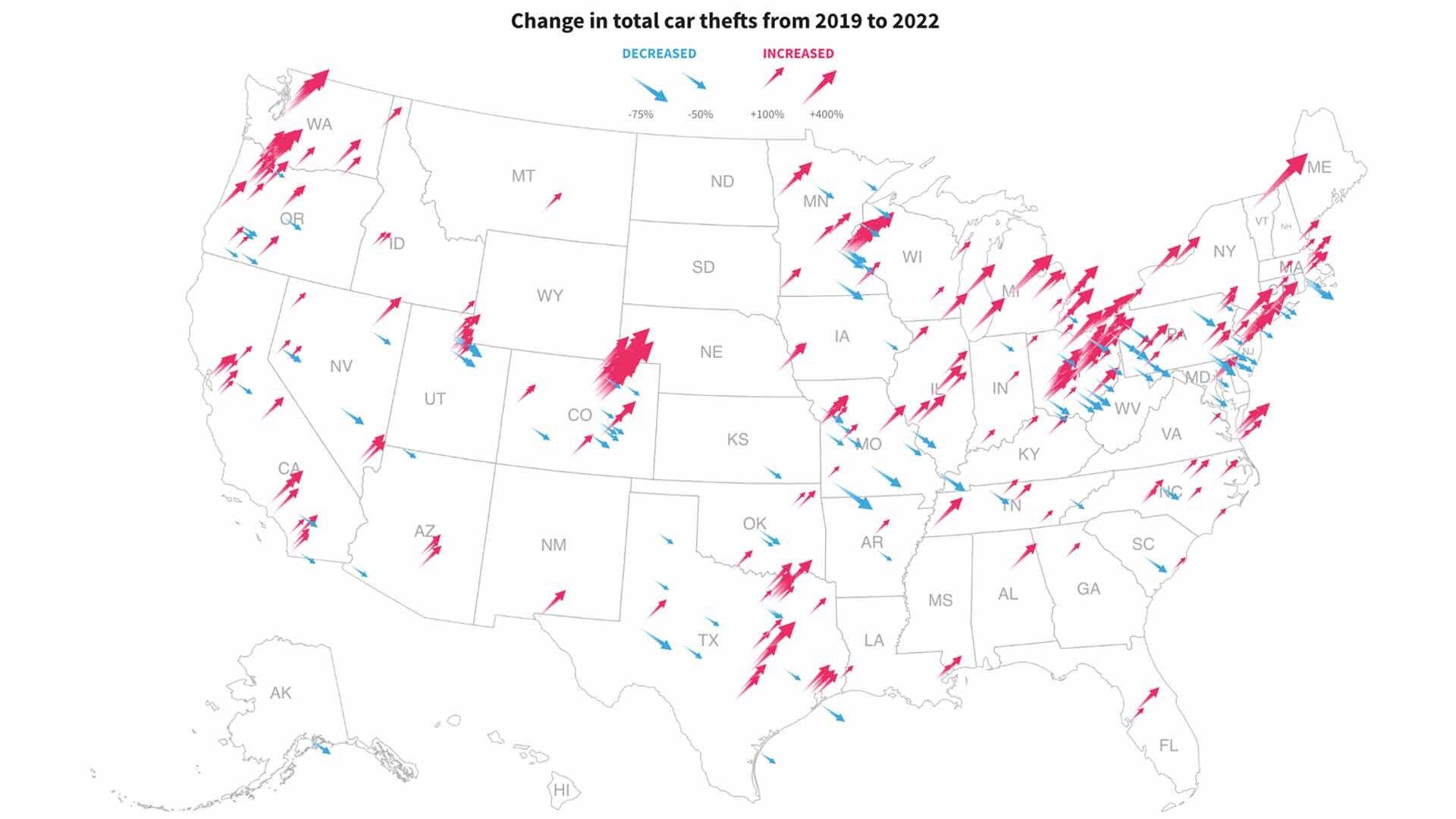
Car thefts are on the rise across multiple cities nationwide, according to new data, and a recent social media trend may be to blame.
Driving the news: Major cities across the U.S., including Milwaukee, Cleveland and Chicago, saw a significant rise in car thefts from 2019 to 2022, according to new data from USAFacts. Many are pointing to a recent TikTok trend showing how to steal Kia and Hyundai vehicles.
Adobe is taking the wraps off Firefly, a new family of generative AI tools it says can help transform the emerging technology into something that more design professionals can embrace instead of fear.
Why it matters: Generative AI has taken the world by storm, but has received a mixed response from artists; some see it as a new tool to harness, others see it as a job killer and a form of theft.
OpenAI's newest generative AI tool GPT-4 is more likely to spread misinformation — when prompted — than its predecessor GPT-3.5, according to a new report shared exclusively with Axios by NewsGuard, a service that uses trained journalists to rate news and information sites.
Why it matters: NewsGuard's findings serve as a reminder that new technologies require validation and testing from many sources.
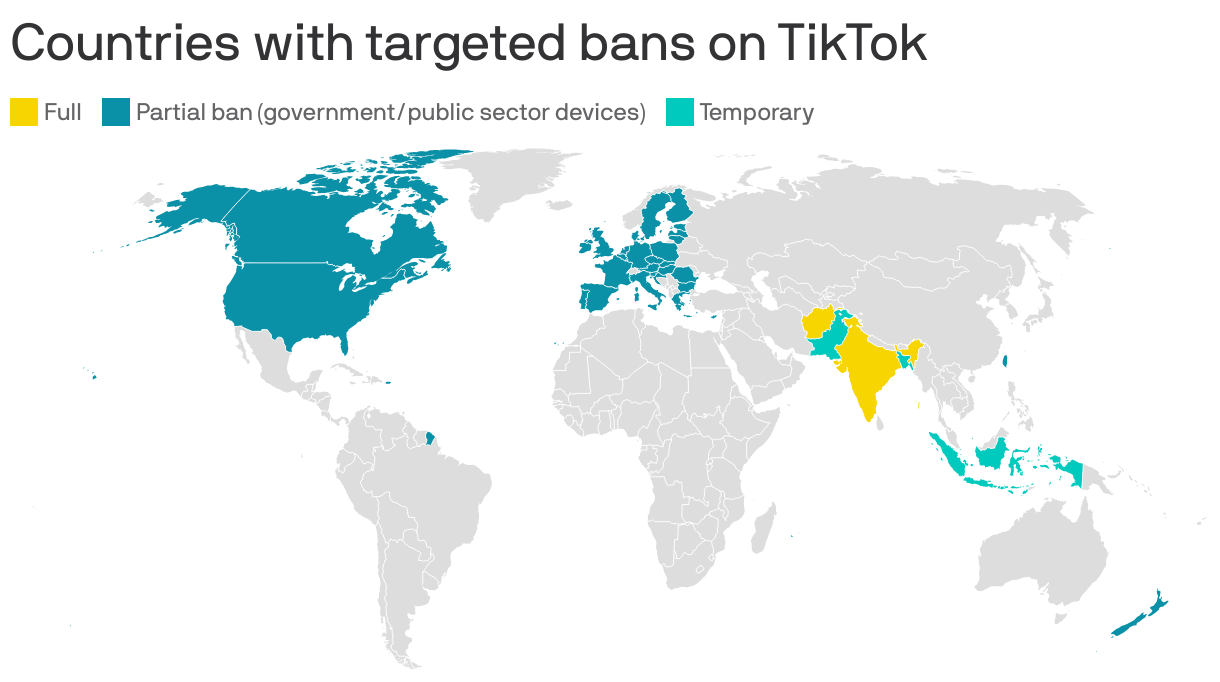
Correction: The map has been updated to show that Indonesia's ban on TikTok was not permanent but temporary and has been lifted. Data: Axios Research; Chart: Rahul Mukherjee/Axios
More than a dozen countries around the world have introduced full, partial or public sector bans on TikTok amid heightened national security concerns.
Why it matters: Most of the bans that have been introduced are limited to public sector or government devices. But a growing number of private companies are unilaterally blocking the app as the U.S. government considers an outright ban if TikTok's Chinese owners don't sell the U.S. version of the app.