At some point last year, both Apple and Meta handed over customer information to hackers who impersonated law enforcement to make emergency requests, Bloomberg reported Thursday.
Why it matters: The incidents display yet another way that hackers have managed to get their hands on customer information, in addition to breaking into systems or luring workers to reveal their credentials.
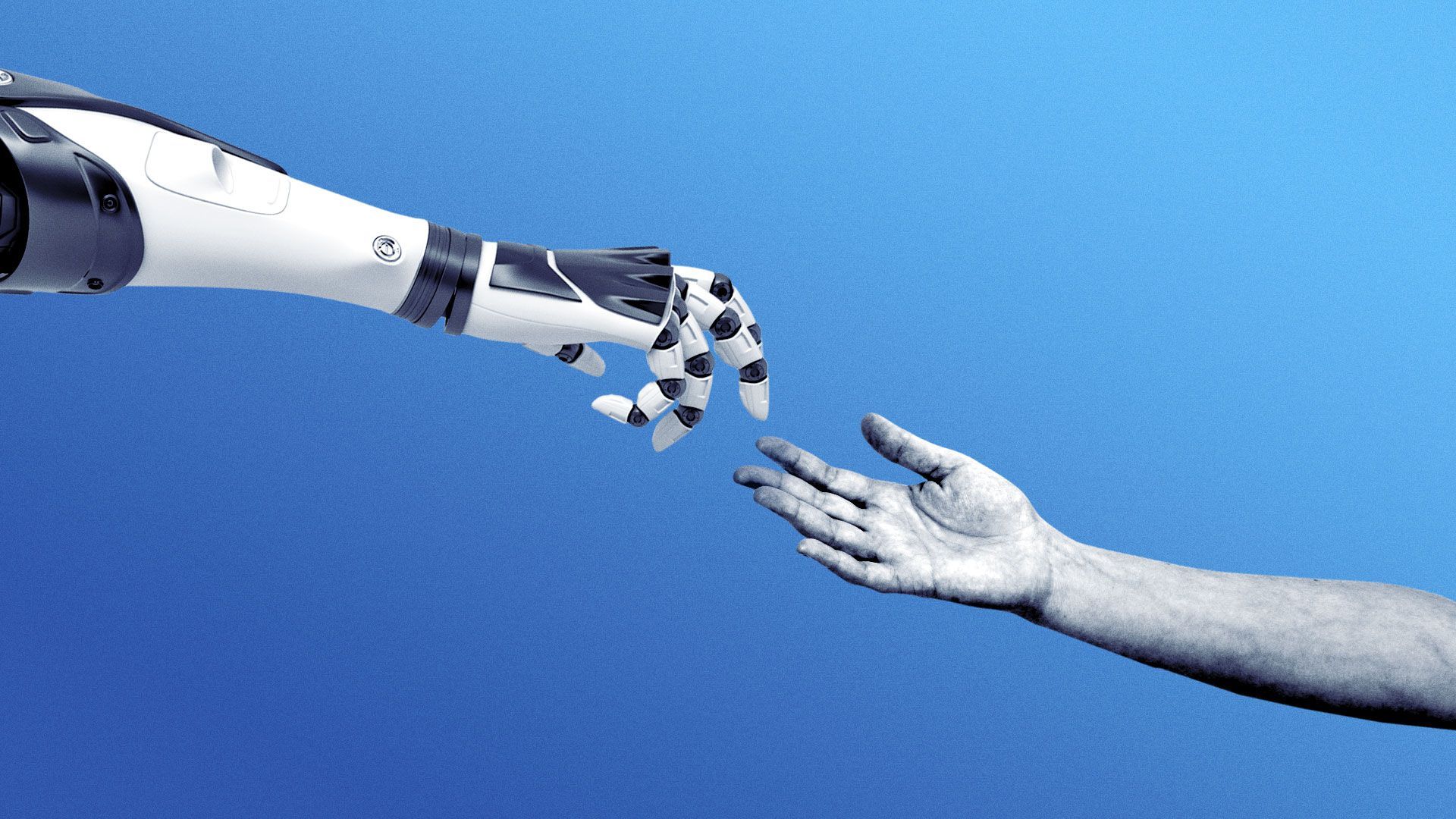
A robot-assisted way of life is becoming more and more the norm as companies have improved their technologies and the cost of those technologies have come down.
Why it matters: As employers continue to struggle to find workers to fill certain jobs, and the world's population ages creating a smaller future workforce, automation in many fields is a necessity.
A proposed class-action lawsuit against Nintendo over malfunctioning controllers now hinges on whether two children can sue the house of Mario and Zelda.
Driving the news: Lawyers for families suing Nintendo in the case Sanchez et. al. v. Nintendo of America say in a new court filing that an arbitrator has ruled that two mothers in the case can’t proceed with a class action. But they intend for the children to press on.
Meta researcher Angela Fan is employing a novel approach to get Wikipedia to include more biographies of women: She's using AI to write the rough drafts.
Why it matters: Only about 20 percent of those profiled on the online encyclopedia are women, and many other groups are underrepresented on the site.
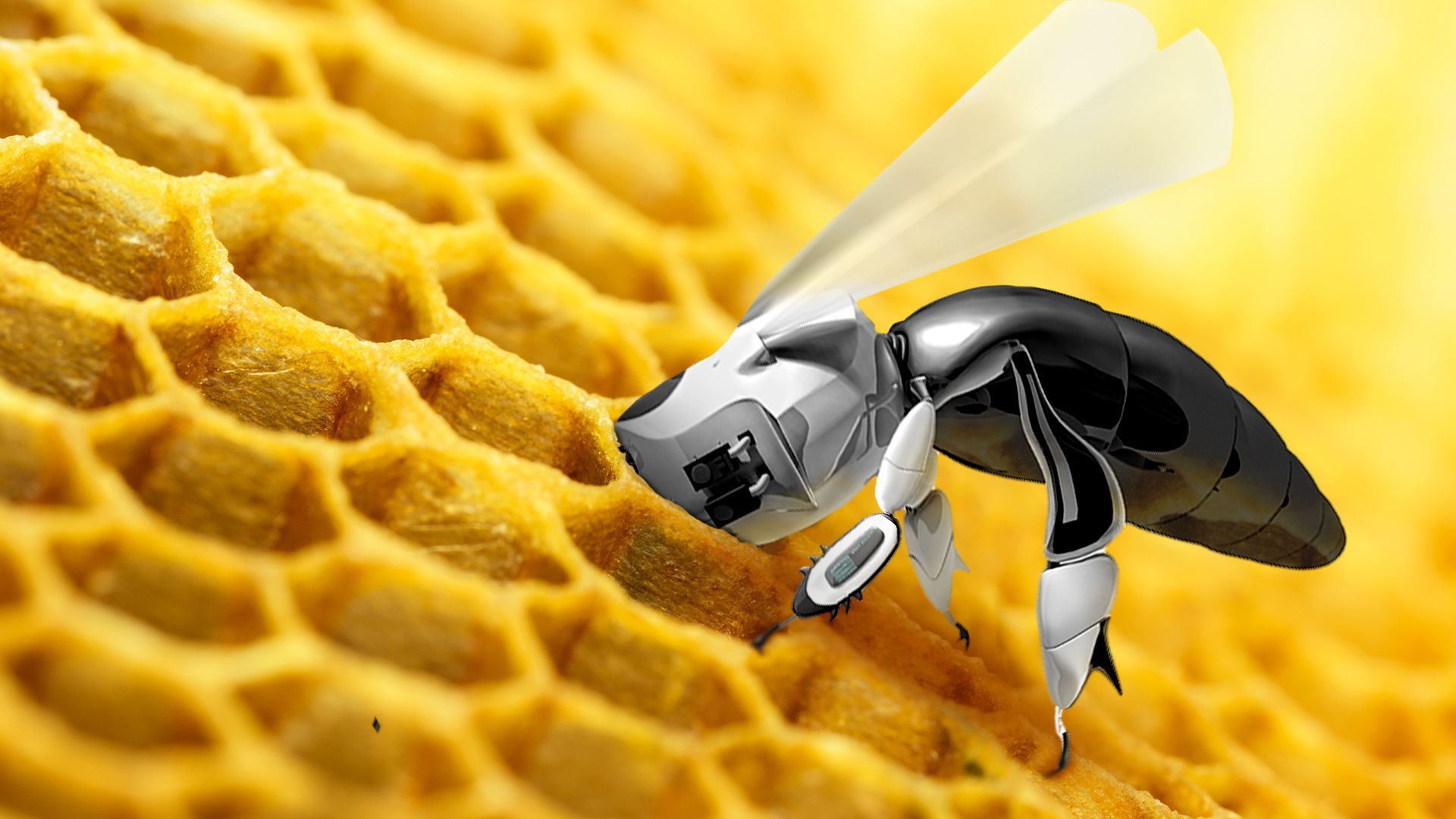
Beewise, an Israeli developer of robotic beehives, raised $80 million in Series C funding led by Insight Partners.
Why it matters: Bees are vital to the world's food supply, but their hives are subject to "colony collapse disorder," during which most worker bees in a colony disappear. Theorized causes range from pests to pesticides. Beewise says its tech can monitor and guard against such threats.
A small Silicon Valley startup is announcing Wednesday that it is close to having a working prototype of a contact lens capable of showing basic information such as driving directions using only eye movements to control the display.
Why it matters: While smart glasses are often touted as a fixture of our augmented-reality future, a handful of companies are taking things in a different direction — focusing on putting smarts into contact lenses instead.
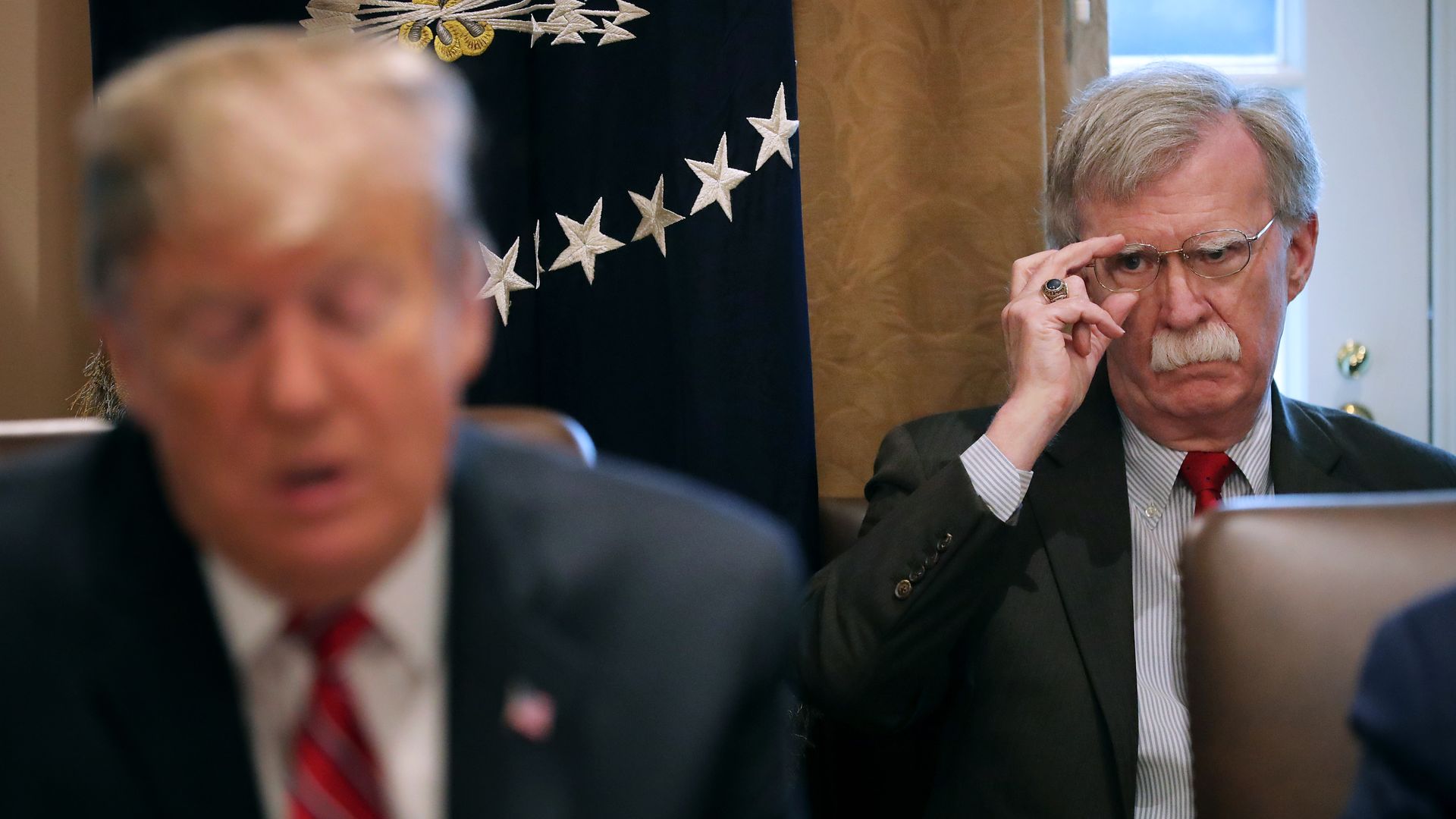
Former national security adviser John Bolton told CBS News Tuesday that former President Trump used the phrase "burner phones" several times in discussions during his presidency.
Why it matters: CBS and the Washington Post reported that White House records submitted to the House panel investigating the Capitol riot show a seven-hour, 37-minute gap in Trump's phone logs for Jan. 6, 2021 — including the period when the Capitol was stormed. The Jan. 6 select committee is investigating whether a disposable "burner phone" was used, per the outlets.
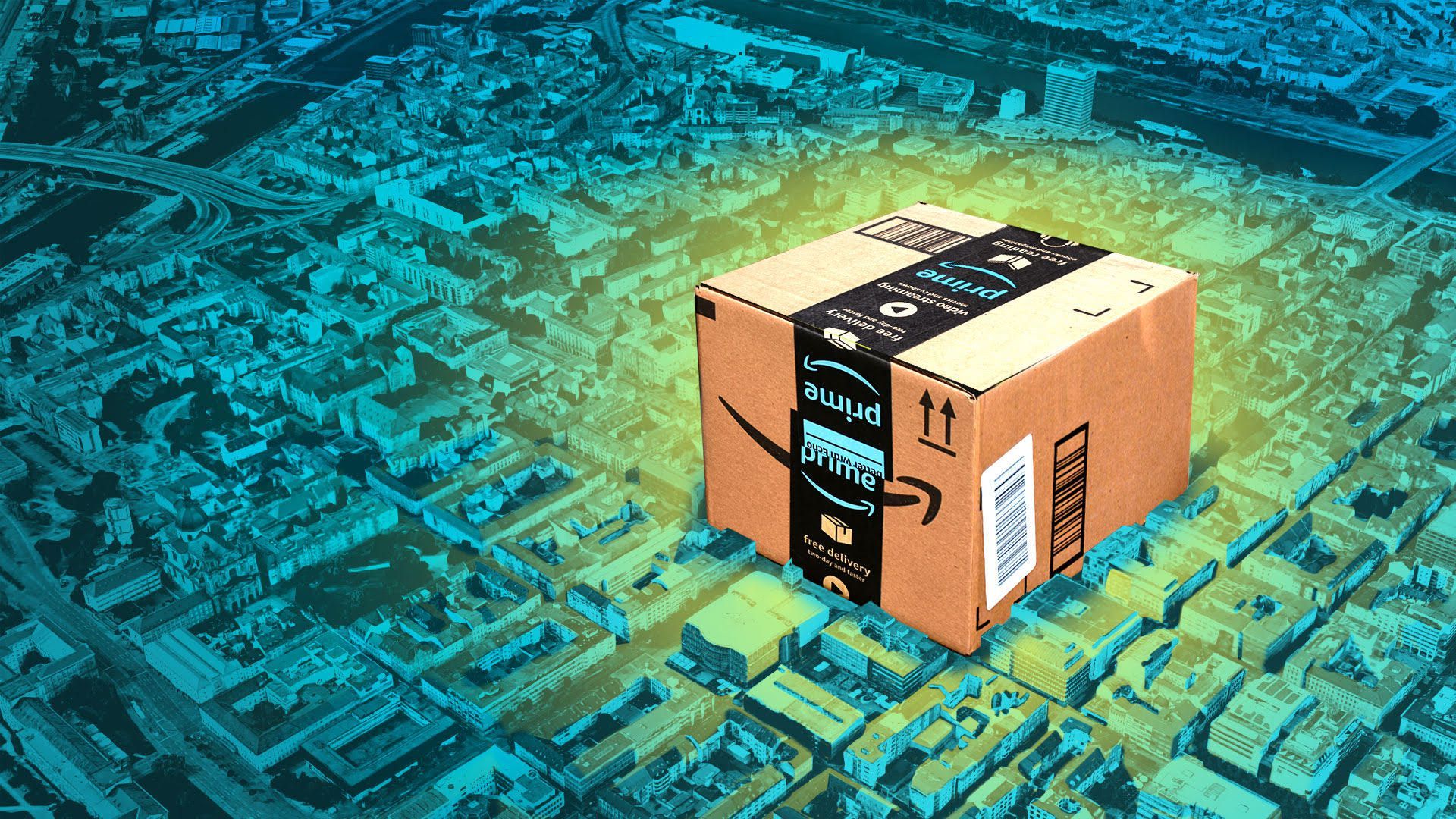
Small businesses say Amazon's dominance is one of their most significant challenges in a new survey Wednesday from an anti-monopoly group shared exclusively with Axios.
Why it matters: Tech giants and their critics are both looking for support from small businesses in their lobbying battles over antitrust bills, due to the outsized sway small firms can hold with lawmakers.
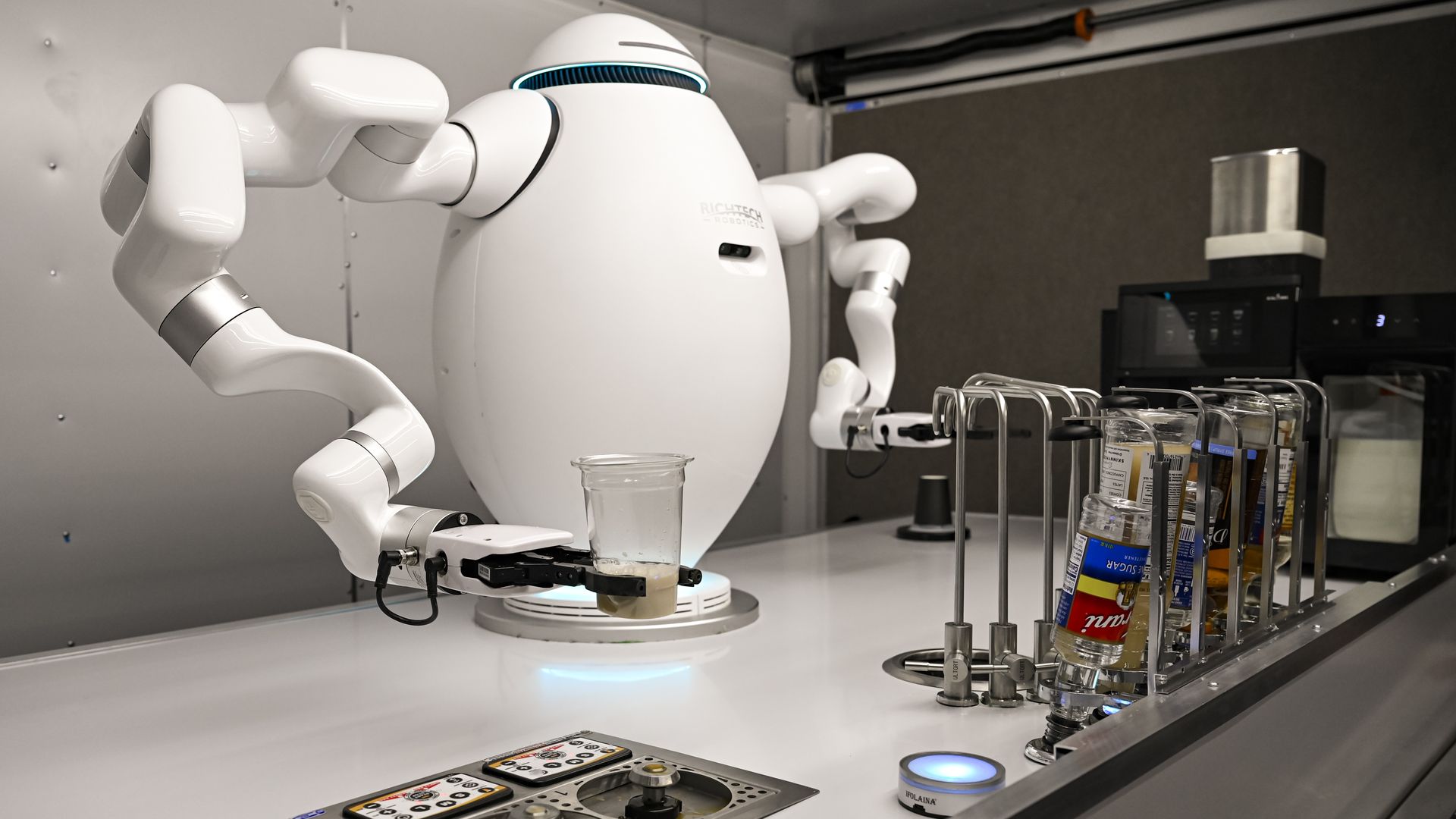
Hot trends at this year's Bar & Restaurant Expo in Las Vegas: robot bartenders (who presumably keep all your secrets), booze-free cocktails and wobble-free tables.
Why it matters: The show — which was back after a two-year break for the pandemic — featured lots of automation and touchless technology, the better to avoid the spread of germs.
This year's Turing Award, often dubbed the Nobel Prize of the computing industry, is going to Jack Dongarra, a pioneer in the field of supercomputers.
Why it matters: The arrival of supercomputing — machines that put massive numbers of processors working in parallel to tackle complex scientific problems — has paved the way for everything from the sequencing of genomes to modeling weather patterns to simulating nuclear war.
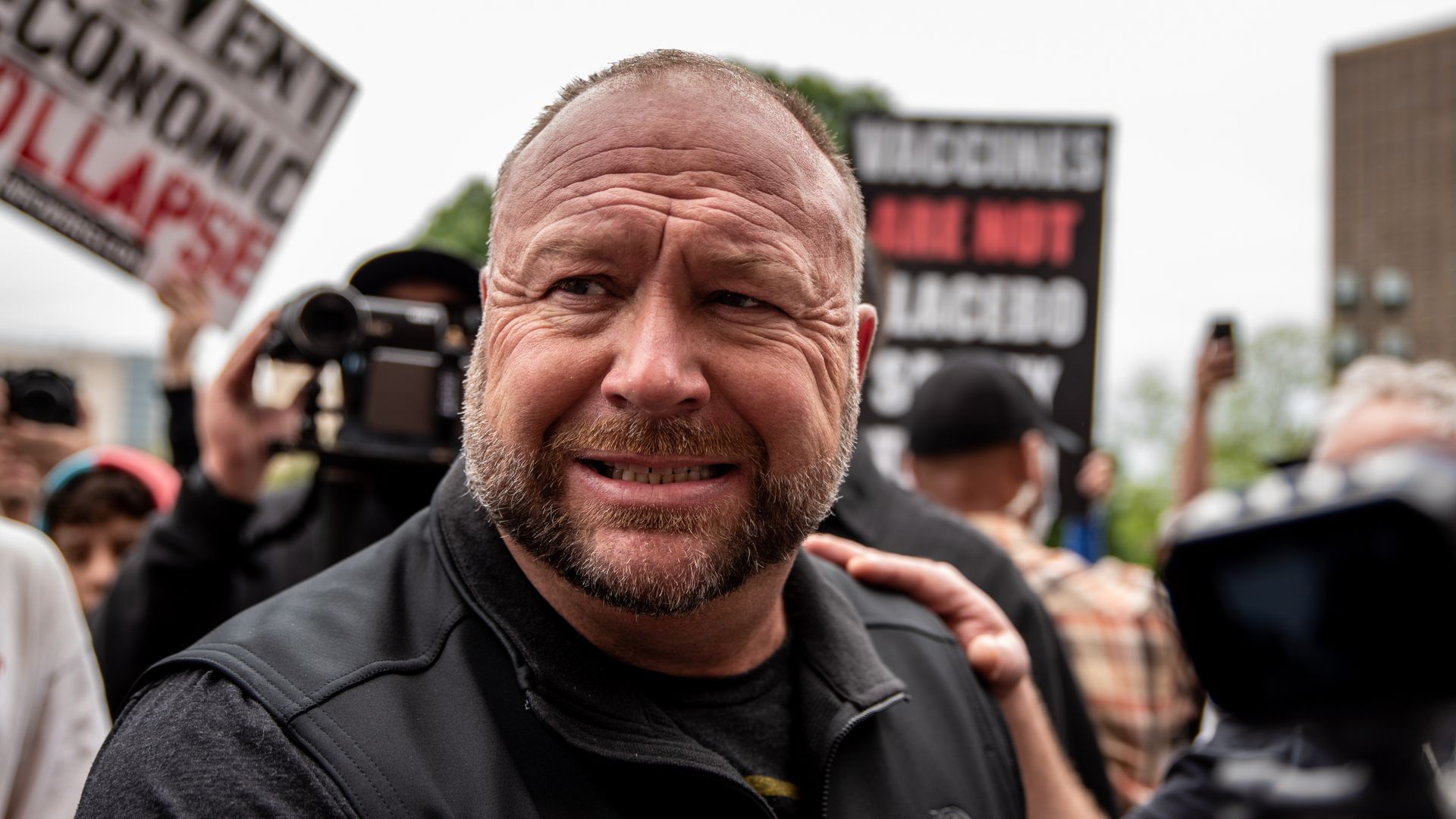
The families of victims of the Sandy Hook Elementary School shooting massacre on Tuesday rejected conspiracy theorist Alex Jones' offer to settle with each of them for $120,000, per AP.
Why it matters: The Infowars host is due to face a defamation trial to determine damages after a Connecticut judge ruled last November that Jones is liable in a lawsuit brought by the victims' families after he falsely claimed the 2012 mass shooting was a hoax.