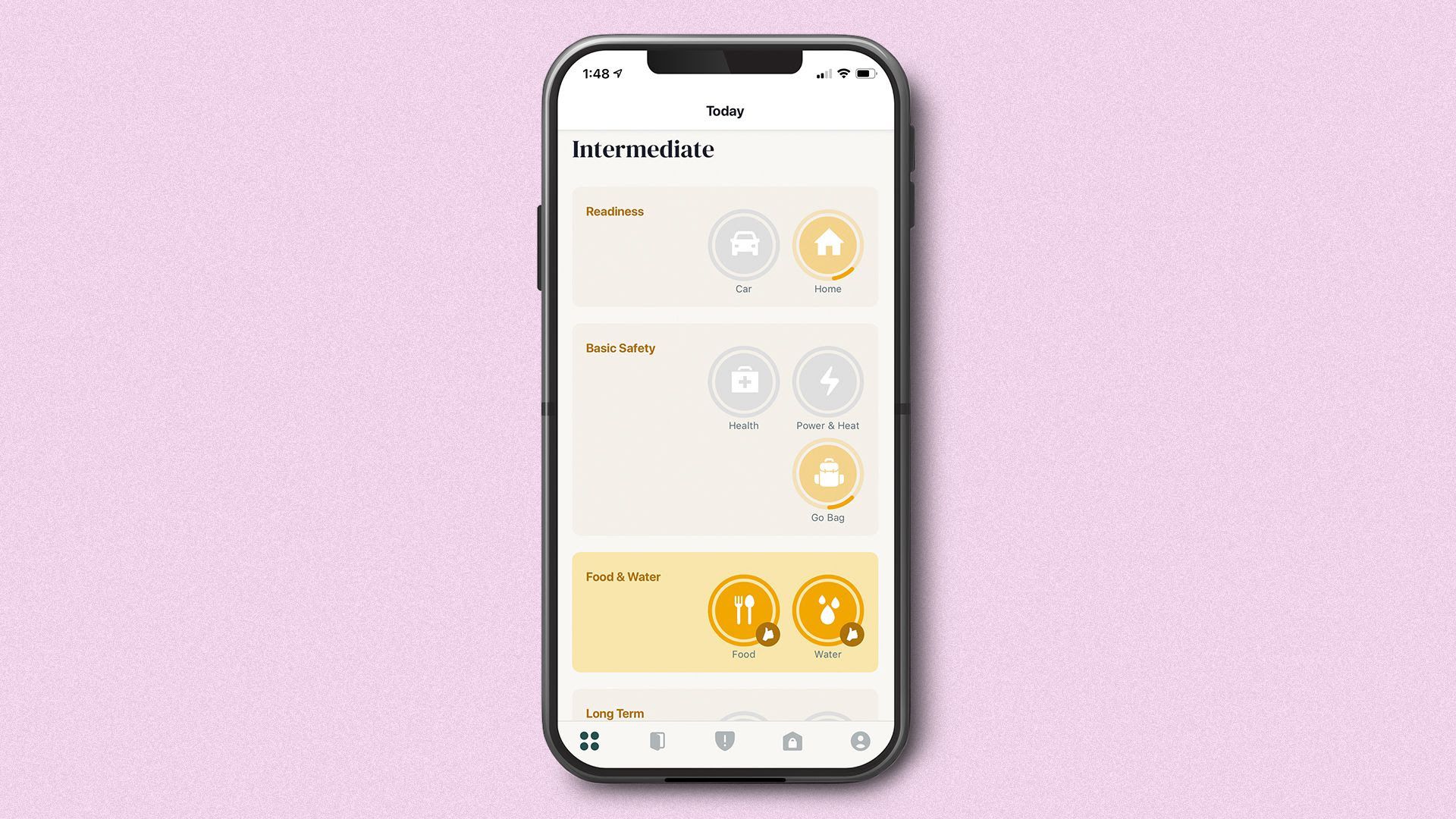
A new app guides users through the basic steps needed to prepare for natural disasters.
Why it matters: 2020 has already set records for wildfires on the West Coast, and Hurricane Delta — the 25th named storm of the season — just made landfall along the Gulf Coast. But you can shield your family from the worst if you prepare first.
Pakistan has become the latest country to ban the Chinese app TikTok, citing the platform's failure to block "immoral and indecent" content, per the AP.
Why it matters: TikTok has repeatedly found itself at odds with foreign leadership, including the U.S., wherein President Trump threatened to ban app downloads over privacy concerns. India outright banned TikTok earlier this year.
Roadie, an Atlanta-based company that got its start using gig drivers to deliver lost baggage for Delta Air Lines, now figures to play a big role in delivering holiday purchases this year.
Why it matters: Demand for same-day shipping exploded during the pandemic, and is likely to increase even more during the holidays. Traditional parcel carriers have strained to keep up, often slapping surcharges on deliveries, leaving a lane for Roadie to help manage peak demand.
After two years of tightly controlled operation in Chandler, Ariz., Waymo is opening up its driverless taxi service to the public.
Why it matters: This is a big deal — a real driverless taxi service, with no one in the driver's seat — that is open to anyone who downloads the Waymo One app.
Twitter said Friday it would be making a slew of significant new product and enforcement changes to help clamp down on misinformation leading up to the election.
Why it matters: It's the most aggressive set of changes that Twitter has rolled out to date to curb election-related misinformation on its platform.
AMD is in advanced talks to acquire rival chip company Xilinx in a deal that would value the latter at more than $30 billion, according to the Wall Street Journal.
Why it's the BFD: This is the latest in a string of notable semiconductor deals, including Nvidia's recent agreement to acquire ARM from SoftBank for $40 billion.
The government has a newfound interest in looking into discrimination in the tech industry, which is overwhelmingly male and has a big problem with underrepresentation of Black and Latinx employees.
The Trump administration, far from seeking greater diversity, is asking whether corporate goals to boost Black representation are a form of discrimination.
Why it matters: Experts say concrete goals are needed to ensure aspirations turn into results.
Peloton, the networked fitness-bike seller, has found itself in the position of having to scour its forums and leaderboards to remove hateful speech.
The bottom line: It highlights how toxic the social media environment is in 2020. If it's online and social, it's probably going to require moderation.
Mira, a NYC-based startup that has users pay a membership fee to access basic health care services at fixed prices, has raised $2.7 million in funding from FlyBridge Capital Partners, Newark Venture Partners, Precursor Ventures, Plug and Play, CityLight, and angel James Chung.
Why it matters: Despite the Affordable Care Act enabling access to health coverage for more Americans, many remain uninsured, skipping out on preventative care and struggling to pay out of pocket for services.
A group of 11 technology, software and advertising organizations is calling on the Trump administration to rescind an executive order intended to stop federal agencies and contractors from conducting anti-racism trainings.
Catch up quick: The White House order describes its goal as "to combat offensive and anti-American race and sex stereotyping and scapegoating," but its practical result is to ban diversity and inclusion programs, and critics have argued it will undermine progress toward reducing systemic racism in business, education and government.
Social media platforms are scrambling to crack down on domestic actors who have picked up foreign meddling techniques to try to influence the 2020 election — an effort that's resulted in a spate of action against U.S.-based conservatives.
The big picture: Domestic influence campaigns are not new, but tech firms are more aware of them this cycle. The companies also have more help from intelligence agencies and media companies to help uncover these operations and shut them down.