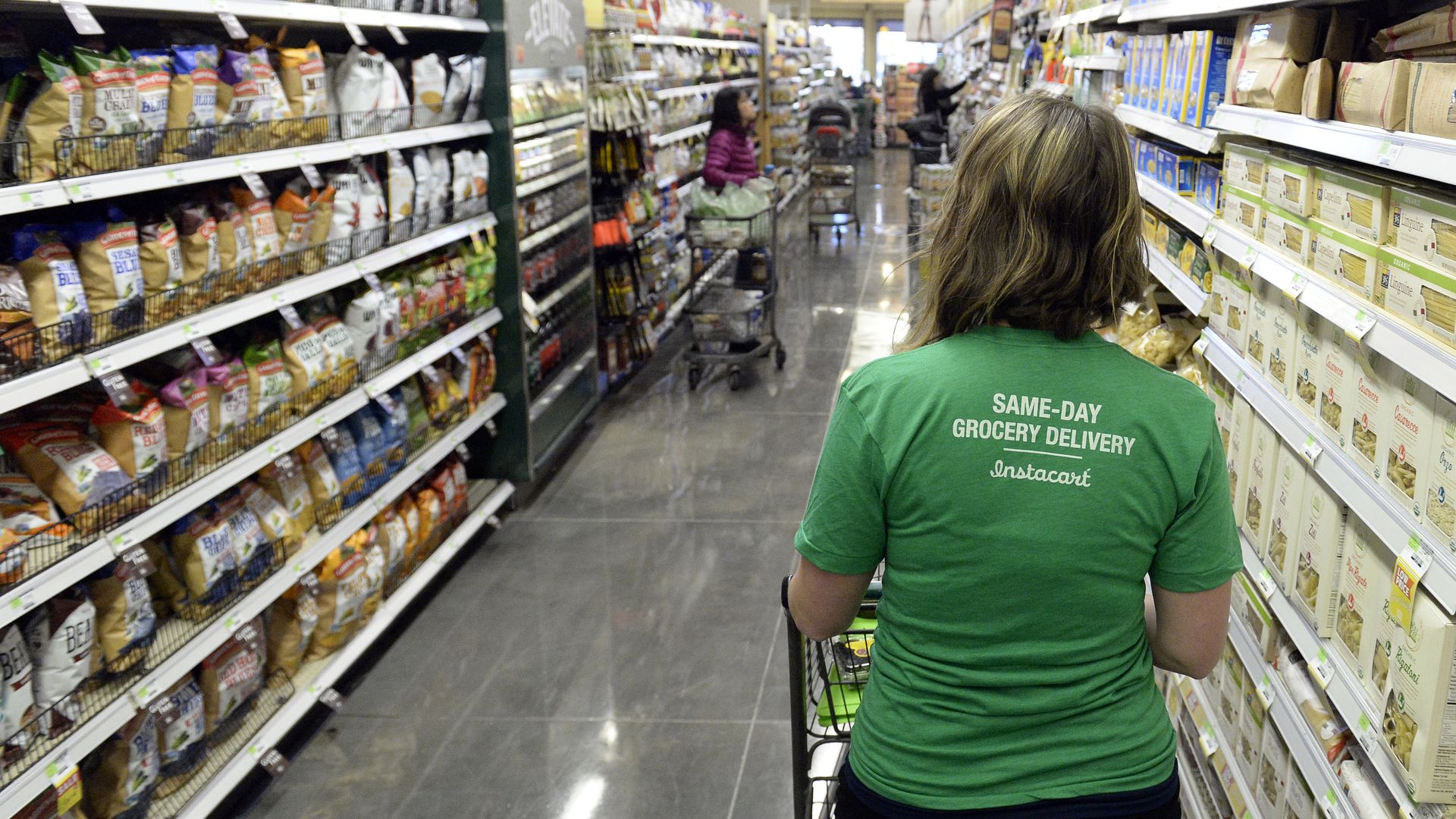
Grocery delivery company Instacart says that beginning next week it will make free safety kits with face masks, hand sanitizer and a thermometer available to the workers who shop for its customers and distribute masks to in-store workers amid the coronavirus outbreak.
Why it matters: Some Instacart workers began a strike on Monday to put pressure on the company to provide them with benefits, safety supplies and additional pay as they — and delivery workers at large — have become a lifeline for many Americans staying in their homes amid the COVID-19 pandemic.
Google will begin to allow some advertisers to run ads across its platforms that address the coronavirus, according to a Google memo sent to clients and obtained by Axios.
Why it matters: Democrats have argued that in banning attack ads targeting President Trump's response to the coronavirus pandemic, including on YouTube, Google was shielding his campaign in a critical election year.
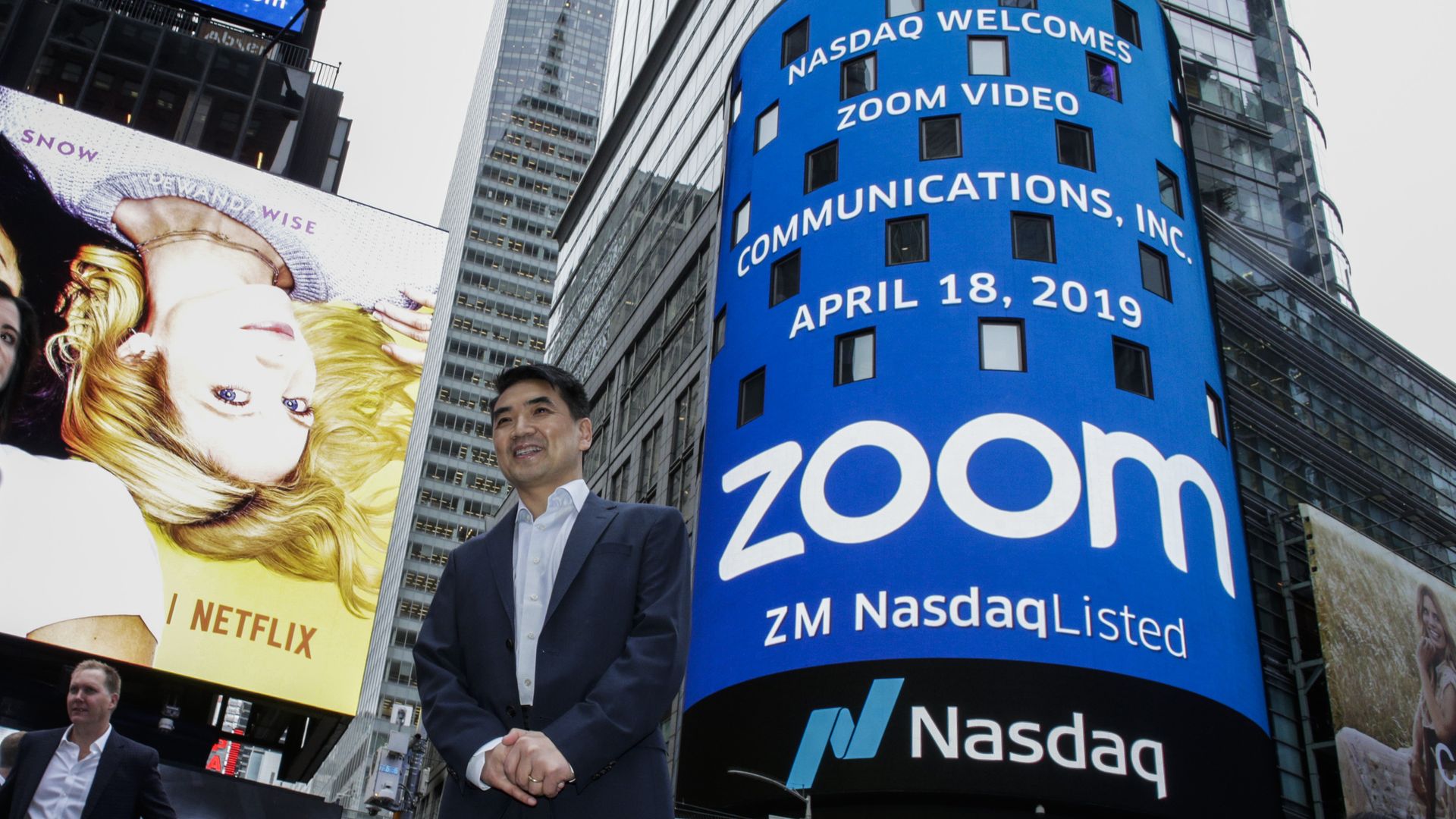
This is clearly Zoom's moment in the spotlight, as the public has embraced the videoconferencing provider's service during the coronavirus lockdown. However, security woes, privacy controversies, and trolling incidents have marred the company's star turn.
The big picture: When Zoom usage soared as Americans started working and studying from home, some worried whether it could handle the load. It did, but other problems cropped up as millions of consumers started using what had been an unsung piece of business software.
For years, Crisis Text Line has served as a 21st-century version of the call-in hotline, helping a largely young clientele manage life's challenges via text message. With the coronavirus outbreak, the line is now serving a new role as well — offering aid to a broader audience struggling to deal with a rapidly changed reality.
Why it matters: In addition to the direct health threat posed by the coronavirus, the pandemic and restrictions aimed at stemming it have led to all manner of anxieties, from health fears to money worries to social concerns.
Artificial intelligence experts at Stanford University are calling for the creation of a task force to establish a National Research Cloud to aid American AI research.
Why it matters: Government support for basic science helped create the post-war American technological colossus. But the unique resource needs of advanced AI research demand a new approach to ensure the field isn't dominated by a few large, rich companies.
Wednesday is April Fools' Day, but this year it's decidedly the wrong moment for online pranks — even though tech companies have reveled in them for several years now.
The big picture: The genre was getting a bit tired even before the pandemic — and many things that might be funny in ordinary times simply aren't funny right now.
Apple acquired paid weather app Dark Sky on Tuesday for an undisclosed amount.
Why it matters: This is a double-coup for Apple. It may use Dark Sky to improve the iPhone's default weather app, which currently gets its data from The Weather Channel, and it plans to kill the Android version of Dark Sky.
T-Mobile and Sprint have closed their merger, the newly combined companies announced Wednesday.
Why it matters: The deal — initiated nearly two years ago — brings together the nation's No. 3 and No. 4 wireless carriers under the T-Mobile name. Critics have said that the combination will reduce competition, even with concessions the companies made to win Justice Department approval.
The coronavirus pandemic has caused shortages of life-saving equipment like masks and ventilators — and now, we could be running low on WiFi hotspots, devices that use cellular signals to create local networks.
Why it matters: Demand is outpacing supply of the normally niche product, now a hot commodity for schools and libraries looking to bring online learning to students who lack internet access at home.