Cafe X, an operator of robotic coffee shops, has closed its three San Francisco locations and laid off their staffs, Axios has learned.
Why it matters: Robots have been hailed as the future of food service, but as Cafe X and pizza-making robot startup Zume are finding, it's not so easy.
Longtime Facebook executive Andrew Bosworth said in an internal Dec. 30 post that he thinks Facebook was responsible for Donald Trump getting elected, "but not for the reasons anyone thinks," the New York Times reports.
What he's saying: "He didn’t get elected because of Russia or misinformation or Cambridge Analytica," Bosworth wrote. "He got elected because he ran the single best digital ad campaign I’ve ever seen from any advertiser. Period."
Speaker maker Sonos on Tuesday sued Google for patent infringement and asked a trade court to bar importation of some Google products that are manufactured overseas.
Why it matters: Sonos has been trying to add smarts to its speakers while touting their audio quality to deal with a flood of competition from tech players offering inexpensive smart speakers. It had previously worked with Google to bring that company's voice assistant to its speakers.
The White House is warning federal agencies against over-regulating artificial intelligence as part of fresh guidance on how to govern the next-generation technology.
Driving the news: The Trump administration's 10 regulatory principles are guidelines for agencies that may be tasked with crafting AI regulations, as well as a signal to companies that the White House is wary of saddling the burgeoning tech with expansive rules.
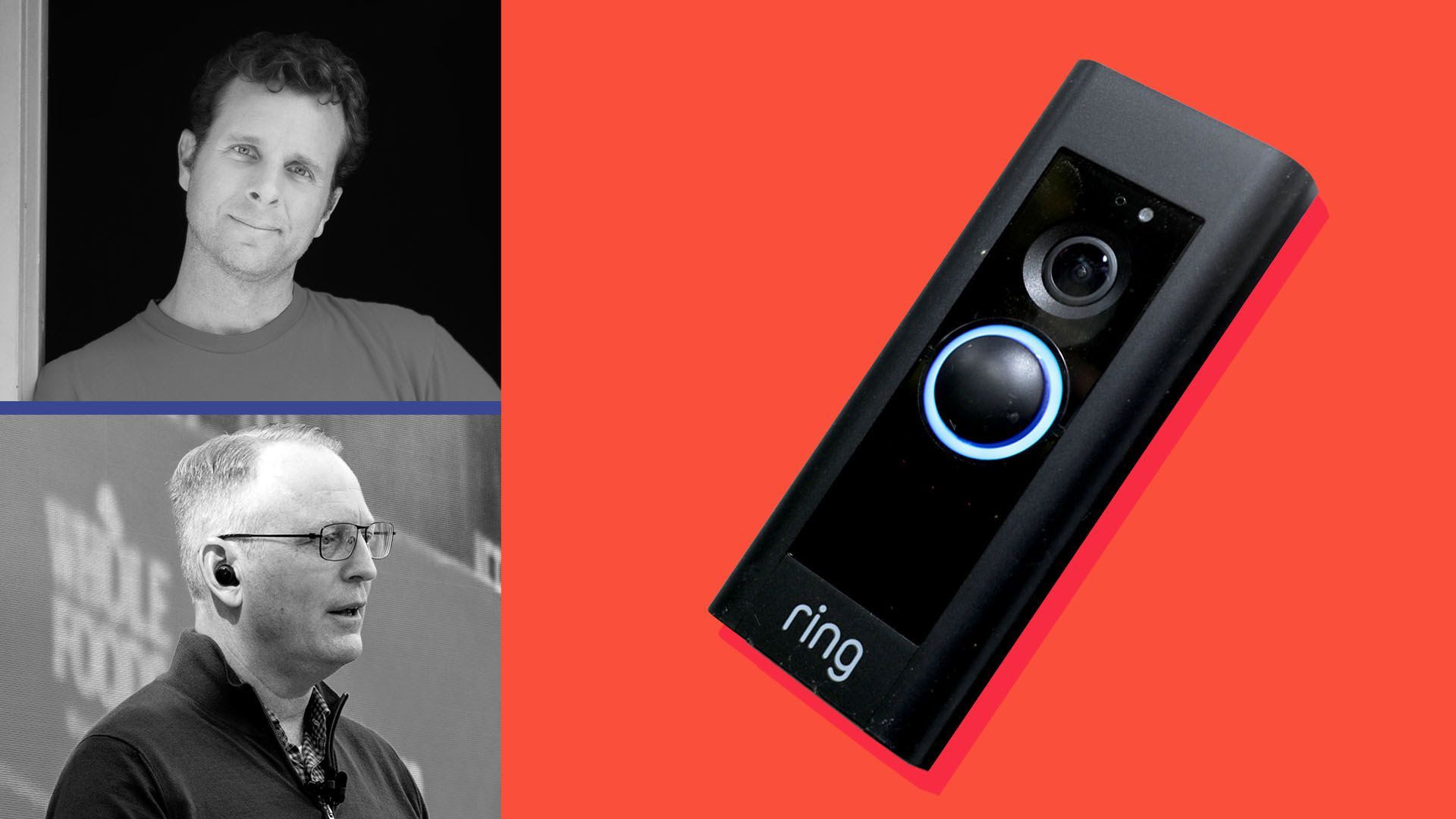
The executives in charge of Amazon's Ring doorbells insist their products are making the world better and safer, largely dismissing concerns they are helping lay the foundation for a police surveillance state.
Why it matters: Civil rights groups and others have criticized the company for both its security practices and its close ties with law enforcement.
More than two years after Amazon announced its search for a second headquarters and cities around the U.S. bent over backwards to offer the megacompany as much free cash and incentives as they could, new research confirms what economists have been saying for years: Such programs are a waste of money.
Driving the news: A paper from researchers at Princeton and Columbia Business School found "no evidence" that business tax incentives given to individual companies increased broader economic growth at the state and local level.
Two new studies highlight artificial intelligence's potential to improve patient care, specifically by aiding or improving cancer detection.
Why it matters: AI could create enormous benefits for patients and the doctors who treat them, but some experts warn that the explosion of new health technology could put some patients in danger, as the L.A. Times and Kaiser Health News recently reported.
America "needs to be prepared for retaliation in the hard cyber space and soft information space" after killing Iranian general Qasem Soleimani, says a top expert at the Atlantic Council.
Why it matters: Iranian influence operations to-date have been different than other state-backed disinformation campaigns, particularly from Russia.
In a clinical trial, a team of doctors found a combination of deep-learning algorithms and laser-imaging technology was as effective as pathologists — but faster — at diagnosing brain tumors in near real time, according to a study published Monday in Nature Medicine.
Why it matters: There is a shortage of pathologists and an increase in demand, with roughly 15.2 million people diagnosed with cancer each year globally, most of whom will have surgery. In the U.S. alone, there are roughly 1.1 million biopsies annually.
In a court filing with the U.S. Supreme Court Monday, Google argued that the future of software innovation and interoperability hangs on the court's decision in the tech giant's long copyright battle with Oracle.
The big picture: There are also billions in damages at stake in the case, which centers on whether Google illegally used parts of Oracle’s Java code for its Android software. The Supreme Court said in November it would take up Google's appeal of Oracle's win at a lower court.
Facebook is tightening its policies on "manipulated media," including deepfakes, Monika Bickert, the company's vice president of global policy management, says in a blog post.
Why it matters: Facebook has been criticized for the way it enforces its policies on deepfakes (AI-generated audio and video) and other misleading media. In particular, critics took aim at the tech giant's decision to allow a doctored video of House Speaker Nancy Pelosi to remain on its platform last year.