Dan talks with "Bitcoin Billionaires" author Ben Mezrich about why he wrote a redemption story about the Winklevoss twins, after previously savaging them in a book that became the basis for The Social Network film.
Former National Security Agency contractor Edward Snowden, who leaked a series of classified documents in 2013, will release his memoir worldwide on September 17.
The big picture: Snowden is currently living in Moscow, avoiding U.S. charges that could send him to prison. While U.S. officials have harshly condemned Snowden's actions, some have lauded him for bringing to light previously unknown NSA practices and increasing government accountability.
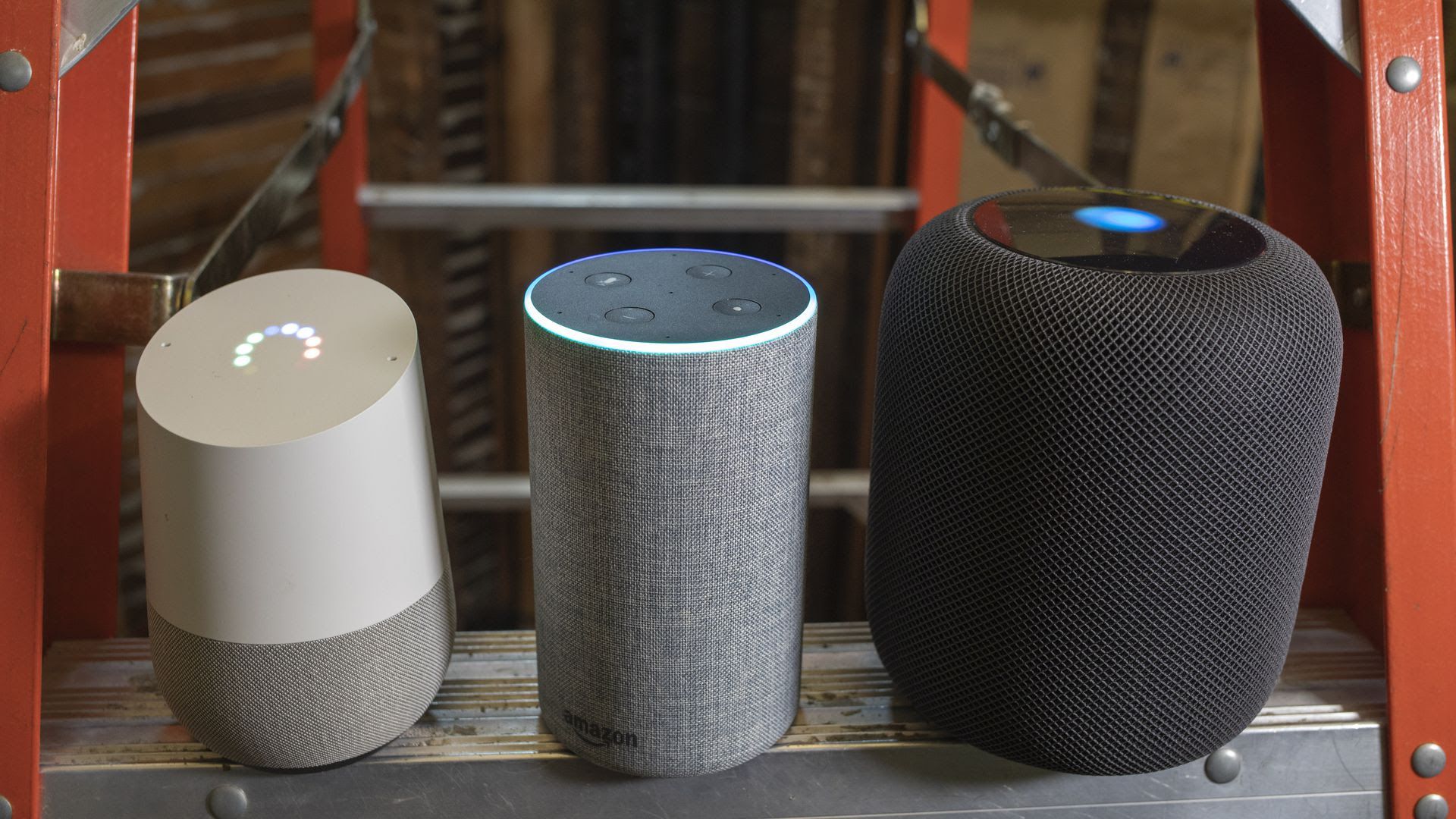
Eager for a place in the home, tech giants are beefing up their smart speaker products, hoping to find just the right combination of screens, speakers and features that will stick with consumers.
Why it matters: There's a lot of potential in the smart speaker market, especially for the big companies like Google and Facebook whose traditional advertising streams face slowed growth projections. But balancing privacy concerns with enough functionality to attract users is proving to be tricky.
IBM is announcing a series of moves Thursday designed to start recouping some of the $34 billion it just spent to buy open source specialist Red Hat.
Why it matters: IBM sees a $1.2 trillion opportunity in enterprise software, services and infrastructure by 2022. But competing effectively means being able to meet customers where they are at, says IBM senior vice president Arvind Krishna.
In recent years, Amazon has made a series of investments, acquisitions and R&D moves in the smart home industry. None seemed particularly consequential on its own, but with a real estate deal last week, Amazon appears to have captured first-mover advantage in one of the most important new industries on the planet.
Why it matters: With the deals, Amazon has taken a pioneering lead in what has come to be called "surveillance capitalism," which includes some of the biggest businesses of the future, like 5G, autonomous vehicles and smart cities. Now, the behemoth, with its edge in this new economy, is positioned to explode its revenue.
Congress appears to be trying to revive efforts to pass legislation on self-driving cars, Reuters reports.
Why it matters: Without federal standards, automakers and tech companies have to deal with a patchwork of state laws that they say is hampering the rollout of the technology. Consumer advocates want assurances that AVs are safe.
With a surge of violent crime plaguing the streets of Baltimore, some residents whose lives have been upended by murder are pushing for a drastic measure: citywide surveillance.
Why it matters: Americans have historically valued privacy over security and generally reject the idea of being monitored by anyone, especially law enforcement.
But record-setting homicide rates in Baltimore — not to mention national attention on the city's problems following President Trump's recent Twitter insults — may test that mindset.
Superplastic, a Burlington, Vt.-based designer toy startup founded by Paul Budnitz (Ello, KidRobot), has raised $10 million in Series A funding led by Craft Ventures.
Why it matters: This coincides with Superplastic trying to turn two of its most popular characters into virtual Instagram stars, a burgeoning niche.
With its latest earnings numbers, Apple proved once again that its growing services and wearables businesses can help lead the company to record financial results even as iPhone sales fall short of prior years.
Why it matters: This strategy is a creative way to manage through a maturing smartphone market, but Apple's business is arguably just as dependent on the iPhone as it has ever been, perhaps more so, because these new businesses are tied at the hip to the device.