Facial recognition is going everywhere far faster than expected — including creeping into private and public spaces as a means to keep tabs on children.
Why it matters: The people with the power to rein in this tech are the same ones who will most enjoy its benefits — while those who face its adverse effects, especially people of color and low-income communities, will be largely powerless to make anything change.
The Federal Trade Commission's antitrust probe of Facebook is looking at whether the social network used acquisitions to take out its competition, according to the Wall Street Journal.
Why it matters: It suggests that the agency was serious when it said it might look at already-completed mergers and acquisitions as part of a broader review of the tech sector.
Apple is putting a worldwide hold on a program that had contractors listening to some Siri queries in an effort to grade the digital assistant on its responses. When the program returns, Apple says users will have the choice whether to participate.
Why it matters: Apple touts privacy as a key selling point, making the idea that someone might be listening to Siri queries unsettling, even if only a tiny fraction of queries were being monitored.
Dan talks with "Bitcoin Billionaires" author Ben Mezrich about why he wrote a redemption story about the Winklevoss twins, after previously savaging them in a book that became the basis for The Social Network film.
Former National Security Agency contractor Edward Snowden, who leaked a series of classified documents in 2013, will release his memoir worldwide on September 17.
The big picture: Snowden is currently living in Moscow, avoiding U.S. charges that could send him to prison. While U.S. officials have harshly condemned Snowden's actions, some have lauded him for bringing to light previously unknown NSA practices and increasing government accountability.
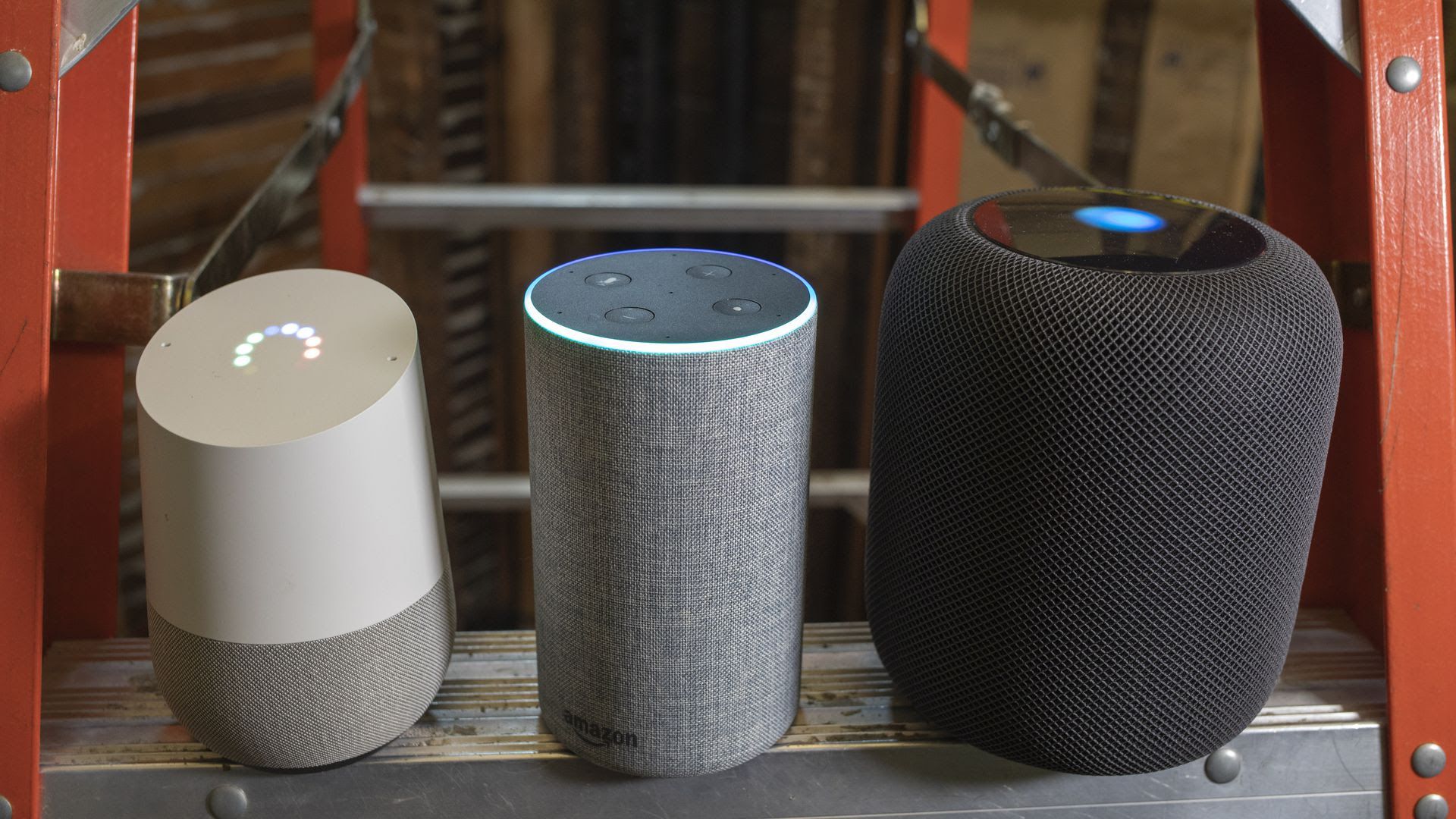
Eager for a place in the home, tech giants are beefing up their smart speaker products, hoping to find just the right combination of screens, speakers and features that will stick with consumers.
Why it matters: There's a lot of potential in the smart speaker market, especially for the big companies like Google and Facebook whose traditional advertising streams face slowed growth projections. But balancing privacy concerns with enough functionality to attract users is proving to be tricky.
IBM is announcing a series of moves Thursday designed to start recouping some of the $34 billion it just spent to buy open source specialist Red Hat.
Why it matters: IBM sees a $1.2 trillion opportunity in enterprise software, services and infrastructure by 2022. But competing effectively means being able to meet customers where they are at, says IBM senior vice president Arvind Krishna.
In recent years, Amazon has made a series of investments, acquisitions and R&D moves in the smart home industry. None seemed particularly consequential on its own, but with a real estate deal last week, Amazon appears to have captured first-mover advantage in one of the most important new industries on the planet.
Why it matters: With the deals, Amazon has taken a pioneering lead in what has come to be called "surveillance capitalism," which includes some of the biggest businesses of the future, like 5G, autonomous vehicles and smart cities. Now, the behemoth, with its edge in this new economy, is positioned to explode its revenue.