Google CEO Sundar Pichai met with military leaders last week to try easing tensions with the Pentagon over the company's decision to drop out of an AI drone-video analysis contract after employees raised ethical concerns, The Washington Post’s Tony Romm and Drew Harwell report.
The big picture: Google wants to take advantage of potentially lucrative contracts but keeps encountering conflicts with company values — not only here but also in a recent controversy over a proposal to run a modified search engine in China.
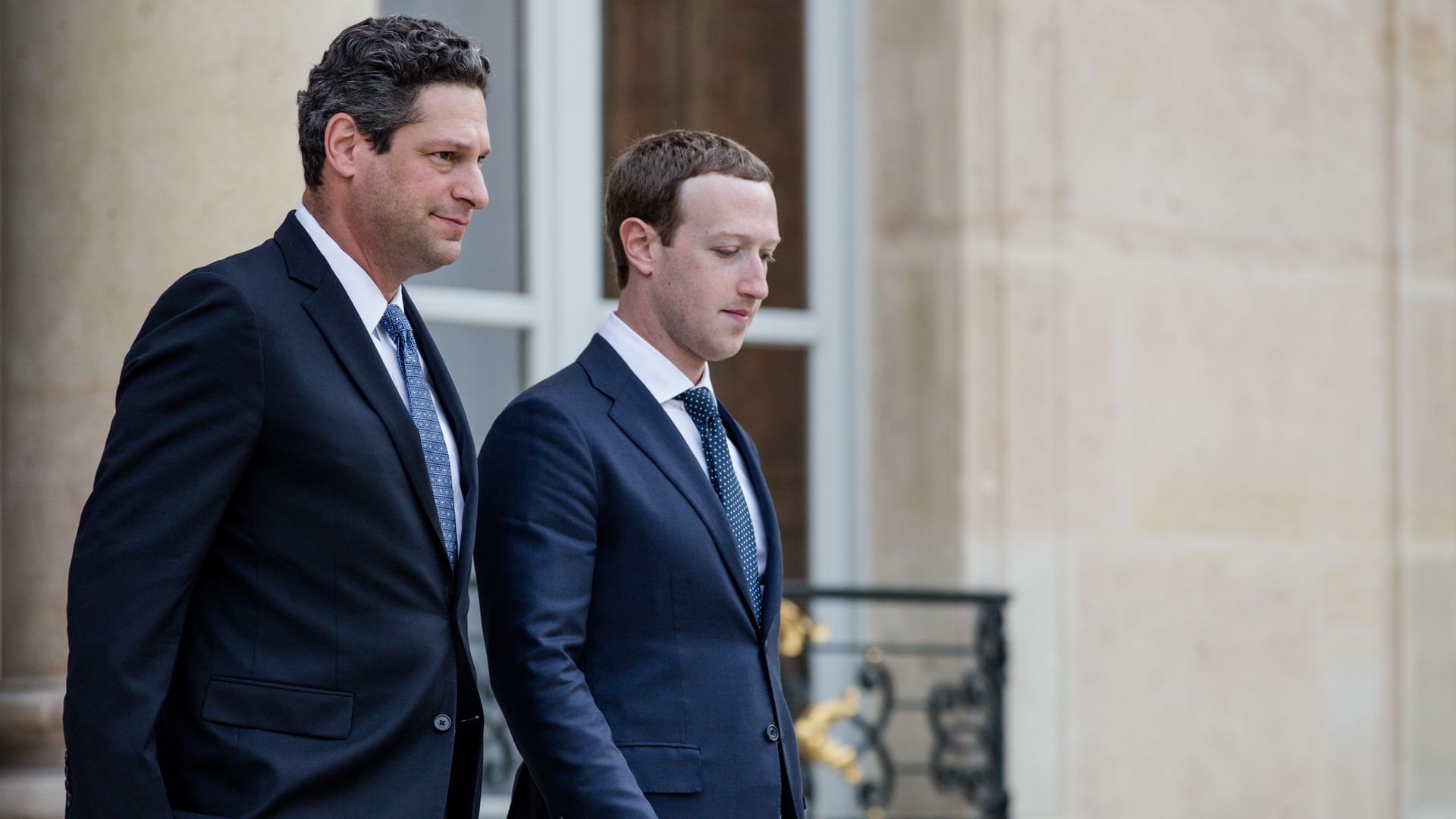
Top Facebook executive Joel Kaplan made an emotional appearance at a companywide town hall Friday, and admitted that he should have consulted his superiors before attending last week's Brett Kavanaugh hearing, according to sources.
Why it matters: Facebook is trying to contain internal fallout from employees who were dismayed by Kaplan's appearance at the hearing sitting behind his friend Kavanaugh, who he served with in the administration of George W. Bush.
Why it matters: Single-sign-on login systems do not make a hack more likely. But they do affect what a hacker can access from inside a system. While Facebook reports there is no evidence third-party apps were accessed, this incident should cause consumers to re-evaluate whether to link accounts in the first place.
Lost amid the difficulties Tesla has had ramping up production of its mass-market Model 3, along with other distractions, is that they've squandered an early lead in autonomous technology. Now Tesla is in the rare position of playing catch-up. On Twitter this week, CEO Elon Musk acknowledged self-driving is difficult and their technology needs more work.
Why it matters: ElonMusk’s ambitious vision to lead the planet toward sustainable energy and safer cars can’t be achieved unless Tesla is financially viable. Musk is getting a new boss, courtesy of the Securities and Exchange Commission: an independent chairman will help him keep his eyes on the road ahead and on delivering the company's AV promise. But the Tesla CEO continues to provoke the SEC.
Adaptive cruise control, which holds a vehicle's speed steady while maintaining a safe distance from traffic ahead, is now a feature in 16 of the 20 bestselling vehicles in the U.S., classifying them as level-1 AVs.
Why it matters:Phantom traffic jams — the ones that appear to have no obvious cause — result from human driving behavior. Adaptive cruise control replaces some of these jam-inducing behaviors with algorithms, using sensors to detect the vehicle ahead and adjust cruise speed accordingly. When designed correctly, level-1 AVs may help prevent such traffic patterns from developing.
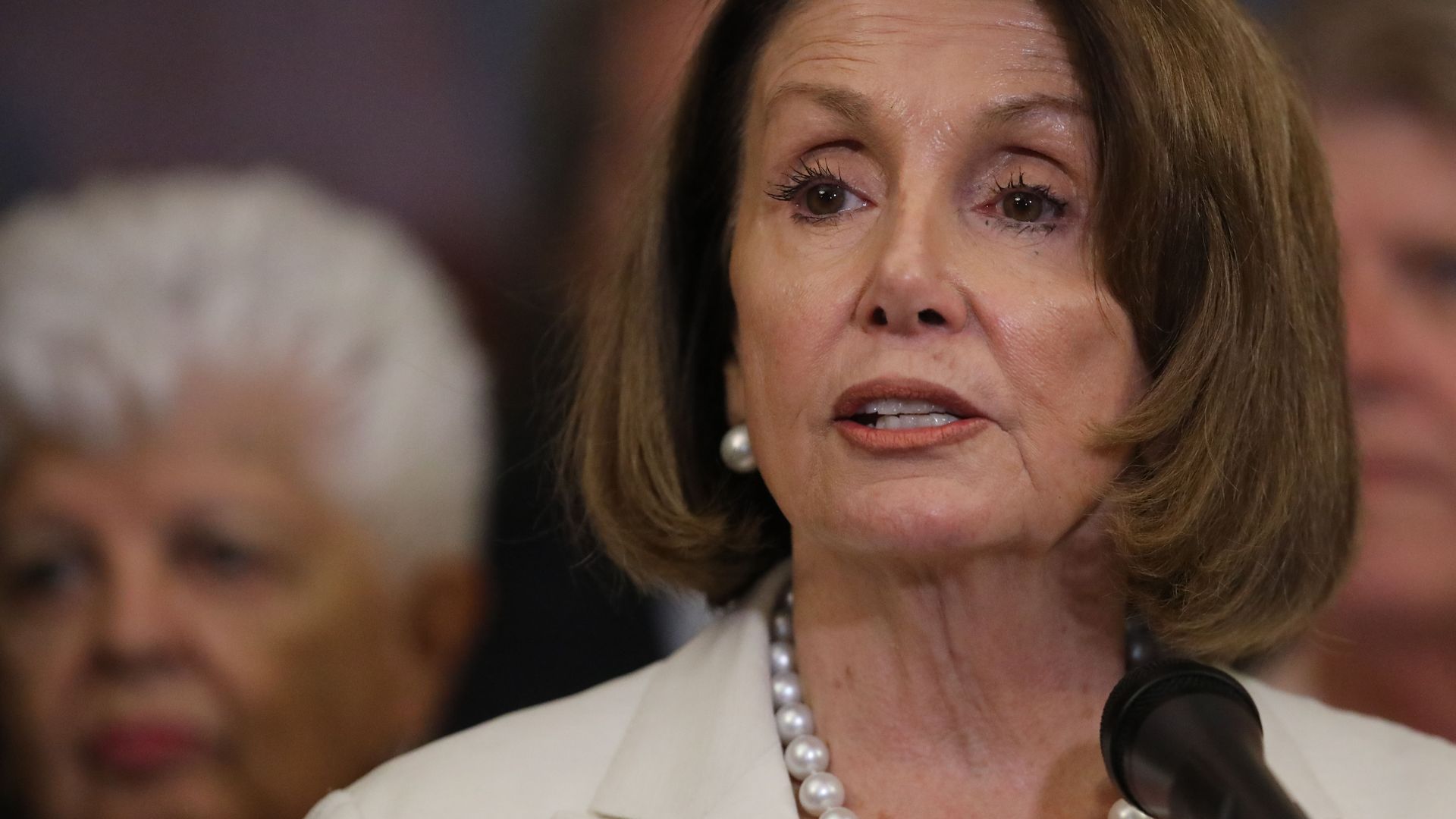
House Democratic Leader Nancy Pelosi plans sweeping regulation of tech if Dems win the majority, Recode's Kara Swisher reports in a New York Times essay:
In an interview with Swisher, Pelosi suggested that " a new agency could be created to manage tech’s growing impact." And in April, Pelosi put congressman Ro Khanna — the Democratic whose California district is home to Apple, Intel and Yahoo — in charge of with creating a list of principles. "Call it a Bill of Rights for the internet," Swisher writes.
Facebook policy executive Joel Kaplan's attendance at Brett Kavanaugh's testimony last week sparked a firestorm inside the company, Mike Isaac reports in the New York Times.
Our thought bubble: The reaction is another example of the kind of turmoil Silicon Valley companies face when leaders make choices that clash with values held by many in their workforce.
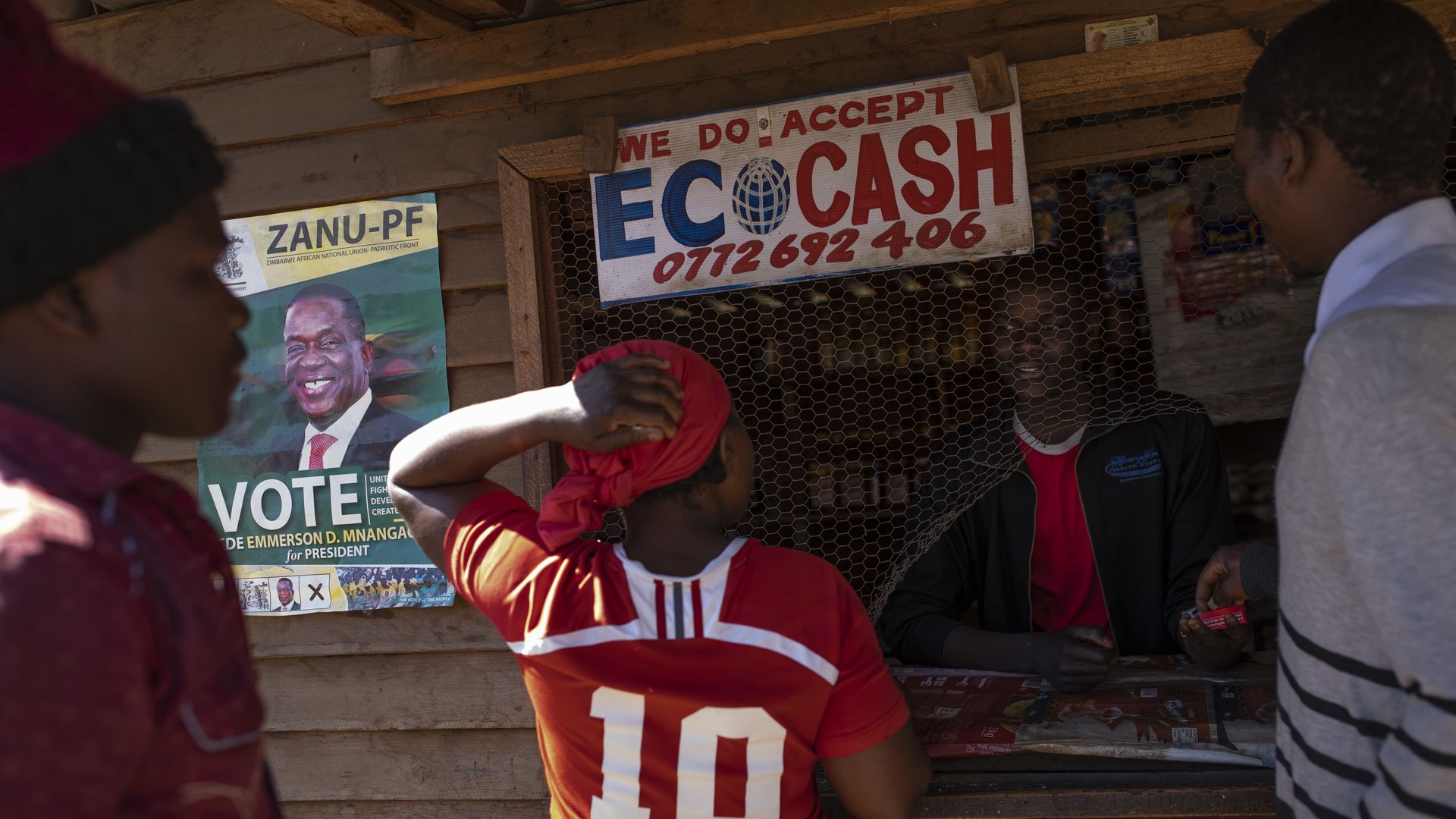
Of the 690 million registered mobile-money accounts worldwide, 50% are in Africa. In Zimbabwe and Somalia, for example, both countries that have experienced decades of economic isolation and political unrest, mobile money is ubiquitous and central to economic activity.
The big picture: While Apple Pay and other mobile-money platforms have been slow to grow in the U.S., with only 20%–30% of iPhone users enabling Apple Pay, a cashless economy has taken hold in unexpected places. In Africa, a continent all too often mislabeled as relatively undeveloped, major innovations are taking root and scaling quickly.
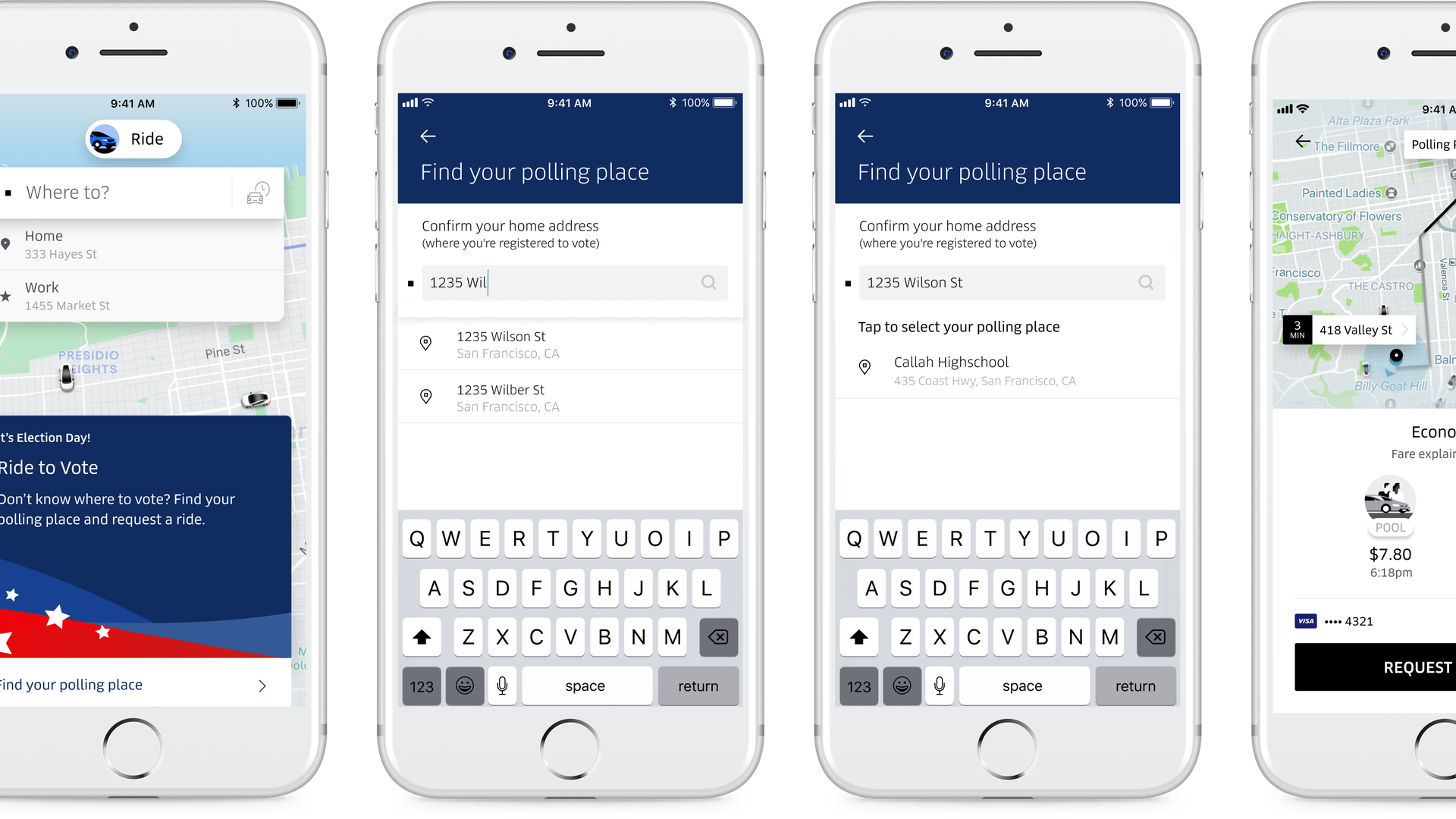
Once again, Uber is providing free rides to the polls on Election Day next month to some voters, but this year it's got something new: a button that will find any passenger's designated polling location based on the home address they provide.
Why it matters: Voting is still a complicated process today — people need to register, figure out where to go and actually get there.
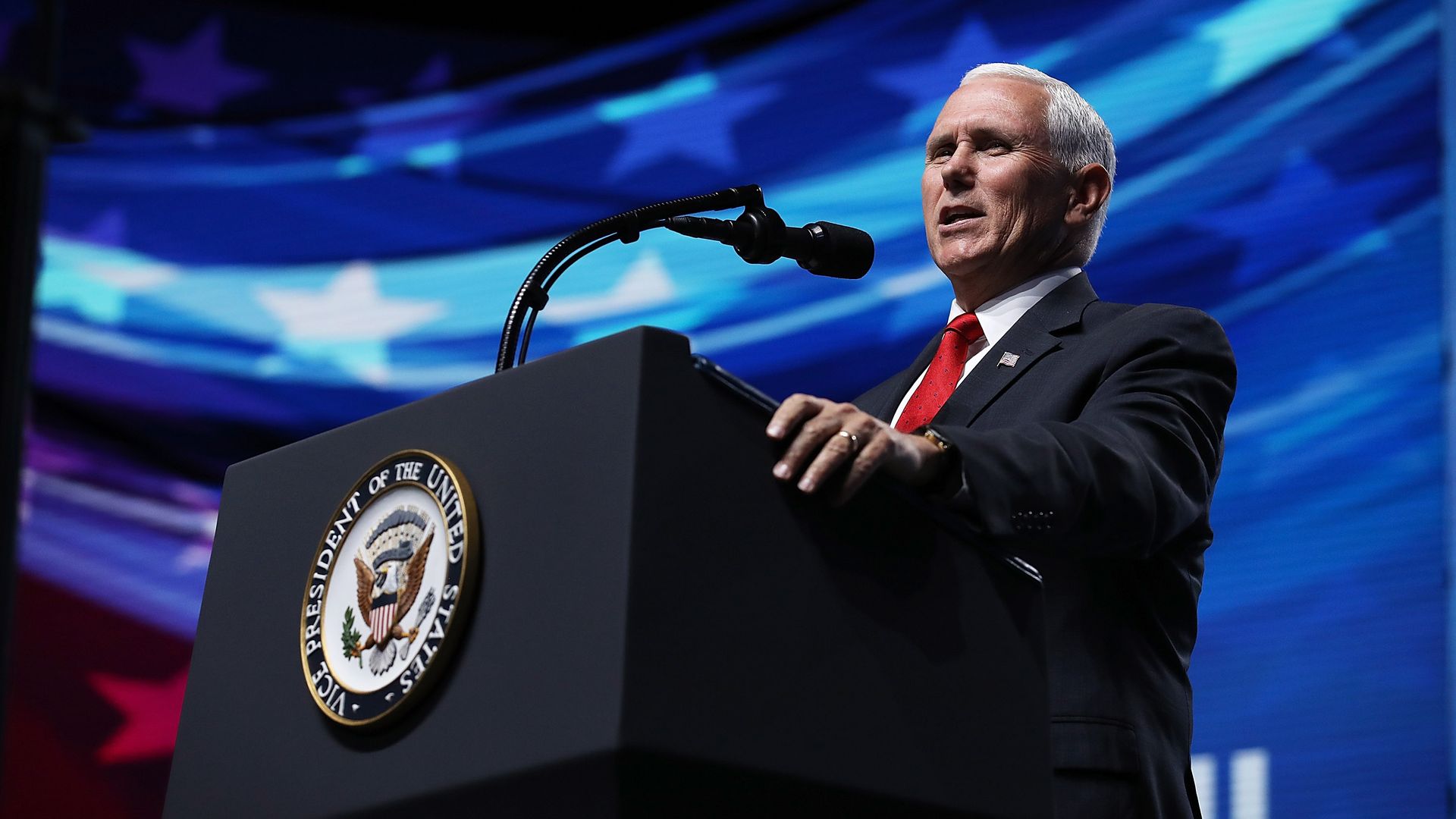
Vice President Mike Pence said on Thursday that Google should "immediately end development of the 'Dragonfly' app [for the Chinese search market] that will strengthen Communist Party censorship and compromise the privacy of Chinese customers," per Reuters.
The big picture: Google's reported look at re-entering the Chinese search market has become a flashpoint for the company in Washington, with lawmakers expressing concerns about the project. Google has said it's not close to launching a search product in China.
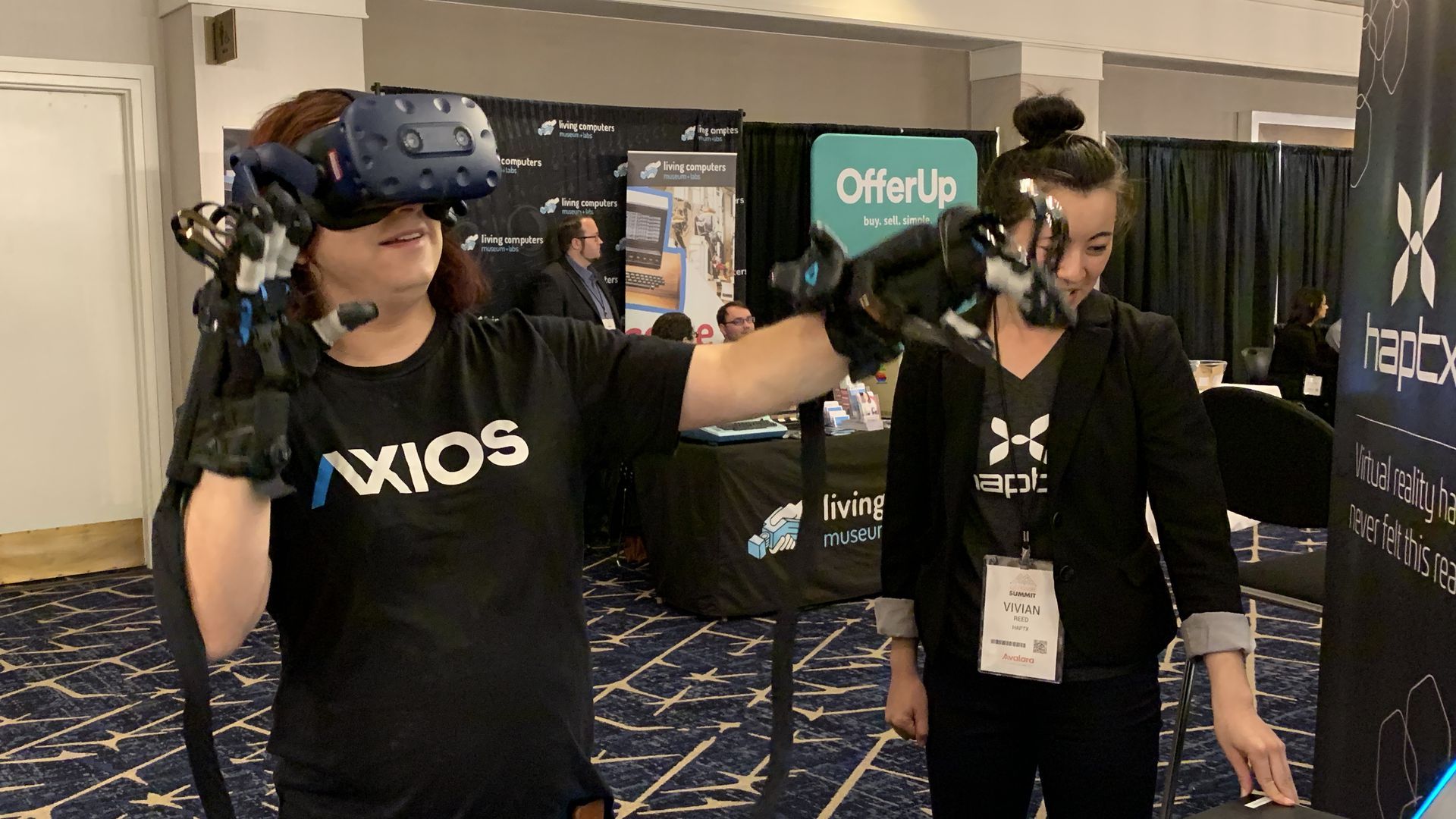
While virtual reality headsets let you look and move around in a fictional world, VR hasn't yet been able to give users tactile experiences.
Several startups are working on that, and I've had the chance to try out a few over the past several months. One of them is created by Seattle-based HaptX, which officially launched Wednesday.
Siri or Alexa can get you the weather, but don’t expect a conversation. Neither can chatbots (once the next big thing) hold a back-and-forth. But researchers are now developing systems that leapfrog chit-chat to the next frontier: They can argue and play devil's advocate.
Why it matters: Whenever artificial intelligence reaches an advanced stage, far beyond current capabilities, researchers want machines that humans can converse knowledgeably with, and can explain how they reach their conclusions.