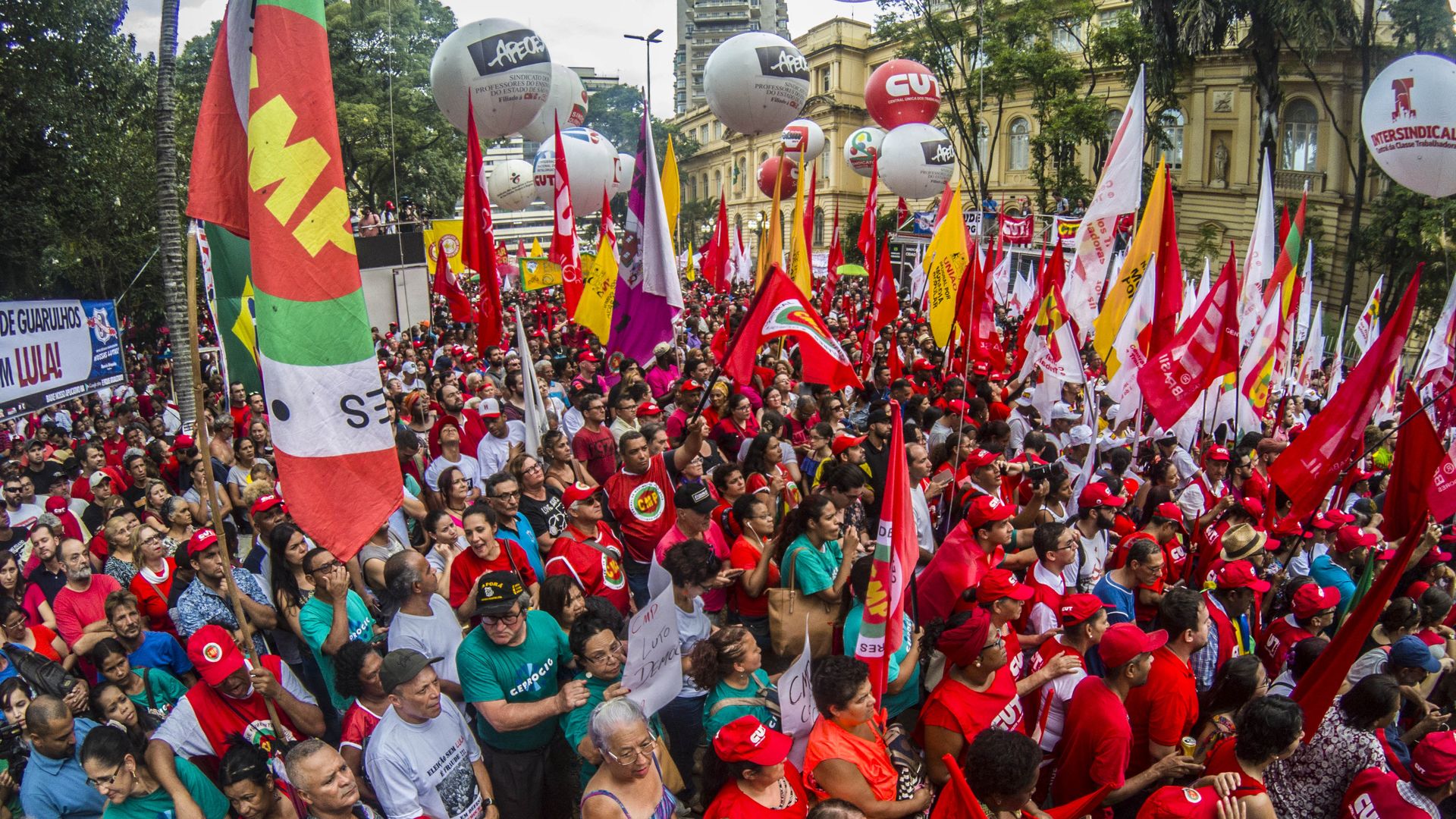
Officials in Brazil are growing wary of fake news flooding into Facebook timelines and other online outlets, both from domestic and foreign actors, ahead of October's presidential election. They're now trying to crack down on organized attempts to mislead voters, The New York Times reports.
Why it matters: Americans got a detailed picture of election meddling and misinformation in Robert Mueller's indictments on Friday — and the U.S. isn't the only country dealing with these issues.
Facebook cooperated with special counsel Robert Mueller, quietly supplying Russian-placed material that was cited in Friday's blockbuster indictment.
A Facebook source tells me: "[T]he level of detail in the indictment wouldn’t have been possible without the close cooperation of Facebook, particularly the details about the communication between IRA [Russians' Internet Research Agency] pages and unwitting Trump campaign staffers and volunteers about rallies in Florida.”
Facebook has traditionally been a reactive company, but it's learning that it needs to focus on communicating its strengths and weaknesses in preparation for a crisis.
Facebook was the first to respond to Mueller’s indictment. It’s taken a proactive stance on Russia, specifically, while its competitors have been more silent.
Facebook Vice President of Ad Product Rob Goldman tweeted Friday that he can "very definitively" say that swaying the election was not the main objective of the Russian actors that meddled in the 2016 elections using social media, but rather sowing discord was their goal.
Why it matters: Facebook executives have been saying for months that the majority of Russian ad spend occurred after the election, meaning the objective of the Russians was to cause disruption and division among Americans, not tip ballots.
Facebook reiterated Friday that it's increasing the number of people working on security from 10,000 to 20,000 this year, the company's VP of Global Policy Joel Kaplan said following Robert Mueller's indictment of Russian cybercriminals Friday.
Why it matters: Social media companies have come under fire over the past year for failing to police the activity of bad actors using their platforms to meddle in the election.
Twitter said Friday that it is halting the availability of the Twitter for Mac app and will stop supporting it in 30 days.
Why it matters: The company has been slow to add the latest feature to that and other dedicated apps. The move leaves the Web client and a dwindling number of other apps as the only means for tweeting from the Mac