Monday's technology stories

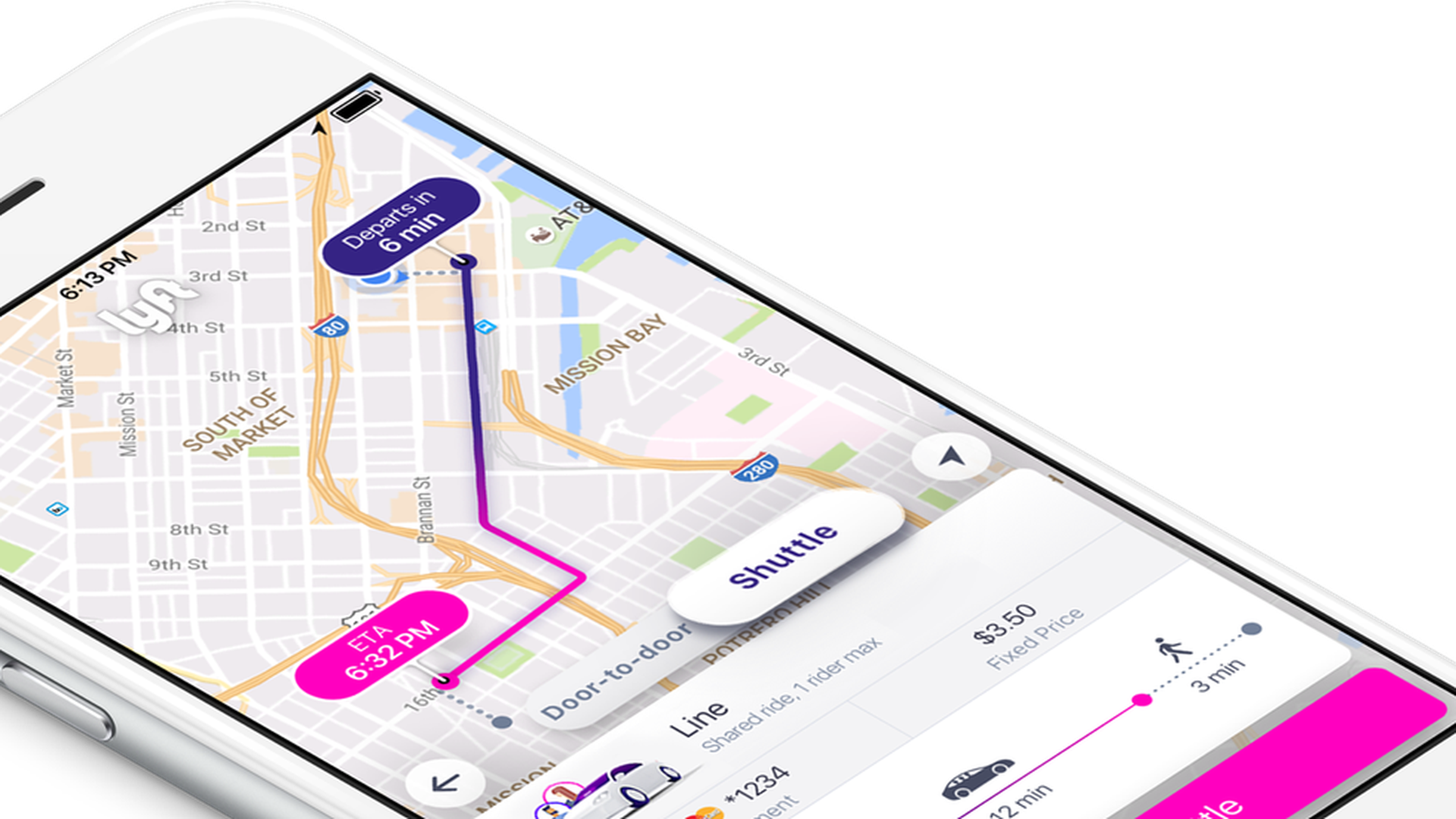
Lyft has a good reason to offer a bus-like service
On Monday, a short Lifehacker review of Lyft's latest service, Shuttle, elicited chuckles on Twitter. Shuttle is just like a bus service, but under Lyft's ride-hailing brand.
But here's the thing: It's already been proven—at least in San Francisco—that there's a market for busses that aren't part of the city's public transit.
Bottom line: The fact that there is a demand for alternatives is telling: the local public transit system isn't meeting the needs of some consumers, who are willing to pay a bit more for comfort and convenience.

Drivers sue ride-hailing startup Juno for nixing equity program
A group of drivers have filed a lawsuit against ride-hailing company Juno (and its new parent company Gett) for breach of contract, false advertising and securities fraud, as Recode first noticed. Juno operates in New York City and branded itself as the driver friendly alternative to Uber and Lyft.
The issue: The drivers' biggest gripe is that Juno's main selling point to them was the promise of earning equity in the company, yet it rescinded that plan after it sold itself to Gett, another ride-hailing company operating in New York City, for $200 million. Instead, the company said it will pay cash bonuses to drivers with shares in the company.
Challenges: Juno said that even before the acquisition, it realized implementing its equity program would be more difficult than anticipated.
Piling on: In May, a guild representing drivers filed a complaint to the Federal Trade Commission accusing Juno of misleading drivers with its equity program.

Pokémon Go details its big summer update
After promising a big summer for months now, the creators of Pokémon Go on Monday offered up details on new features coming to the popular, but not as popular as it once was, mobile game. In a blog post, Niantic said it is overhauling the gym feature to be more interactive, including "raids" where up to 20 players can work together.
Also in the works: Niantic is holding its first real-world event in July in Chicago and, at Apple's developer conference, showed how it could use Apple's newly introduced augmented reality tools to improve that part of the experience.
Why it matters: Pokémon Go was an overnight success, but Niantic has said it wants the game to be a years-long hit. To do that, it will need a steady stream of new features and challenges to keep people from moving on.

Amazon has scared grocers — and others — the world over
In the 1970s, oil behemoths, then kings of the corporate world, bought up department stores, beef canners and even the Barnum and Bailey Circus. But is it now the turn of the big five U.S. tech companies to snap up some economic prizes?
What was most surprising about Amazon's stunning $13 billion acquisition of Whole Foods last week was its juxtaposition with CEO Jeff Bezos' years of denunciations — and destruction — of brick-and-mortar retail chains. And people sense it may signal the front end of a wave of legacy sector acquisitions:
- We already have Silicon Valley moving in on Detroit's turf, creating a tense contest for who will dominate self-driving transportation.
- But to the degree the Whole Foods acquisition is not an anomaly, don't look for the tech giants to mimic the oil companies of yore, and venture far from their core businesses.
- Amazon is also unlikely to conduct a massive firing of workers, which would undermine the Whole Foods brand.

We're getting old. We need robots to take care of us
To say that Japan's population will shrink over the next 83 years is an understatement. According to official state figures, the country will go from about 126 million people today to about 50 million in 2100, a 60% plunge.
Moreover, the makeup of Japan's population will utterly change, too. From about 15% of the population, people 65 and older will be 35% in 2100. And the working age population whose salaries are supporting the old will plunge: in 1970, Japan had 8.5 workers to support every retired person; in 2050, the number will be 1.2.
As you see in the chart below, these numbers reflect the trend in most of the world. Right now, the median age across the planet is around 29. In 2100, it will be 42. When you exclude Africa, the whole world will be, on average, 60 or older in just over three decades.