Sunday's technology stories
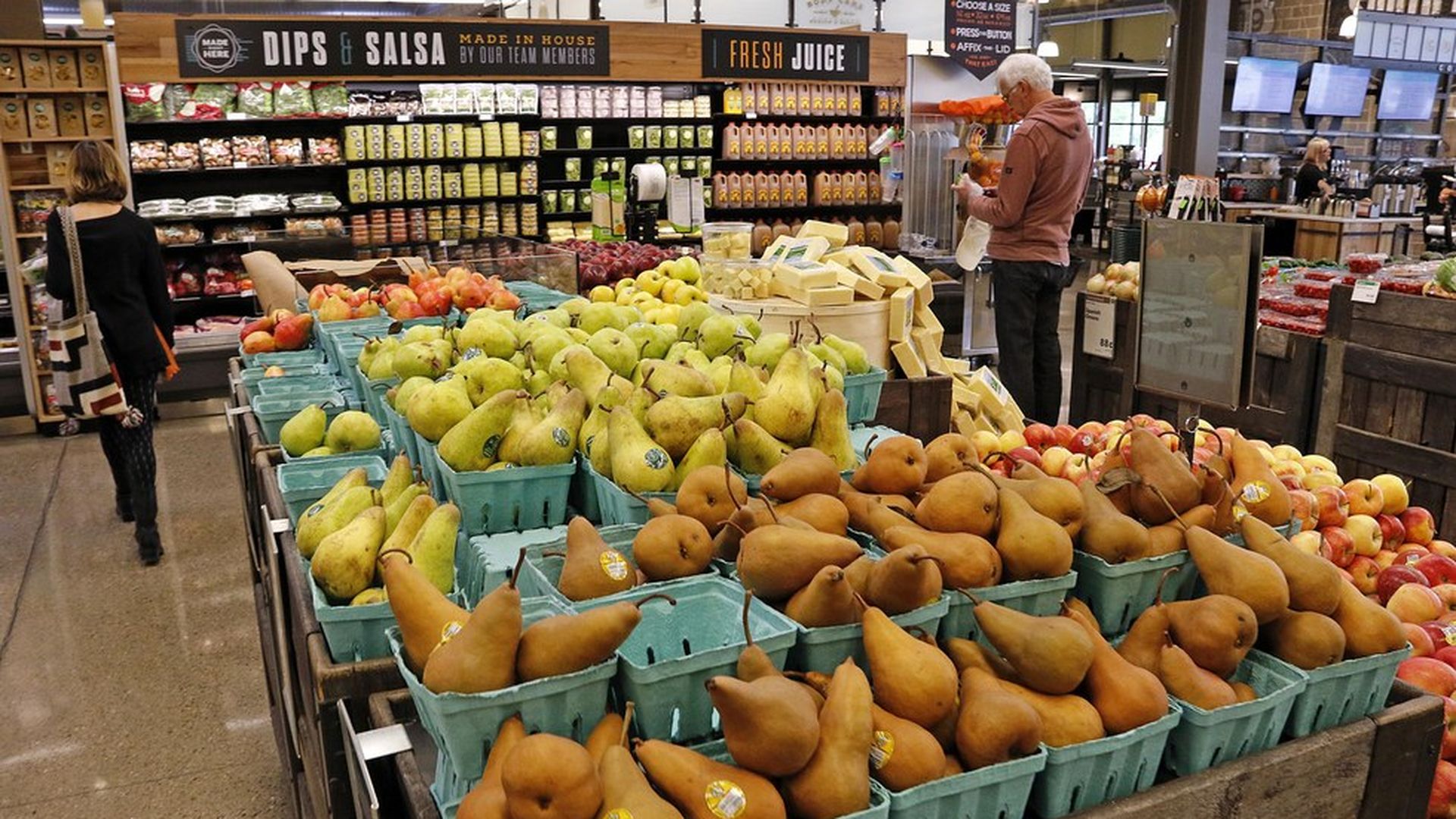
Amazon has scared grocers — and others — the world over
In the 1970s, oil behemoths, then kings of the corporate world, bought up department stores, beef canners and even the Barnum and Bailey Circus. But is it now the turn of the big five U.S. tech companies to snap up some economic prizes?
What was most surprising about Amazon's stunning $13 billion acquisition of Whole Foods last week was its juxtaposition with CEO Jeff Bezos' years of denunciations — and destruction — of brick-and-mortar retail chains. And people sense it may signal the front end of a wave of legacy sector acquisitions:
- We already have Silicon Valley moving in on Detroit's turf, creating a tense contest for who will dominate self-driving transportation.
- But to the degree the Whole Foods acquisition is not an anomaly, don't look for the tech giants to mimic the oil companies of yore, and venture far from their core businesses.
- Amazon is also unlikely to conduct a massive firing of workers, which would undermine the Whole Foods brand.

We're getting old. We need robots to take care of us
To say that Japan's population will shrink over the next 83 years is an understatement. According to official state figures, the country will go from about 126 million people today to about 50 million in 2100, a 60% plunge.
Moreover, the makeup of Japan's population will utterly change, too. From about 15% of the population, people 65 and older will be 35% in 2100. And the working age population whose salaries are supporting the old will plunge: in 1970, Japan had 8.5 workers to support every retired person; in 2050, the number will be 1.2.
As you see in the chart below, these numbers reflect the trend in most of the world. Right now, the median age across the planet is around 29. In 2100, it will be 42. When you exclude Africa, the whole world will be, on average, 60 or older in just over three decades.

This week at Uber: the moves that mattered
Uber had a chaotic week as the company addressed Attorney Eric Holder's report investigating a workplace culture of sexual harassment.
Why it matters: Uber is struggling to bounce back from a string of high-profile controversies, including CEO Travis Kalanick's leave of absence. Still, it has a massive footprint in the business world, as the highest-valued startup in history.

Lyft resists subpoena to share info with Uber
Ride-hailing company Lyft on Friday pushed back on subpoenas it was served by rival Uber concerning its recent partnership with Waymo, according to court documents. Lyft argued that the broad information, which would give Uber insights into its competitor, is not relevant to the case, and Uber should be able to obtain whatever it needs from Waymo.
Uber sought to obtain information about Lyft and Waymo's relationship in an effort find out if the latter disclosed the trade secrets to Lyft. In February, Waymo filed a lawsuit against Uber, alleging the ride-hailing company stole trade secrets when it acquired a startup formed by former Waymo employees. (Find a full timeline of the case here.)
What's next: The parties have deadlines next week to file their arguments on this issue.