Tuesday's technology stories

House votes to roll back privacy protections for internet customers
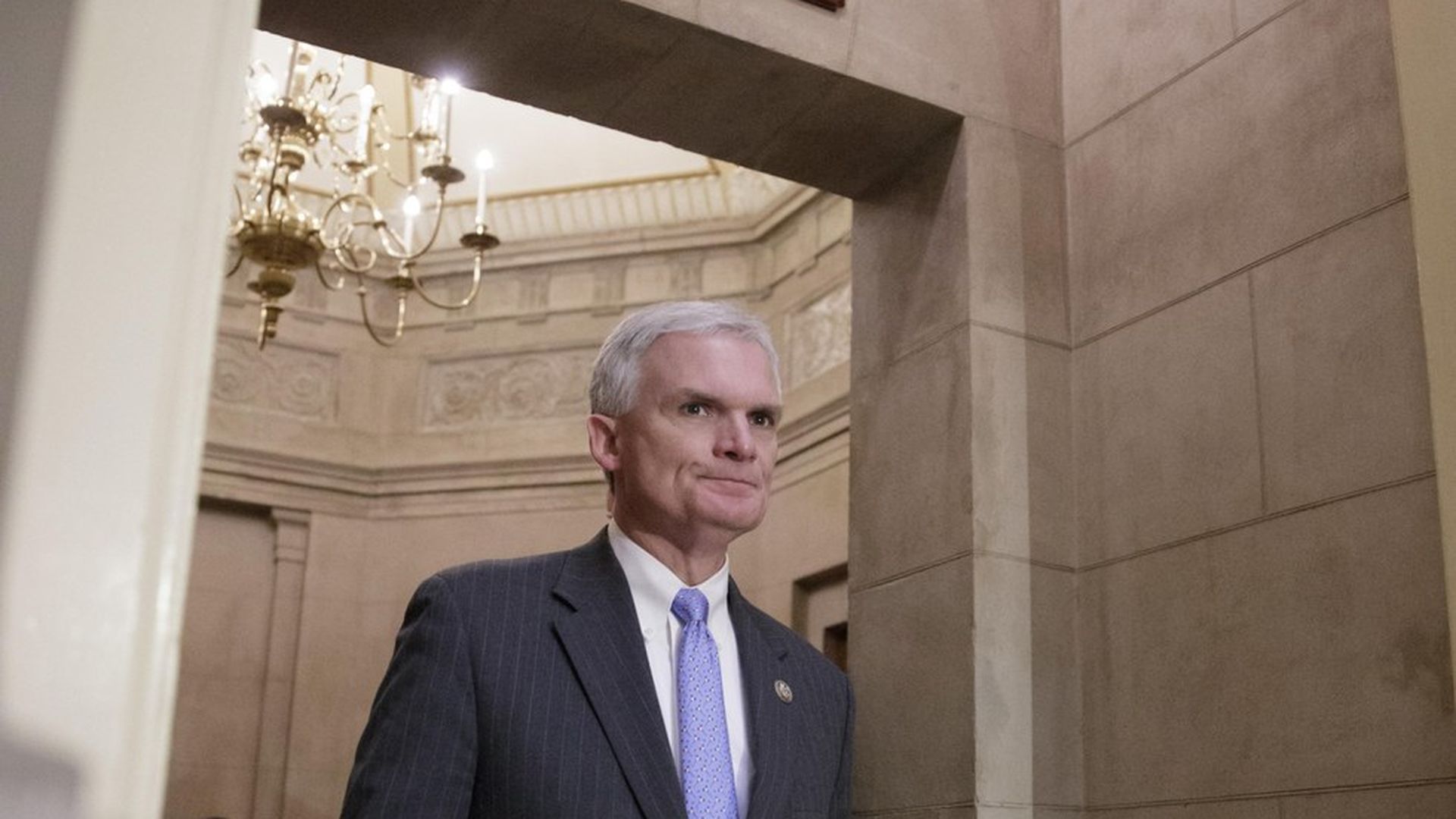
The House voted 215-to-205 Tuesday night to overturn Obama-era regulations that require internet providers like Verizon, Comcast and AT&T to get a user's permission before sharing their browsing history and other data with advertisers. It also prohibits the FCC from creating similar regulations in the future.
The White House has said it will recommend that President Trump sign the resolution, which was already approved by the Senate.
What it means for broadband providers: The rules hadn't yet gone into effect so this doesn't change the day-to-day ways that ISPs deal with customer data. But this likely clears the way for ISPs to go full speed ahead in taking on Facebook and Google for digital ad dollars. Meanwhile, the FCC will have to determine how to deal with privacy on broadband networks without the rules in place.

Dunkin' Donuts and Waze will order your coffee
Boston is gearing up for a mass descent on drive thru lines: Google's Waze, the traffic navigation app, is teaming up with Dunkin' Donuts to order coffee for drivers before they arrive at brick and mortar stores, according to The Boston Globe.
If this goes well, Waze will expand the "order ahead" function to other merchants.
The partnership: Waze doesn't earn a commission on the Dunkin' Donuts sales, but Dunkin' Donuts is increasing the amount it spends on Waze ads. To place an order, users will need both the Waze and the Dunkin' Donuts apps installed and be registered with the Dunkin' loyalty program.
Why it matters: Brand loyalty for Dunkin' and Waze. Note, Starbucks had a similar partnership announced last week with Amazon's Alexa and Ford vehicles. The Dunkin' Donuts-Waze partnership allows anyone — not just Ford drivers with Alexa — to take advantage, but will bring people time and time again to both Waze and Dunkin'.

Uber's first diversity report shows it's just like other tech companies
Uber has released its first ever workforce diversity report, and the results are what you'd expect—heavily male and white, just like the rest of the tech industry. Uber had been slower than its peers to release such a report, for which CEO Travis Kalanick apologized on Tuesday.
Gender: Overall, 63.9% of Uber's employees worldwide are men, and 36.1% are women. Within technical roles, 15.4% are women, just as CEO Travis Kalanick stated a few weeks ago. The numbers get more even within non-technical and customer support jobs.
Turvo raises $25 million to simplify logistics management
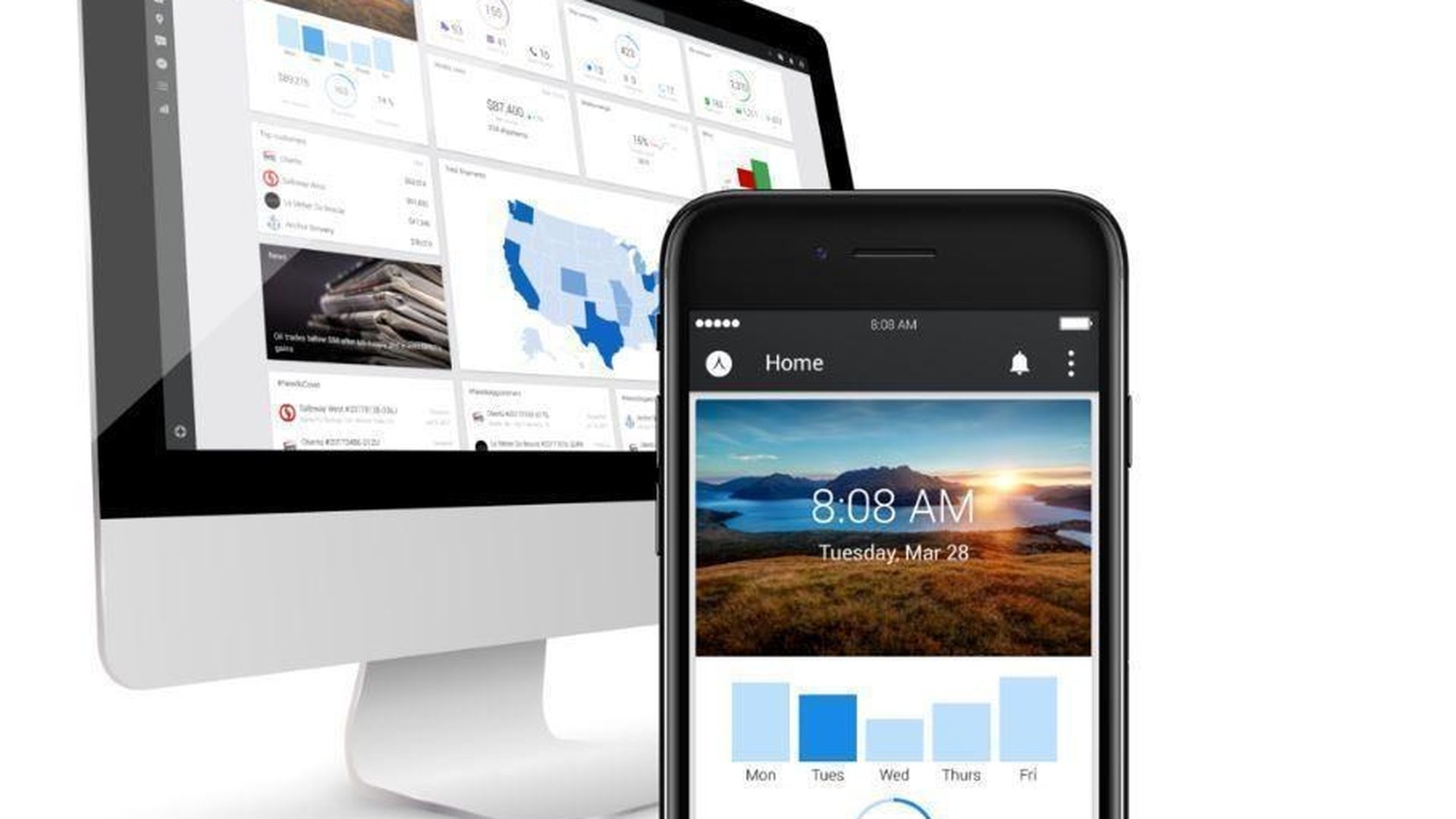
Turvo, a Silicon Valley startup that's been quietly building logistics management software, has raised $25 million in Series A funding.
Making logistics efficient: Turvo's software lets large business connect all vendors and services they use to ship or move merchandise or supplies ― including brokers, shippers, carriers, and invoices and payments ― so they can manage it all at once. Sort of like a central command center. Turvo charges monthly fees and per-shipment fees to its customers, but they can in turn invite their vendors and business partners for free. Its existing customers include jerky manufacturer Oberto Brands, cosmetics company Le Metier De Beaute, and beer-maker Anchor Brewing.

The potential of self-driving cars
Every year on our nation's roadways, more than 35,000 people tragically lose their lives due to traffic accidents—a large number of them caused by distracted driving.
With so many traffic fatalities resulting from human error, we have to ask ourselves if there is a better way. American innovation may have the answer to this problem — in the form of self-driving cars.
While it may seem like science fiction, the reality is that technological breakthroughs have allowed for deployment of these cars to be right around the corner.
Facebook hires Apple veteran to lead Oculus hardware efforts
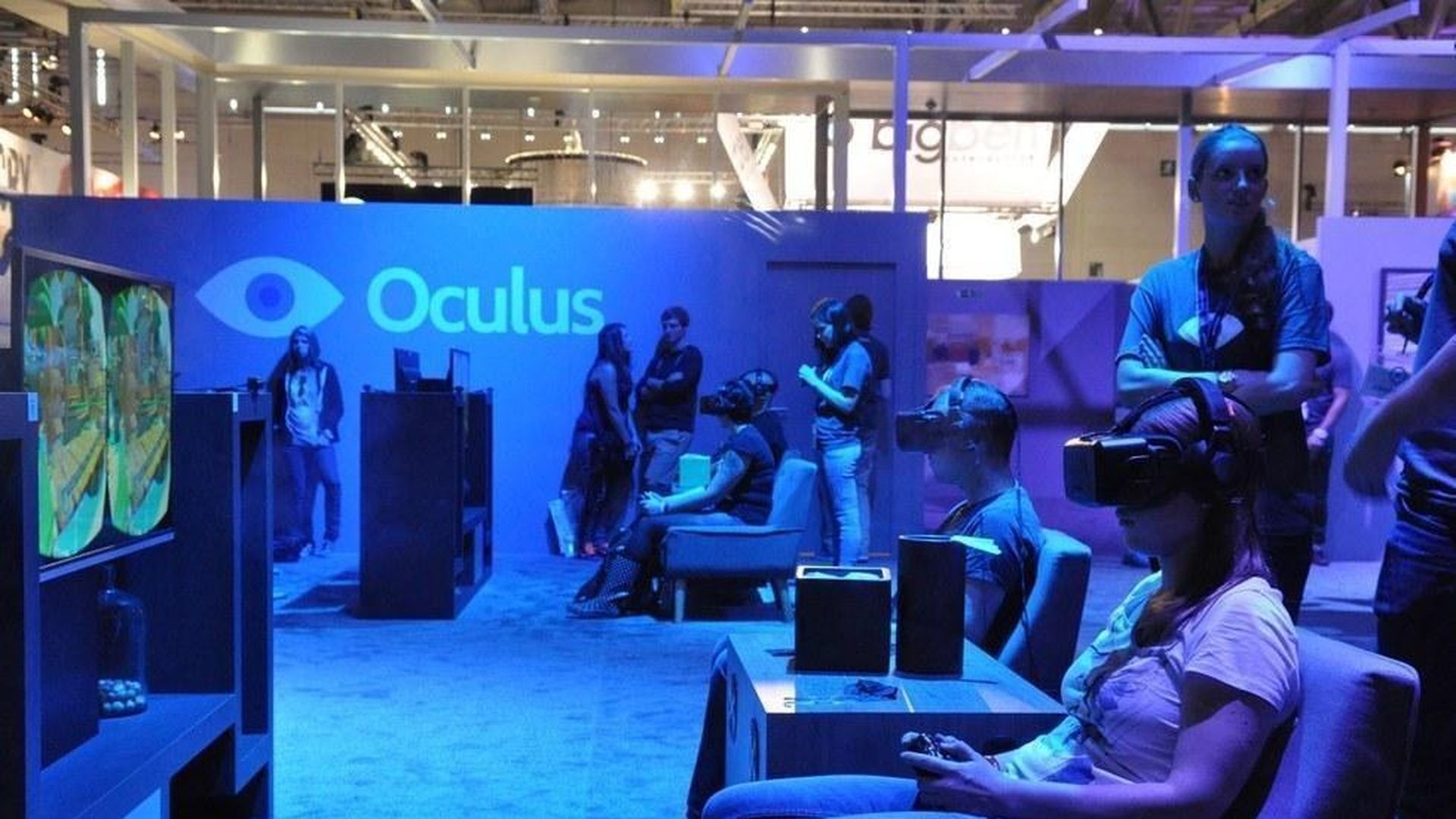
Facebook has hired Michael Hillman, a 15-year Apple veteran, to head hardware efforts for its Oculus division, according to his LinkedIn profile. Hillman will work closely with Oculus COO Hans Hartmann, according to Bloomberg, which first reported the news.
At Apple, Hillman spend more than a decade working on the iMac and other desktop products, according to his LinkedIn profile, giving him extensive experience developing mass consumer products.
Why it matters: Facebook CEO Mark Zuckerberg has made it clear he views virtual reality as the next important computing platform, and the company is investing heavily in that area. Two months ago, it announced the hiring of Hugo Barra, a former Android executive who spent 3.5 years at Chinese mobile device giant Xiaomi.
Uber's self-driving cars return to Arizona roads after Friday crash
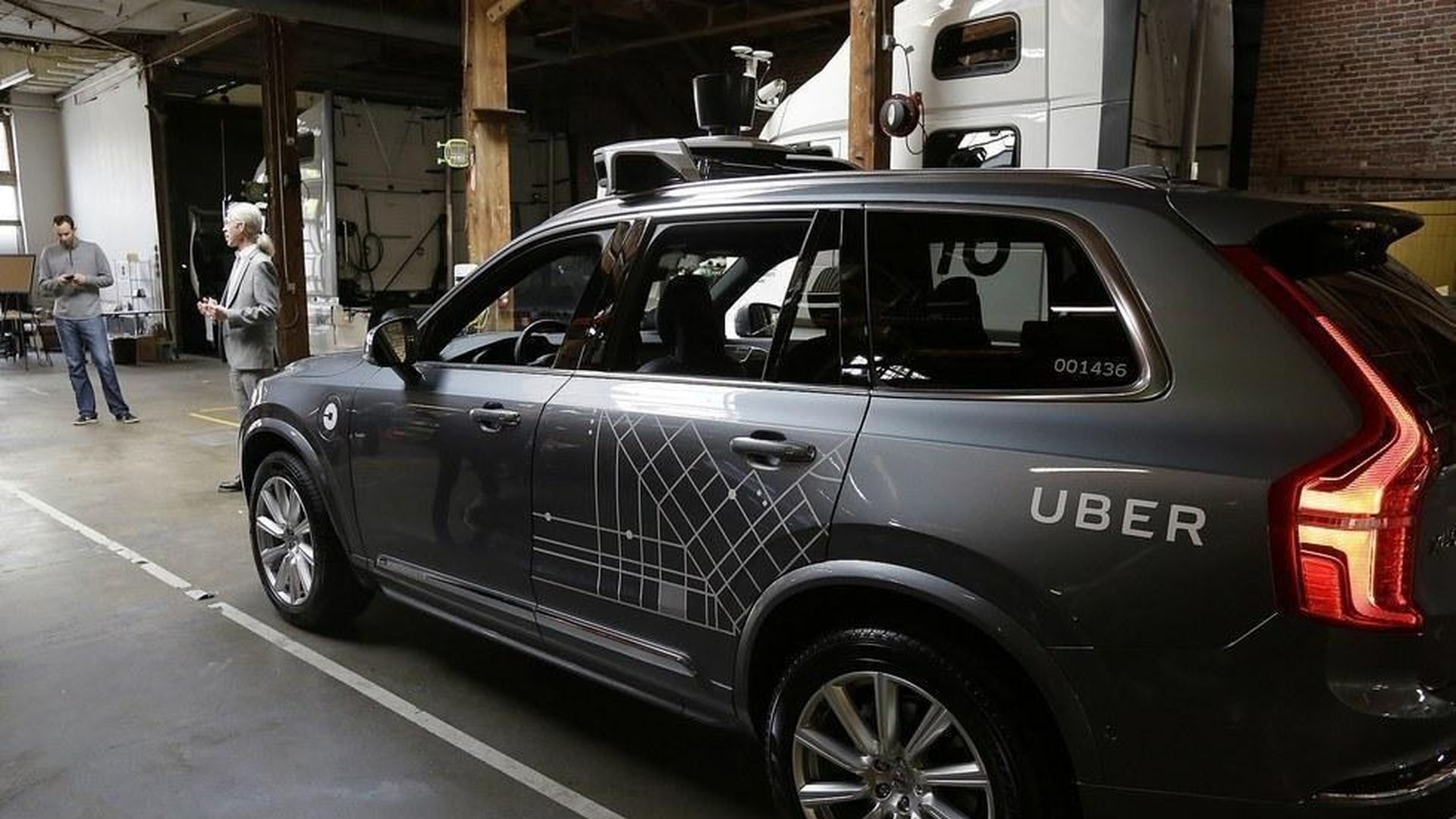
Uber is putting its self-driving cars back on the road in Tempe, Ariz., and Pittsburgh later today, the company told Axios. Uber temporarily grounded its cars over the weekend following a car accident that involved one of its self-driving cars in Tempe while it was in autonomous mode.
Earlier on Monday, Uber's self-driving cars got back on the road in San Francisco, where it's also testing them.
Not at fault: According to Tempe police, Uber's self-driving car was obeying the law when it was struck by another car making a left turn and didn't yield to Uber's vehicle, according to the Associated Press. The other vehicle was subsequently cited for a a moving violation.
Facebook lets you call elected officials straight from the News Feed
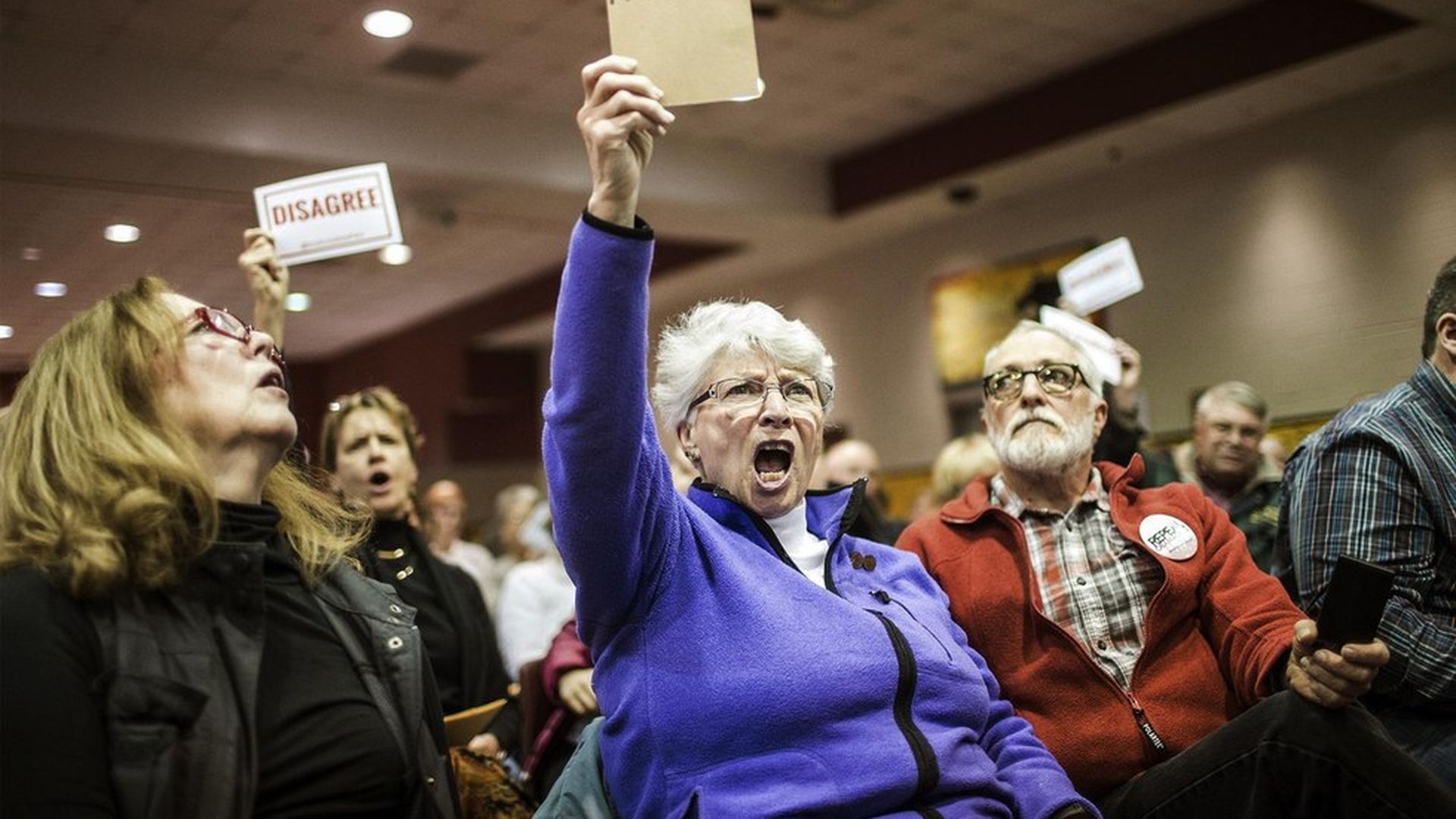
Facebook is tapping into the Trump-era groundswell of interest among Americans in contacting their elected representatives.
The details: A new Facebook feature will provide users with ways to contact their representatives if they like or comment on their posts on the platform. Those users will be able to get in touch with lawmakers through a single click. A feature called Town Hall will also help users determine and contact their representatives. The company will also start reminding people about local elections for the first time.
What we're watching: Facebook's voter turnout messages have been known to drive more people to the polls. What will be the impact of adding lawmaker contact buttons to its landmark product, at least in some cases?

Samsung may sell refurbished Galaxy Note 7 phones, but not in US
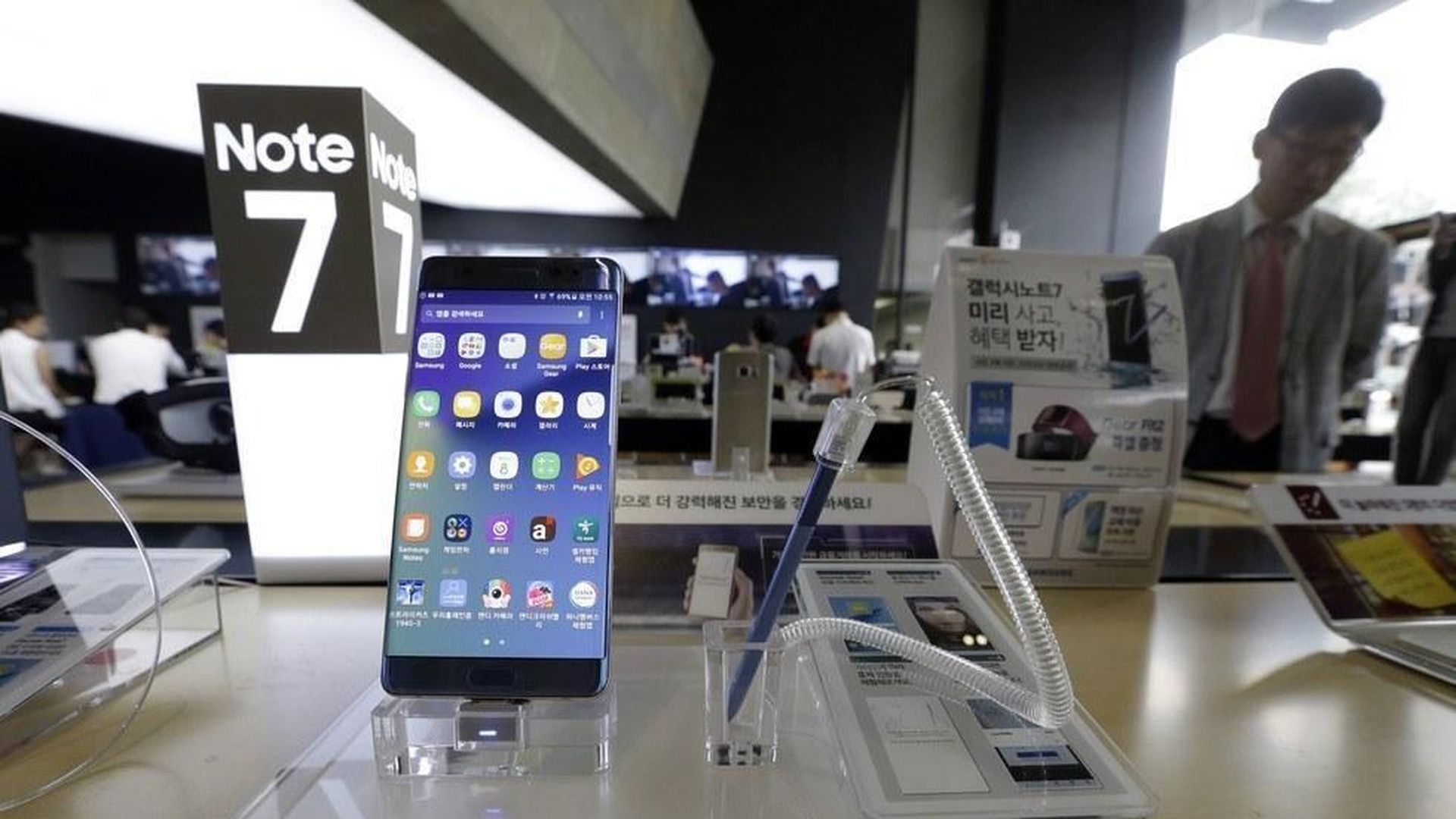
Samsung confirmed on Monday that it is considering selling or renting refurbished versions of the Galaxy Note 7 phone it recalled last year over their potential to catch fire. The devices won't be sold in the U.S. and may have a new name. The Korean phone maker will also work to recover and recycle materials from phones not used as refurbished devices.
"To be clear, the objective of introducing refurbished devices is solely to reduce and minimize any environmental impact," a Samsung representative told Axios. "The product details including the name, technical specification and price range will be announced when the device is available."
What it means: Samsung must be pretty certain that its investigation fully uncovered the battery-related issues causing the phones to ignite.
Why bother? Despite the reputation and other risks associated with such a move, Samsung's move could keep more electronic waste out of landfill and salvage a fraction of the lost revenue caused by the massive recall.

How humanity ends
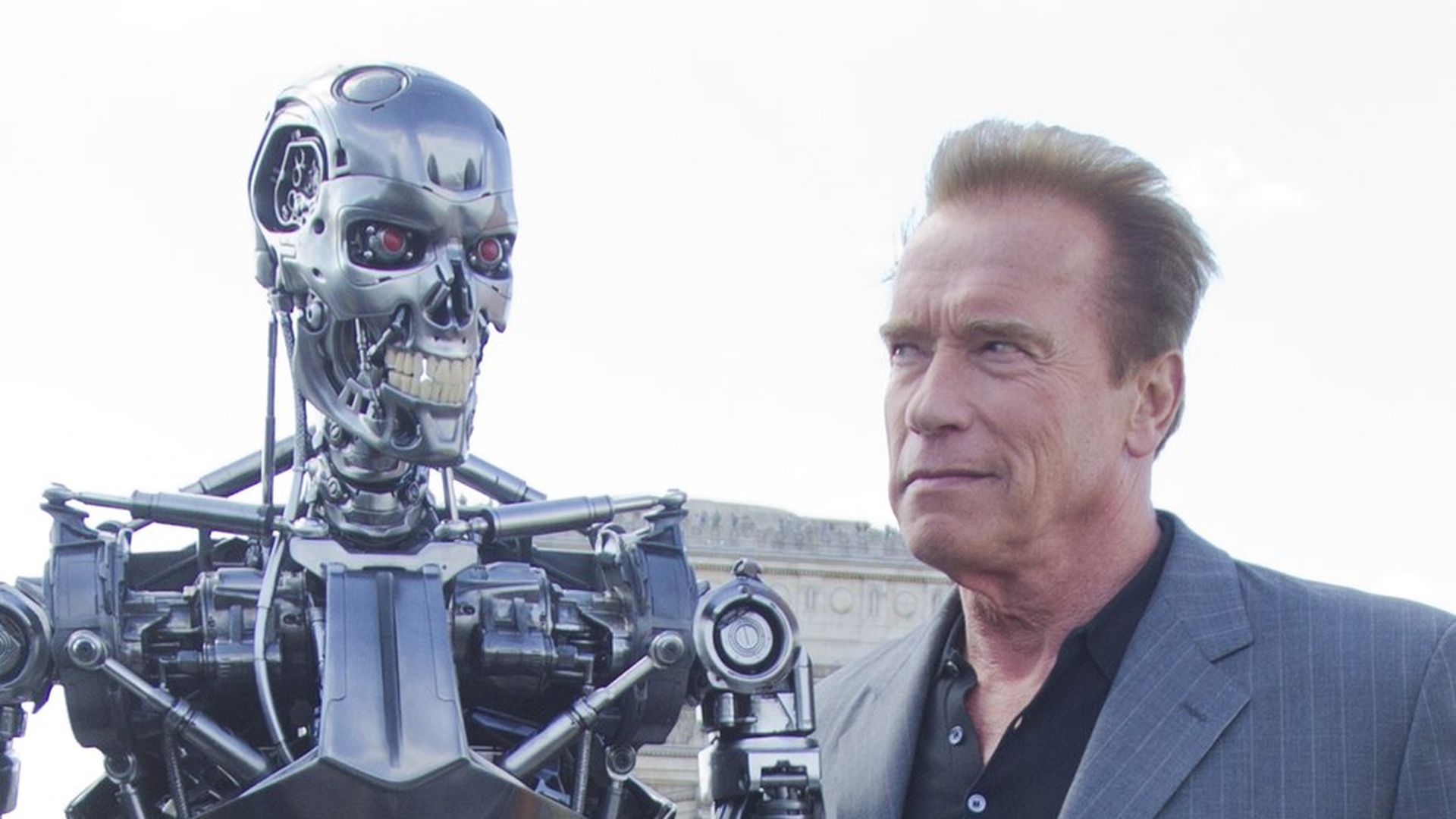
In Maureen Dowd's Vanity Fair piece on Elon Musk and the coming revolution in artificial intelligence, researcher Eliezer Yudkowsky lays out one vision of the apocalypse:
"If you want a picture of A.I. gone wrong, don't imagine marching humanoid robots with glowing red eyes. Imagine tiny invisible synthetic bacteria made of diamond, with tiny onboard computers, hiding inside your bloodstream and everyone else's. And then, simultaneously, they release one microgram of botulinum toxin. Everyone just falls over dead."
Elon Musk takes on the "A.I. apocalypse"
Maureen Dowd for Vanity Fair, "Elon Musk's billion-dollar crusade to stop the A.I. apocalypse: Musk is famous for his futuristic gambles, but Silicon Valley's latest rush to embrace artificial intelligence scares him. ... Inside his efforts to influence the rapidly advancing field and its proponents, and to save humanity from machine-learning overlords":
- "Musk [says] this .. one reason we needed to colonize Mars [is] so that we'll have a bolt-hole if A.I. goes rogue and turns on humanity. ..."
- "You'd think that anytime Musk, Stephen Hawking, and Bill Gates are all raising the same warning about A.I. — as all of them are — it would be a 10-alarm fire. But, for a long time, the fog of fatalism over the Bay Area was thick. ..."
- "Some in Silicon Valley argue that Musk is interested less in saving the world than in buffing his brand, and that he is exploiting a deeply rooted conflict: the one between man and machine, and our fear that the creation will turn against us. They gripe that his epic good-versus-evil story line is about luring talent at discount rates and incubating his own A.I. software for cars and rockets."
Related: Treasury Secretary Steve Mnuchin says A.I. taking jobs from humans is ""not even on our radar screen."
Mark Zuckerberg's red state road trip

The questions started as soon as Mark Zuckerberg announced on his Facebook page in early January that his "personal challenge" for the year was to travel the roughly 30 states he'd never visited. Was he launching a political career? Making amends for a year of politically-tinged crisis at the company?
It's premature to say what exactly Zuckerberg and his empire will get out of the year-long junket, and he says he isn't running for president. But a few months into his project, there's an early message: Less Crunchies, more Country Music Association Awards.