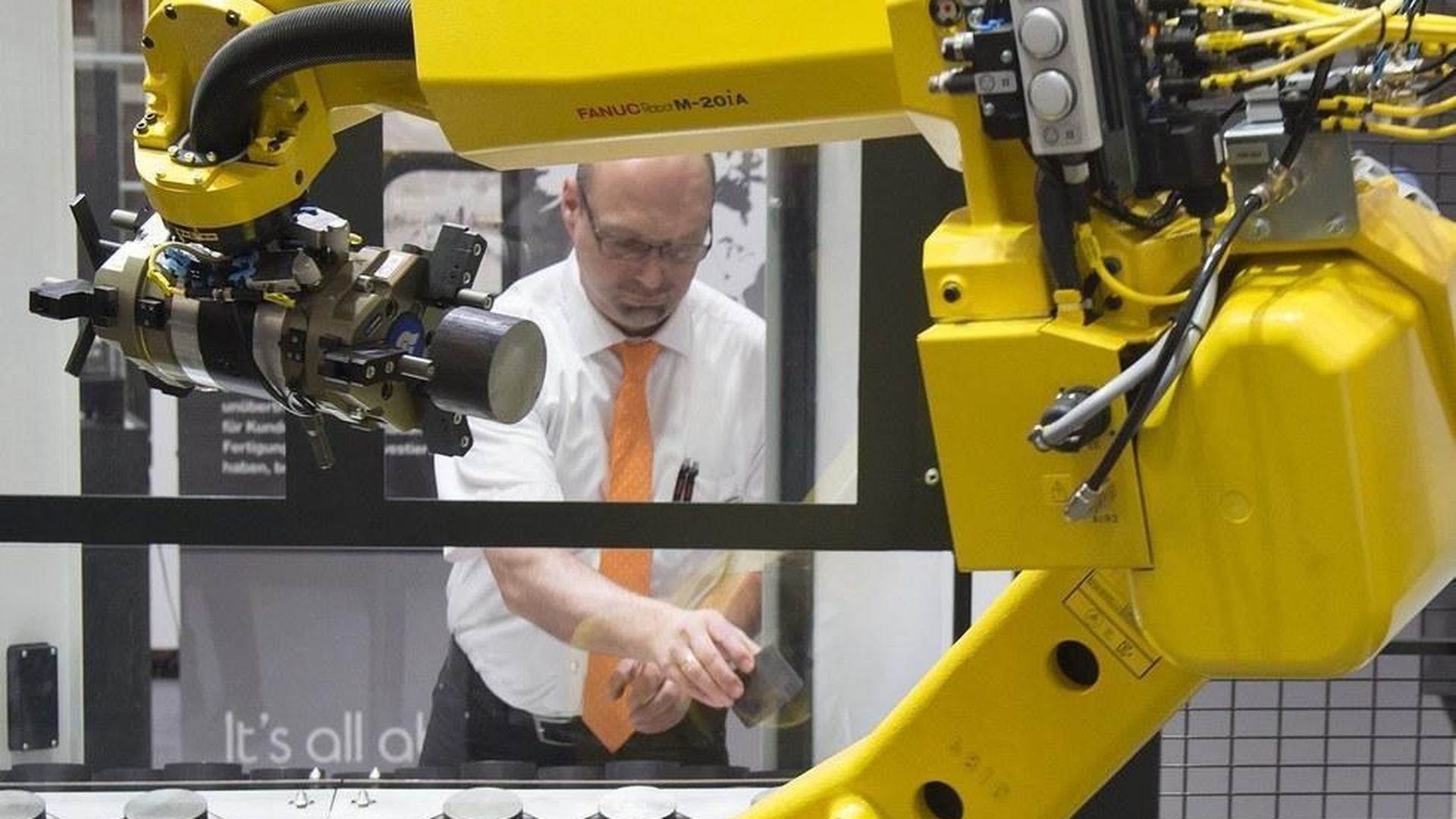
An interesting perspective on the employment questions raised by automation surfaced at a Senate hearing this morning thanks to retired Col. Michael Cartney, who leads the Lake Area Technical Institute in South Dakota:
"So there's been concerns that technology's going to allow us to do more with less. So my response is always: you never do more with less, you do more with something different. And that's what technology's doing. But it's not reducing the number of workers we need, it's changing the types of workers that we need."
Why it piques our interest: We hear all the time that automation isn't going to rob Americans of their jobs, just change them. But Cartney isn't some think-tank type — he's involved in training Americans for new jobs.
Uber finally released its first diversity report on Tuesday—something it reluctantly did after recent allegations of sexual harassment and discrimination created pressure. The conclusion: Uber's workforce demographics look pretty much like those of other major Silicon Valley companies, meaning it employs mostly white men.
Why it matters: Uber is still under pressure to make meaningful changes to its work culture. While releasing this data is a first step in being publicly held accountable, it's no guarantee that such changes will happen.
Amazon is shutting down its Quidsi division, owner of Diapers.com and Soap.com, because it's not profitable, as Bloomberg first reported and the company confirmed to Axios. Amazon acquired the company for $545 million in 2011.
"We have worked extremely hard for the past seven years to get Quidsi to be profitable, and unfortunately we have not been able to do so," Amazon said in a statement. "Quidsi has great brand expertise and they will continue to offer selection on Amazon.com; the software development team will focus on building technology for AmazonFresh."
After Quidsi: Quidsi was co-founded by Marc Lore, whose second e-commerce venture, Jet.com, sold to Walmart for $3 billion last year to help it compete with Amazon.
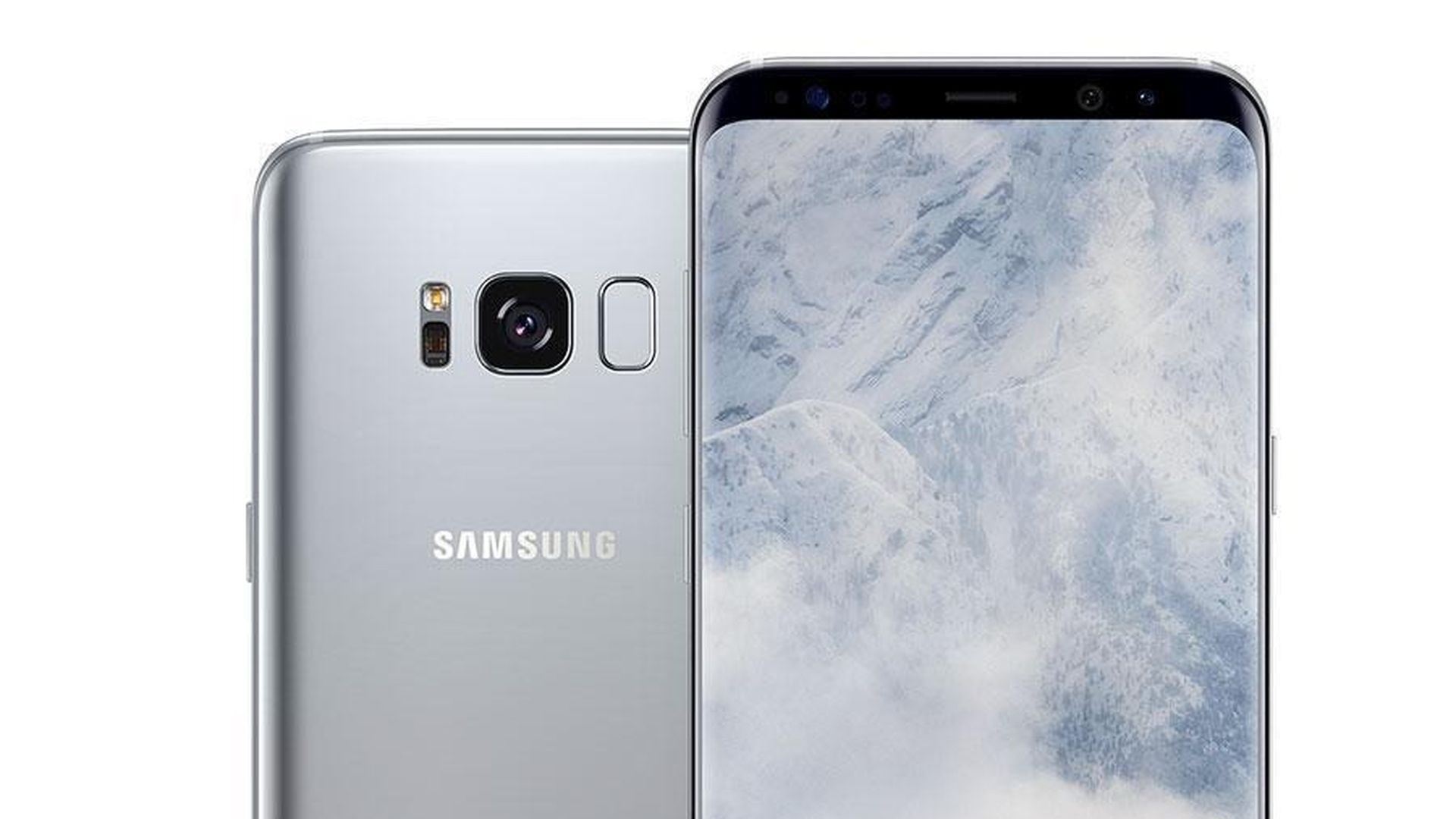
Samsung is making the pitch this morning that its new Galaxy S8 and Galaxy S8+ aren't like all the other smartphones out there. Here are three reasons why that's at least partly true.
No home button: By removing the physical home button, the vast majority of the space on the front of the new Galaxies is devoted to pure screen. It gives the phone a clean look and adds extra space for browsing Web pages and documents.
That giant screen: By using a curved screen and getting rid of the home button, Samsung has managed to get a rather massive display on to both new models. The smaller, but still large, Galaxy S8 measures 5.8-inches diagonally, while the S8+ has a 6.2-inch display.
Bixby: While Apple has Siri and Google has its Assistant, Samsung says Bixby is a new kind of virtual assistant, capable of handling a much broader array of tasks. While initially limited to a handful of Samsung's own programs, Bixby is capable of doing nearly anything that can be done in those programs with a tap or a click.
The Galaxy S8 and S8+ will be available for pre-order on March 30 and start shipping on April 21. We're still waiting to hear exact pricing.
Update: Verizon says the S8 will sell for $720 and the S8+ will fetch $840.
One might have thought that Apple's app economy might lose steam as the number of Android devices began to vastly outpace those running iOS. One would be wrong.
Even as Android now accounts for 9 out of every 10 phones, Apple's store has continued to outpace Google's because Apple users spend so much more on content than their Android brethren.
The House voted 215-to-205 Tuesday night to overturn Obama-era regulations that require internet providers like Verizon, Comcast and AT&T to get a user's permission before sharing their browsing history and other data with advertisers. It also prohibits the FCC from creating similar regulations in the future.
The White House has said it will recommend that President Trump sign the resolution, which was already approved by the Senate.
What it means for broadband providers: The rules hadn't yet gone into effect so this doesn't change the day-to-day ways that ISPs deal with customer data. But this likely clears the way for ISPs to go full speed ahead in taking on Facebook and Google for digital ad dollars. Meanwhile, the FCC will have to determine how to deal with privacy on broadband networks without the rules in place.
Boston is gearing up for a mass descent on drive thru lines: Google's Waze, the traffic navigation app, is teaming up with Dunkin' Donuts to order coffee for drivers before they arrive at brick and mortar stores, according to The Boston Globe.
If this goes well, Waze will expand the "order ahead" function to other merchants.
The partnership: Waze doesn't earn a commission on the Dunkin' Donuts sales, but Dunkin' Donuts is increasing the amount it spends on Waze ads. To place an order, users will need both the Waze and the Dunkin' Donuts apps installed and be registered with the Dunkin' loyalty program.
Why it matters: Brand loyalty for Dunkin' and Waze. Note, Starbucks had a similar partnership announced last week with Amazon's Alexa and Ford vehicles. The Dunkin' Donuts-Waze partnership allows anyone — not just Ford drivers with Alexa — to take advantage, but will bring people time and time again to both Waze and Dunkin'.
Uber has released its first ever workforce diversity report, and the results are what you'd expect—heavily male and white, just like the rest of the tech industry. Uber had been slower than its peers to release such a report, for which CEO Travis Kalanick apologized on Tuesday.
Gender: Overall, 63.9% of Uber's employees worldwide are men, and 36.1% are women. Within technical roles, 15.4% are women, just as CEO Travis Kalanick stated a few weeks ago. The numbers get more even within non-technical and customer support jobs.
Turvo, a Silicon Valley startup that's been quietly building logistics management software, has raised $25 million in Series A funding.
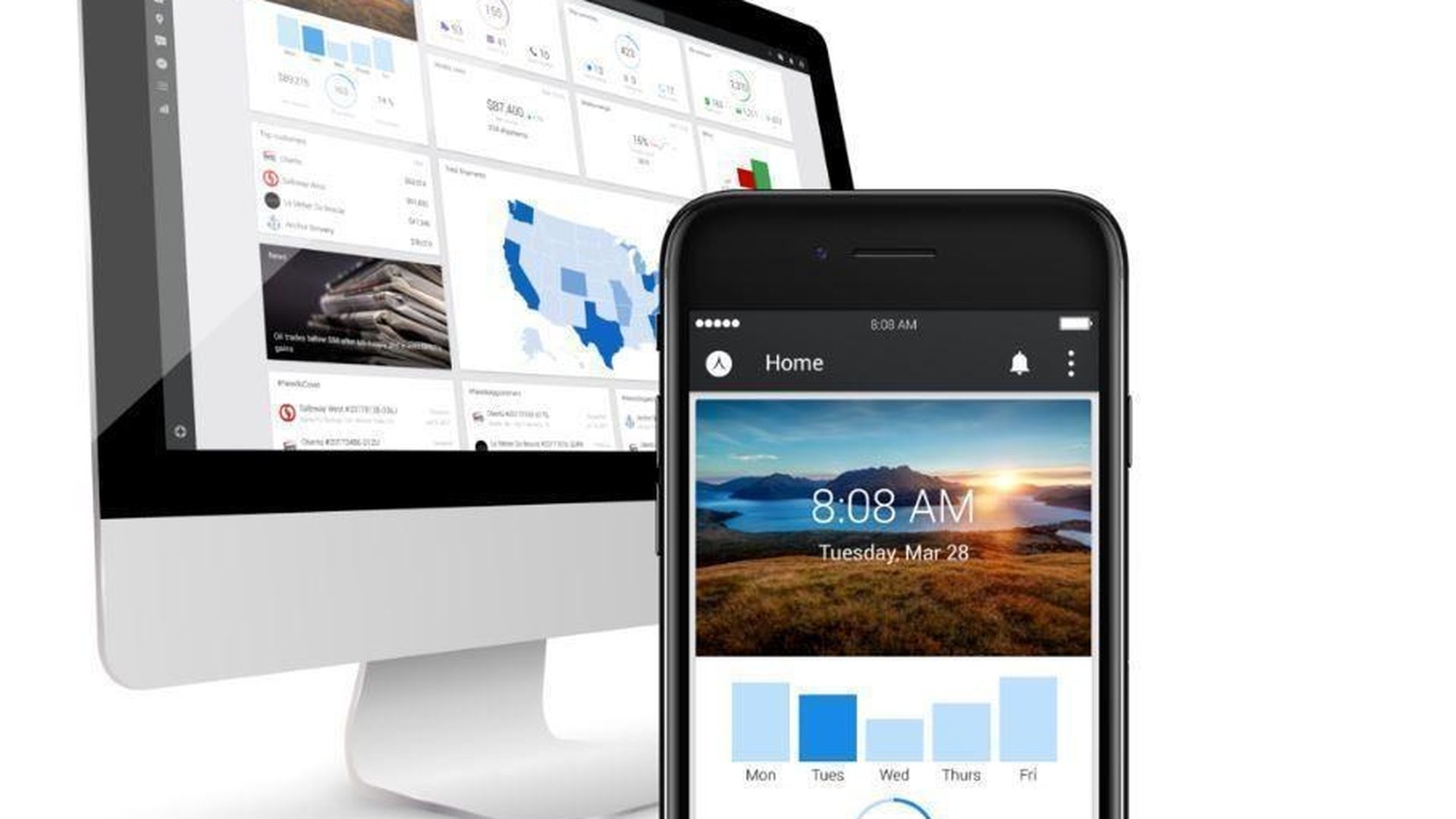
Making logistics efficient: Turvo's software lets large business connect all vendors and services they use to ship or move merchandise or supplies ― including brokers, shippers, carriers, and invoices and payments ― so they can manage it all at once. Sort of like a central command center. Turvo charges monthly fees and per-shipment fees to its customers, but they can in turn invite their vendors and business partners for free. Its existing customers include jerky manufacturer Oberto Brands, cosmetics company Le Metier De Beaute, and beer-maker Anchor Brewing.