Thursday's technology stories

Hot in Silicon Valley: Twitter's "long way to go"

Twitter's CEO admits the company still has work to do: Speaking at the Goldman Technology Conference in San Francisco, CEO Jack Dorsey said Twitter still has "a long way to go" as far as making the service easier for its users. He added that in the U.S., the company is seeing patterns similar to those it saw during the Arab Spring in 2011 around political activism and discussion. The company disappointed investors last week with its earnings, proving that even Trump and politics aren't enough to energize the company's growth.
Elon Musks deletes critical immigration tweets: The entrepreneur, who still sits on Trump's economic advisory council, quickly posted and deleted tweets that called the president's immigration order "not right." He later said that these were "earlier drafts" of tweets and mirror what he's already said on the topic.
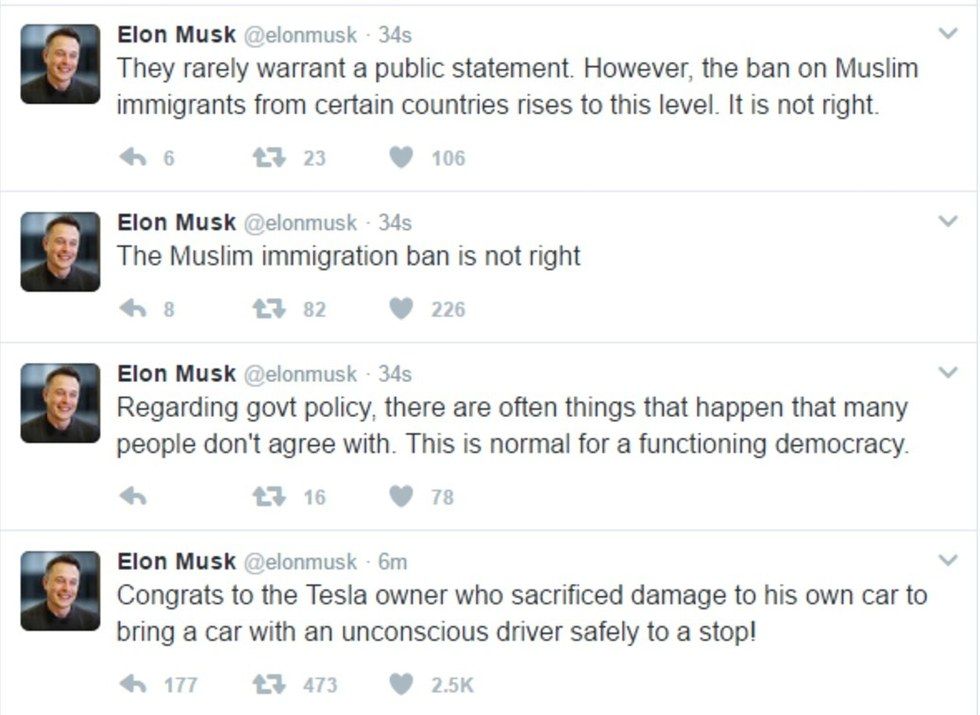
Why it matters: Musk, himself an immigrant, has so far defended his decision to remain on the council, arguing that it gives him an opportunity to influence Trump on such topics.


How — and when — Trump tweets
Since becoming president, Donald Trump has tweeted 109 times from his trusty (and very unsecure) Galaxy S3. Monday was the first day since entering the White House that Trump did not tweet before 8:15 AM. That's notable because his Twitter usage has some very clear trends...

Yahoo says email accounts may have been compromised
Yahoo is warning users that their accounts may have been subjected to "malicious activity" between 2015 and 2016, per AP. The news comes in the midst of the company's investigation into a massive security breach that exposed 1 billion users' data — such as email addresses, birthdates, and answers to security questions — several years ago.
In an email to users Wednesday, Yahoo said that based on the information they have collected so far, the company thinks that "forged cookies" — strings of data that enable people to access accounts without re-entering their passwords — were used in the breach. Yahoo has yet to announce how many people were affected, but has said they believe a "state-sponsored actor" is responsible.
Why this matters: The first wave of news surrounding Yahoo's mega-breach threatened the company's proposed deal to sell its core Internet business to Verizon. Earlier today, Bloomberg reported that the deal is still happening, but Verizon has lowered the price by $250 million.

Facebook adds Snapchat-like video features to feed
- Sound will autoplay for videos in newsfeed: About 60% of videos on Snapchat play with the sound on, giving Snapchat a leg up for video advertisers. Facebook reportedly had an 80% video sound off rate.
- Vertical Video: Snapchat championed vertical video, and began pushing it in the market in 2015, when they said vertical video yields the best-performing shows and ads and ads are viewed 9x more frequently when shot vertically over horizontally. Facebook began testing in-feed vertical video in 2016 and the feature will now be available on iPhone and Android devices.
- Watch and Scroll: It's now possible to minimize the video so that it keeps playing in the corner of your screen while you browse other stories in News Feed. This is something publishers have been long-experimenting, to help increase video engagement numbers as viewers navigate their sites. CNN.com and YouTube have similar watch and scroll video features.
Why it matters:
Facebook is scrambling to optimize its video viewing experience to be able to increase the competitiveness of video advertising in its ad auction and to compete with other platforms to win video advertising dollars. 2017 is supposed to be a slow growth year for Facebook advertising, and revenues are expected to come down significantly.