






Illustration: Sarah Grillo/Axios
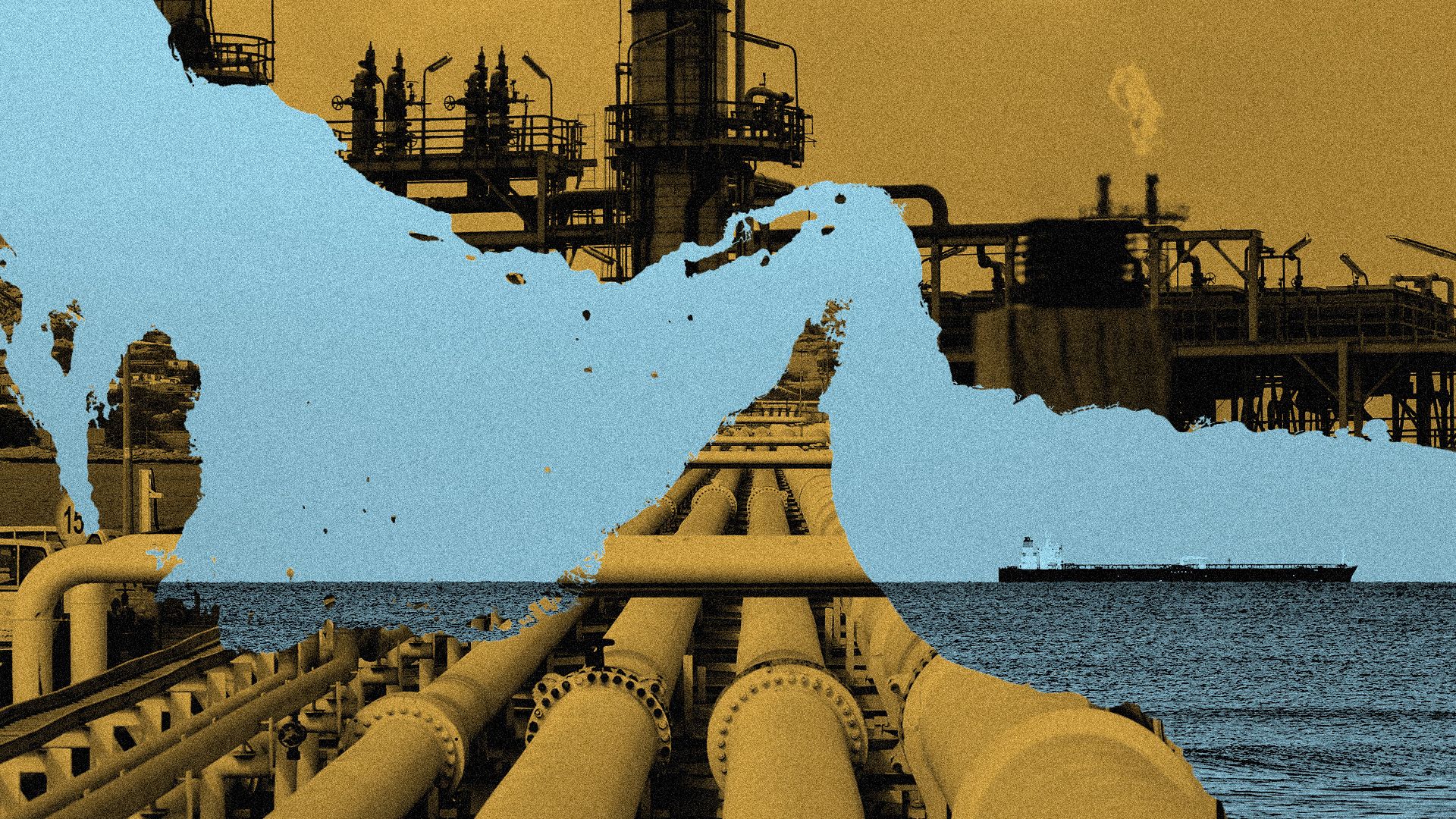
To understand what the global economy will do this year, you have to understand what happens next in the Iran war.
- The outlook for the war and its aftermath, and what that means for the free passage of energy through the Strait of Hormuz, is the global economic outlook.
- That's the uncomfortable reality hanging over the International Monetary Fund and World Bank Group spring meetings this week.
Why it matters: The economic pain is uneven: Poorer countries that import their oil carry the heaviest weight.
- The U.S. — the country that started the conflict — is poised to suffer the least economic damage, by almost every measure.
- Still, a prolonged surge in prices for gasoline, diesel, jet fuel, fertilizer and more would exact a toll in the U.S.
The intrigue: There is little else on the minds of finance ministers, central bankers and other policymakers meeting in D.C. this week but the shock that is rattling their respective economies.
Consider the economic forecast that set the tone for the meetings. The IMF slashed its global growth forecast as it predicted a surge in inflation this year.
What they're saying: "The impact of the war will be uneven," IMF chief economist Pierre-Olivier Gourinchas told reporters on Tuesday.
- Alongside a baseline scenario, the IMF released two other forecasts in the event of a more prolonged conflict: an adverse scenario of a sharper economic slowdown and a more severe scenario that has the global economy flirting with an outright recession.
- But the growth hit for poorer nations would be twice as large as that for richer nations, the IMF said.
- "Every day that passes and every day that we have more disruption in energy, we are drifting closer toward the adverse scenario," Gourinchas said.
Zoom out: "The U.S. isn't vulnerable. It's the Asian countries who are," Treasury Secretary Scott Bessent told reporters when asked about the Strait of Hormuz blockade imposed earlier this week.
- "I can say that the president signaled that it would be a four- to six-week process ... and I think we're close to that," top White House economist Kevin Hassett told Axios.
The bottom line: Even if the U.S. escapes the worst, it still faces higher commodity prices — especially at the pump.
- Will inflation pressures at home eventually force President Trump to seek a quicker end to the war?
Former World Bank president David Malpass told Axios: "It's a clear supply shock — and so that's not just oil and natural gas, but in other products that are coming through the Strait of Hormuz. That takes time for the world to adjust to."
- "But my observation is markets are really good at adjusting to a supply shock."