Global economy could take big hit from Iran war

Add Axios as your preferred source to
see more of our stories on Google.
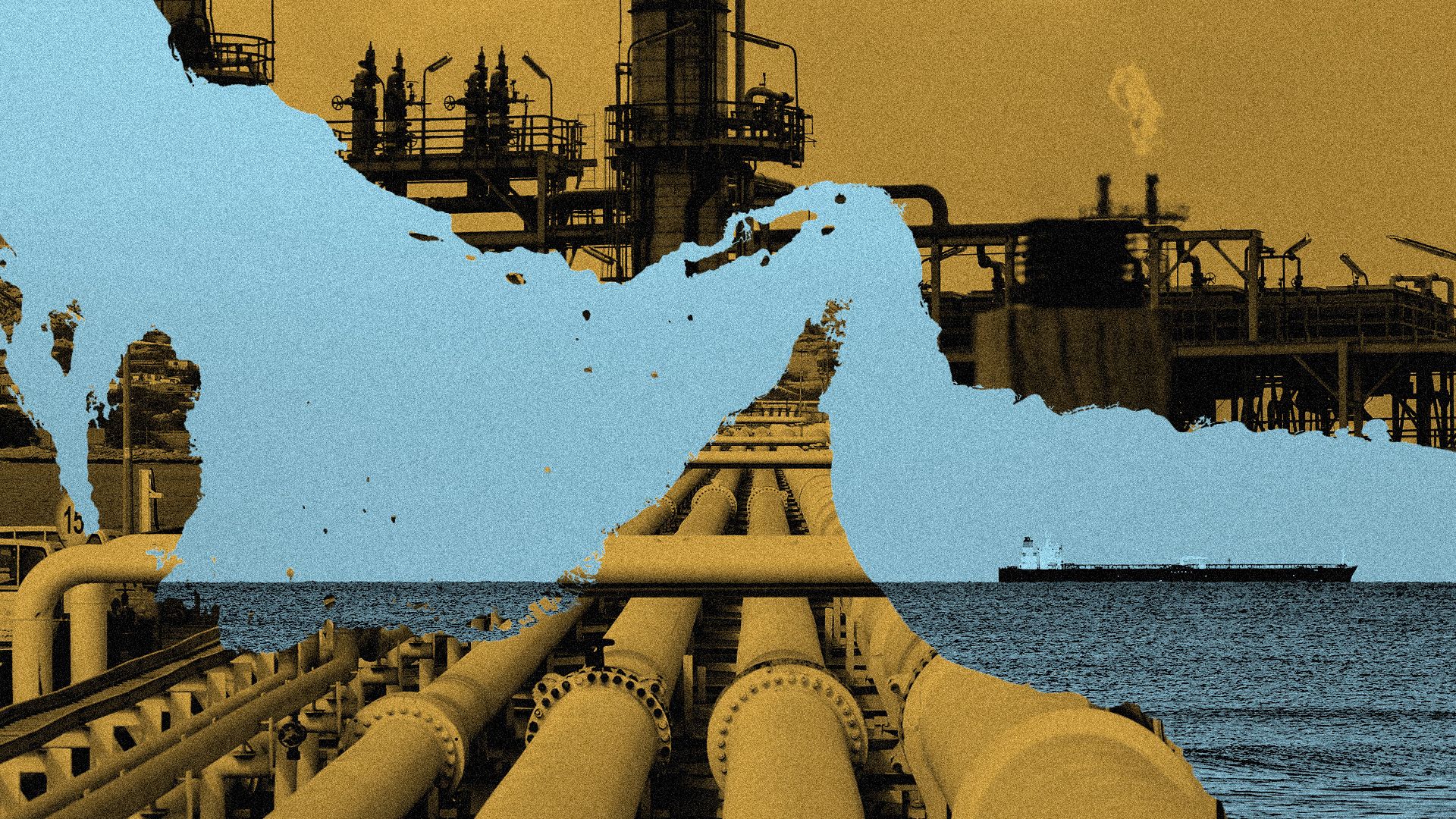
Photo illustration: Brendan Lynch. Photos: Getty Images
The International Monetary Fund cut its 2026 global economic growth forecast Tuesday, warning of slower growth and higher inflation thanks to the Iran war.
Why it matters: The war and energy shock in tow has halted economic momentum — and even a rather short conflict will do real damage, it finds.
- And if it's a long-term conflict — which the forecast says is definitely possible — the damage would be even greater.
- "More attacks on critical energy facilities and the prospect of a longer shutdown of the Strait of Hormuz are raising the specter of a more significant and persistent conflagration for the global economy," the IMF states.
The big picture: IMF analyses are closely tracked by finance ministers and other global economic policymakers.
Driving the news: The fund's revised World Economic Outlook sees growth slowing to 3.1% this year — down from 3.4% in its pre-war look-ahead — and inflation rising to 4.4%.
- And even those headline figures obscure the acute damage unfolding in many countries.
Threat level: It could actually get much worse. The outlook models several scenarios for the length of the conflict and its effect on energy prices:
- The short-term scenario is the 3.1% "reference" estimate. It assumes a "relatively short-lived" conflict lasting a "few more weeks," with energy commodities up 19% on an annual basis.
- The "adverse scenario" would be larger price increases that persist longer. In that case, global economic growth slows to 2.5%, and inflation rises to 5.4%.
- And then there's the even grimmer "severe scenario," with more damage to regional energy infrastructure and supply dislocations that extend into next year. In that case, 2026 growth plummets to 2% — and inflation hits 6.1%.
What we're watching: IMF outlines three large, connected buckets of variables that will decide how bad things get.
- 📈 High commodity prices are a "textbook negative supply shock" that raises costs for goods and services that require lots of energy — food, chemicals, shipping, you name it. The result: higher inflation and less consumer buying power.
- 🌀 These effects can be amplified as companies and workers alike try to make up their income losses. This risks an upward spiral — workers need higher wages as prices rise, which prompts businesses to further raise prices to deal with higher labor costs, and so on.
- 🏦 There could be quick changes in financial markets, such as lower asset values, in response to economic instability and central bank policies that could tighten monetary policy.
What's next: The forecast offers central banks and government policymakers guidance for managing the crisis.
- For instance, interventions like consumer energy subsidies and price caps should be well-targeted to the vulnerable and have sunsets to avoid adding large amounts of new government debt, it states.
The bottom line: "Despite the recent news of a temporary ceasefire, some damage is already done, and the downside risks remain elevated," Pierre-Olivier Gourinchas, the IMF's research director, said in a blog post alongside the report.
Sign up here for Axios' Future of Energy newsletter.
