Rubio launches direct negotiations between Israel and Lebanon

Add Axios as your preferred source to
see more of our stories on Google.
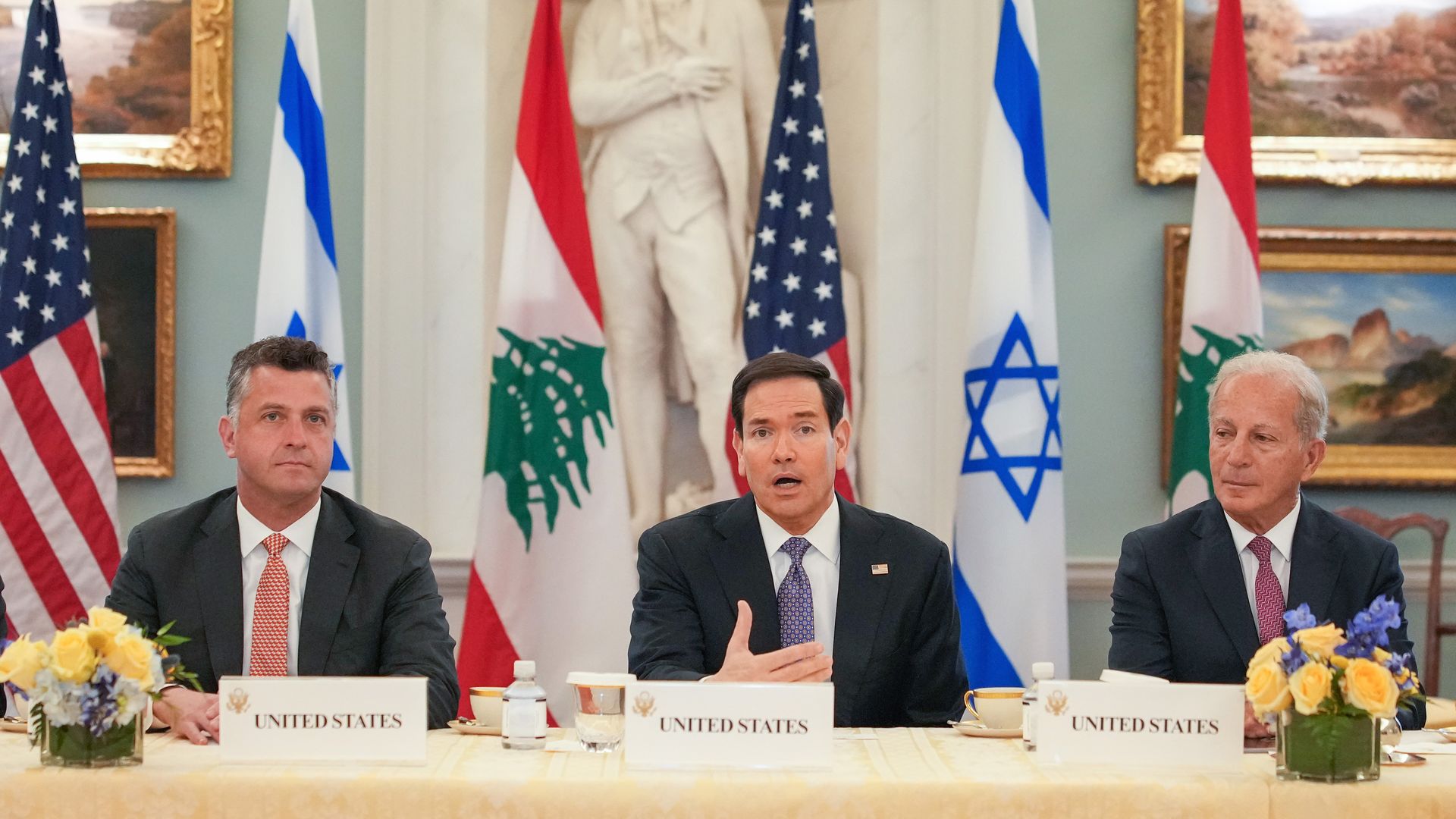
Rubio at a meeting with Israel and Lebanon, flanked by Counselor Michael Needham (L) and U.S. Ambassador to Lebanon Michel Issa (R). Photo: Andrew Harnik/Getty Images
Secretary of State Marco Rubio hosted the Israeli and Lebanese ambassadors to Washington for a two-hour meeting on Tuesday, during which they agreed to hold further direct talks on a peace agreement.
The big picture: Israel is conducting a wide-ranging ground invasion in southern Lebanon amid its war with Hezbollah. President Trump pushed Israeli Prime Minister Benjamin Netanyahu to de-escalate the fighting last week, paving the way for Tuesday's meeting.
- Netanyahu had previously rejected Lebanese proposals for direct talks.
- U.S., Israeli and Lebanese officials say the meeting was aimed at further isolating Hezbollah, pressing it do disarm, and strengthening the Lebanese government and its sovereignty over the country.
- According to a joint statement, the sides agreed to hold peace negotiations "at a mutually agreed time and venue."
Driving the news: Lebanese Ambassador Nada Hamadeh said at the meeting that there was an urgent need for a ceasefire and the full implementation of the cessation of hostilities agreement from November 2024.
- She also called for "concrete measures to address and alleviate the severe humanitarian crisis" in Lebanon as a result of the fighting.
The other side: The Israeli ambassador Yechiel Leiter said he stressed in the meeting that Israel will continue taking military action against Hezbollah.
- Leiter emphasized the need to disarm Hezbollah and said Israel is ready to work with the government of Lebanon to achieve that.
- "We discovered today that we are on the same side of the equation — that is the most positive thing we could have come away with. We are both united in liberating Lebanon from the occupation power called Hezbollah," Leiter told reporters after the meeting.
What they are saying: The U.S. said in a statement it supports "Israel's right to defend itself from Hezbollah's continued attacks."
- "The U.S. affirmed that any agreement to cease hostilities must be reached between the two governments, brokered by the U.S., and not through any separate track," according to the joint statement published at the end of the meeting.
- That was a signal that any ceasefire in Lebanon should not be the result of Iranian pressure.
- Iran and the Pakistani mediators both claimed that the current ceasefire in Iran also applied to Lebanon. Israel and the U.S. denied that, and Israel conducting a massive bombing campaign soon after the deal was announced.
Flashback: Tuesday's meeting in Washington was the highest-level engagement between Israel and Lebanon since 1993. The Trump administration brokered lower-level talks last year.
What's next: Leiter said the parties discussed during the meeting "a long term vision" for delineating the borders between the countries, reaching a security agreement and finally signing a full peace agreement.
- "The United States expressed its hope that talks can exceed the scope of the 2024 agreement and bring about a comprehensive peace deal," the joint statement read.
