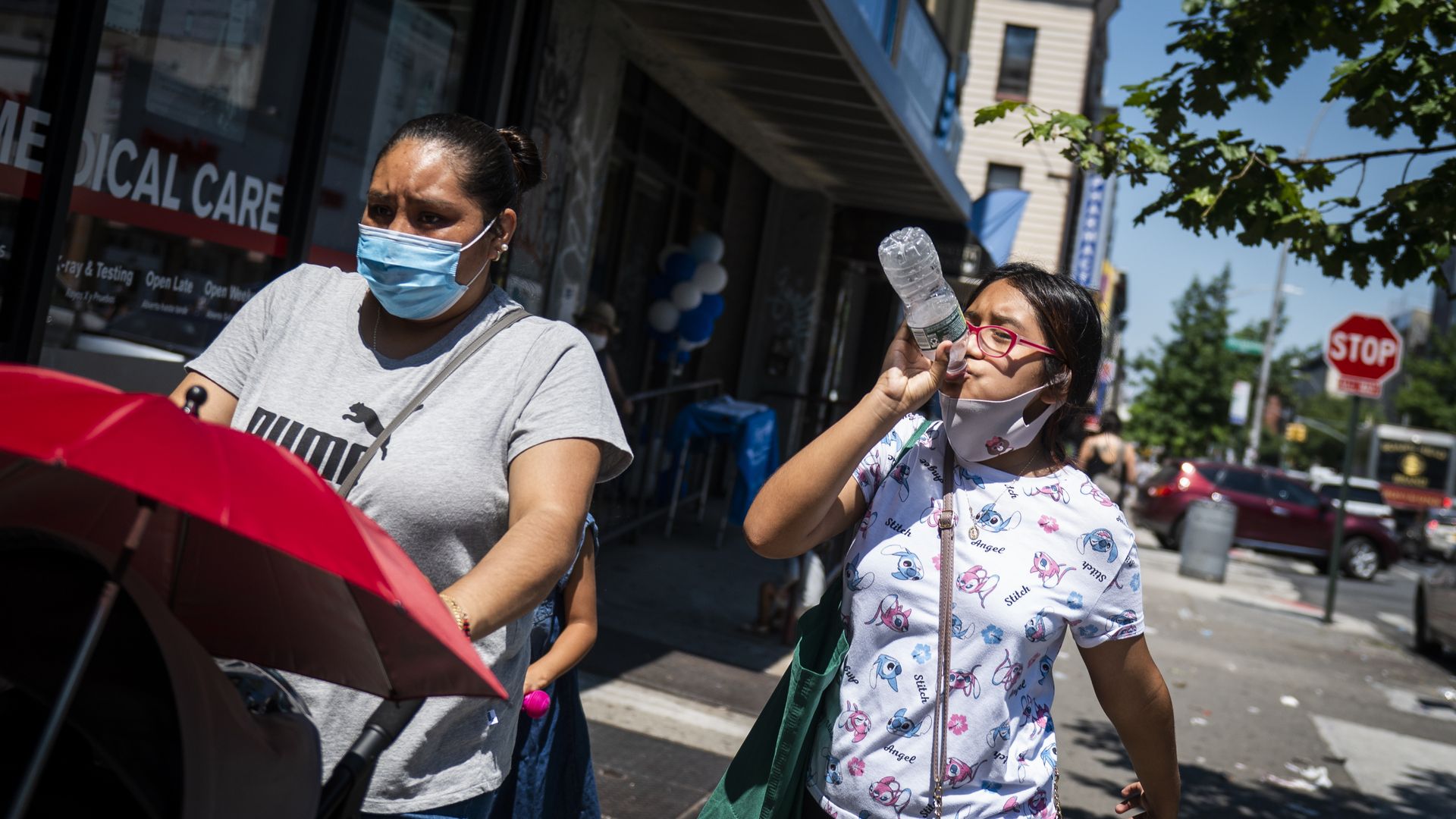
Nights on average are heating up faster than days in most parts of the United States — a trend caused by climate change, according to the 2018 National Climate Assessment Report, newly cited by the New York Times.
Why it matters: Last month was the hottest June on record for the U.S., and more than 1,500 areas of the country logged new record-high overnight temperatures toward the end of the month.
Why it matters: The average temperature across the U.S. last month was 72.6°F, and eight states — Arizona, California, Idaho, Massachusetts, Nevada, New Hampshire, Rhode Island and Utah — saw their hottest June on record.
Giant pandas are no longer endangered after decades of conservation efforts, Chinese officials announced this week.
Why it matters: China's efforts over the last half-century to expand giant pandas' habitats helped drive their population in the wild up to 1,800, according to CNN.
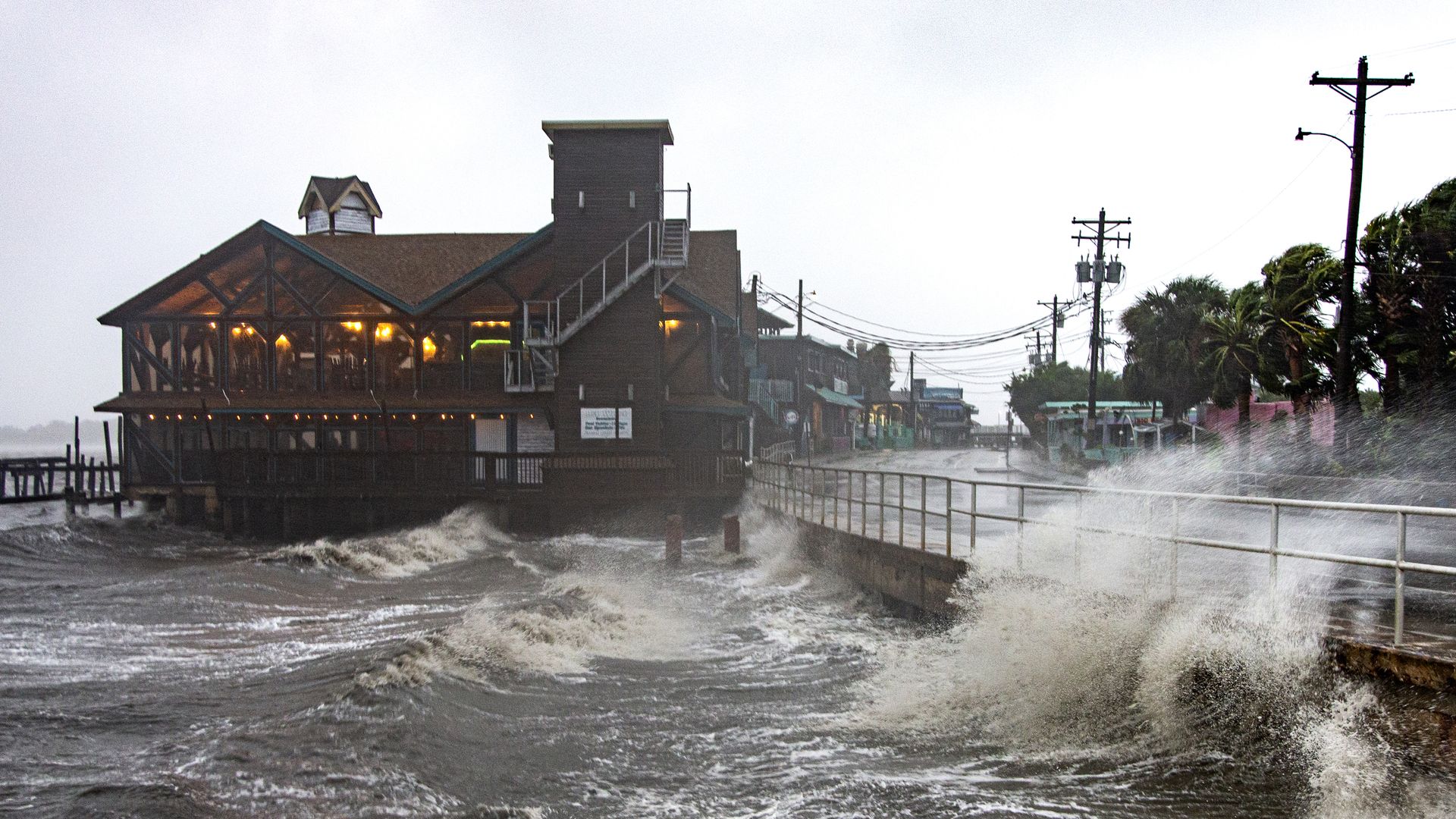
Tropical Storm Elsa is currently moving from North Carolina to Virginia, where up to four inches of rain are expected, with isolated totals of up to six inches, the National Hurricane Center said Thursday evening.
Catch up quick: Elsa killed at least one person in Florida after making landfall in the state and unleashing a suspected tornado that wounded 10 others at a Navy base campground in southeast Georgia on Wednesday, AP reports.
The prospect of mining the seafloor is prompting calls for more research about its potential impact on the ocean and sea life.
The big picture: Metal-rich mineral nodules on the ocean floor contain cobalt, nickel and other ingredients that power batteries, solar panels and other renewable energy technologies. But they also support unique organisms, and mining a habitat that scientists are just beginning to explore and understand carries risks.
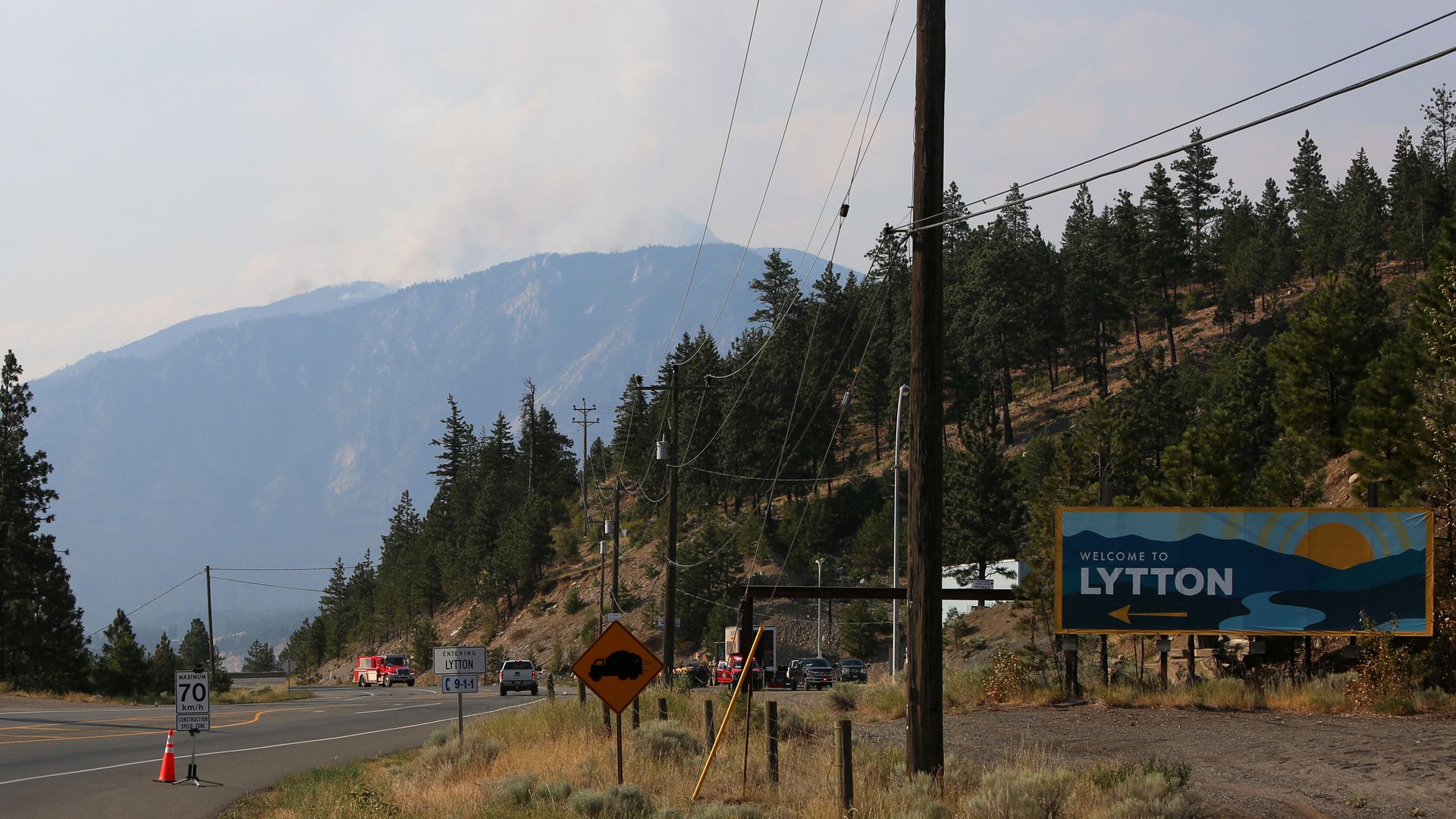
The historic heat wave that struck the Pacific Northwest would have been "virtually impossible without human-caused climate change," an international team of climate researchers said in a new report.
Of note: The World Weather Attribution's analysis, published Wednesday, found that the record-setting heat that triggered wildfires and was linked to hundreds of deaths was a one-in-a-1,000-year event that "would have been at least 150 times rarer without human-induced climate change."
The global toll of confirmed deaths from COVID-19 surpassed 4 million on Wednesday, Johns Hopkins University data shows.
Why it matters: World Health Organization chief Tedros Adhanom Ghebreyesus noted at a news conference in Geneva on Wednesday the "shocking inequity" in vaccine rollouts, with richer countries hoarding does as he warned the world "is at a perilous point" of the pandemic.
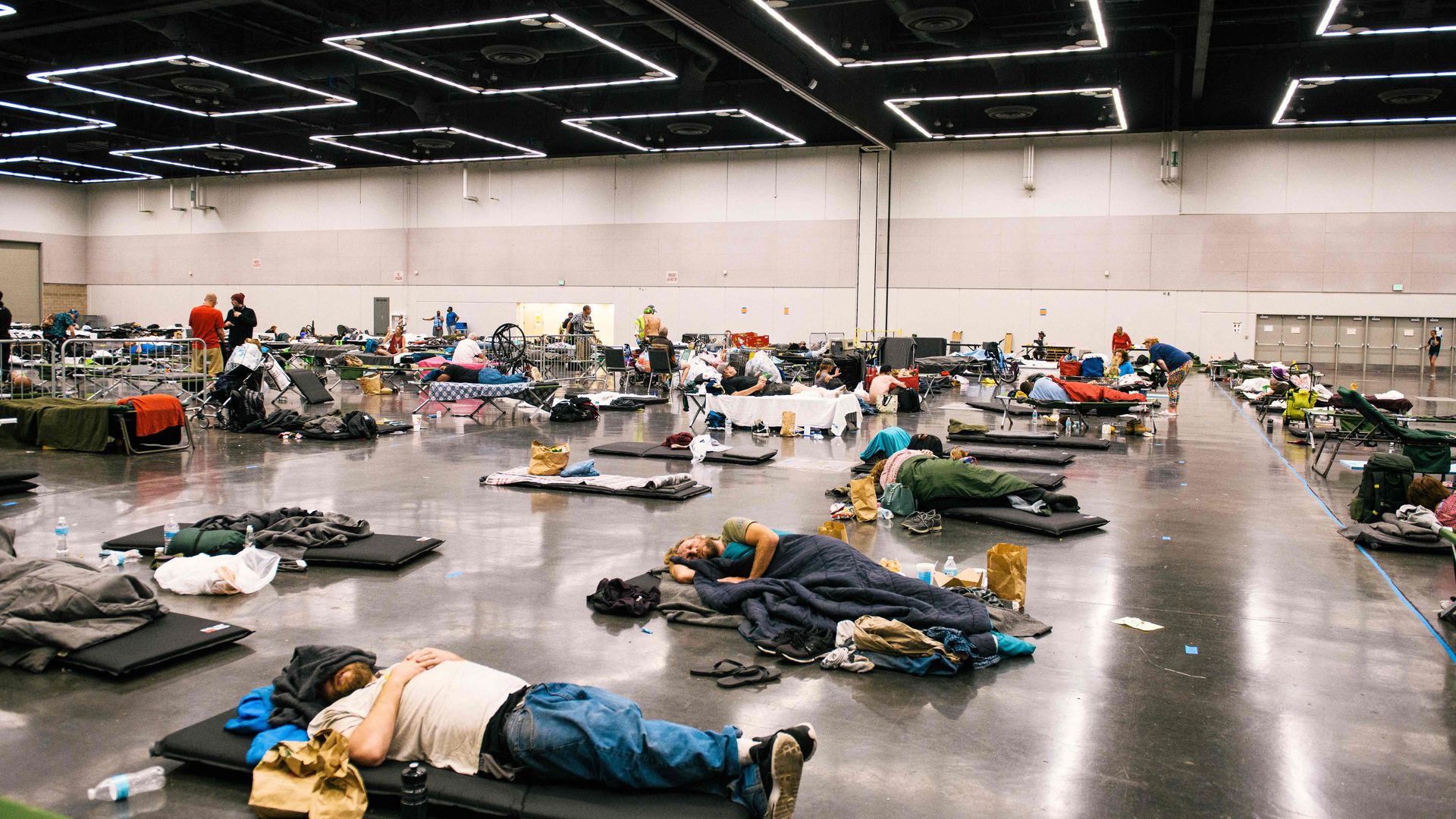
The Oregon State Medical Examiner on Wednesday announced that the death toll in the state associated with the late June Pacific Northwest heat wave reached 116.
Details: The new tally provided by the state police does not offer any details to identify the victims other than age, gender and county of residence. The victims' ages range between 37 and 97.
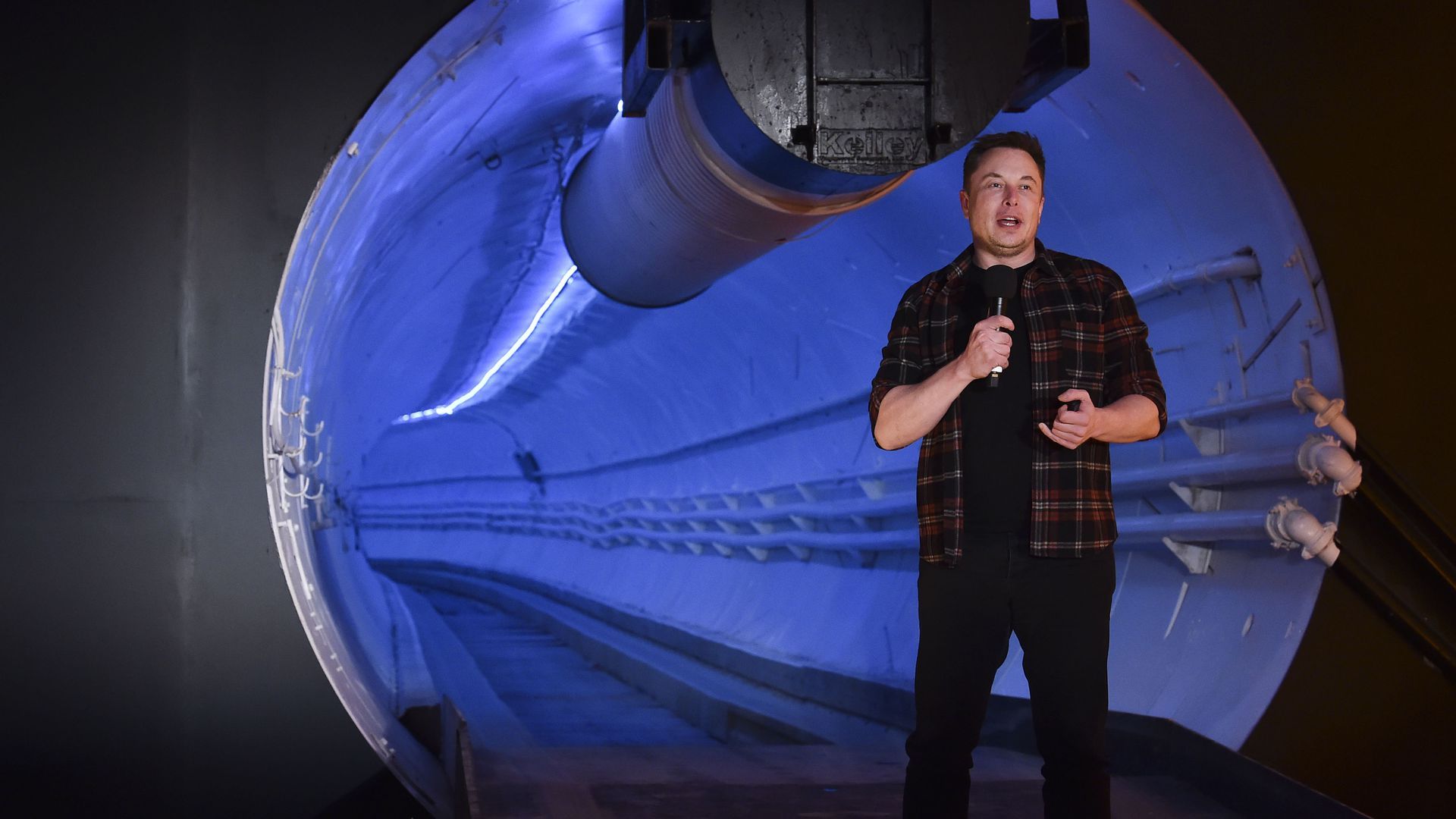
Fort Lauderdale officials have accepted a proposal from Elon Musk's The Boring Company to build a tunnel between the Florida city's downtown area and the beach.
Driving the news: Mayor Dean Trantalis (D) said in a statement announcing the agreement Tuesday night that the venture would be "a truly innovative way to reduce traffic congestion."