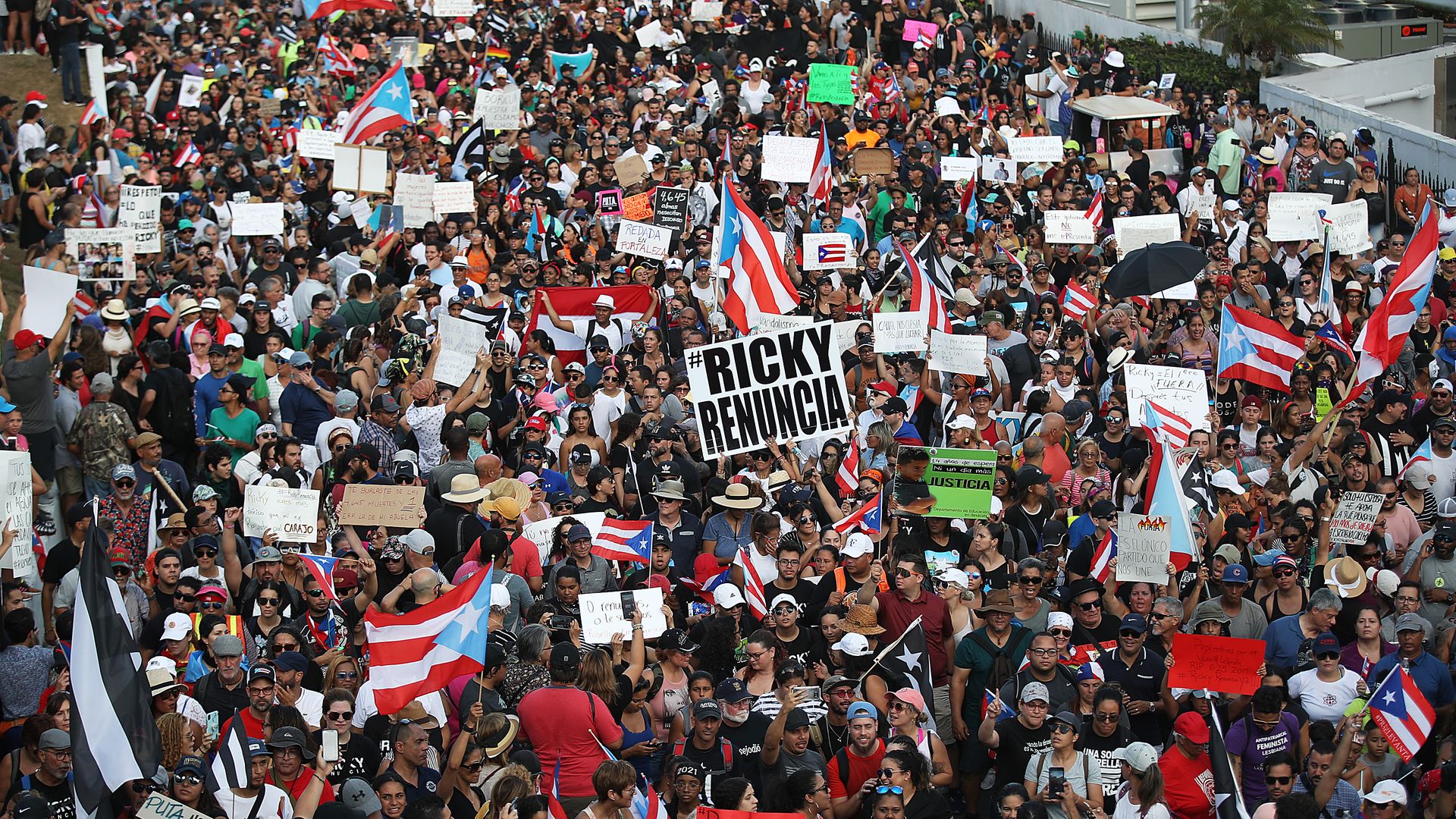
Puerto Rico Gov. Ricardo Rosselló announced Sunday that he will not seek re-election next year and will step down as president of the New Progressive Party, but stopped short of saying he will resign as governor before the end of his term.
Why it matters: Protestors took to the streets last week to demand Rosselló resign over leaked Telegram messages between the governor and his top aides that were reported to include misogynistic, profane and homophobic comments. Some of the messages were reported to have mocked victims of Hurricane Maria, a disaster over which Rosselló's administration has been criticized for mishandling.
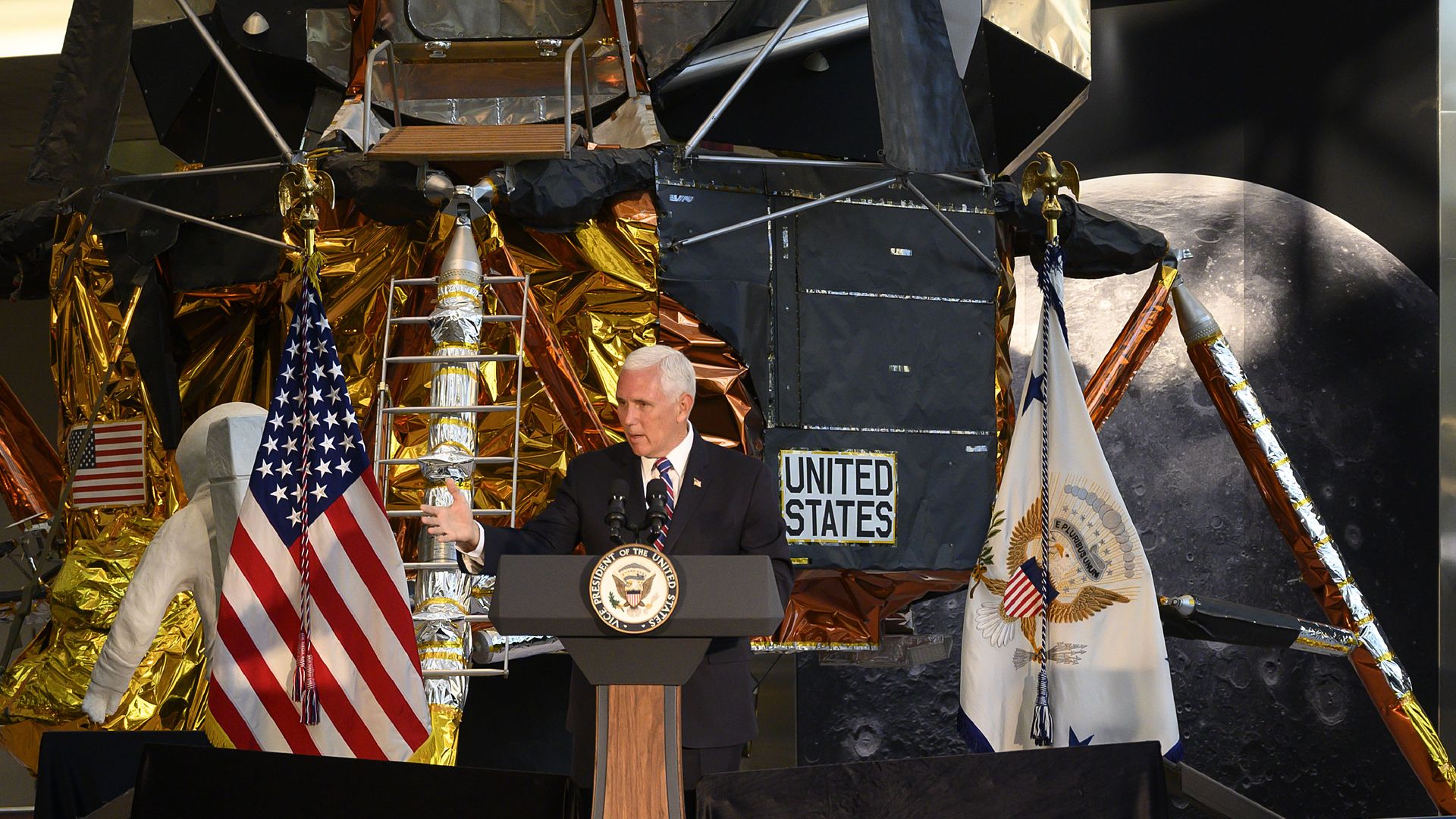
Vice President Mike Pence said at Kennedy Space Center Saturday that NASA's Orioncapsule is "ready to begin preparations for its historic first flight" to take American astronauts back to the Moon.
What he's saying: "America will return to the Moon within the next 5 years and the next man and the first woman on the Moon will be American astronauts,” Pence said at the event on the 50th anniversary of the Apollo 11 Moon landing, alongside Apollo 11 astronaut Buzz Aldrin. "We’re going back."
The Moon, long an object of fascination and exploration, is now also seen as a place to make money.
The big picture: 50 years ago during the Apollo 11 mission, humans were drawn to our nearest cosmic neighbor by scientific curiosity and the desire to demonstrate technological prowess and geopolitical power. But now there’s a financial incentivefor the entrepreneurially minded.
While most Americans think the U.S. should be a global leader in space exploration, many remain hesitant about visiting, living on and working on the Moon.
By the numbers: Younger adults are far more interested in visiting the Moon as tourists compared to older adults. 65% of adults 18–24 years old would visit the Moon if money were not a factor, compared to just 25% of those 65 and older, according to an Axios-SurveyMonkey poll. By contrast, American adults across all generations are reluctant about living and working on the Moon, if settlements were established there.
Public and private space enterprises are aiming to extract water from the Moon, which they hope to turn into rocket fuel to fly missions farther into our solar system. However, it's not yet clear how much water is available on or below the lunar surface.
Why it matters: If NASA and others can extract water from the Moon, it would change exploration as we know it.
While there may not be money in harvesting resources from the Moon yet, Jeff Bezos' Blue Origin is playing the long game, developing its capabilities in preparation for the day that could pay off.
The big picture: In the short term, the company wants to help NASA get astronauts back to the Moon. In the long term, Blue Origin hopes to bring about a future where millions of people are living and working in space, sustained, at least in part, by harvesting resources from the Moon.
The last geopolitical race to space seemed existential, set against the nerve-rattling competition between the U.S. and the Soviet Union. The outcome was the moonshot — the astonishing launch of two humans onto the nearest body in space.
Driving the news: This time, the show of scientific and engineering muscle is the same, as the U.S., India, China and a host of privateers try to establish the first perch on the Moon. But it seems reasonable to ask whether the aim — the Moon — sets the sights of the contest too low.
In Greek mythology, Apollo is Artemis’ twin sister, but to the chagrin of some classicists, the first crewed U.S. Moon mission was named after him. Only now is Artemis — the name of NASA's 2024 mission — getting the credit some say she deserves.
The context: 50 years ago, the workforce behind Apollo 11 was majority white and male. With the Artemis program, NASA aims to be more inclusive. The agency plans to send the next man and the first woman to the lunar surface in 5 years.