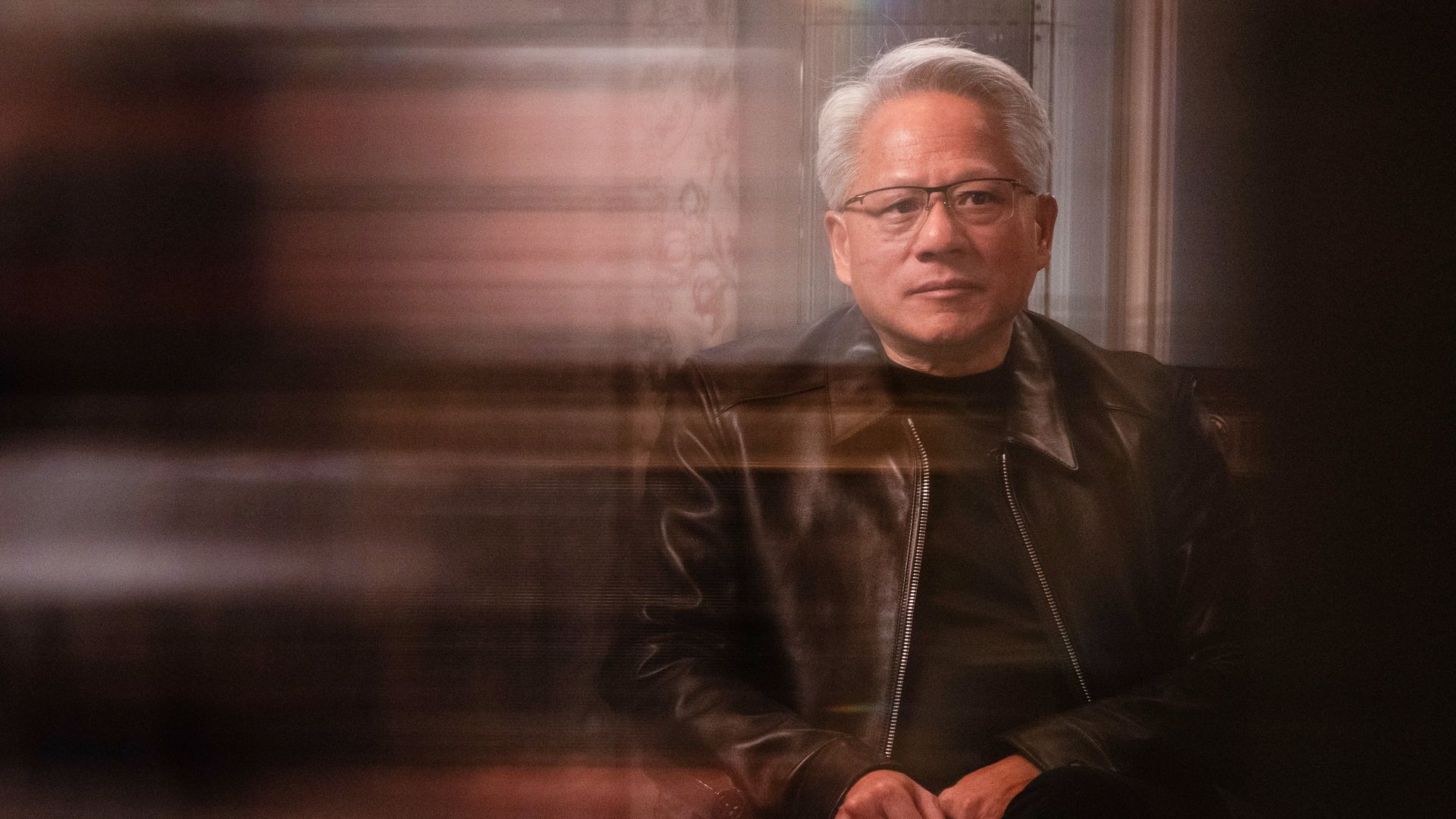
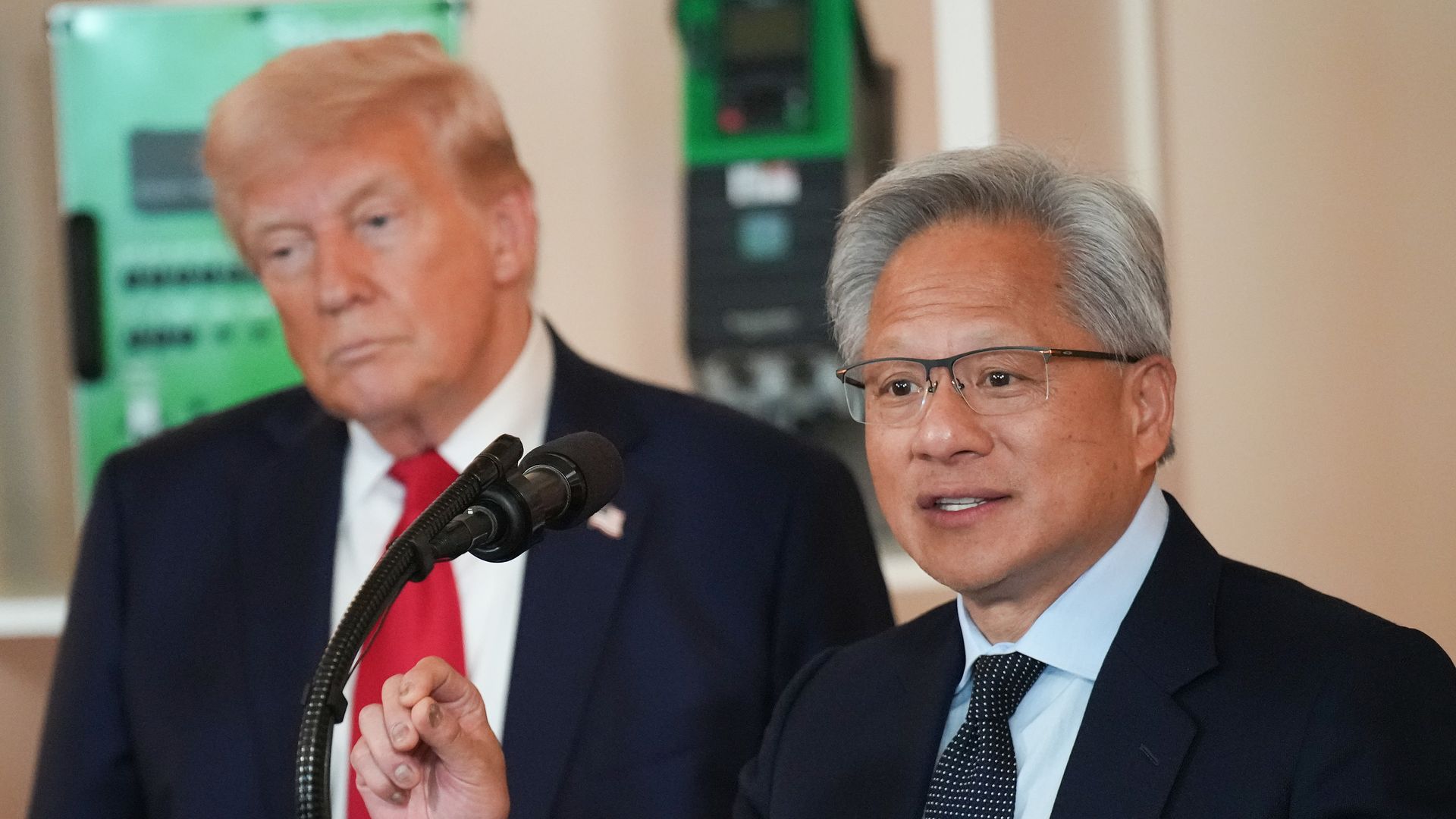
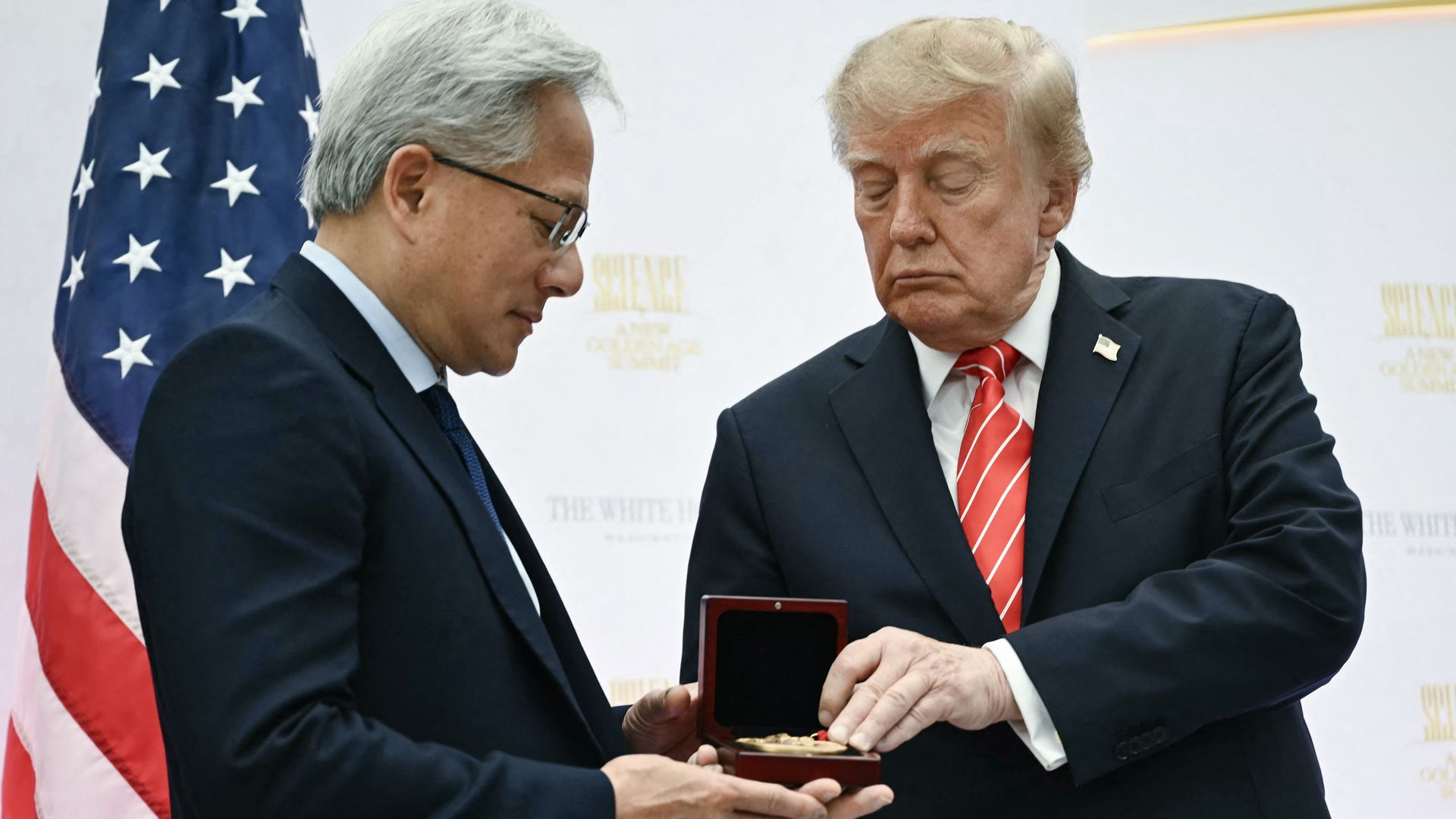
Nvidia CEO Jensen Huang's affair with a woman suspected of spying for China echoes past controversies involving prominent Americans whose romantic relationships raised national security concerns.
Why it matters: Foreign intelligence operatives can use romantic relationships to gain access to political intelligence, corporate secrets and classified information — posing serious national security risks.
The bipartisan Senate permitting bill cleared its first hurdle Monday with a 73-25 procedural vote.
Why it matters: The legislation could transform how America builds energy infrastructure, with major implications for everything from electricity costs to data centers.
May Mailman, a close ally of new White House chief of staff Stephen Miller, is temporarily returning to the administration to help oversee West Wing operations and staffing, Axios has learned.
Why it matters: Mailman's return is the latest sign of Miller's efforts to put his stamp on the White House as he takes over from Susie Wiles.
Rep. Thomas Massie (R-KY) introduced articles of impeachment against Defense Secretary Pete Hegseth on Monday over his handling of the Iran war and other alleged misconduct.
Why it matters: The coming vote could mark the first impeachment of a Cabinet secretary during the second Trump administration and signal what's to come when Democrats take control of Congress next year.
The Jensen Huang scandal is prompting questions about whether he should remain on the job during an investigation, and the prospect that one of the world's most powerful CEOs could suddenly be ousted.
Why it matters: Huang's acknowledged affair with a suspected Chinese spy forces Nvidia's board to confront the possibility that his behavior could have compromised the AI chip giant's secrets — and the nation's security.
A who's who of Democratic power players descends on Denver this week to plot the party's future, fresh off its sweeping midterm victories.
Why it matters: The gathering gives Democrats' rising stars an early stage to test their 2028 message, and explore whether Colorado's red-to-deep-blue shift could offer a national playbook.
Nvidia is coming under fire for having no clear succession plan to replace Jensen Huang in the event that something unexpected happens — like an international incident with him at the center.
Why it matters: The spotlight on Huang shows the vulnerabilities of a large company being dependent on one executive — and the risks it poses to investors and customers, corporate governance experts tell Axios.
Republicans are returning to work this week,facing the prospect of an especially lame lame-duck session after a bruising midterm election that set off a countdown clock on their control of Congress.
Why it matters: Democrats have little incentive to help Republicans advance their agenda before January, while departing GOP lawmakers could complicate matters further by skipping votes or defying party leaders.
U.S. veteran homelessness declined more than 50% over the past 15 years, according to the latest federal housing data.
Why it matters: The widespread declines represent significant progress in addressing homelessness among those who served, although some states continue to struggle.
The fallout from Nvidia CEO Jensen Huang's admitted affair with a suspected Chinese spy could reverberate through the entire AI economy.
Why it matters: The revelations highlight the "key man risk" at Nvidia — the chipmaker's growth and success disproportionately turn on the leather-jacketed superstar who cofounded the company decades ago.
What they're saying: "Nvidia is not an ordinary company, and Jensen is not an ordinary CEO; he IS NVIDIA, clearly sets the long-term strategy and direction," analysts at Bernstein wrote Sunday.
With Nvidia's flat organizational structure, it's not apparent who could replace him.
The big picture: It's not just Nvidia that stands to be affected. The world's largest semiconductor company is at the heart of the AI economy — interconnected with basically all the major players — and Huang is its leading spokesman and policy advocate.
Nvidia also serves as the central bank of AI, with more than $530 billion in commitments and guarantees to various suppliers, data center operators and cloud computing firms, per this detailed research from Bethany McLean at Hunterbrook.
And the $4.5 trillion market-cap company accounts for roughly 7% of the S&P 500 index.
Catch up quick: On Sunday, Nvidia CEO Jensen Huang admitted to having an affair with a suspected Chinese spy, and the company's board announced it was launching an independent investigation.
What to watch: Whether the investigation shakes the board's confidence in the charismatic leader, and what its shares do in trading Monday.
Where it stands: The company's stock fell sharply last week on worries that the midterm election results were a setback for the data center buildout.
On Friday, Nvidia stock closed at $186.64 — down 6% from a year ago and on track for its worst annual performance since 2022, before the ChatGPT-sparked AI gold rush sent its stock into the stratosphere.
Its stock is now down 22% from its October peak.
Between the lines: The espionage allegations and Huang's admitted affair are obviously a bad look for the CEO and his company.
At a minimum, they could hurt politically — giving congressional China hawks ammunition to further curtail trade with the country and provide ammo to a newly elected wave of anti-AI lawmakers.
Headlines reading "Nvidia's CEO got honeypotted by China" are "going to be a heavy distraction, and at the worst provide significant ammunition to both sides of the aisle," the Bernstein analysts wrote.
Reality check: Nvidia already had an interest in getting the U.S. to let it sell more chips in China — it didn't really need a spy to convince it.
"This seems superfluous to us," the analysts wrote.
The intrigue: Whispers about Huang's relationship with Alice Huang, a former executive at Singapore data center firm Megaspeed, surfaced back in May.
Short-seller Culper Research alleged that Nvidia chips were getting to Chinese customers through Megaspeed, claiming it was financed by Alibaba.
Yes, but: Culper's claims are not proven, and it's not clear if any sensitive information was compromised.
The other side: Nvidia's board said it has no reason to believe national security or company secrets were compromised and expressed confidence in Huang's leadership, Axios' Madison Mills reported.
Flashback: At a company event in January, Huang was asked how he was able to stay atop the company for so long.
"The secret for being CEO for this long is, one: Don't get fired," he replied, Bloomberg reported.
The potential for partnership between newly ascendant Democrats and the "Make America Healthy Again" movement is already threatened by their deep disagreements over Health Secretary Robert F. Kennedy Jr.
Why it matters: Democrats want to convince health-conscious voters that they're the party that can deliver on food and pesticide use, but many view an alliance with Kennedy as a nonstarter.
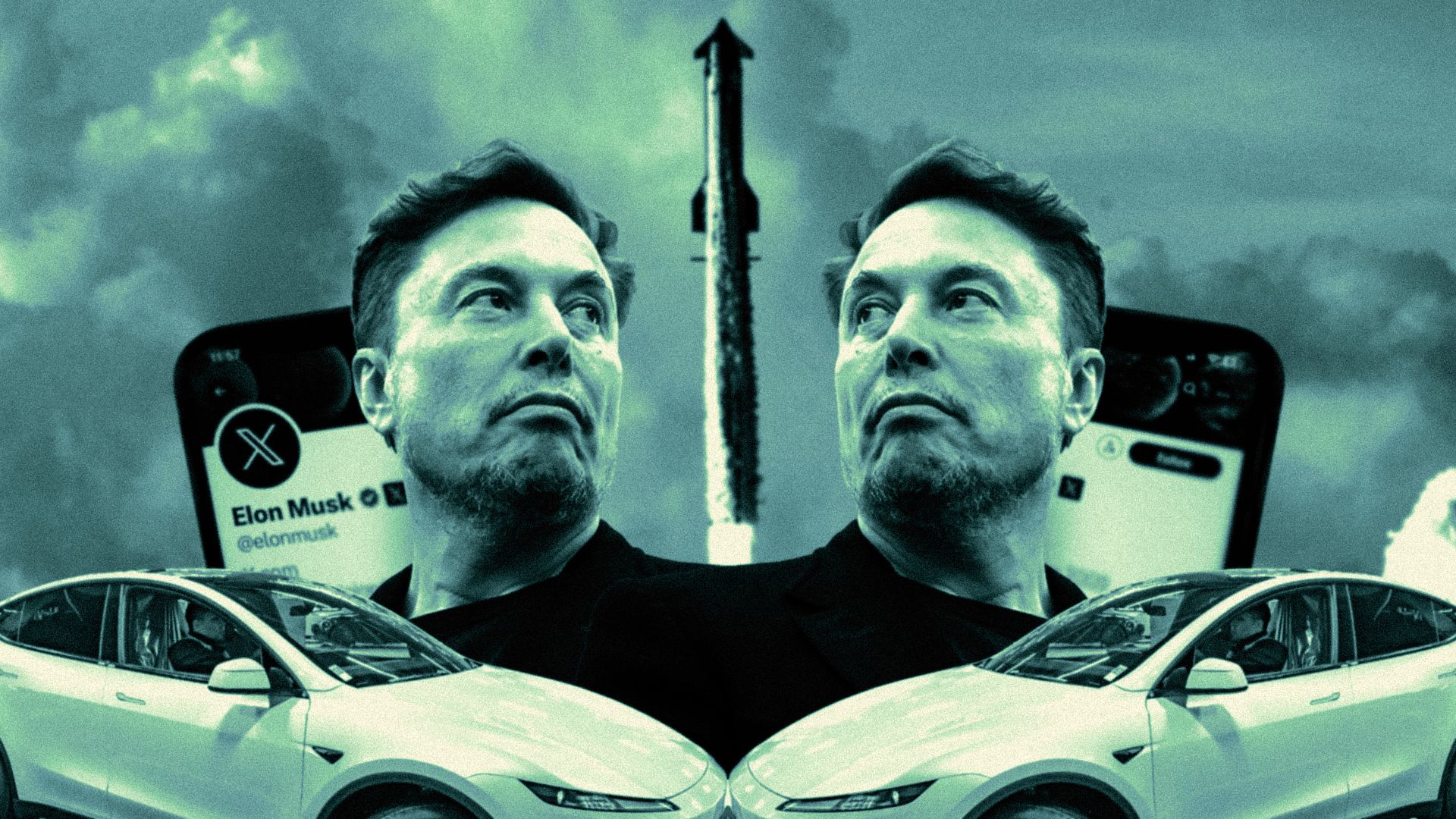
Elon Musk's sprawling empire — from rockets to robots, electric cars to AI — is facing a political onslaught with few parallels in modern corporate history.
Why it matters: The world's richest man confronts a constellation of risks spanning the halls of Congress, his Texas industrial empire, Wall Street and his vision for AI supremacy.
Efforts to fight climate change, conserve nature and build clean energy have long unfolded on competing tracks. Now, they're colliding — and exposing tough trade-offs for environmentalists.
Why it matters: Congress' sweeping permitting debate is forcing those competing priorities into the same conversation, with major consequences for climate action and conservation.
The world's most powerful AI executive admitted Sunday to an affair with a suspected Chinese spy, sending shock waves through an industry built on his singular influence.
Why it matters: Nvidia CEO Jensen Huang has fashioned himself as the indispensable leader of an indispensable company — a $4.5 trillion behemoth with unparalleled clout in Silicon Valley, on Wall Street and inside President Trump's White House.
Sen. Dave McCormick (R-Pa.) is calling for a delay in Tuesday's Senate GOP leadership elections, injecting another note of uncertainty into what had been a largely foregone conclusion before Republicans' devastating midterm defeat.
Why it matters: McCormick isn't demanding that Majority Leader John Thune (R-S.D.) step down. But he is asking his colleagues to pump the brakes on Tuesday's internal elections.
President Trump defended Nvidia CEO Jensen Huang on Sunday night, even as the company's board launched an investigation into his affair with a suspected Chinese spy.
Why it matters: The blowback to Huang's relationship is only getting more intense by the hour, with multiple members of Congress calling for probes and investors saying the news could put a cloud over the entire AI trade.