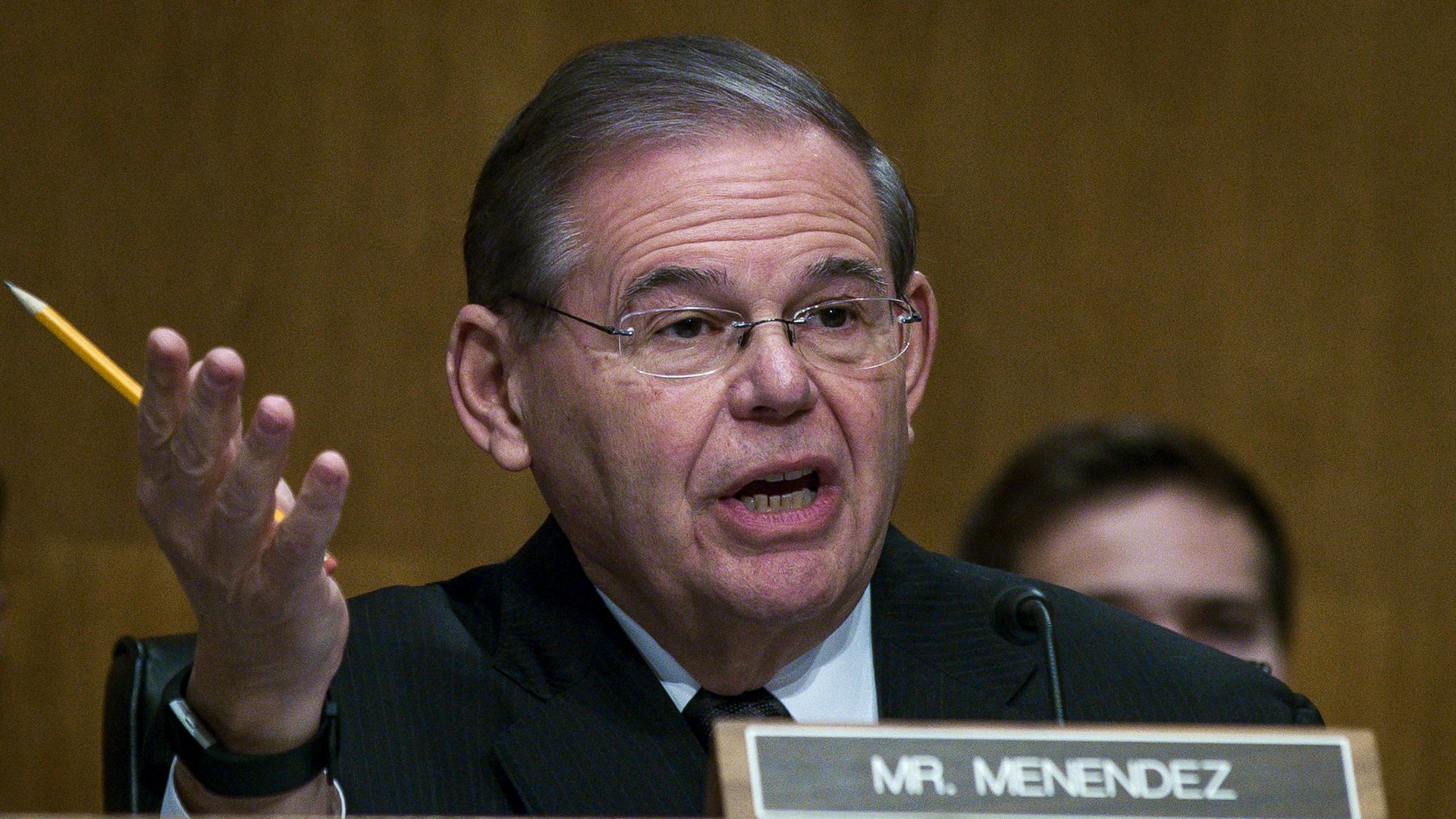
A bipartisan group of U.S. Senators introduced legislation Thursday that would suspend the sale of weapons to Saudi Arabia and block refueling of Saudi coalition warplanes bombing Yemen.
Why it matters: This legislative attempt seeks to punish the kingdom for its role in Yemen’s devastating civil war, which has killed over 10,000 people, and crown prince Mohammad bin Salman's alleged involvement in the assassination of Washington Post columnist Jamal Khashoggi. Earlier Thursday, the Trump administration slapped sanctions on 17 people, including Saudi Consul General Mohammad Alotaib, for the murder of Khashoggi.
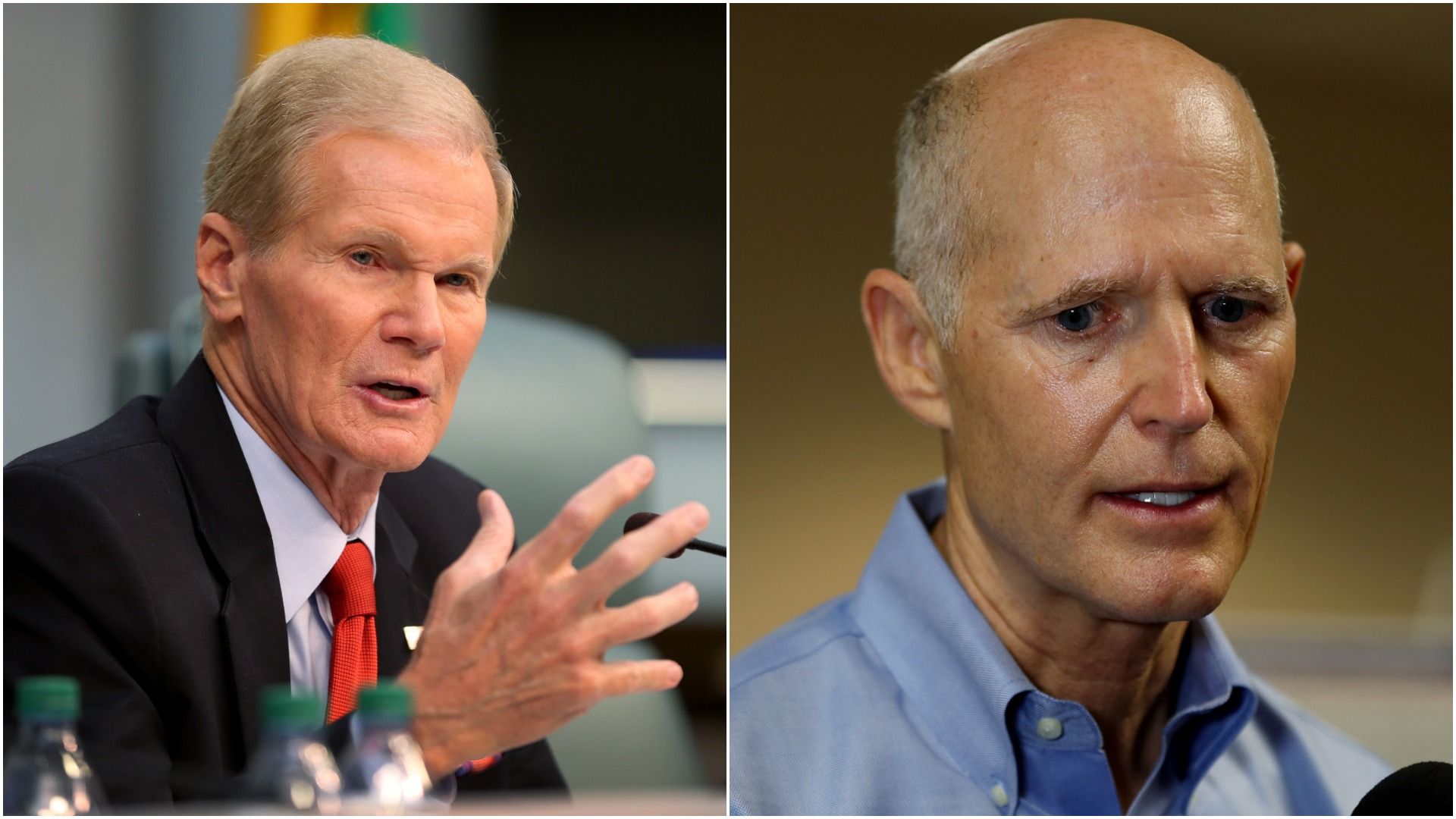
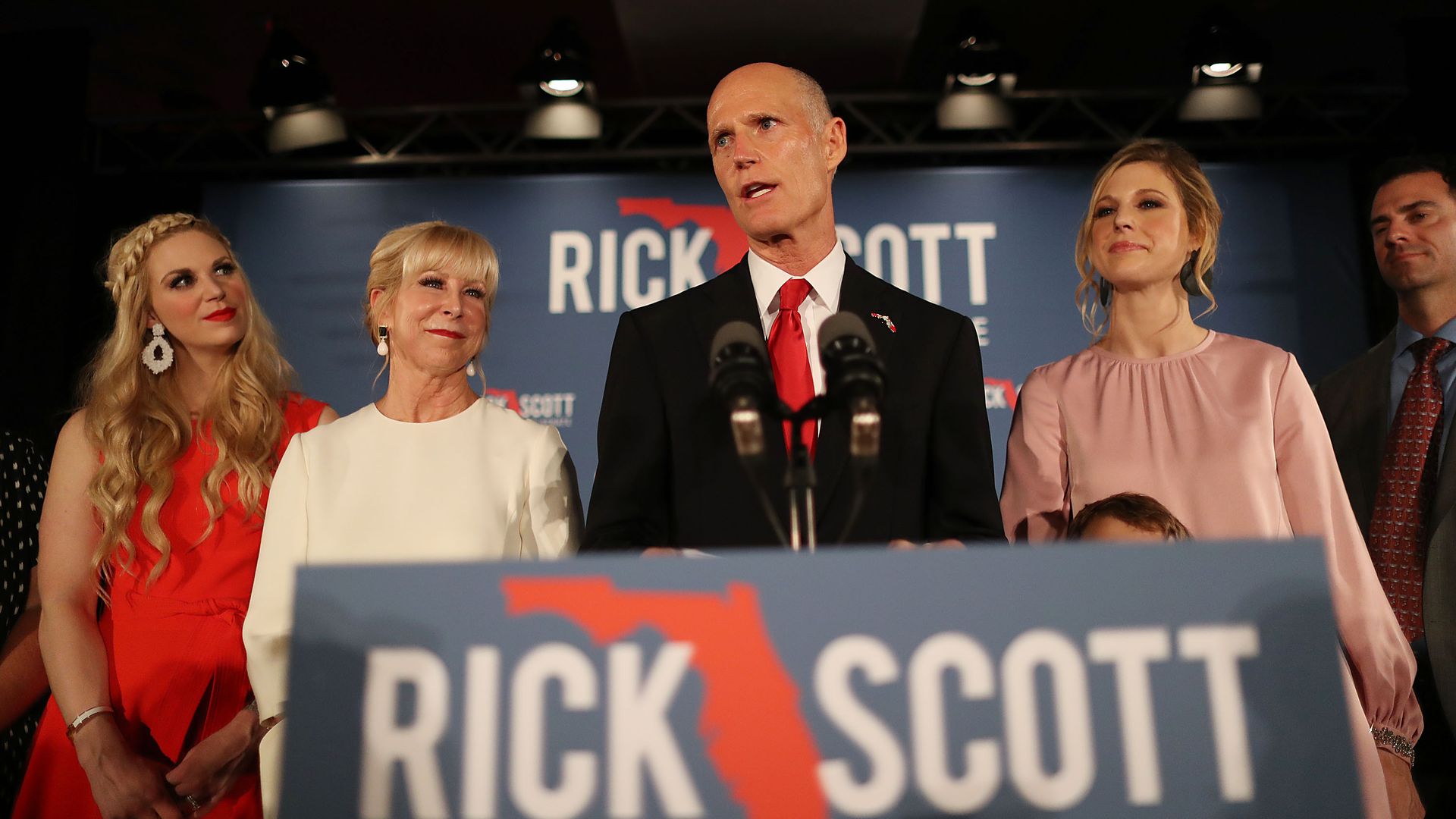
Florida's Secretary of State Ken Detzner on Thursday ordered a hand recount of the votes in the highly contested U.S. Senate race between incumbent Democrat Sen. Bill Nelson and his Republican opponent Gov. Rick Scott.
Why it matters: The recount further escalates the partisan tension in the deeply divided state. Thursday's machine tallies show Scott leading Nelson by just 12,603 votes, or .15%. That falls under the 0.25% margin that automatically triggers a manual recount.
Eighteen years after hanging chads and the Brooks Brothers riot, the Sunshine State is once again at the center of an election mess of its own doing.
The big picture: Florida is in the middle of three statewide recounts, and three counties in particular (Palm Beach, Hillsborough and Broward) haven't helped the situation.
The conservative One America News Network is breaking with most media organizations by supporting the White House against CNN in the legal battle over correspondent Jim Acosta's suspended press badge.
"WE are going to file in the CNN vs White House court an Amicus Brief in favor of the White House. Acosta’s actions are stopping our people from getting their questions answered, so that we can give our audience the real news direct from our President. ... Can’t believe Fox is on the other side, but they have direct communication to the President. We are lucky if we get a five minute interview once a quarter."
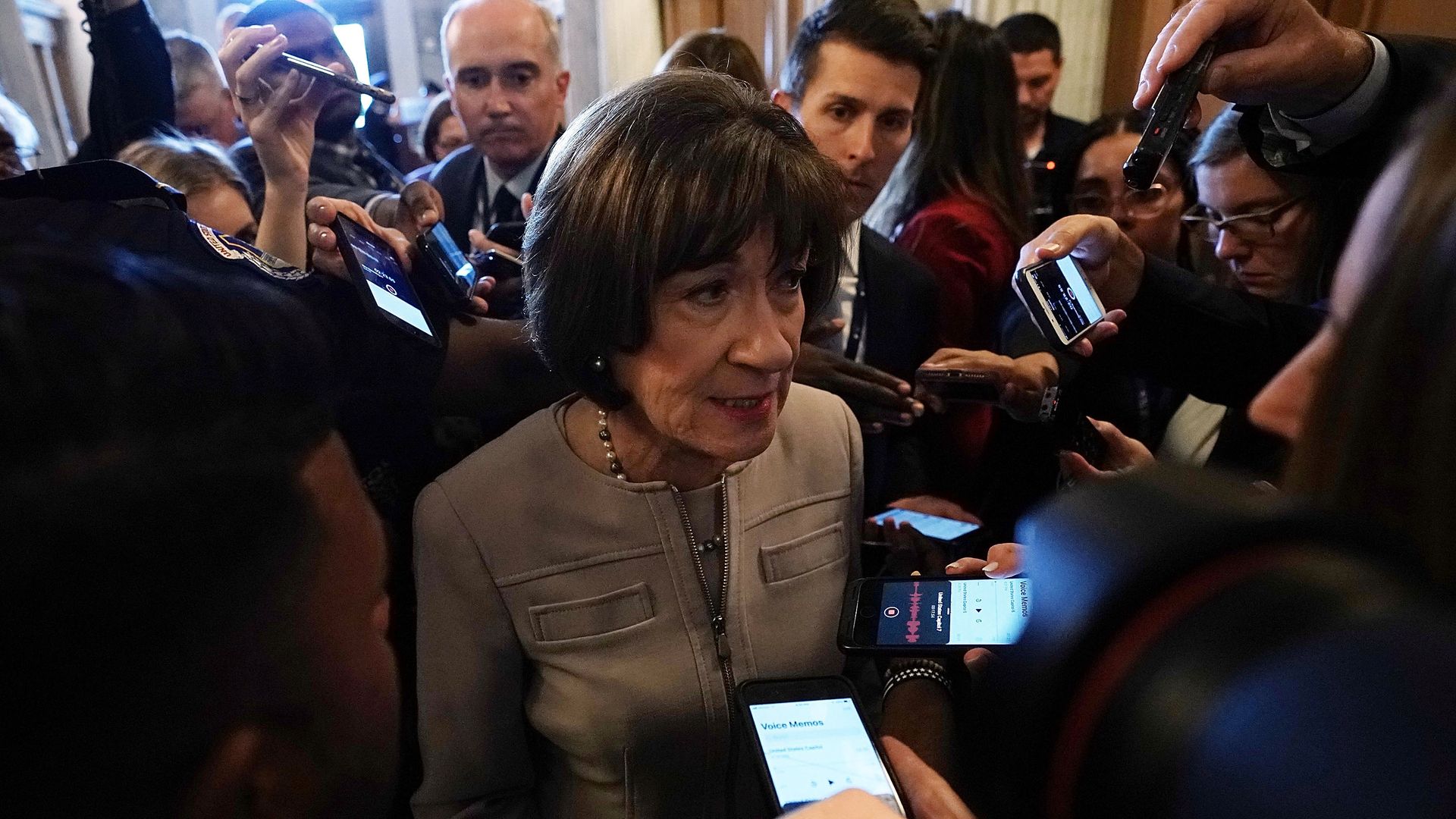
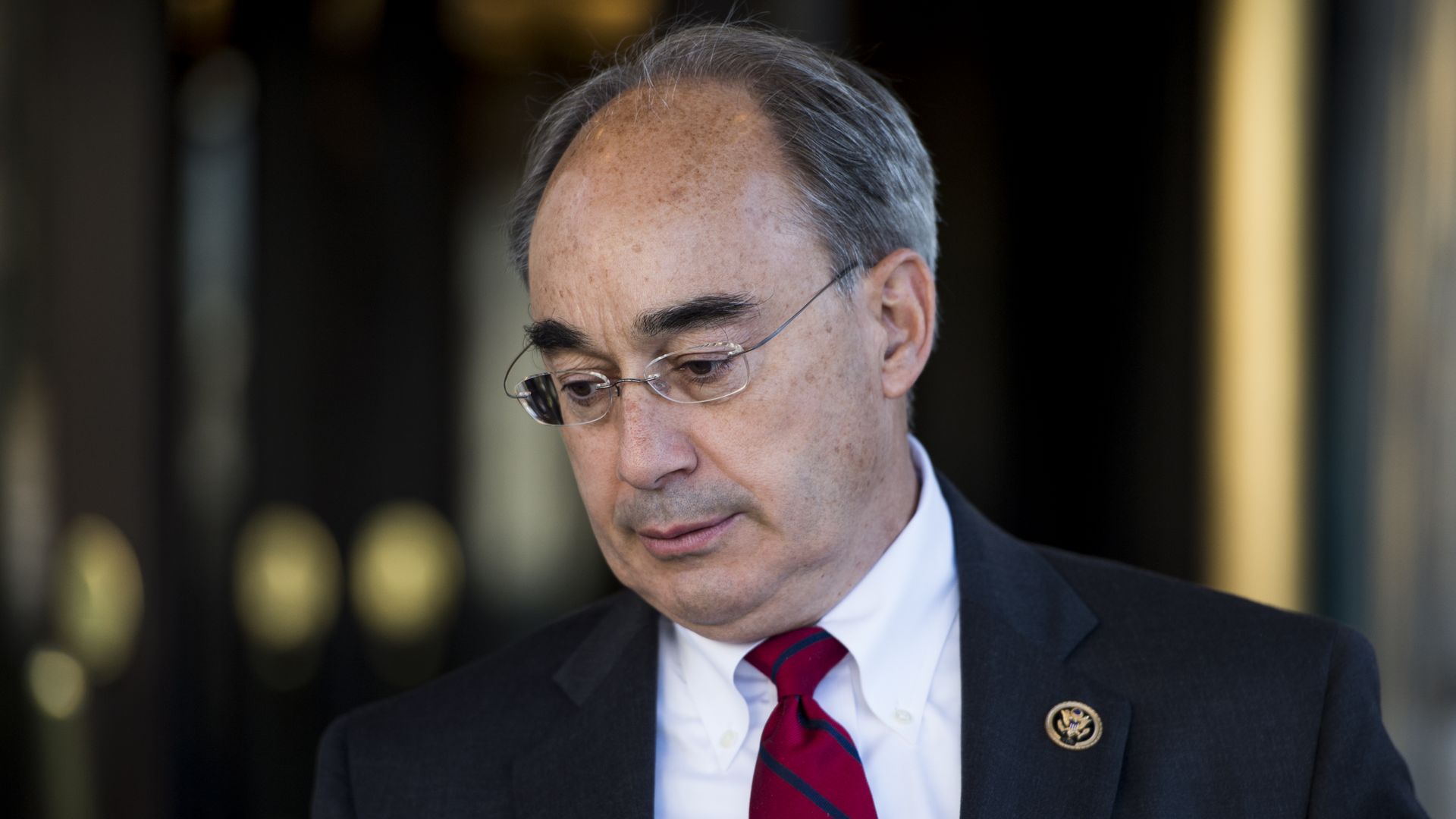
Following Democrat Jared Golden's victory over Rep. Bruce Poliquin in Maine's 2nd district on Thursday, Republicans now hold zero House seats in New England and only one Senate seat — Maine's Susan Collins, who's up for re-election in 2020.
The big picture: Republicans lost big in moderate suburban districts in the 2018 midterms, and even ceded ground in deep-red rural districts that voted for Trump in 2016. The flip in Maine's 2nd blue-collar district "filled with forests, lobsters, and blueberries," could be an indicator that the GOP's shift to the right has alienated moderate Republicans in the northeast, the Boston Globe writes.
Democrat Jared Golden, Assistant Maine House Majority Leader, has defeated Republican incumbent Rep. Bruce Poliquin in Maine's 2nd Congressional district.
Why it matters: Golden's win is not only another Trump-leaning pick-up for the Democrats, but it was also the first ever House race decided by ranked-choice voting, in which voters rank candidates in order of preference. Maine voters approved the use of ranked-choice voting in 2016.
Donald Trump Jr.'s February trip to India — during which he promoted the Trump Organization's luxury real estate projects and met privately with Prime Minister Narendra Modi — rung up $97,805 in Secret Service costs, according to Department of Homeland Security documents obtained by the Washington Post.
Why it matters: President Trump has stepped back from overseeing his family empire, but still benefits from The Trump Organization's success because he has not moved his assets to a blind trust. Critics say his family's need for Secret Service protection during their business trips ultimately means taxpayers are footing the bill for the president's personal financial gain.
With a crowded 2020 presidential field and an unpopular president who still manages to get his voters to the polls, Democrats face unique challenges in the 2020 presidential election, according to Doug Sosnik, a White House adviser to President Bill Clinton who is one of the best trend detectors in U.S. politics.
The big problem, based on 2016: "The president's voters don't always admit to pollsters that they like him. And he ran better in tossup states than his national average."
With changing demographics across the country and waning support in the Midwest, President Trump and the GOP could face a tough slog in the 2020 presidential election, according to Doug Sosnik, a White House adviser to President Bill Clinton who is one of the best trend detectors in U.S. politics.
Why it matters: Sosnik projects that there could be more tossup states in the South and Southwest than in the Midwest — with almost twice the number of electoral votes at stake.
U.S. lawmakers of both parties have lamented the mounting death toll and humanitarian crisis in Yemen's civil war, where civilian casualties have surged more than 160% in recent months and famine imperils 14 million. Yet little-noticed procedural votes in the House this week will prevent Congress from having to debate America’s continuing role in the conflict.
Why it matters: The House votes foreclosed debate on a bipartisan attempt to invoke the War Powers provision, which would have halted all U.S. support to the Saudi-led coalition fighting the Houthi rebels. The murder of Washington Post contributor Jamal Khashoggi has amplified pressure for a re-evaluation of the U.S.-Saudi relationship, but these votes have revealed that questioning the war in Yemen remains a red line for House Republicans.
A Florida judge has ruled that the state will have until Saturday to potentially count mail and provisional ballots that were rejected due to mismatched signatures, reports the Washington Post.
Why it matters: Assuming the signature issues are resolved, the ballots could play a significant role in Florida's Senate race, where Gov. Rick Scott is currently leading Democratic Sen. Bill Nelson by fewer than than 13,000 votes amid Scott's groundless claims of voter fraud. The judge said there are more than 4,000 ballots in 45 counties that were not counted due to inconsistent signatures — and that the number in Florida's other 22 counties is not known. Scott's team announced Thursday it would be "immediately appealing" the decision, per CNN's Jim Sciutto.
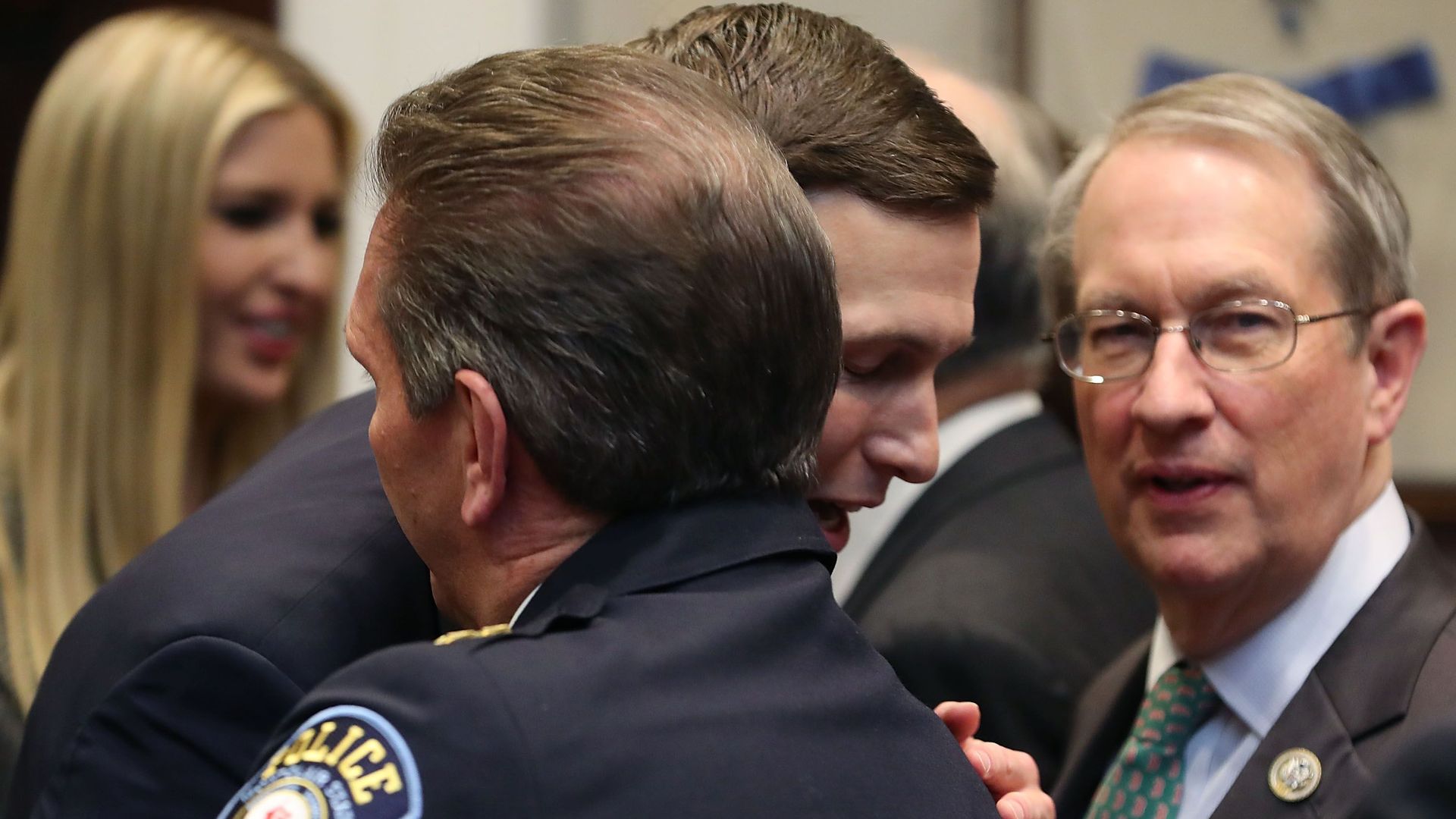
President Trump's backing of bipartisan criminal justice reform yesterday is a 180-degree twist from Campaign Trump, who ran on 1980s-style law and order.
How it happened: Jared Kushner brought the president a long way to get his support. Criminal justice reform was not what Trump ran on — quite the opposite — and it’s been a huge effort from Kushner and allies to get Trump to this point.
To win re-election, President Trump must wage a two-front war: Not only does he have to defend Democratic-leaning Midwest states that sealed his victory in 2016, but he now needs to defend against clear Republican erosion in the South and Southwest.
What they're saying: "Changing demographics and Trump have blown up the electoral map that has dominated American politics since 1992," said Doug Sosnik, a White House adviser to President Bill Clinton who is one of the best trend detectors in U.S. politics.