Monday's politics & policy stories

Former Trump adviser Carter Page met with Russian spy
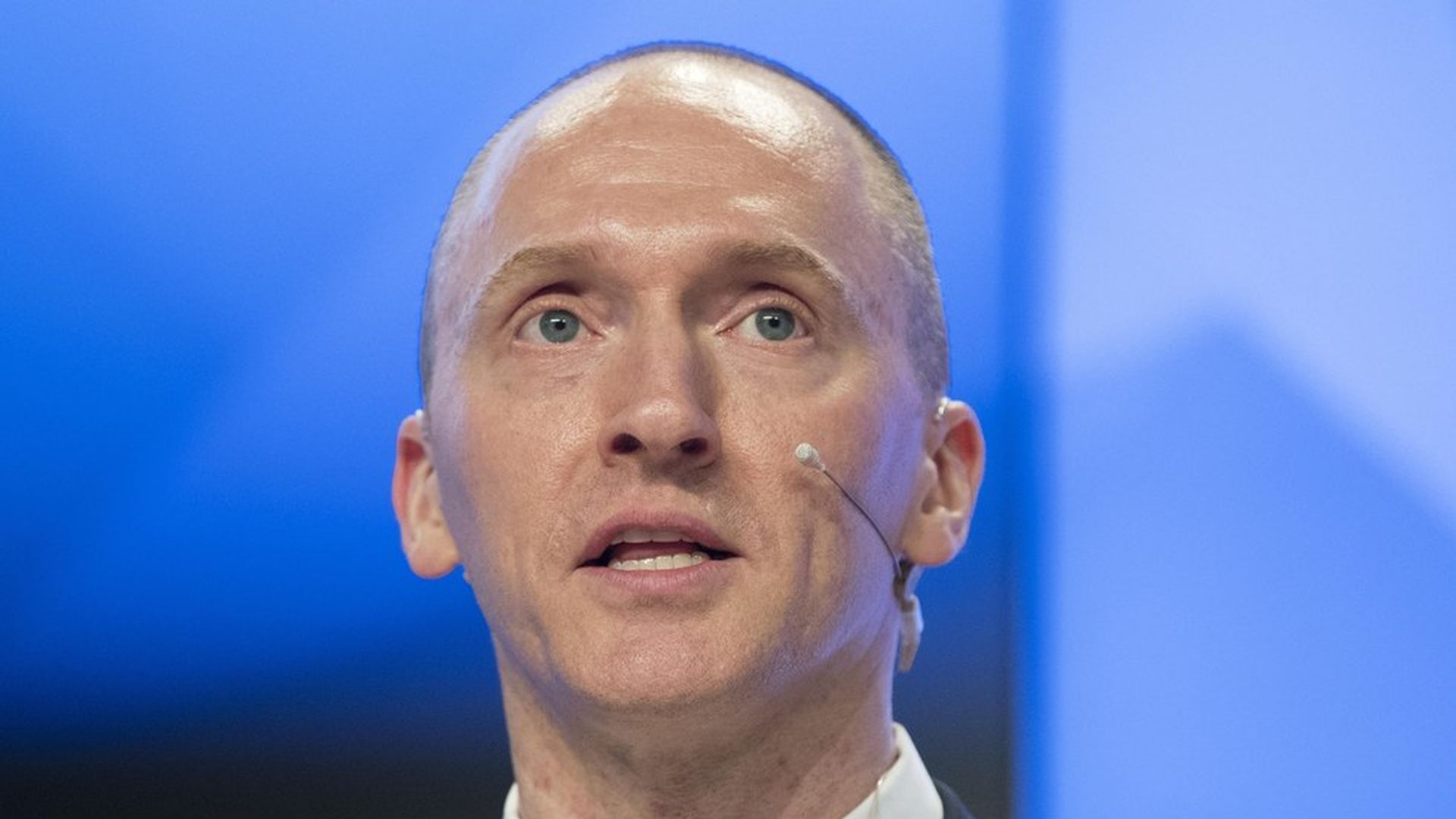
Carter Page, a former foreign policy adviser to the Trump campaign, met with a Russian spy in New York City in 2013 and passed him documents about the energy industry, BuzzFeed News reports.
Victor Podobnyy, the spy, was under cover at Russia's UN office and was later charged, along with two others, with being in a spy ring. He referred to Page as "Male-1" in conversations with another spy and discussed efforts to recruit him, Buzzfeed reports:
"The revelation of Page's connection to Russian intelligence — which occurred more than three years before his association with Trump — is the most clearly documented contact to date between Russian intelligence and someone in Trump's orbit."
Page, an energy consultant, confirmed to Buzzfeed that he was "Male-1". He has repeatedly said he did nothing wrong in his contacts with Russia. He was nixed by the Trump campaign after it emerged that federal investigators were looking into his ties with Russian officials.
Trump can't delete his tweets from history
The National Archives and Records Administration has informed the White House that President Trump's tweets must be preserved for history, per the AP. That means even if Trump deletes or corrects his tweets, they must be archived to abide by the Presidential Records Act.
It took a while to figure this one out: Axios repeatedly tried discussing the intricacies of the matter with the NARA in January when it told Axios "social media account handles don't matter, in terms of records," but it dodged the questions repeatedly about what Trump would have to do with deleted tweets. Officials briefed the White House counsel's office about the law February 2.
Note: An official told Axios "any records created during the transition period by the President-elect and the Transition Team are not government records."

Computer programmers may no longer be eligible for H-1B visas
U.S. Citizenship and Immigration Services quietly over the weekend released new guidance that computer programmers are no longer presumed to be eligible for H-1B visas.
What it means: This aligns with the administration's focus on reserving the temporary visas for very high-skilled (and higher-paid) professionals while encouraging low- and mid-level jobs to go to American workers instead. The new guidance affects applications for the lottery for 2018 fiscal year that opened Monday.
What comes next: Companies applying for H-1B visas for computer programming positions will have to submit additional evidence showing that the jobs are complex or specialized and require professional degrees. Entry-level wages attached to these visa applications will also get more scrutiny. The change appears to target outsourcing companies, who typically employ lower-paid, lower-level computer workers.
Lawsuits possible: Releasing this policy change at the start of the application filing window is going to rankle companies who used 17-year-old policy guidance to apply for this year's visas. Some companies may challenge the guidance on the grounds that USCIS didn't provide sufficient notice of the change.
UPDATE (6:15 pm Eastern): A USCIS spokeswoman said the guidance is "not a policy change" and is just clarifying existing policy for a Nebraska service center.
- But an immigration attorney following this process said the memo would increase scrutiny for H1-B applicants for the computer programmer job category. The attorney added that most Silicon Valley companies don't hire entry level programmers, and so the real impact of the change would be felt by offshore companies. "It's not an unsubstantial development," he said.
- There is some confusion over the impact of the new guidance. Bloomberg says it would "bring more scrutiny to [applications] for computer programmers doing the simplest jobs." Endgadget reports a misinterpretation of the guidance "caused many to panic" but programmers can still qualify for H-1B visas.
- Separately, USCIS announced new measures today to rein in abuse of the H-1B program.
Related: Sign up for the Axios tech newsletter, Login.
Feds zero in on H-1B abuse at IT outsourcing firms

U.S. Citizenship and Immigration Services today announced new measures to rein in abuse of the H-1B program.
The agency will take "a more targeted approach" when making site visits to focus on employers who "are evading their obligation to make a good faith effort to recruit U.S. workers."
Trump to donate salary to National Park Service
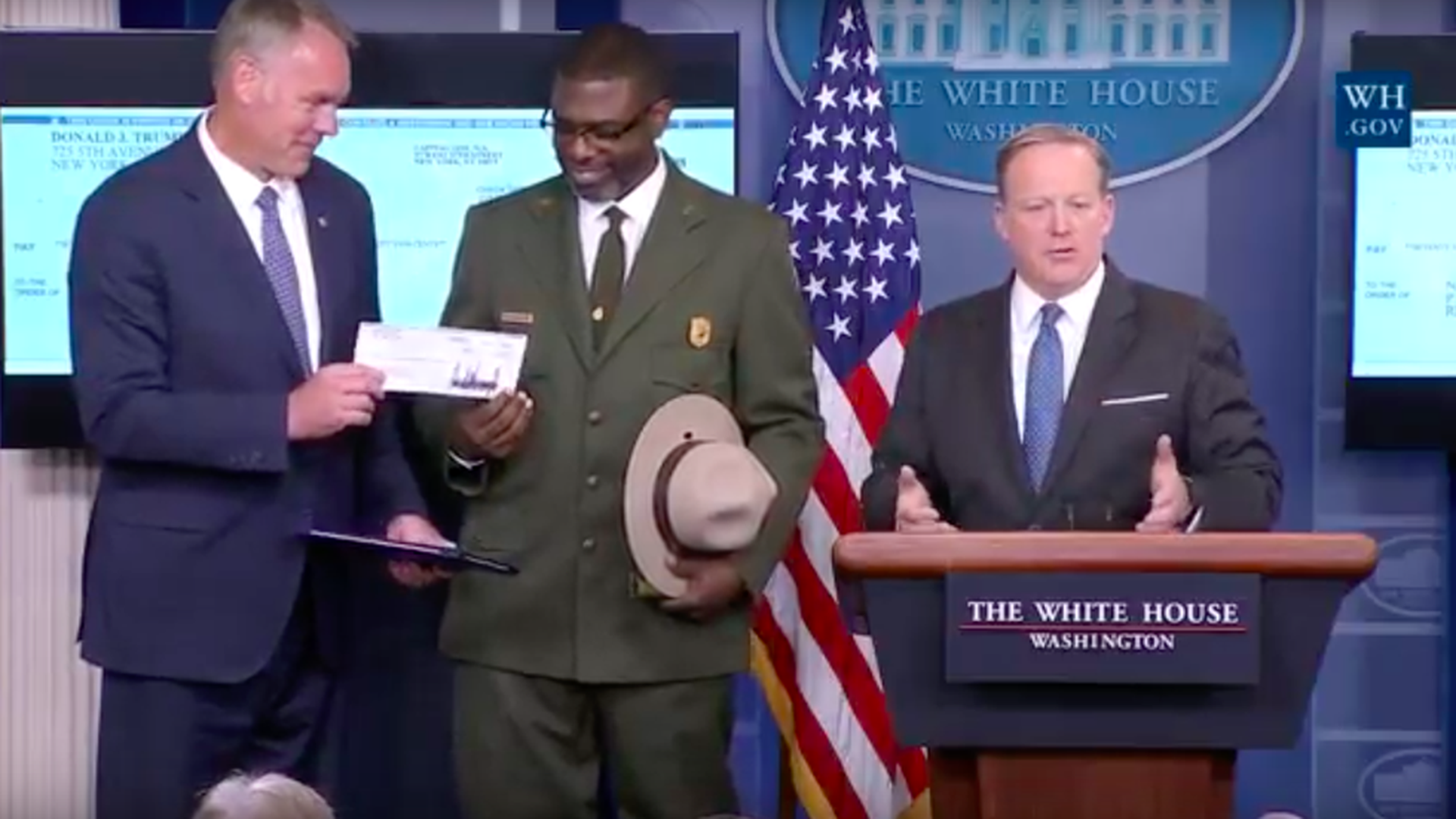
Sean Spicer told reporters Monday that President Trump will be donating his salary from the first quarter of 2017 ($78,333.32) to the National Park Service, fulfilling his earlier promise to donate his salary.

The highlights from Spicer's Monday briefing
Spicer opened the briefing by announcing that Trump will donate his salary from the first quarter of 2017 to the National Park Service. Other takeaways:
- Russia attack: The WH extends their condolences, and the U.S. is prepared to help investigate the attacks. Trump and Putin haven't spoken yet.
- Kushner's Iraq visit: "It's not a binary choice," Spicer said of Kushner going rather than Rex Tillerson. Added that Kushner will be briefed on military efforts while there.
- On Susan Rice: "I don't want to get into motives," said Spicer of Rice's reported request for the names of Trump associates caught up in surveillance.
- H1B visa program: Spicer acknowledged there are problems with the program, but said Trump will enforce the law.
- Trump's pricey Mar-a-Lago visits: Spicer said Trump has "walked away from a lot" financially to be president, and pointed to Trump's $78k salary donation. "At what point does he do enough?"

Trump can profit from his businesses without disclosure
ProPublica has a look at a previously unreported clause of the document that President Trump used to place his sprawling business empire into a trust upon assuming the presidency. It reads:
The Trustees shall distribute net income or principal to Donald J. Trump at his request, as the Trustees deem necessary for his maintenance, support, or uninsured medical expenses, or as the Trustees otherwise deem appropriate.
Why it matters: This clause allows Trump to take profits from the trust without any form of disclosure, as both the trust and the Trump Organization are privately held entities.
The tax return angle: The only definite way to know if Trump does take profits would be the release of his tax returns, since income from a trust wouldn't necessarily have to be included on POTUS' next federal financial disclosure. A senior fellow at the Urban-Brookings Tax Policy Center told ProPublica that "for tax purposes, it's as if the trust doesn't exist at all."
Trump's morning tweets: Unmasking, Podesta and Hillary Clinton
Trump was pretty active on Twitter this morning, praising Fox and Friends' coverage, calling out John Podesta's brother Anthony for his alleged Russia ties, and making jabs at Hillary Clinton for failing to ever apologize for her political debate advantage. The tweets:

Reading between Trump's lines on China/North Korea
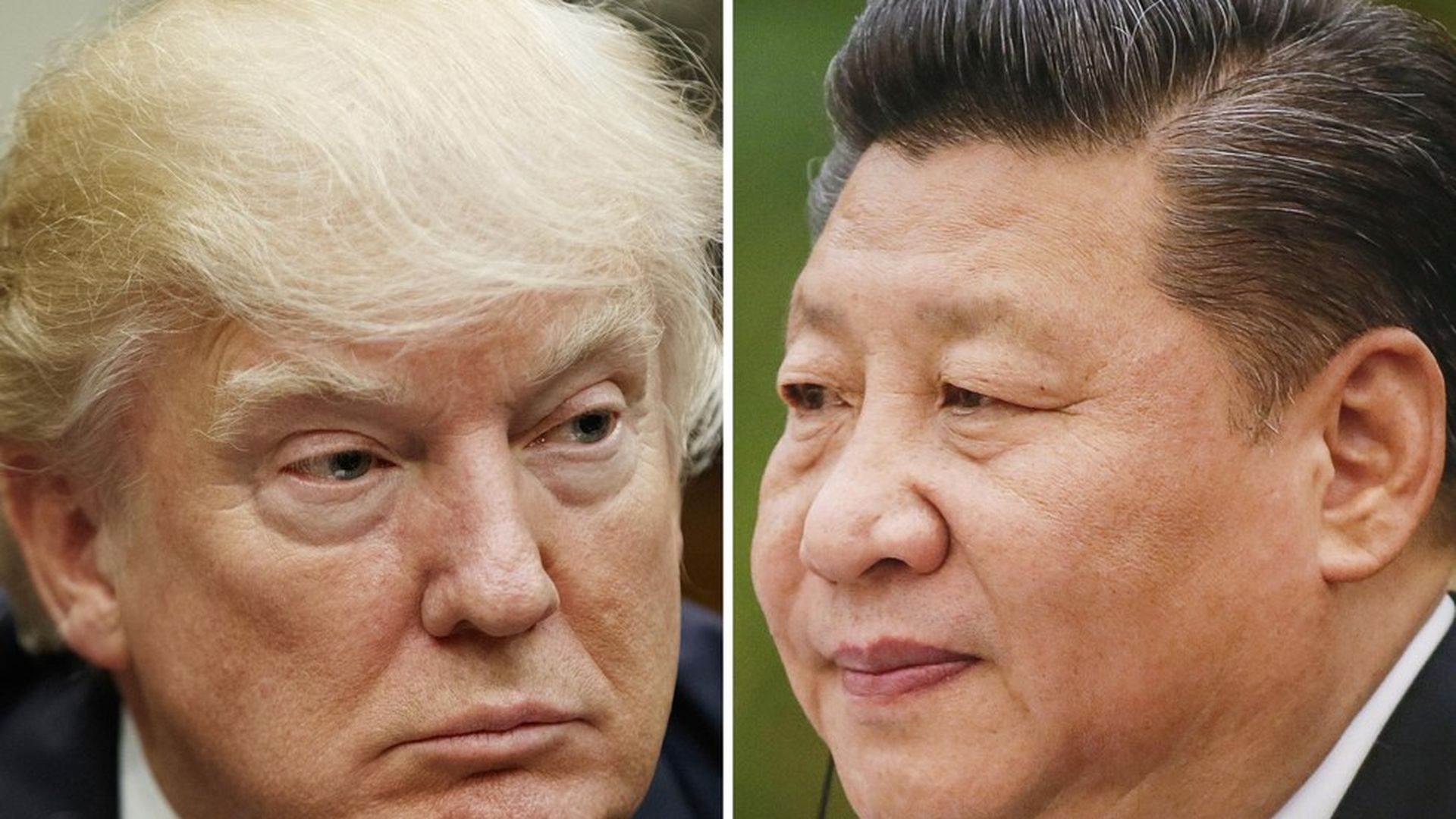
On Friday afternoon, after a signing ceremony on trade, President Trump sat down with the Financial Times in the Oval Office and gave a blunt, hard-edged interview that foreshadows some tense conversations with Chinese President Xi Jinping at their Mar-a-Lago summit on Thursday and Friday:
[H]e made clear that he would deal with North Korea with or without China's help. Asked if he would consider a "grand bargain" — where China pressures Pyongyang in exchange for a guarantee that the US would later remove troops from the Korean peninsula — Mr Trump said: "Well if China is not going to solve North Korea, we will. That is all I am telling you."
Bill Bishop (@niubi) — publisher of The Sinocism China Newsletter, and one of Washington's most astute China-watchers — offered to help Axios AM read between the lines of Trump's interview, and to get us smart ahead of this week's summit: