Axios Vitals

November 08, 2023

Happy Wednesday morning, especially to all our late-night election watchers. Today's newsletter is 847 words or a 3-minute read.
🧪 Tina here! Join me and Alison Snyder on Nov. 15 for an evening reception in D.C. where we'll converse with leading women in STEM, featuring NASA's Nicola Fox and Howard University College of Medicine's Andrea Hayes Dixon. RSVP here.
1 big thing: A big night for abortion rights
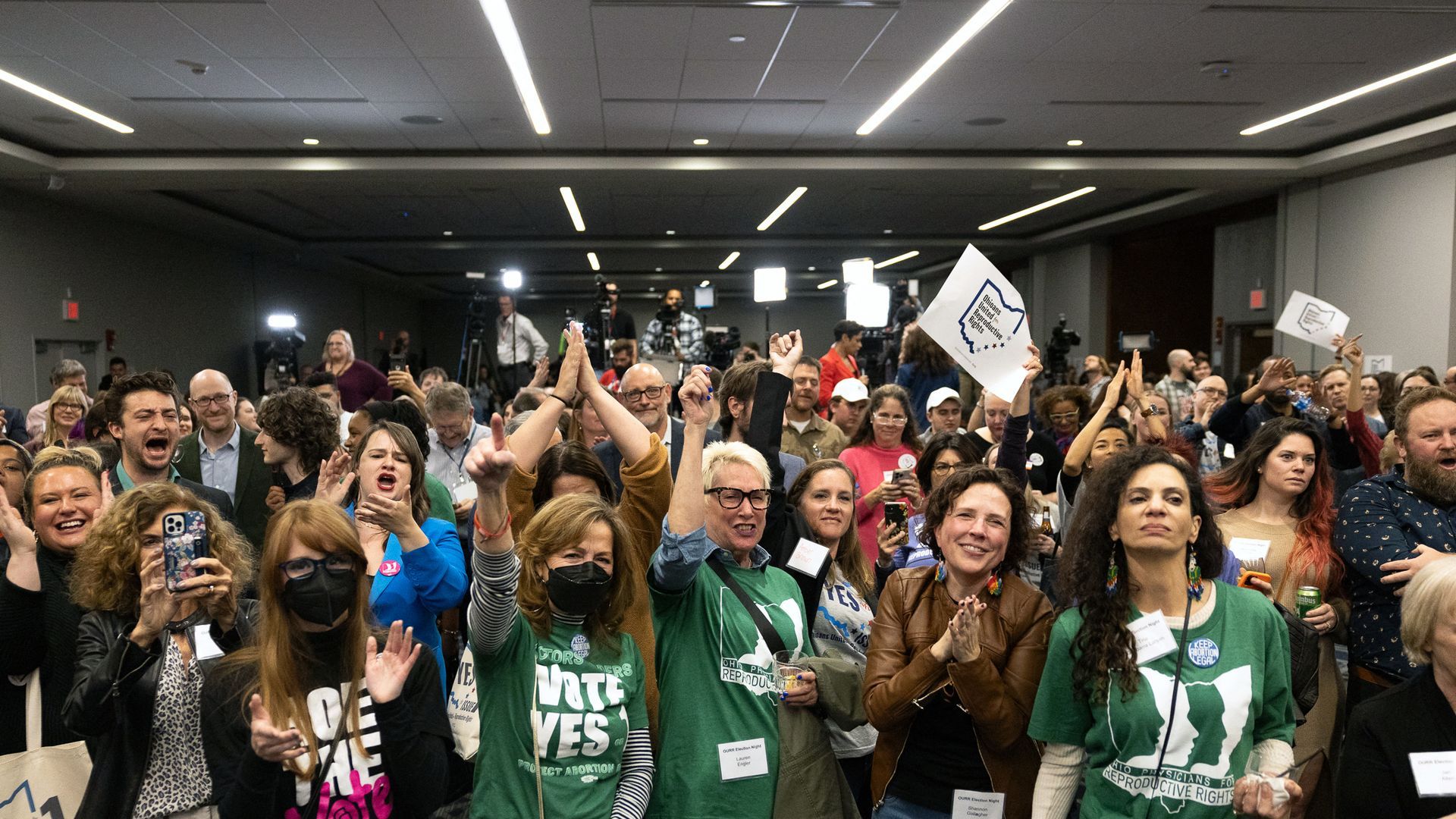
Abortion rights supporters celebrate winning the referendum in Ohio. Photo: Megan Jelinger/AFP via Getty images
Tuesday's off-year elections proved the power of abortion rights to bolster Democratic success, even in red states like Ohio and Kentucky.
Why it matters: Abortion rights have won every time they've been on the ballot since the Supreme Court overturned Roe v. Wade, Axios' Caitlin Owens and Stef W. Kight write.
- Ohio voters last night added the right to abortion into the state constitution.
- Kentucky Democratic Gov. Andy Beshear won re-election after a campaign often defined by his support for abortion rights.
- Virginia Republican Gov. Glenn Youngkin, who pitched a 15-week ban as a middle-ground approach voters would back, was denied full GOP control of the state legislature.
What we're watching: The Ohio vote likely provides a template for advocates in other red and purple states hoping to push similar measures.
- Groups in Arizona, Florida, Nevada, Colorado and South Dakota are moving to get abortion rights measures placed on the ballot next year.
- After disappointing results in Virginia, Republicans are still looking for a message that could neutralize one of Democrats' primary political advantages heading into 2024.
- The five GOP presidential candidates on tonight's debate stage may face fresh questions about the party's approach on abortion. But in a past meeting, consensus was hard to find.
2. What awaits the new NIH director
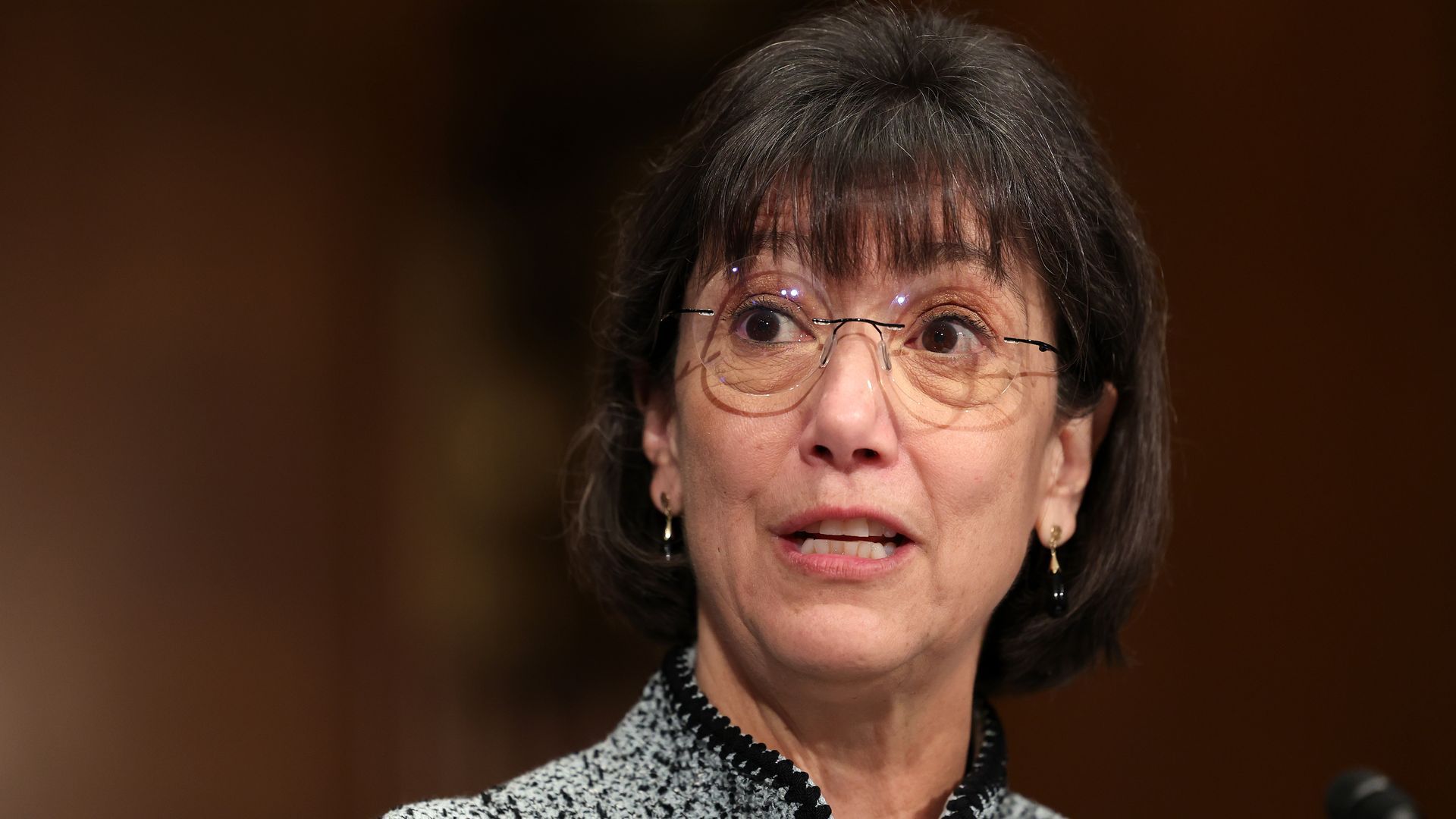
Monica Bertagnolli testifies during her confirmation hearing. Photo: Kevin Dietsch/Getty Images
Newly confirmed NIH director Monica Bertagnolli is taking the helm of the biomedical research agency at a critical moment, Axios' Adriel Bettelheim and Jason Millman write.
Driving the news: Despite Tuesday's bipartisan confirmation vote, Bertagnolli will quickly have to navigate a series of high-stakes clashes that will test her political and administrative skills.
- Congressional Republicans are in a belt-tightening mood and the agency's work is being wrapped up in heated debates over COVID-19, drug pricing and U.S.-funded research in China.
Zoom in: The NIH is deeply enmeshed in the standoff over keeping the government open and would see research and clinical trials delayed in the event of a shutdown, per the White House.
- Bertagnolli also will confront more questions about the $48 billion agency's work developing drugs and the way it licenses its discoveries to industry.
- Senate health committee Chair Bernie Sanders (I-Vt.) opposed her nomination, saying she hadn't committed to lower drug prices through means like "reasonable pricing" clauses in NIH contracts.
- There's also lingering distrust among mostly GOP lawmakers, who are still upset about the institutes' role in the COVID response and what they see as some officials' high-handed dismissal of theories that the coronavirus originated from a lab leak.
Bertagnolli, most recently the head of NIH's National Cancer Institute, succeeds longtime director Francis Collins, who left at the end of 2021 after serving three presidents.
- She faces a far different world than Collins, who presided during a period of federal budget largesse and generally more goodwill — though he navigated his own political battles over research and the COVID response.
- Given Bertagnolli's fairly thin political resume, we'll learn a lot about her in a hurry.
3. FTC warns firms over drug and device patents

Illustration: Maura Losch/Axios
The Federal Trade Commission is challenging over 100 patents held by drugmakers and medical device firms that the agency says could improperly delay cheaper generics, driving up consumer costs.
Driving the news: The consumer watchdog agency on Tuesday sent letters to 10 companies disputing the accuracy or relevancy of their patent listings for products like asthma inhalers and EpiPens.
- At issue are patents listed by companies in the FDA's Orange Book of approved products. Once a patent is listed there — even if inappropriately — competing products could be shut out for 30 months, the FTC says.
The FTC signaled a crackdown almost two months ago, when it warned firms they could face legal action for improper Orange Book listings.
- The agency sent letters to 10 companies, including: AbbVie, AstraZeneca, Boehringer Ingelheim, Impax Laboratories, Kaleo, Mylan Specialty, and subsidiaries of GlaxoSmithKline and Teva.
- The agency is using the FDA's regulatory dispute process, but it said it could take further action if needed, including "investigating this conduct as an unfair method of competition."
4. Postpartum pill gets a price

Illustration: Annelise Capossela/Axios
The first pill approved to treat postpartum depression will be priced at $15,900 for a two-week treatment course, its manufacturer said Tuesday.
Why it matters: The pricing decision has been a big question mark since the FDA in August approved Sage Therapeutics and Biogen's drug, Zurzuvae, for just postpartum depression and not major depressive disorder.
Context: Sage previously said the pill's price would be under $10,000 if it was also approved for major depressive disorder, which has a much larger patient population.
- An estimated 500,000 people are affected by postpartum depression each year.
- The launch price was above RBC Capital's estimate of $11,000, per a note from senior analyst Brian Abrahams.
- Though Abrahams noted initial uncertainty about the drug's market size and how insurers may cover it, he predicted a modest launch after the drug starts becoming available in December.
5. Catch up quick
🚨 Newborn syphilis cases have reached "dire levels," the CDC says. (NBC News)
💊 Common medications are rarely tested in people considered obese, who are often explicitly excluded from drug studies. (Associated Press)
💉 How lawmakers in Texas and Florida undermine COVID vaccination efforts. (KFF Health News)
Thanks for reading Axios Vitals, and to health care editor Jason Millman and copy editor Matt Piper. Please ask your friends and colleagues to sign up.