Axios AM

May 16, 2026

🧘 Welcome to the weekend. Smart Brevity™ count: 1,436 words ... 5½ mins. Thanks to Dave Lawler for orchestrating. Edited by Katie Lewis.
🏛️ Situational awareness: The Supreme Court denied an emergency effort from Virginia Democrats to revive their chances of redrawing the state's congressional maps before midterms, Axios Richmond's Sabrina Moreno reports.
1 big thing: 🚜 Farmers growing desperate

Farmers across the Midwest are entering planting season under mounting financial pressure, as the Iran conflict drives up diesel and fertilizer prices — deepening the worst agricultural downturn in decades, report Nathan Bomey and Axios Local reporters across the Farm Belt.
- Why it matters: Rising fuel and fertilizer costs threaten to kill more family farms, drive up food prices and further strain rural economies already battered by trade disruptions, inflation and extreme weather.
🖼️ The big picture: Mark Mueller — a northeast Iowa farmer and president of the Iowa Corn Growers Association — tells Axios that the current landscape is tougher than at any time since the 1980s farm crisis, when interest rates soared and exports plunged, triggering agricultural bank failures.
- Bankruptcies are rising. Lenders are becoming more reluctant to loan to farmers.
- "There's going to be fewer farmers next year than this year," Mueller says.
Farmers are grappling with a confluence of forces:
- 🔌 Skyrocketing energy prices triggered by the Iran war. Diesel is up 60% from last year.
- 🌾 Spiking fertilizer prices and shortages after Iran blocked shipments through the Strait of Hormuz. 70% of farmers say they can't afford the fertilizer they need.
- 🇨🇳 Disrupted export markets tied to President Trump's tariffs and Chinese import restrictions.
- 💧 Global drought and other weather pressures.
🌽 The crisis is hitting farmers hard across the country:
- In Arkansas, energy and fertilizer costs are way up even as farmers are selling their crops for less.
- In Ohio, first-generation farmer Michael Kilpatrick said his fuel bills are up from $400 to $700, and container costs have risen 30%.
- In Iowa, farmers are dealing with a decline in soybean prices from $13-$15 to around $10 per bushel, as exports to China have fallen due to trade tensions.
- In Minnesota, calls to the state's farm and rural issues mental health helpline are climbing.
For consumers, the crisis is especially noticeable with beef.
- The U.S. cattle herd is at its lowest level in decades, largely due to global drought.
Contributing Axios reporters: Worth Sparkman in NW Arkansas, Monica Eng in Chicago, Casey Weldon in Cincinnati, Jason Clayworth in Des Moines, Arika Herron in Indianapolis, Torey Van Oot in the Twin Cities, and Kelly Tyko in Florida.
2. 🤖 ChatGPT powers grade inflation
AI is exacerbating the trend of colleges handing out too many A's, Axios' Josephine Walker reports.
- Why it matters: Universities and colleges were already concerned about grade inflation. But now they must worry that graduates are leaving AI-proficient rather than knowledgeable about their subjects of study.
✔️ The big picture: It isn't a case where A- students get bumped to an A, says Igor Chirikov, a UC Berkeley professor who authored a study on AI and grade inflation.
- "We have a C student who is now an A student," Chirikov tells Axios, citing his analysis of grades given between 2018 and 2025 at an unnamed Texas research university.
📈 What they found: Since the release of ChatGPT in 2022, "excellent" grades rose by 30% in classes where AI is useful, such as English composition and coding.
- In classes where it's not — like sculpture and lab-based courses — grades remained flat.
- Classes where homework was heavily weighted saw a higher rate of grade inflation, suggesting students got an AI-assisted boost.
📓 What to watch: Professors are getting crafty with steps like requiring handwritten or oral exams.
3. 💼 Workplace perks shrink
The era of ever-expanding workplace perks is ending. It's not just free kombucha and laundry — policies like paid parental leave and retirement matches are on the chopping block, Axios' Tina Reed reports.
- Why it matters: Corporate America spent the labor-shortage years competing to offer the most generous workplace benefits. Now, with soaring health-care costs and workers losing leverage amid an AI reckoning, some employers are rolling them back.
The big picture: First, it was the return to the office.
- 💸 Now, benefits that became standard during COVID and workforce shortages — from fertility subsidies to 401(k) matches — appear on shakier ground in an era dominated by AI spending and rising health costs.
- 🤰Deloitte and Zoom are among the largest companies to grab headlines recently with pullbacks on family leave.
- 🩺 Recent surveys suggest many companies plan to cut benefits to fund AI investments and cover rising health care costs.
What to watch: Benefits consultants say white-collar workers may be in less of a position to demand perks when AI appears capable of replacing some of the workforce.
- It's a reversal from the flashy days of the tech boom, when companies raced to recruit and retain key talent with free meals, massages and in-house fitness centers.
4. 🧹 College-educated dads step it up at home


Dads are spending less time doing paid work and more time doing things like child care and chores at home, Axios' Emily Peck writes from a new analysis of Census data.
👨🍼Why it matters: Millennial and Gen X men are more involved fathers than previous generations, a pattern that appears to have accelerated in the post-pandemic period.
- The difference is particularly pronounced among college-educated men who are part of a couple, finds a new working paper from Ariel Binder, a research fellow at the American Institute for Boys and Men.
🧺 Reality check: Women still do much more unpaid work.
5. 🪧 Voting rights marches to sweep the South
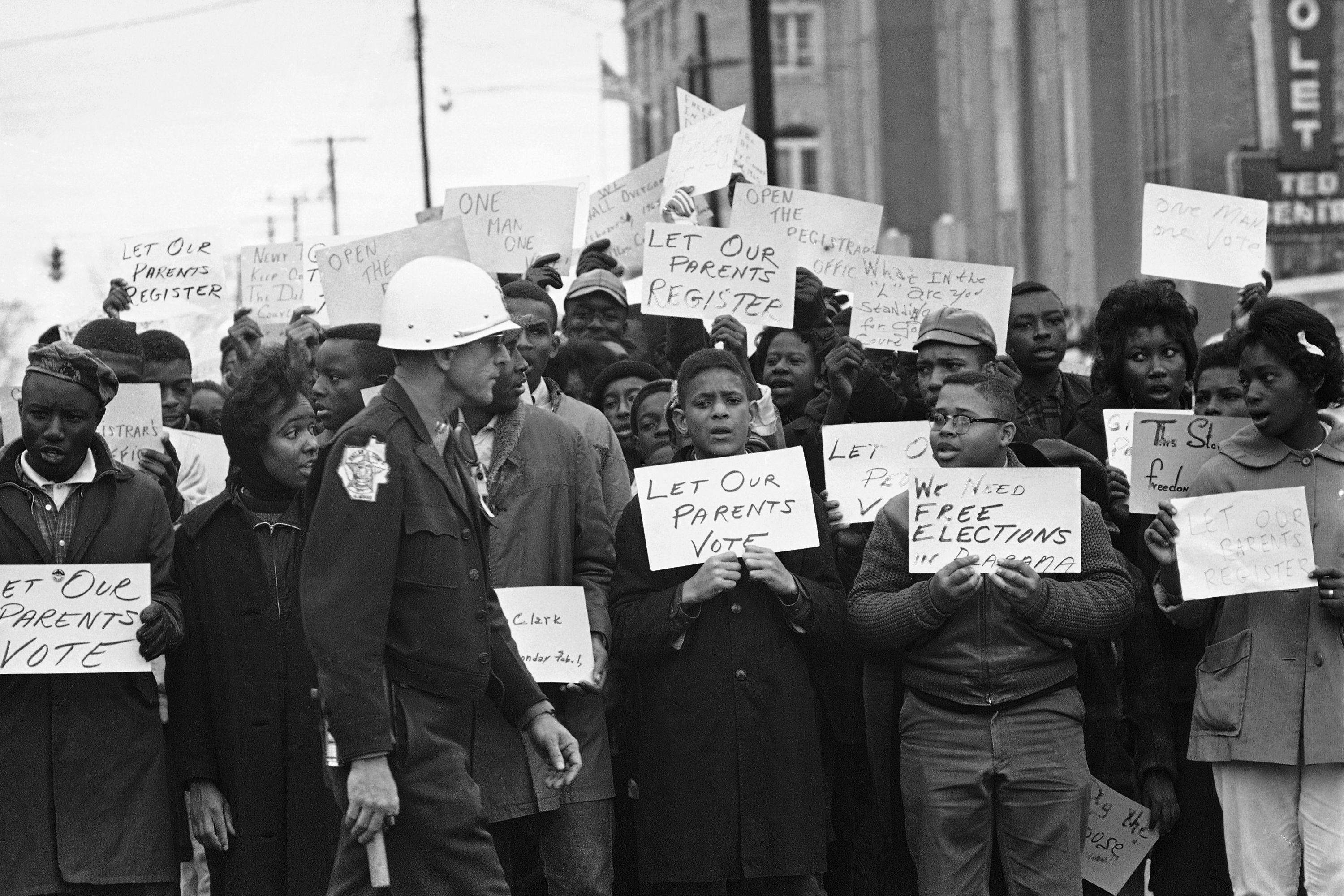
A wave of voting rights battles and GOP redistricting fights is triggering a coordinated response across the South, with organizers preparing a "Summer of Action" beginning this weekend, Axios' Delano Massey and Russell Contreras report.
🗳️ Why it matters: Organizers say the fight over congressional maps, voting access and political representation is accelerating in real time as states redraw political power ahead of November's midterms and the 2028 general election.
- The Supreme Court narrowed the Voting Rights Act in late April, making it harder to challenge maps on the basis of racial discrimination.
Republican-led efforts in Tennessee and Alabama have targeted Democratic-leaning districts, particularly those anchored by Black voters, for last-minute 2026 redistricting.
- Georgia and Mississippi both plan to redistrict ahead of 2028.
🗓️ Driving the news: Organizers in Selma, Ala., are planning marches beginning today, tied to the legacy of Bloody Sunday and the Edmund Pettus Bridge, framing this summer's demonstrations as a continuation of the civil rights movement.
- "This is going to require sustained pressure and agitation," Marc Morial, president of the National Urban League, tells Axios. "There will be multiple activations taking place in multiple places this summer."
6. 💵 The Powell school of leadership

Axios' chief economic correspondent Neil Irwin, who had a front-row seat for Jerome Powell's eight years as Federal Reserve chair, reflects on Powell's legacy as Kevin Warsh takes over:
Powell guided the U.S. economy through extreme tumult and fought off unprecedented presidential efforts to undermine the Federal Reserve's independence.
- But it's Powell's approach to duty and public service that is his ultimate legacy as a leader and that will shape his place in history.
For the better part of the last decade, I've either watched on a screen or been physically present for pretty much everything Powell has said in public. Two sentences stick most in my memory.
- 😷 It was April 2020. The world was on lockdown, the unemployment rate was nearly 15%, GDP was in free fall, and the future appeared bleak.
- 📜 "None of us has the luxury of choosing our challenges; fate and history provide them for us," Powell said. "Our job is to meet the tests we are presented."
The big picture: Powell's mistakes contributed to the painful inflation of the early 2020s.
- But he has led a crucial American institution for eight long years with a deep sense of public purpose.
7. 🎣 Low rivers threaten salmon run out West
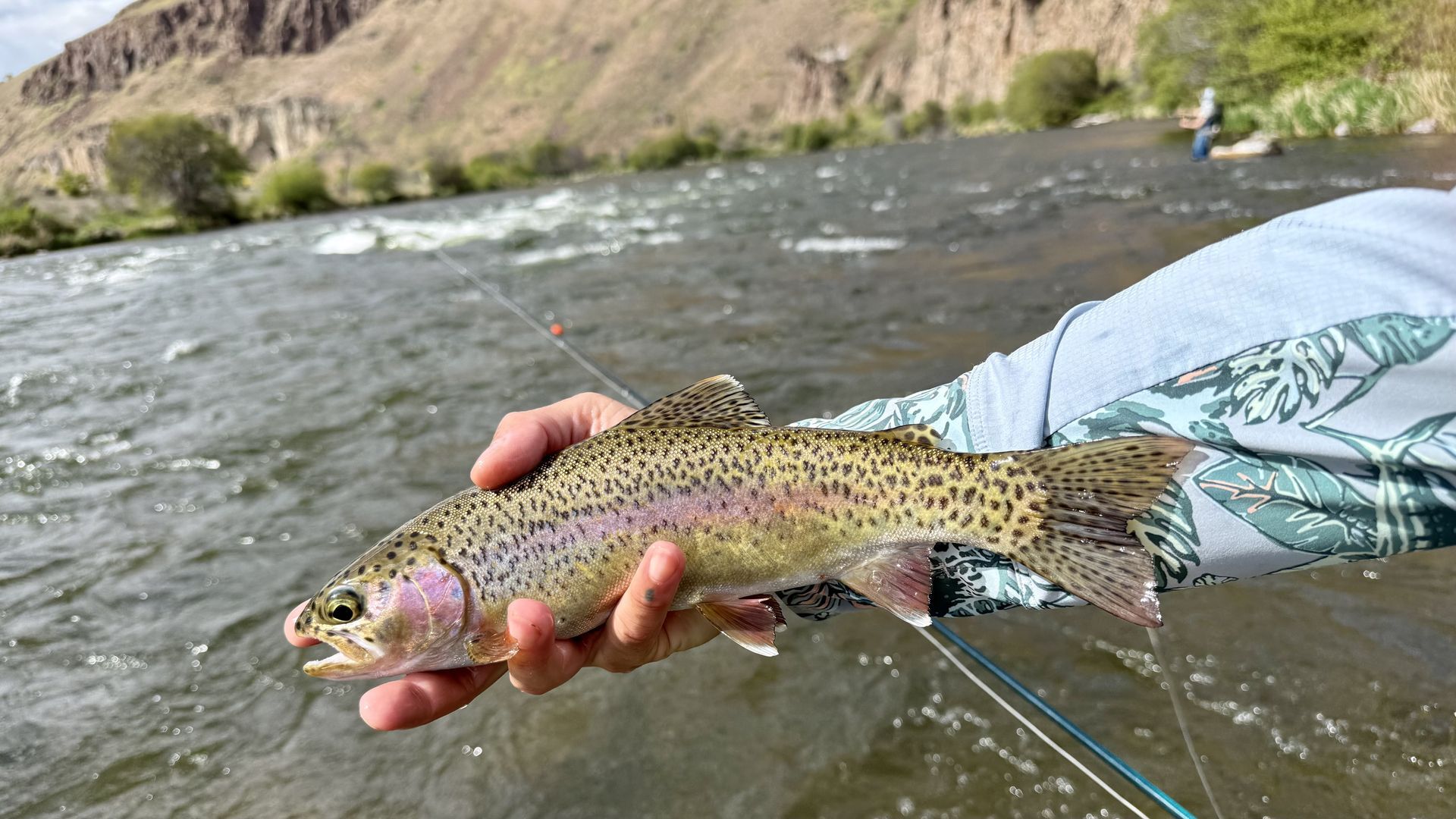
Historically low snowpack and widespread drought are causing rivers to run lower and warmer earlier than usual this year, raising chances of die-offs and disease outbreaks among native fish species as we head into summer, Axios Portland's Meira Gebel reports.
🐟 Why it matters: Salmon, trout and steelhead remain critical to river ecosystems, and are deeply tied to Oregon's cultural identity, recreation economy and tribal communities.
"This year is just dire everywhere," Spencer Sawaske with the Oregon Department of Fish and Wildlife (ODFW) tells Axios.
- But Daniel Ritz, river steward program director at Native Fish Society, says native and wild fish "are incredibly resilient," and have "managed to survive with some abundance."
8. 🎺 1 for the road: Band camp for adults
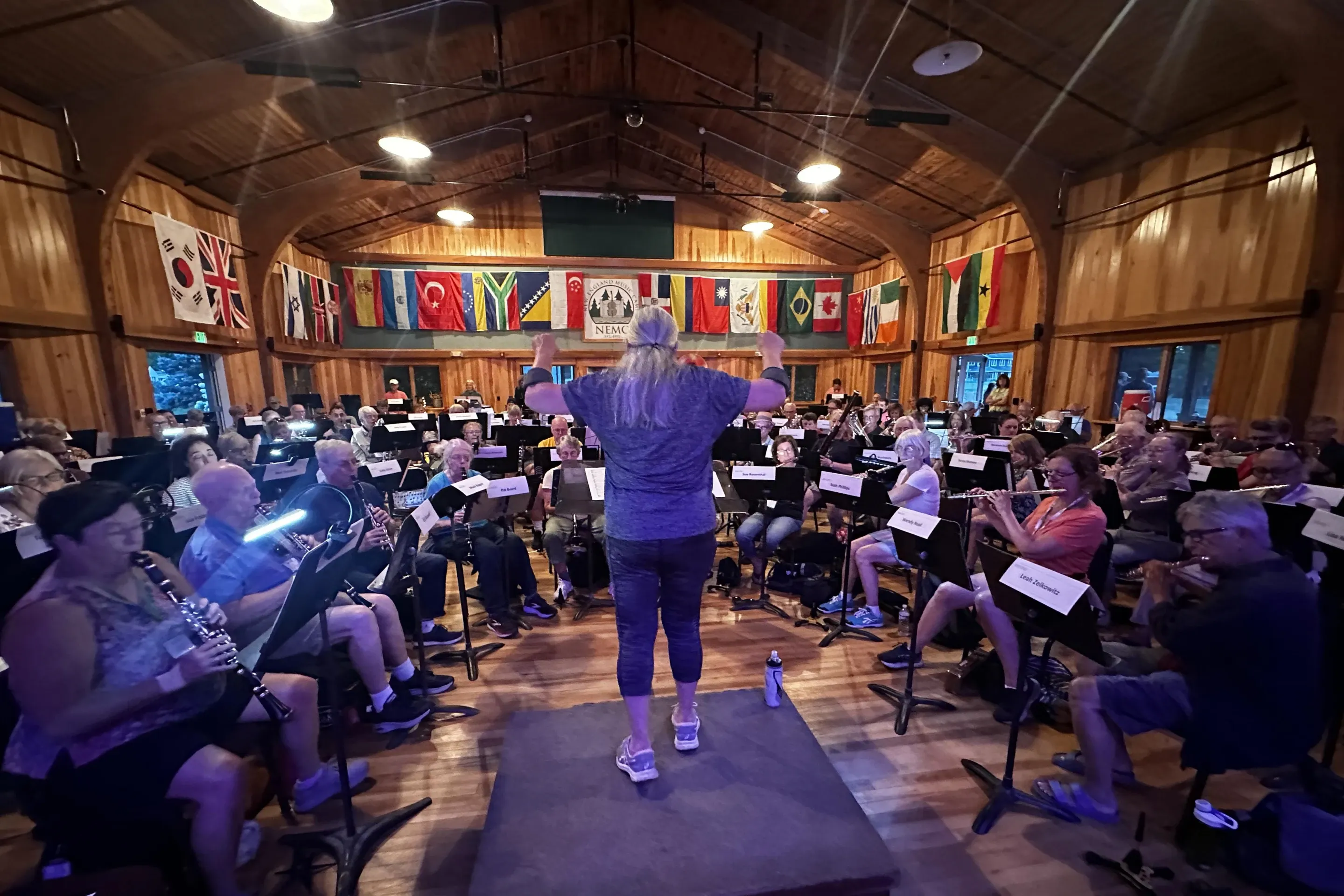
Band camp is a summer tradition across America — and some of the campers are senior citizens.
- Adults can find summer music programs ranging from electronic, folk, rock 'n' roll and jazz to chamber and opera, AP reports.

Jonathan Alpert, a psychotherapist based in New York, said: "Returning to an instrument learned in childhood ... combines memory, discipline and renewed growth."
📬 Thanks for starting your weekend with us! Please invite your friends to join AM.
Sign up for Axios AM