Blue books make an "out of step" campus comeback in the AI era

Add Axios as your preferred source to
see more of our stories on Google.
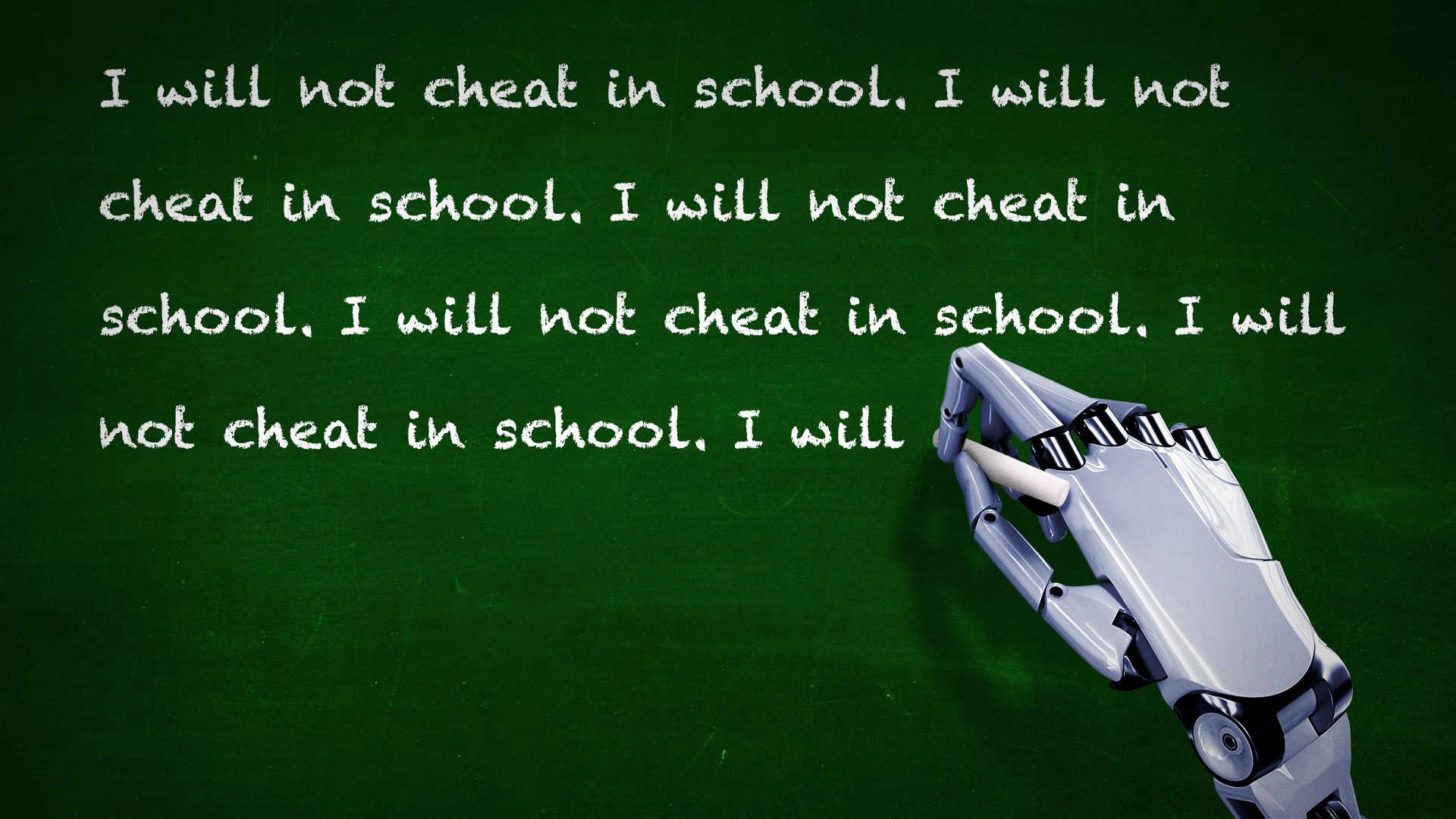
Illustration: Allie Carl/Axios
Colleges besieged by AI-generated writing brought back blue-book exams to deter cheating, but some educators say hand-written tests don't showcase students' best work and disadvantage swaths of learners.
Why it matters: Educators say AI cheating is real — if sometimes overstated — but reverting to pen-and-paper tests sidesteps the reality that many employers want graduates who are comfortable using AI tools.
State of play: Education has fundamentally changed since OpenAI dropped ChatGPT in 2022.
- Blue books can help prevent copy-and-paste cheating. But Professor Dan Melzer, at University of California, Davis, says educators won't be able to completely "outsmart ChatGPT" use because students will find workarounds.
Zoom in: Steven Krause, a professor at Eastern Michigan University, says the pervasive myth that students everywhere are cheating is overstated.
- In his experience, most cheaters are failing and are "desperate" for solutions.
- He says he reads about 1,500 pages of student writing each semester, and that "AI writing just sounds off." Experienced professors should be able to detect it, especially if they know their students.
- It's worth noting that influencers and startups are creating programs and prompts to "humanize" AI writing, making it harder to recognize to an untrained eye.
Critics say blue-book exams are a misguided solution.
- More than half of students now take at least one online course and asynchronous, self-paced classes make in-person assignments impractical.
- Multilingual writers and students with disabilities who need accommodations are at a massive disadvantage in timed, handwritten scenarios. Plus, deciphering students' poor handwriting is a headache, Krause says.
- Writing is meant to be a revision process. Forcing students to write a timed, single-draft response, means professors are evaluating a students' rushed thoughts, not their skills.
- It's also not a scalable solution for large classes, with some topping 200 students. And AI wearables, such as Meta's smart glasses, could enable cheating regardless of in-person exams.
Zoom out: Many young Americans have spent much of their lives on screens. Leaning on blue books makes educators look like "dinosaur[s]," Melzer says.
- "Out of step and out of date with the way literacy is currently practiced in the world, outside of the ivory tower," he adds.
- Krause took it a step further: "Why don't we just have them write with chisels?" he jokingly asked Axios.
- Melzer says he tries to get students to see the value in his assignments, "as opposed to just thinking: 'I could just have ChatGPT do this and I'll get it off my plate.'"
- He calls ChatGPT the "most powerful disruption" in his career and says teachers need to learn how to work with it.
The bottom line: The introduction of typewriters, computers, word processors, spelling and grammar checkers had some educators expressing similar concerns, penning apocalyptic stories about the downfall of education.
- "All these articles are like, it's the end of writing as we know it," Elizabeth Wardle, director of Miami University's writing center (Ohio), tells Axios.
- "It's the end of writing in college, blah, blah, blah. I just don't ascribe to that view."
Go deeper: Fewer Americans value college, despite higher lifetime earnings - Axios Portland
