OpenAI, Anthropic feud could help Google

Add Axios as your preferred source to
see more of our stories on Google.
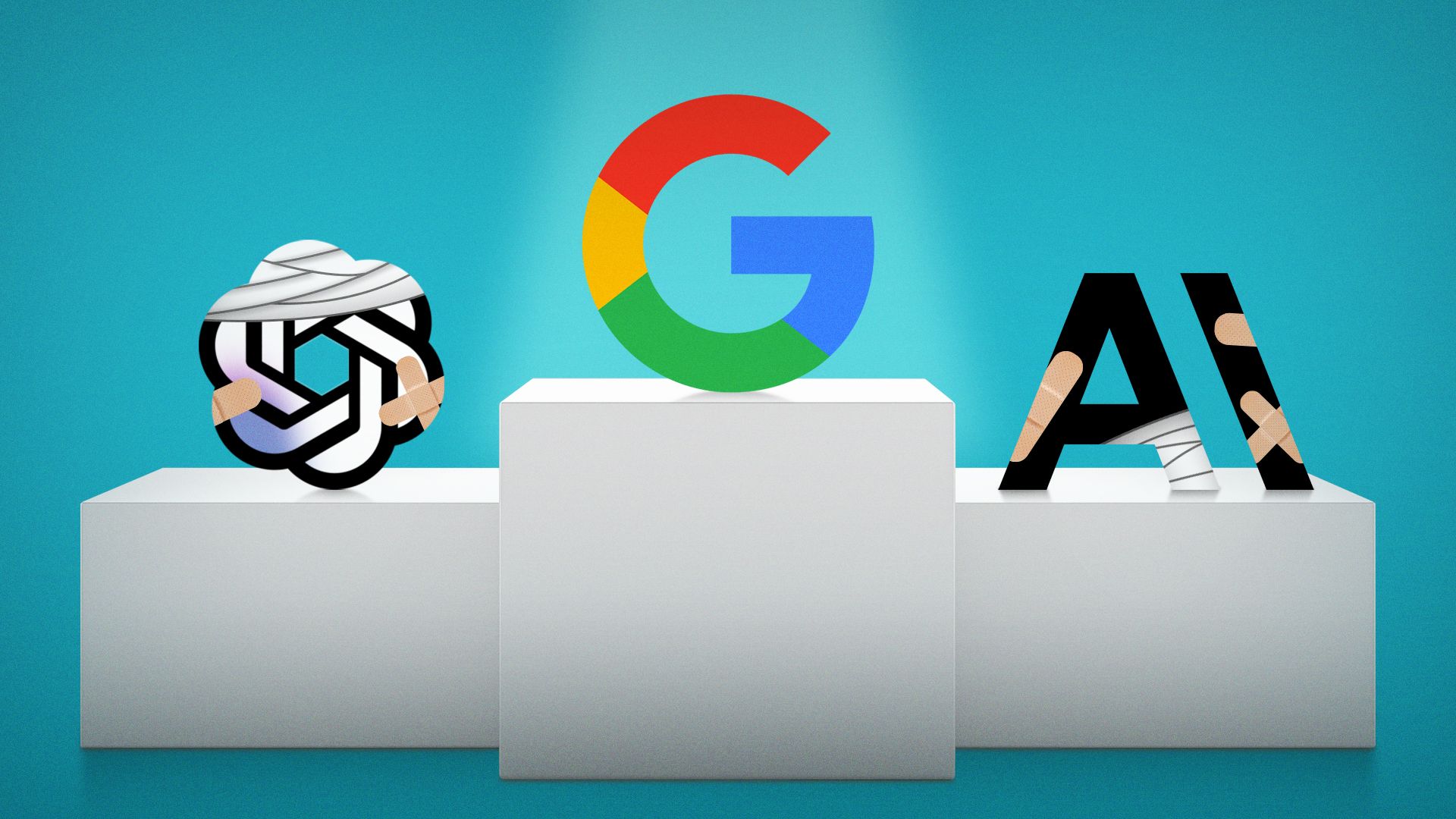
Illustration: Allie Carl/Axios
Google is quietly expanding its Pentagon work — and growing users faster than its rivals — while Anthropic and OpenAI publicly spar over conditions for Defense Department work.
Why it matters: Winning the AI race may depend on knowing when to stay out of scuffles.
What they're saying: "When you have two major companies fighting each other, it is a good distraction for another company to come in and learn from their mistakes and just go all the way to the top," PitchBook's Harrison Rolfes tells Axios.
State of play: Google is set to provide AI agents to the Pentagon's 3-million-person workforce for unclassified work, Bloomberg reported Tuesday.
- The news came just one day after rival AI lab Anthropic sued the Pentagon for classifying the firm as a "supply chain risk" after negotiations broke down over parameters for using Anthropic's Claude.
- Over 30 employees from OpenAI and Google signed an amicus brief supporting Anthropic.
Between the lines: Google largely stayed out of that tête-à-tête.
- "OpenAI looked opportunistic. Anthropic got blacklisted. Google gained the most ground and nobody's talking about it," Patrick Moorhead, CEO of Moor Insights & Strategy, told Axios.
- This comes after Google has already been steadily gaining AI mojo.
Yes, but: Google DeepMind's chief scientist, Jeff Dean, signed the brief supporting Anthropic, and employees wrote letters to executives asking for broader support for Anthropic's safety goals.
- So Google isn't immune to the internal dynamics pressuring its rivals.
The difference: Google has the cash reserves to take bigger hits than OpenAI or Anthropic.
- Defense AI is "immaterial" to Alphabet's over $400 billion annual revenue base. But Moorhead also said the company needs to diversify its revenue away from consumer advertising to "balance the business."
- Anthropic is projected to break even by 2028, and OpenAI by 2030, according to The Information. PitchBook's Rolfes adds that OpenAI doesn't offer much detail on how to achieve that.
Flashback: Netscape and Microsoft defined the browser wars of the 1990s while Google was building a search business that would become ubiquitous.
What we're watching: Claude grew paid subscribers by over 200% year over year, Gemini 258%, with roughly 20% of weekly ChatGPT web users also using Gemini in a given week, according to January Yipit data compiled by a16z.
- OpenAI and Anthropic are "essentially cannibalizing each other," keeping prices low to take market share from one another, Rolfes said.
- While many enterprises are paying for subscriptions at both AI labs, neither is profitable.
- Google is "most lined up to take that top spot" as the infighting continues.
