Arkansas farmers squeezed by costs, lower prices

Add Axios as your preferred source to
see more of our stories on Google.
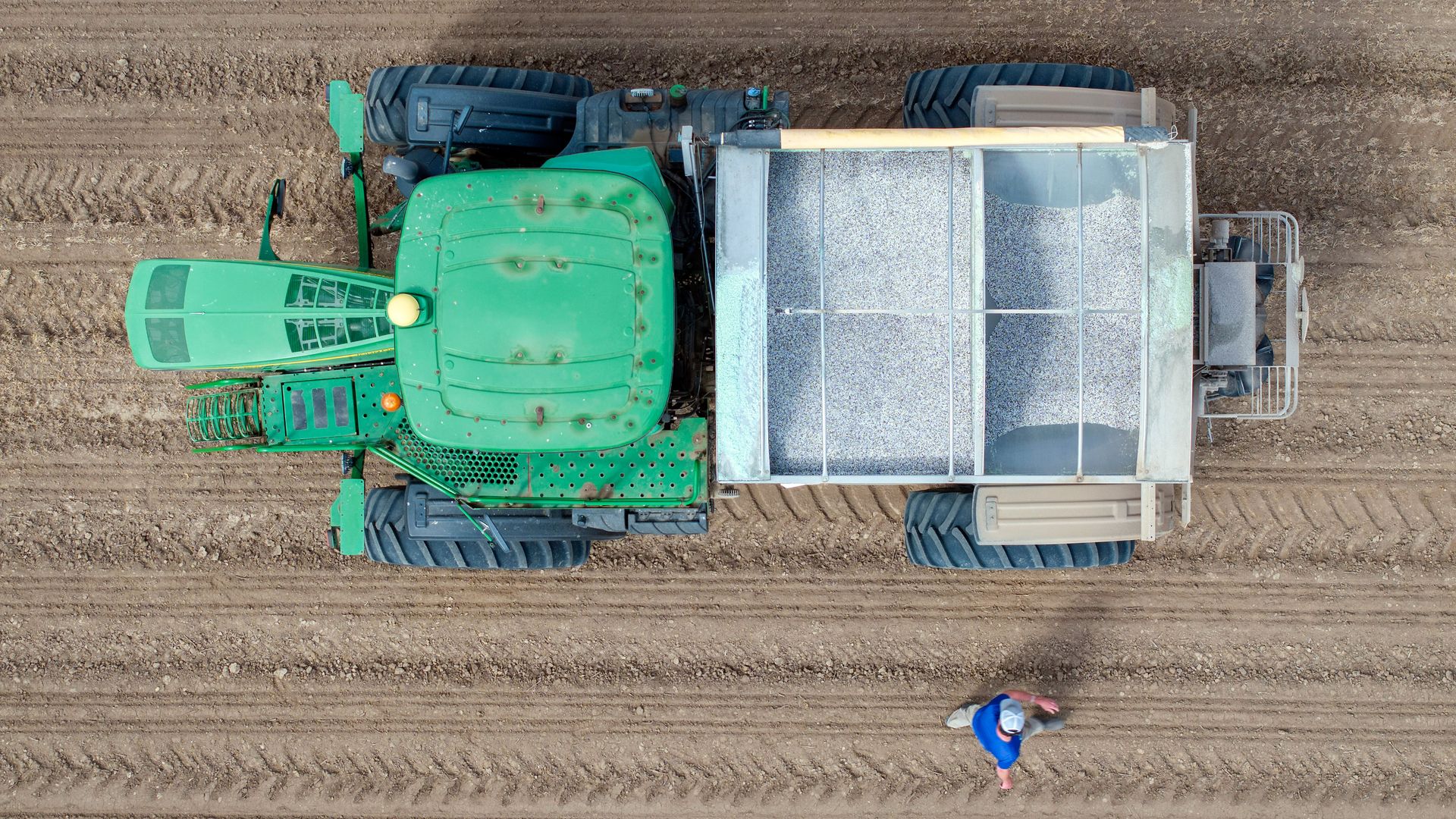
Fertilizer is spread onto a cornfield at a farm in Ruleville, Mississippi. Photo: Rory Doyle/Bloomberg via Getty Images
The Iran war has led to a sharp increase in fuel and fertilizer prices this spring, worsening an already difficult farm economy in Arkansas, which led the U.S. in ag bankruptcies last year.
Why it matters: Agriculture is a cornerstone of the state's economy, contributing $25.6 billion in 2023. As the No. 1 grower of rice and the third-largest producer of poultry, stress on Arkansas farms can ripple into the national food supply.
State of play: Prices for long-grain white rice in Arkansas have fallen to about $29 per 100 pounds, down from roughly $34.50 to $35.25 a year ago, according to USDA data.
- The price of fertilizers, the single highest cost for many farmers, has remained near peak levels, with urea prices jumping 59% since January.
- Diesel has surged since the start of the Iran war, with Arkansans paying $5 per gallon Thursday, up from about $3.24 a year ago.
The big picture: Farmers are facing a widening gap between rising costs and falling prices, Tyler Oxner, director of commodity activities and economics at the Arkansas Farm Bureau, told Axios.
- Input costs have climbed roughly 40% to 70% in the "last couple of years," while the prices farmers receive for their crops have moved in the opposite direction, he said.
The latest: U.S. Sen. John Boozman (R-Ark.) this week said the Senate Agriculture Committee will have a hearing in May focused on fertilizer costs and long-term supply. He urged Congress to move faster on assistance.
- On Thursday, U.S. Rep. Steve Womack (R-Ark.) backed the Farm, Food, and National Security Act of 2026, which aims to expand export markets and boost agricultural research.
What they're saying: "This feels much worse than the '80s did," Jennifer James, a fourth-generation farmer near Newport, said, citing her father's view after nearly six decades of crops.
- Her family grows soybeans, corn, rice and some winter wheat.
- Eastern Arkansas rice farms are entering what may be their fifth straight season with a poor outlook, she said.
In southeast Arkansas, Jim Whitaker grows rice, cotton, corn, soybeans and seed rice, and said his operation expects to be in the red this year.
- "The American people — and especially the American farmer — are the ones paying for all these foreign policies," Whitaker told Axios, noting that he supports many of the Trump administration's larger goals.
- He pointed out that the federal government has been working to help farmers.
Many farmers are adjusting, cutting acreage or shifting crops to manage costs, Oxner said.
The bottom line: "I have a ton of farmer friends and neighbors that aren't in business this year because the last couple of years have been so hard on them," Whitaker said.
- As planting season wraps up, many farmers have one goal: "It's whatever I can lose the least amount of money planting," Oxner said.