Oregon's snowpack falls near record lows

Add Axios as your preferred source to
see more of our stories on Google.
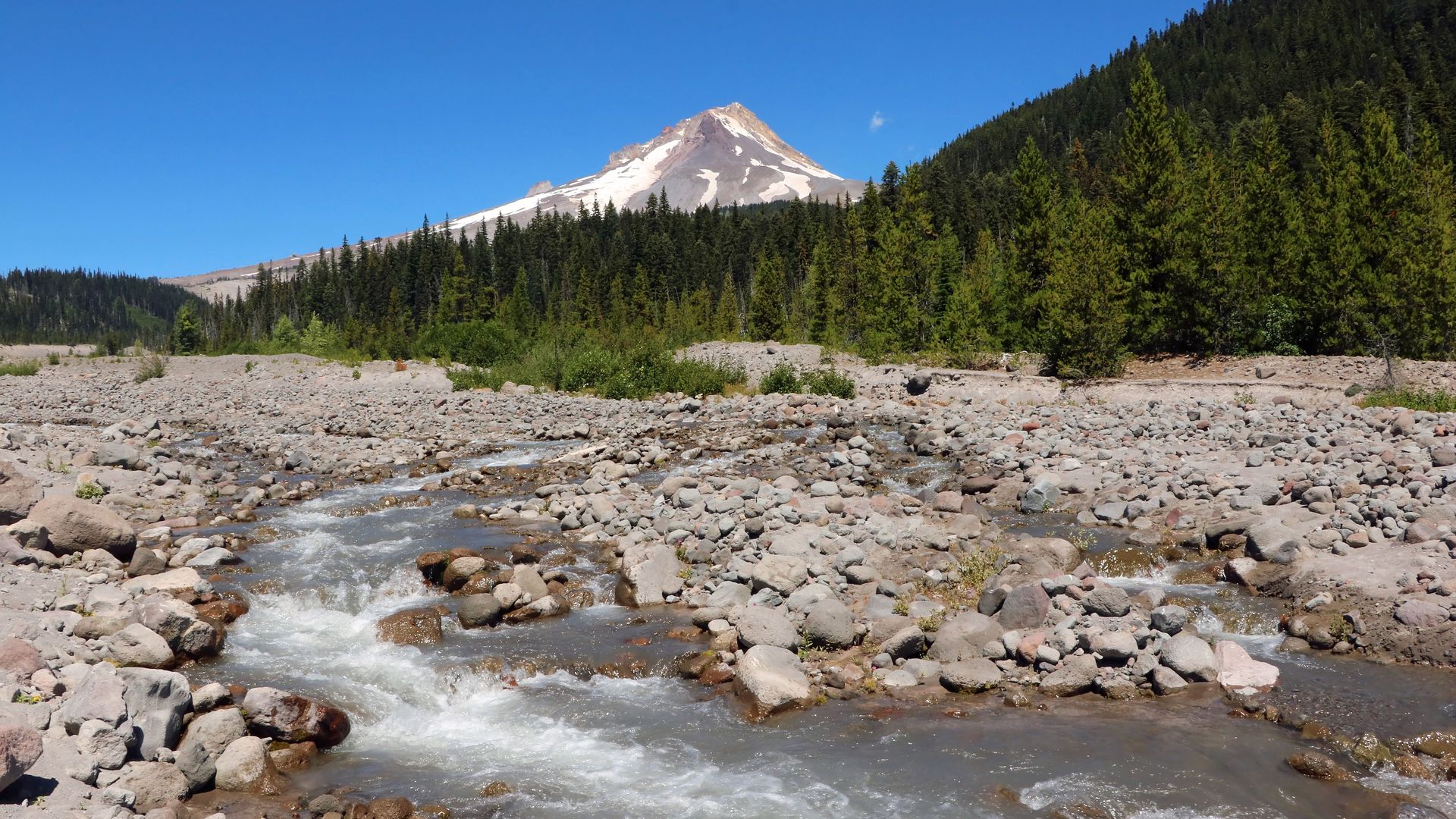
Near record-low snowpack in the Cascades is likely to create water problems this summer. Photo: Don and Melinda Crawford/UCG/Universal Images Group via Getty Images
Oregon's coldest months are behind us, but you'd be forgiven if you never noticed them in the first place.
Why it matters: A warm winter and lack of snow have left Oregon with the lowest snowpack in the Pacific Northwest and its second-lowest level on record.
- That could spell trouble across the state for farmers, fish and firefighters as the potential for summer water shortages looms.
Catch up quick: The winter began with promise — a weak La Niña was expected to bring colder and wetter than average conditions.
- The wetness was there in November and December as strong atmospheric rivers washed over the Pacific Northwest, but they came in riding record warmth and did little to build a base of snow at higher elevations.
- January wasn't much better, with Portland receiving a little more than half its average rainfall.
- Though February brought more precipitation, it also came with statewide temperatures nearly 5°F above average.
Overall, the four-month period from November through February tied 1934 for the warmest in Oregon on record.
Stunning stat: Oregon's snowpack is about 30% of normal, nearly tied with 2015 for the worst year on record.
- "We're kind of the epicenter of the snow drought," Oregon State climatologist Larry O'Neill told Axios, noting that, as of Monday, only Arizona and New Mexico had lower percentages of their median snowpack.
- We aren't alone, though, with many states across the West seeing much warmer and drier conditions than usual.
Threat level: Oregon's snowpack acts as a reservoir that slowly releases water in the warmer months.
- Fish rely on it for adequate stream levels. Farmers rely on it for irrigation. We all rely on it to spin the turbines in our hydroelectric dams.
- "The snowpack is extremely important for our water supply in the spring and summer," O'Neill said. "Without it, we usually end up with severe drought."
What's next: Forecasters are predicting above-average temps — mid-60s in Portland, mid-50s up on Mount Hood — for the next several days.
The bottom line: It's difficult to directly link one winter season to climate change, but experts have long predicted that a warmer climate, caused primarily by humans burning fossil fuels, would result in winters like this one.
- "It represents our future," according to O'Neill. "Low snowpack that melts early or doesn't come at all."