Ohio farmers face '80s-style price squeeze

Add Axios as your preferred source to
see more of our stories on Google.
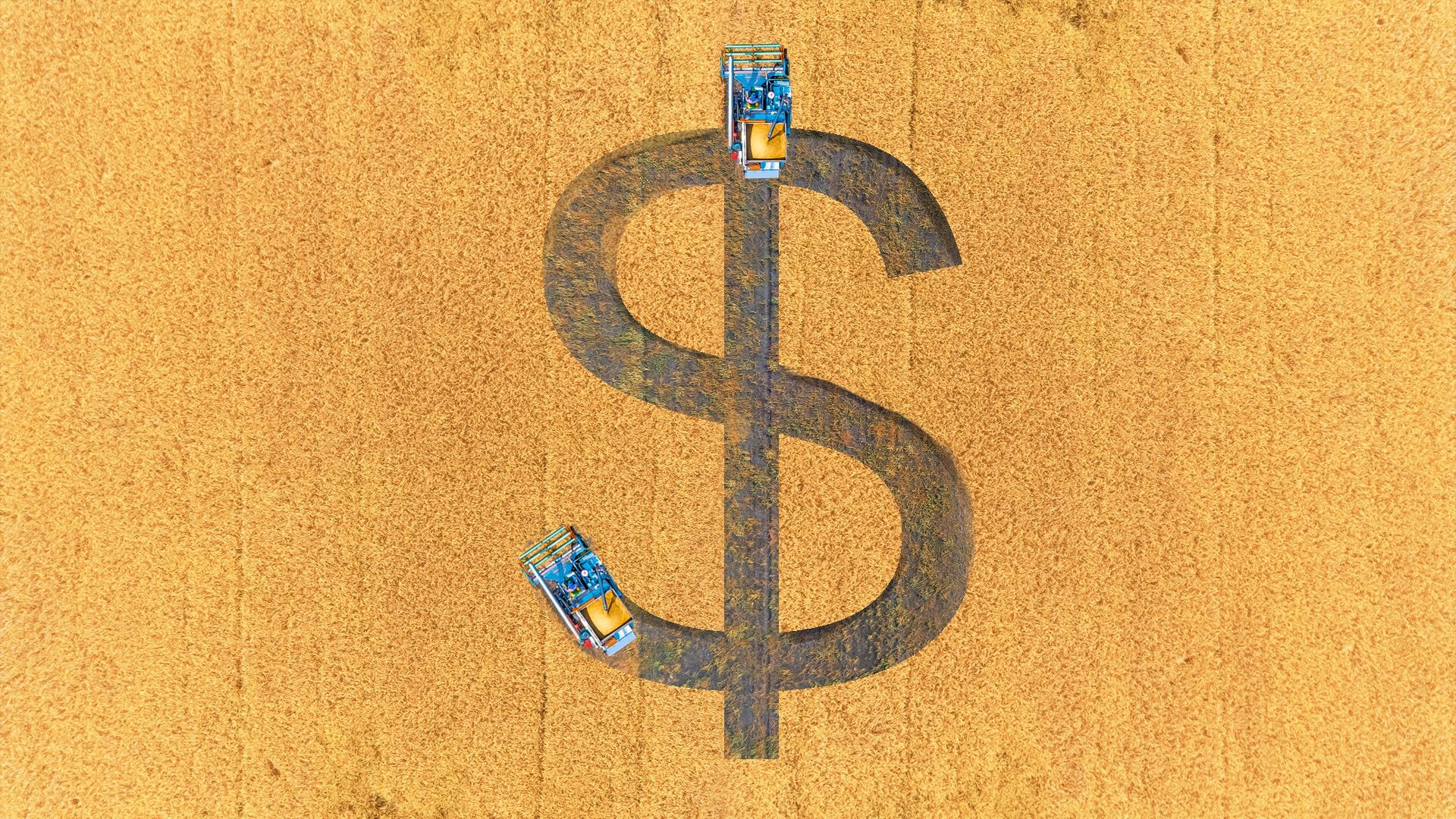
Illustration: Lazaro Gamio/Axios
Rising costs are squeezing Ohio's largest industry, putting new and rising pressures on farmers statewide.
Why it matters: Agriculture drives $124 billion of Ohio's economy and supports one in eight jobs — so strain on farms can ripple into food prices and local economies.
The big picture: Ohio's farm economy spans about 75,000 farms across 13 million acres, producing more than 200 commodities — including top national rankings in Swiss cheese and eggs — and supporting roughly 1,000 food processing companies. Soybeans are the state's top export.
What they're saying: Ryan Matthews, a spokesperson for the Ohio Farm Bureau, called food and agriculture "the backbone of our state" and said farmers today are navigating an economy reminiscent of the 1980s farm crisis.
- "Between historic inflation in input costs such as fertilizer and fuel, ongoing weather conditions, persistently low commodity prices and global trade disputes, the risk to Ohio's multigenerational family farms has never been higher," Matthews told Axios.
Flashback: The 1980s farm crisis combined high interest rates and falling prices, driving widespread farm losses across the Midwest.
Zoom in: U.S. cattle inventory, a key part of Ohio's livestock sector, is at a 70-year low after years of drought and herd sell-offs, said Elizabeth Harsh of the Ohio Cattlemen's Association, pushing prices higher across the supply chain.
Yes, but: Higher prices aren't translating into stronger profits for many producers.
- Input costs — fertilizer, fuel, land and labor — remain elevated.
- Margins remain "not much different than before," said Harsh, whose family farms a 2,500-acre plot in northern Delaware County.
Between the lines: Uncertainty — from weather, trade and policy — is shaping decisions on herd sizes, crop mix and equipment investments.
State support is helping, Harsh said, calling Ohio leaders "a great partner to agriculture," citing $42 million in meatpacking grants and drought aid.
- But at the federal level, "trade negotiations," tariffs, and the lack of a new farm bill are creating "a lot of unpredictability."
Competition for land is also intensifying near fast-growing areas like Columbus, Harsh said: "We're not making more ground."
- "You've got to compete in terms of the price of ground when there is development involved," she added.
Zoom in: Those financial pressures are hitting farms unevenly, with smaller farms feeling the impact first.
- "[Small-scale] farmers are really the only people that buy retail and sell wholesale," said Michael Kilpatrick, a first-generation farmer near Cincinnati. "If prices go up, we're eating that difference."
Kilpatrick's farm grows more than 100 crops on eight acres. He employs seven full-time and 22 seasonal workers.
- His farm sells nearly all of its products directly to customers, including 50%–55% online.
- The shift away from restaurants and wholesalers came as profits decreased.
But rising fuel, shipping and packaging costs are squeezing those already tight profits.
- "I'm looking at those [fuel] bills, and they're $700 instead of the usual $400," he said. "Our containers have gone up about 30% over the last couple years."
With orders placed months in advance, pricing is tough to adjust. Kilpatrick said he expects to spend $10,000 a week on shipping in the spring alone.
- "When every single pint you're doing costs another 10 cents, then you have to instantly raise the price of anything that's in a pint," he added. "Nobody wants that, least of all us."
The other side: Kilpatrick said programs don't reflect the needs of smaller farms.
- "These programs are typically built for farms that are doing 1,000 acres, not 60 crops," he said.
- He added that state agriculture boards are dominated by conventional growers: "If there's nobody advocating for us, smaller, unique farms, that's a problem."
The bottom line: Farmers remain optimistic, but rising costs are reshaping Ohio's farm economy — and consumers are likely to feel the effects.
- "Prices will do what they always do and moderate both at the retail case and the farm gate," Harsh said.