Kevin Warsh confirmed to lead Federal Reserve

Add Axios as your preferred source to
see more of our stories on Google.
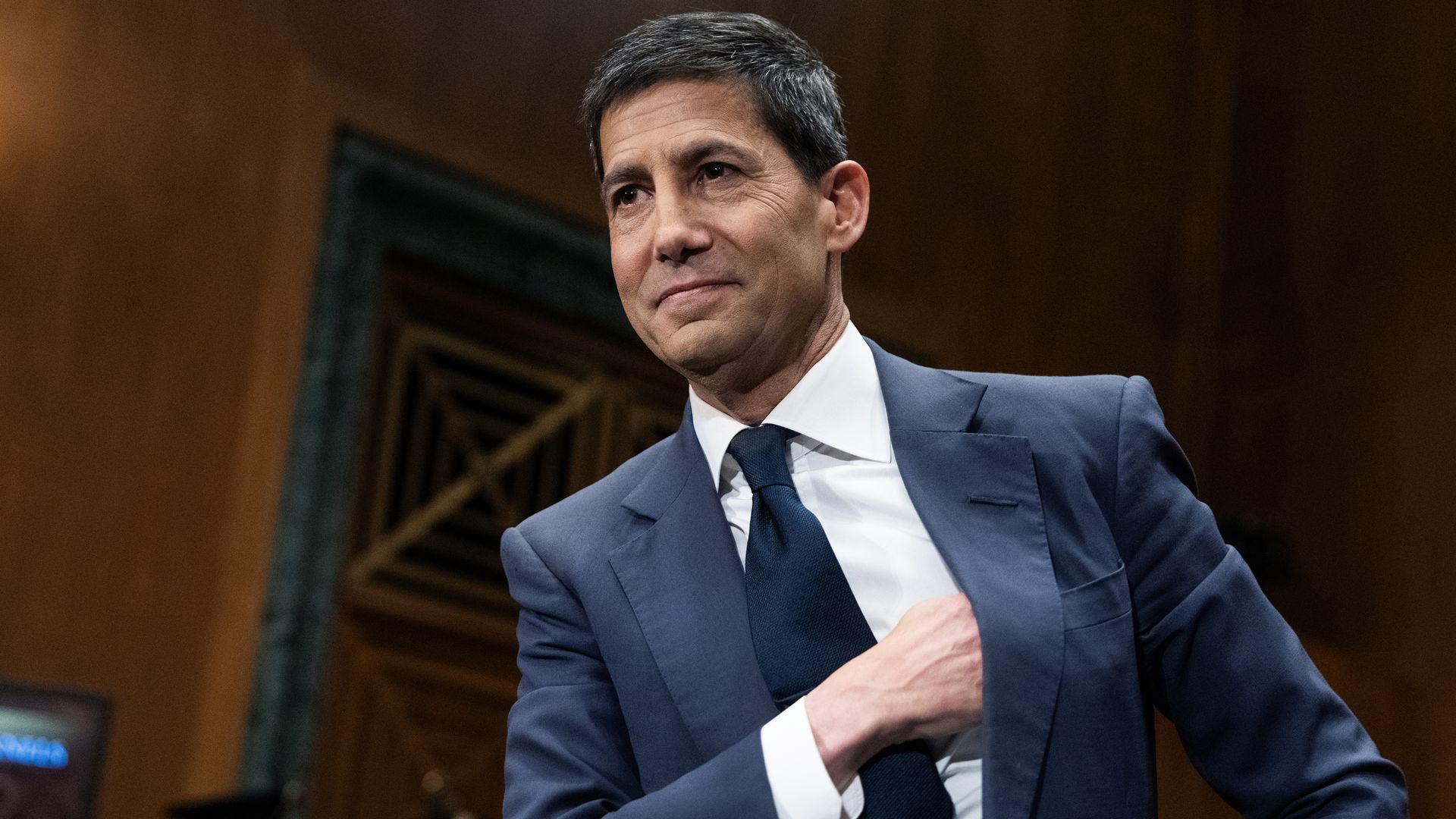
Incoming Federal Reserve chair Kevin Warsh. Photo: Tom Williams/CQ-Roll Call, Inc via Getty Images
Kevin Warsh has been confirmed as the 17th leader of the Federal Reserve, becoming America's economist-in-chief at a moment of resurgent inflation, public discontent with the economy and unprecedented attacks on the Fed's independence.
Driving the news: Warsh was confirmed to a four-year term as Fed chair Wednesday by a 54-45 Senate vote. He received unanimous support from Republicans but only one "aye" vote from a Democrat, John Fetterman of Pennsylvania.
- Warsh takes the helm of the central bank after Jerome Powell's term ends Friday.
The big picture: Warsh has promised sweeping change at an institution that he argues has grown too unwieldy and inclined to intervene in the economy.
- He inherits buoyant financial markets and an AI-driven growth surge — as well as the legacy of five straight years of elevated inflation that has spiked again due to the Iran war.
- High prices and affordability concerns have driven consumer sentiment indicators to recessionary levels, despite a low unemployment rate and solid GDP growth.
Friction point: President Trump has demanded that the Fed cut interest rates, and Warsh has previously laid out an intellectual case for doing so premised on a 1990s-style boom in America's supply potential.
- But in recent weeks — including April inflation data the last two days — evidence has pointed toward price pressures being resurgent and the labor market holding up, which undermines the case for rate cuts.
- Indeed, if he seeks rate cuts anytime soon, Warsh will face an uphill battle with his fellow members of the Fed policy committee, who jointly make those decisions.
Zoom out: The debate over interest rates will occur against a backdrop of historically unique threats to the Fed's ability to act without regard to political influence.
- A Supreme Court case over whether Trump can fire Biden-appointed governor Lisa Cook is pending.
- Powell is remaining on the Fed Board of Governors, contrary to modern precedent, due to what he sees as an ongoing threat by the Trump administration to reopen a criminal investigation over the Fed's building renovations.
- Warsh also takes the helm with less bipartisan support than any previous leader of the central bank, as Democrats expressed doubt he will be sufficiently independent from the White House.
Catch up quick: Warsh was a Fed governor from 2006 to 2011 — then the youngest on record — and was a close ally of chair Ben Bernanke in fighting the financial crisis.
- Warsh stepped down in 2011 amid misgivings about the Fed's post-crisis efforts to stimulate the economy through quantitative easing.
- In the years since, he has become an increasingly sharp critic of the institution he once helped lead, accusing it of mission creep and of massive policy failure in allowing inflation to surge in 2021-2022.
The intrigue: An open question is how quickly he will seek to act in remaking the institution.
- He is largely stuck with the top leadership — the other governors, who serve staggered terms, and the 12 reserve bank presidents around the country. But he has broad authority to make changes to the staff at the Board of Governors.
- He has also flagged possible changes to the Fed's communications approach, including skepticism of its "forward guidance" for signaling future actions, and frequent press conferences.
Between the lines: Warsh got the job in part by attacking the way the Fed has operated over the last dozen years.
- Now the question is whether he can deliver economic outcomes — particularly a return to price stability — that prove more satisfying to the American people than the status quo.
- And as Powell learned the hard way, he may have to do it with an impatient president second-guessing him along the way.
The bottom line: It's Warsh's economy now.
