Low snowpack and drought threaten Oregon native fish

Add Axios as your preferred source to
see more of our stories on Google.
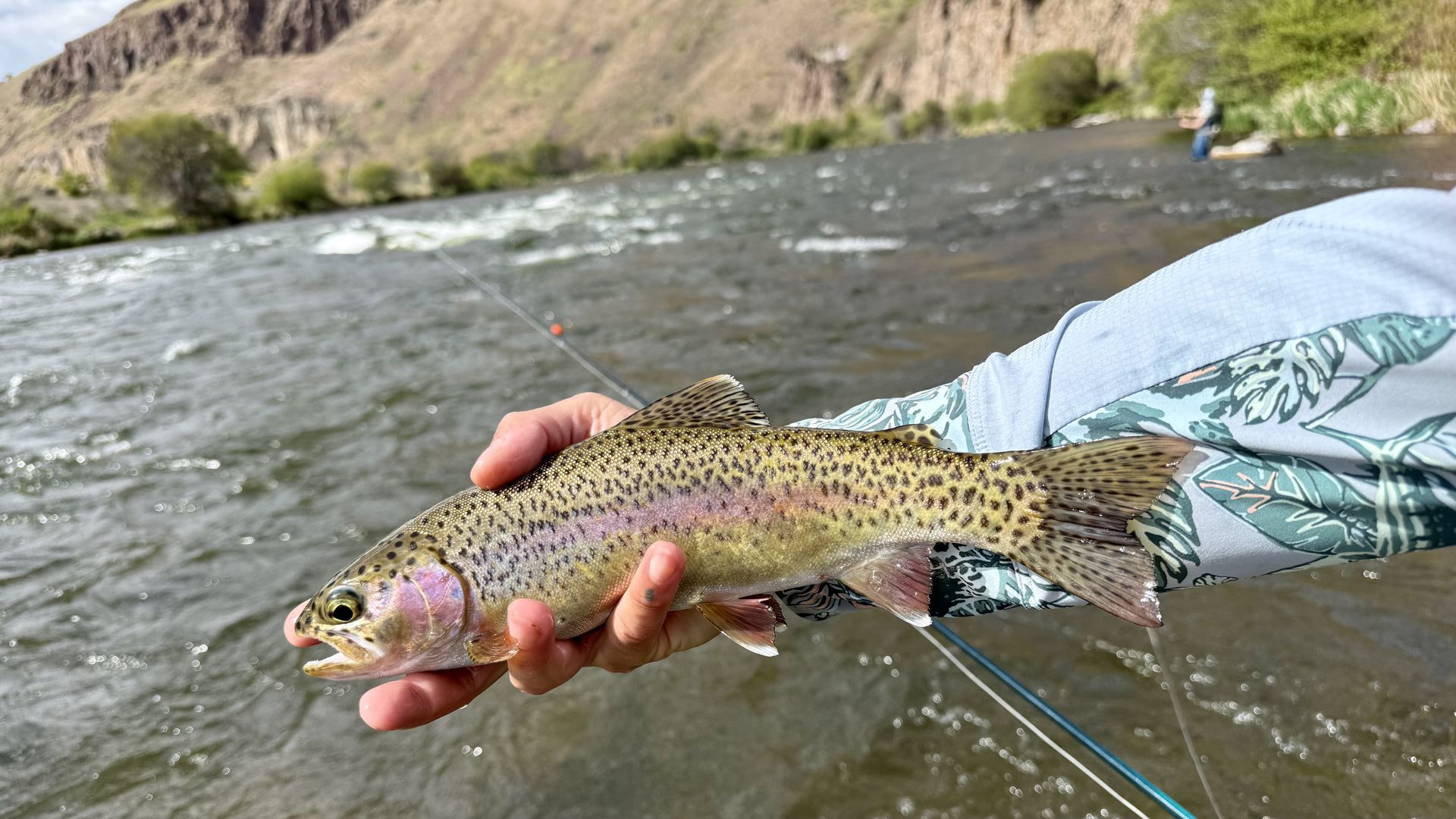
Native fish species, like this rainbow trout in the Deschutes River, will feel the impact of this year's drought. Photo: Courtesy of Julian Lazalde
Historically low snowpack and widespread drought are causing rivers to run lower and warmer earlier than usual this year, raising chances of die-offs and disease outbreaks among native fish species as we head into summer.
Why it matters: Salmon, trout and steelhead remain critical to river ecosystems, and they are deeply tied to Oregon's cultural identity, recreation economy and tribal communities.
Threat level: "This year is just dire everywhere," Spencer Sawaske with the Oregon Department of Fish and Wildlife (ODFW) told Axios.
- Most rivers and streams across the state — including the Clackamas, Sandy, Molalla and Hood — are running far below normal or at all-time lows, according to the U.S. Geological Survey water dashboard.
- Current temperatures in some rivers are also 10 degrees to 20 degrees warmer than usual and typically are not seen until August.
Such low, warm water can shrink fish habitat and food supply, reduce oxygen levels, spread disease and disrupt migration and spawning patterns, Daniel Ritz, river steward program director at Native Fish Society, told Axios.
Friction point: Officials have limited options to help fish once drought conditions are underway, Sawaske said.
- ODFW has focused on fish passage projects, habitat restoration and agreements with irrigators to leave more water in streams during critical periods.
- These conditions make long-term water planning even more important because climate change is expected to produce more dry years.
Yes, but: That work is expensive and underfunded, Sawaske said. While the Oregon Lottery, grant programs and funding from the Bonneville Power Administration support some projects, "we need more sources of money."
The big picture: Water in Oregon is heavily allocated among agriculture, cities and environmental uses, creating tension during drought years when rivers shrink and demand rises.
- Sawaske said ODFW can apply for instream water rights meant to preserve water for fish, but "they're not able to repair a system that already has a big deficit," he said. "They're preventing further degradation."
The other side: Native Fish Society and other conservation groups have called on the state to implement temperature-based fishing restrictions, recognize damage caused by dams and reexamine Oregon's water management entirely.
- "We're working off of an archaic water rights system where water is absolutely over-allocated," Ritz said. "I don't want it to be an 'either or' situation. It needs to be an 'and.'"
What we're watching: Both Sawaske and Ritz said impact from this year's drought could be immediate — with potential die-offs and disease outbreaks — but the broader toll on juvenile fish survival and reproduction won't be seen for years when populations return from the ocean.
- Still, "native and wild fish are incredibly resilient," Ritz said. "And they've managed to survive with some abundance."