Oregon snow drought raises irrigation fears

Add Axios as your preferred source to
see more of our stories on Google.
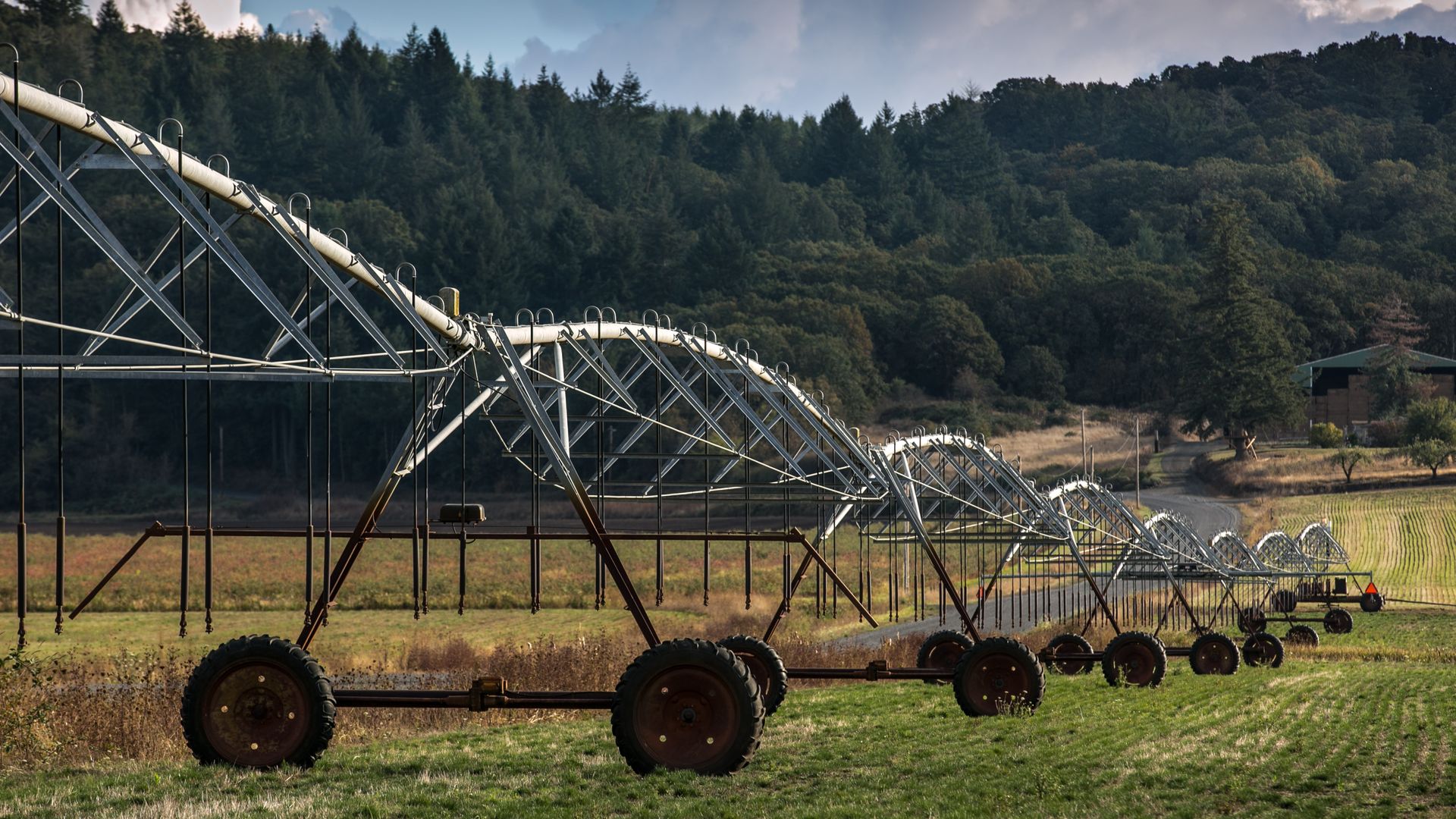
Farmers in some parts of Oregon could be forced to leave up to a quarter of their land unplanted as water shortages loom. Photo: George Rose/Getty Images
Oregon's near-record low snowpack is raising fears of severe irrigation shortages ahead of farms' summer growing season.
Why it matters: Agriculture makes up roughly 13% of the Oregon's gross product — with around $5 billion in annual production — so water shortages will have ripple effects across the state's economy.
By the numbers: Snowpack in Oregon was just 10% of normal as of early May.
- Mountain snow acts as an important water source for farmers, melting into streams, rivers and reservoirs, which then feed into irrigation systems.
- Around 70% of the state was already in moderate to severe drought as of Wednesday, per the U.S. Drought Monitor.
Threat level: "People are anxious and exploring strategies for trying to get through what is obviously going to be a really, really tough year in the state," Greg Addington, executive director of the Oregon Farm Bureau, told Axios.
- "I don't think anybody is expecting to get a full supply of water this year."
Zoom in: Farmers in the Klamath Basin, in southeast Oregon, are likely to see about half the water they usually see, Addington said.
- The Ochoco Irrigation District, near Prineville, is expected to get about two-thirds of its usual water supply, according to Addington.
- To compensate, farmers in the Klamath Basin are looking at leaving roughly a quarter of their 200,000 acres unplanted, Addington said.
- Others are looking at planting fewer water-intensive crops or tapping groundwater reserves.
Friction point: But there's frustration among some farmers that agriculture often becomes the "default water supply" taken for other competing needs, including fish protections and municipal use, during dry spells, Addington said.
- "Fish need more water. Cities need more water. Well, where does it come from? And we know where it's coming from now," he said.
Yes, but: Farms, cities and ecosystems "are going to face challenges this season," Jason Cox, a spokesperson for the Oregon Water Resources Department, told Axios, noting that agriculture represents about 78% of the state's water use.
- But Oregon's water rights system works on a complex and regional "first in time, first in right" principle.
- The people who claimed rights to use water earliest — senior rights holders — generally get priority over more junior users, so the state has limited flexibility to help those facing shortages.
- Cox encouraged water users to contact the department to help them "understand their options."
The bottom line: Oregon farmers are heading into summer with limited water supplies and that could reverberate through the state's economy.