Russell M. Nelson, Latter-day Saints president, dies at age 101

Add Axios as your preferred source to
see more of our stories on Google.
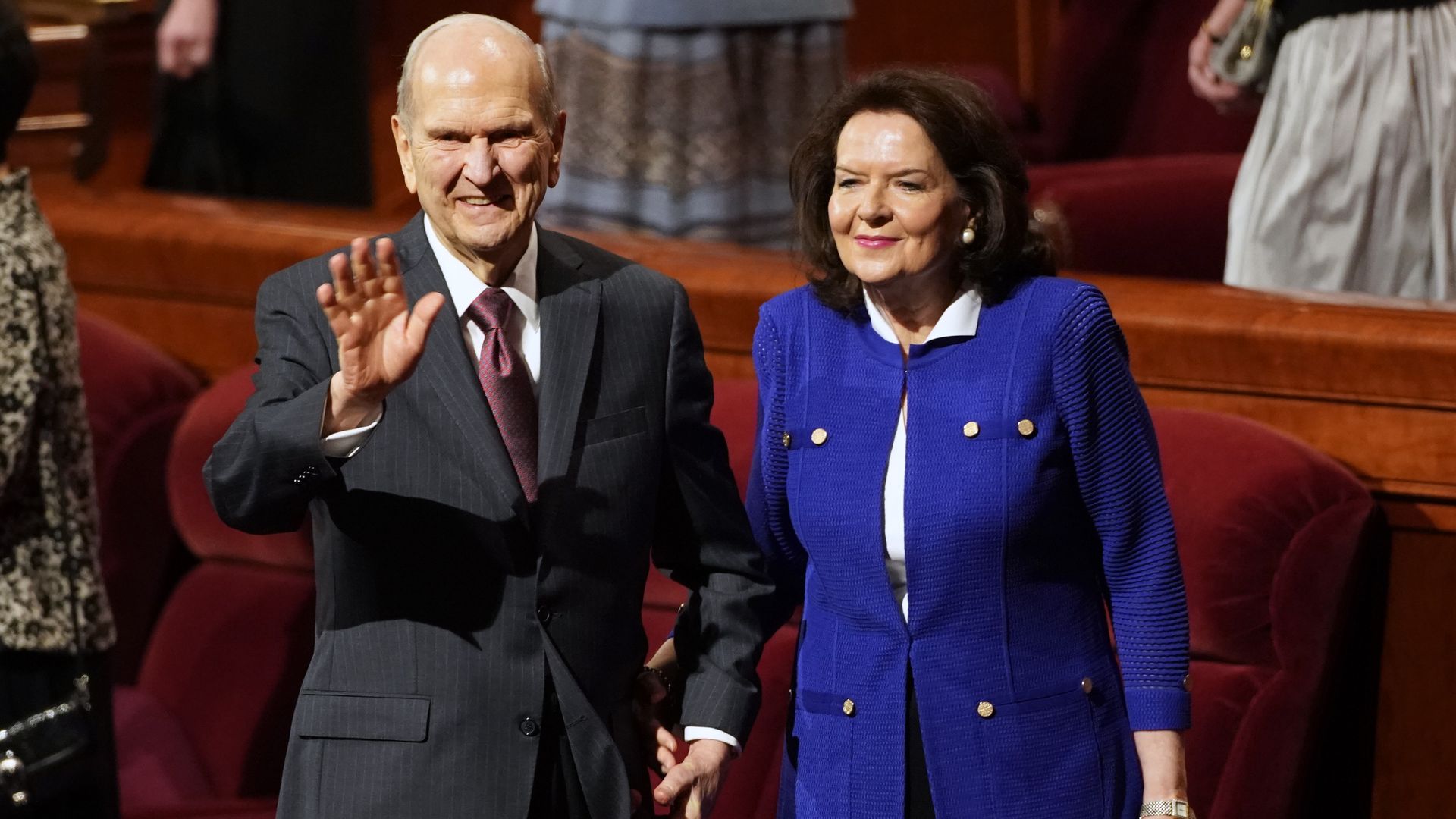
Russell M. Nelson and his wife Wendy at the Latter-day Saints Conference Center in 2019. Photo: George Frey/Getty Images
Russell M. Nelson, president of the Church of Jesus Christ of Latter-day Saints, died Saturday, less than a month after his 101st birthday.
The big picture: The church's president is also revered as a prophet in the Mormon faith, which means he has enormous sway over the direction of the church and its 17 million members worldwide.
What they're saying: "All of us who have worked with Russell M. Nelson, and the many he has taught and associated with, have marveled at his extraordinary modesty for a man of his great accomplishments," said Dallin H. Oaks, who served as Nelson's First Counselor in the First Presidency and is poised to become the next president.
- "He is just the gentlest and sweetest person you could ever hope to associate with. And he will always be remembered that way," Oaks said in a written statement.
Nelson grew up in Salt Lake City and is survived by his second wife, Wendy, and eight of his 10 children. His first wife, Dantzel, died in 2005.
- He died at his home in Salt Lake.
After ascending to the church's top office in 2018, Nelson became best known for two developments.
- He rapidly expanded the number of temples globally.
- He purged the word "Mormon" from the church's branding — from how members address themselves, to the musicians formerly known as the Mormon Tabernacle Choir (now the Tabernacle Choir at Temple Square).
Friction point: Amid pushback, Nelson said the term "offended" Jesus, and some members began to claim the word was a slur.
- Reality check: The church itself used the term for decades in its promotional materials and websites, and the name still appears in the title of its signature scripture.
The intrigue: Nelson said the change allowed members to more clearly identify as Christian — a move that aligns with the church's increasing efforts to ally with other Christian sects and eliminate some of the faith's unique traditions.
By the numbers: Nelson announced 200 new temples in less than eight years, more than doubling the total number built or in planning when he became president.
- Temples house important ceremonies, and the announcement of a new one typically generates excitement among members and publicity for the church in cities where they're built.
Yes, but: The flurry of massive builds has led to contentious zoning disputes in multiple states as the church invokes religious freedom protections to exceed normal size limits in some residential and rural neighborhoods.
Zoom in: Before becoming a religious leader, Nelson was a pioneering medical researcher and heart surgeon — a professional background that surfaced in the church's response to the COVID-19 pandemic.
- He encouraged masking and vaccinations — to the chagrin of some members on the political right.
Zoom out: Other changes under Nelson's leadership included:
- shortening Sunday meetings from three to two hours.
- allowing missionaries to call their families weekly, relaxing rules that previously restricted conversations to Christmas and Mother's Day.
- changing temple rites and other ceremonies to allow women more participation and lessen the emphasis on their subordination to men.
- reversing a 2015 policy barring the children of same-sex couples from baptism — but broadening restrictions on transgender members.
Nelson was a lifelong outdoorsman who was frequently spotted hiking or skiing in the Wasatch Mountains well into his 90s.