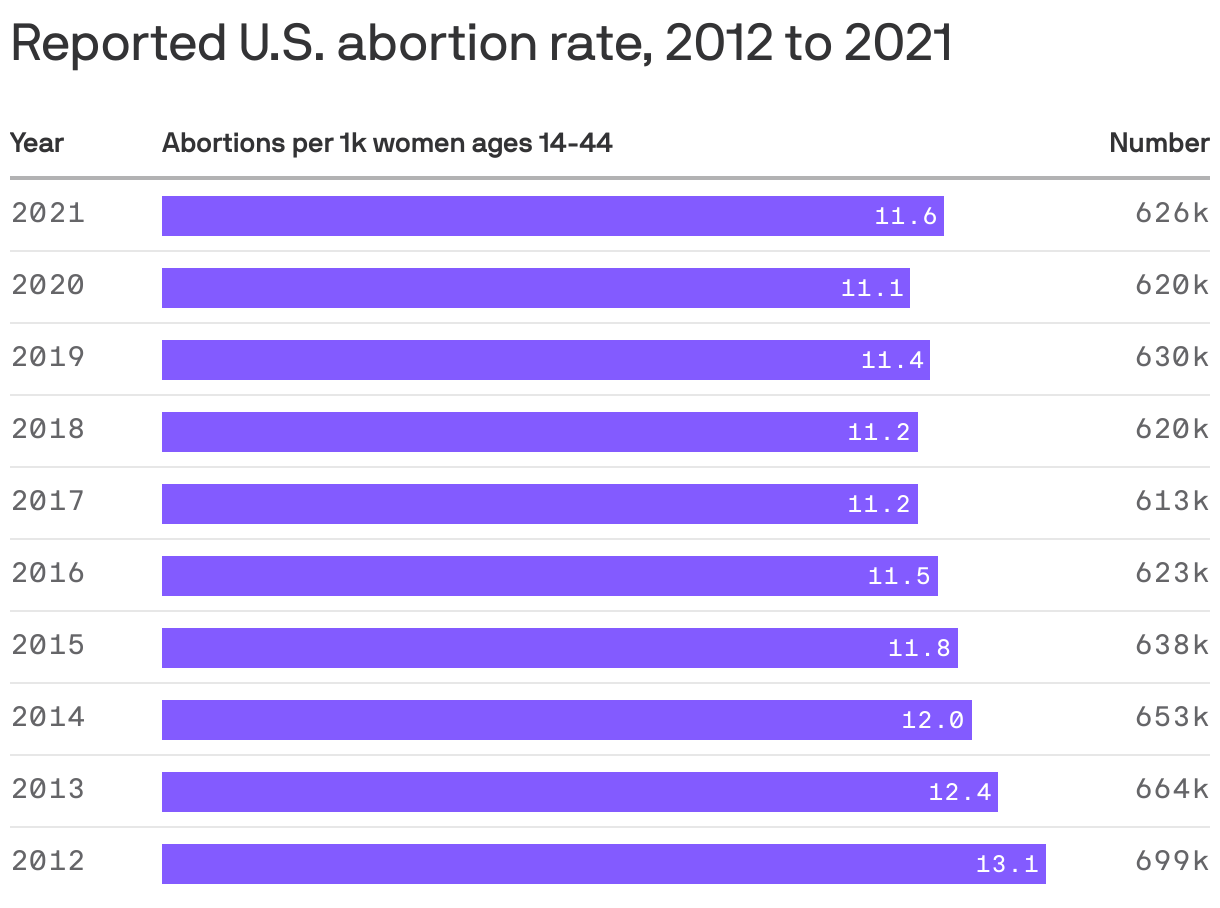
Data: CDC; Note: Excludes California, District of Columbia, Maryland, New Hampshire, and New Jersey; Chart: Axios Visuals
The number of abortions in the U.S. increased 5% the year before Roe v. Wade was overturned, with women in their 20s accounting for nearly 6 in 10 of the procedures, the Centers for Disease Control and Prevention reported on Wednesday.
Why it matters: The 2021 data from CDC's annual abortion incidence report track with earlier research showing demand for abortions was trending upward before the Supreme Court struck down federal protection of the procedure.
Leading hospital trade groups accused Medicare Advantage giant UnitedHealthcare and others of flouting new federal rules meant to crack down on insurers' restrictions on medically necessary care.
Why it matters: Their complaints could serve as an early test of how the Biden administration will enforce the new requirements.
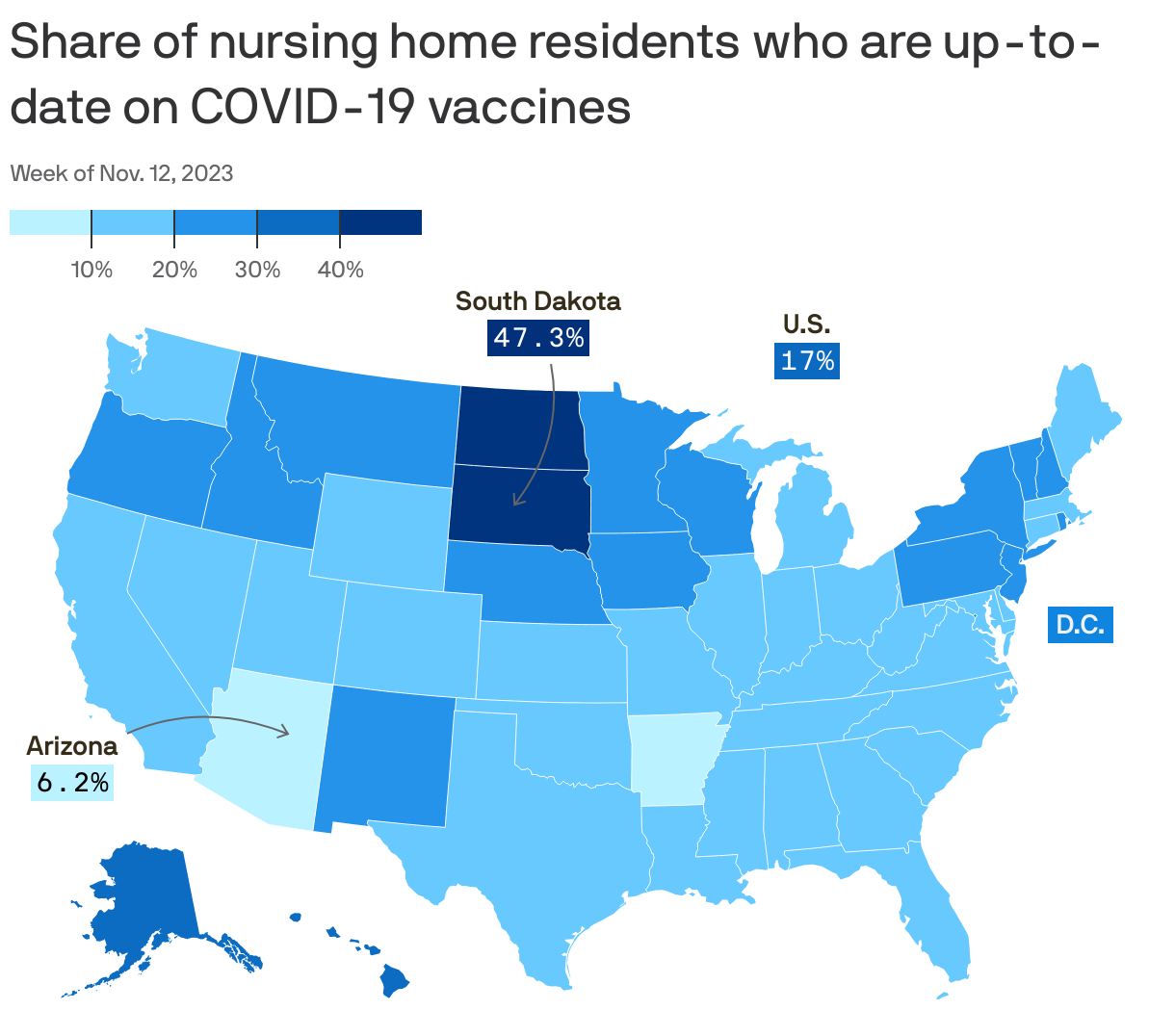
Data: CDC; Note: Up-to-date includes those who received a 2023-2024 updated vaccine or a bivalent vaccine in the past two months; Map: Deena Zaidi/Axios Visual
Only about 17% of nursing home residents and 2% of staff are up to date on their COVID-19 shots as cases rise across the country and health officials prepare for another seasonal tripledemic of respiratory diseases.
The big picture: The Centers for Disease Control and Prevention figures show takeup of the updated vaccine is lagging in the high-risk setting and could reflect the troubled rollout of updated shots that slowed distribution to long-term care facilities.
Virus activity is picking up again as millions of Americans crisscross the country for Thanksgiving, taking fewer precautions to protect themselves against illness as concerns about COVID-19 fade away.
Why it matters: Indoor holiday gatherings are expected to fuel a spike in cases of COVID-19, RSV and the flu — and with vaccinations against all three respiratory viruses lagging, health experts worry hospitals could be slammed again this winter.
With the holidays approaching, it may be the first time in years that COVID-19 is not a predominant concern – but the Omicron wave of the pandemic is not exactly over.
The big picture: In the two years since Omicron emerged, it has continued to rank as the predominant strain in the U.S., and its subvariants are now driving most of the country's coronavirus infections.
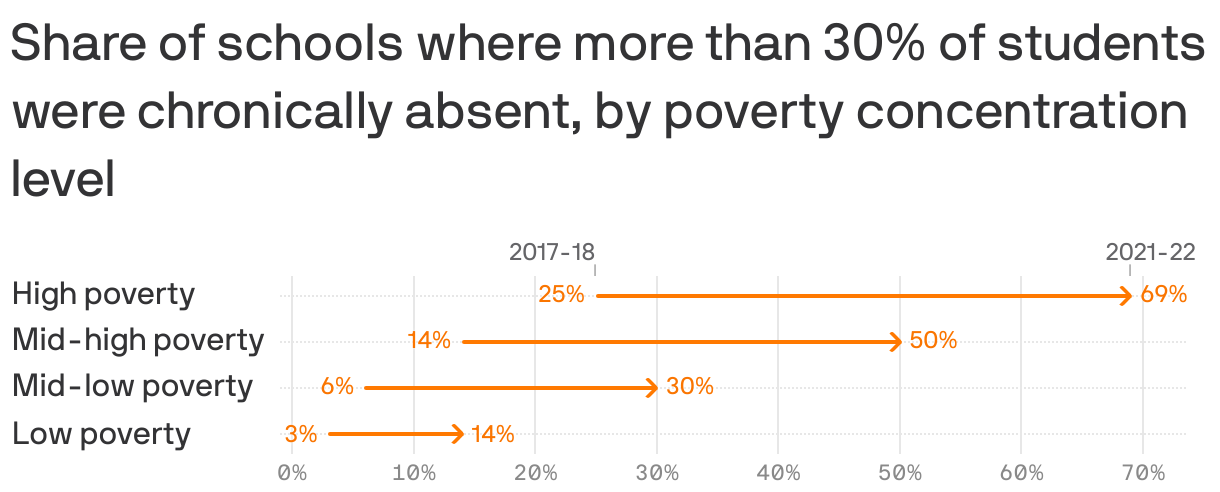
Notes: "Chronically absent" is defined as a student who has missed more than 10% of school days within an academic year. Poverty concentration level is determined by the share of students who are eligible for reduced-price or free meals. Data: Attendance Works; Chart: Danielle Alberti/Axios
Extreme levels of student absence have spiked in schools across the country since the pandemic began, according to data released Friday by Attendance Works, a nonprofit research initiative.
Why it matters: Students haven't recovered from pandemic learning losses, and widespread absences affect entire schools, not just the missing students.
Over roughly the past two decades, middle-aged adults with lower incomes were more likely to develop high blood pressure, while those with higher incomes were more likely to develop diabetes and obesity, according to a new study in the Annals of Internal Medicine.
Why it matters: Progress in preventing death from cardiovascular events like heart attack or stroke has stagnated over time, in large part because of a rise in such deaths among middle-aged Americans. The study helps illuminate how income disparities are contributing to differing risks for heart problems.
The Food and Drug Administration has finalized a long-running effort to require prescription drug ads on TV and radio to clearly lay out potential side effects and when a person should avoid a medicine.
Why it matters: While the number of drug ads has surged and they account for billions of dollars in direct-to-consumer marketing, experts say they primarily rely on emotional appeals and focus on a drug's benefits over potential risks.
Dental care could soon become more widely available to adults who buy health insurance on the Affordable Care Act marketplaces under a new federal proposal that aims to narrow a long-standing coverage gap in the 2010 health care law.
Why it matters: Healthy teeth and gums are tied to a person's overall health — for instance, gum disease is linked to cardiovascular issues and diabetes — but dental services are often treated differently than medical care.







/2023/11/20/1700500088050.gif?w=3840)