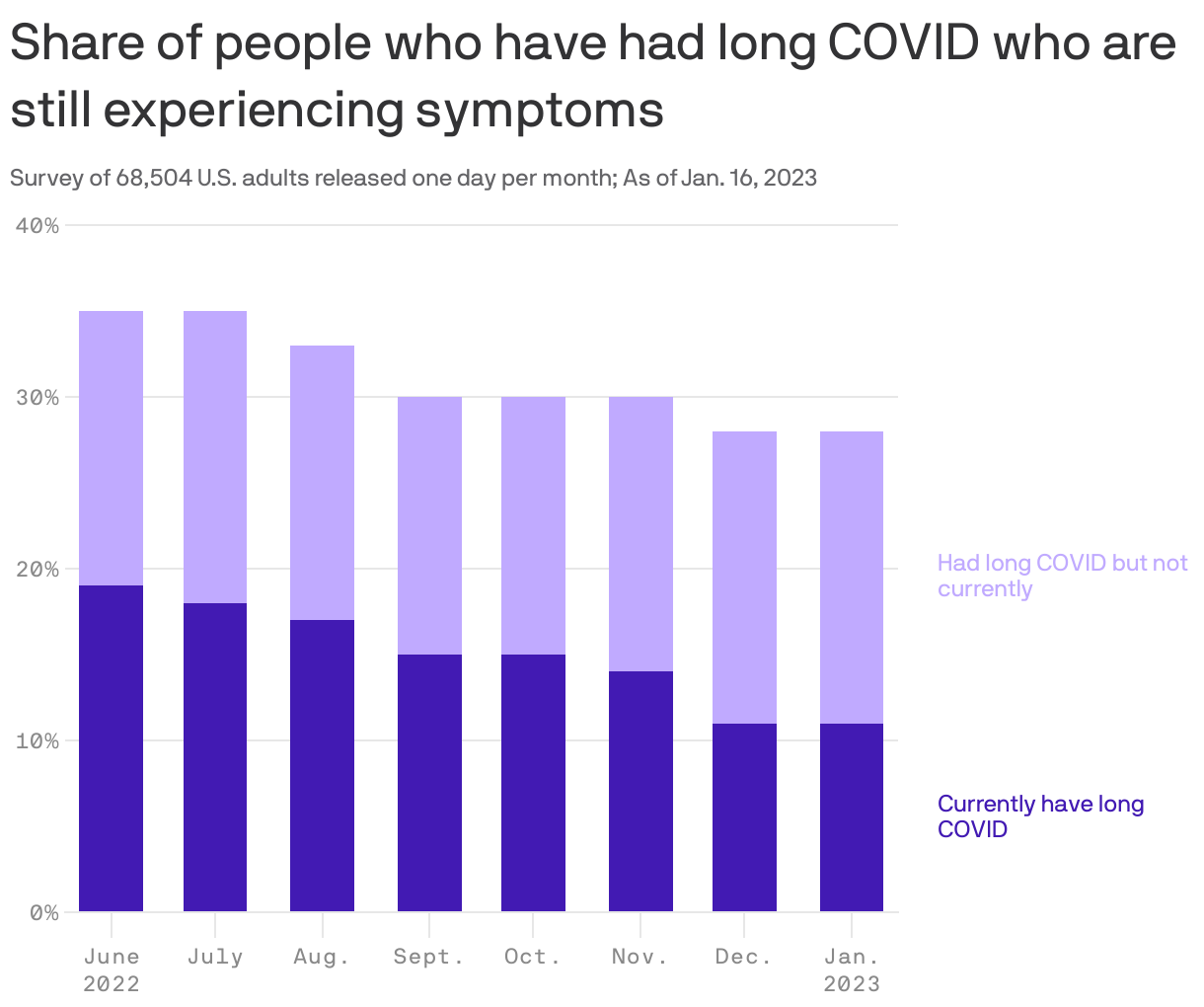
Data: U.S. Census Household Pulse Survey; Chart: Axios Visuals
Among people who have ever had COVID, the share who say they currently or have ever had long COVID declined from 35% in June 2022 to 28% in January 2023, according to an analysis from KFF.
The decline was driven by a reduction in the share who currently reported active symptoms, which fell from about 1 in 5 people to about 1 in 10 people, per the analysis of data from the CDC's Household Pulse Survey.
Pharmacy hours at Walmart and CVS will be reduced starting in March as the major retailers continue to deal with a nationwide shortage of pharmacy staff.
Driving the news: Walmart confirmed to Axios that its pharmacies will close at 7pm weekdays, which is two hours earlier than the current closing time of 9pm. Weekend hours will stay the same, the company said.
The Food and Drug Administration says its current rules for regulating drugs and supplements don't work for determining the safety of CBD products and is calling on Congress to help with a new approach.
Why it matters: The FDA's plan would ease restrictions that were set during the HIV/AIDS crisis in the 1980s, which several medical and LGBTQ organizations say are discriminatory.
Efforts to overhaul the prior authorization process are hitting a crescendo in state legislatures, with at least 40 states expected to consider measures that would streamline the way doctors must obtain health plan sign-offs before they can order procedures, tests or treatments.
Why it matters: As the nation emerges from the pandemic, officials like Surgeon General Vivek Murthy are blaming administrative burdens like prior authorizations for physician and health worker burnout.
An FDA expert panel on Thursday unanimously recommended that the U.S. overhaul its pandemic vaccine strategy and replace initial doses of original COVID shots with bivalent ones that target specific Omicron subvariants.
The big picture: So far, the U.S. COVID vaccine strategy has been developed and revised on the fly, leading at time to public confusion. With all available vaccines following one single composition, health experts argued that vaccination rates could increase.
House Democrats today are set to introduce a largely symbolic bill that would lift longstanding government restrictions on the use of federal funds to cover abortions.
The big picture: Abortion rights advocates have argued that such funding is needed to assure access to the procedure, particularly for low income people and people of color. But its prospects are practically nil in the Republican-controlled House.
A pair of lawsuits challenging abortion pill restrictions in North Carolina and West Virginia look to settle the question on whether states can regulate and restrict drugs that have been approved by the FDA.