The government has new rules to determine what's really organic and what's a sham.
Why it matters: The term "organic" has been stretched over the years as these foods become increasingly popular — and pricey. Products labeled organic that don't meet government standards are hitting store shelves.
Only 19% of hospitals fully comply with the Centers for Medicare and Medicaid Services rule that requires facilities to post estimated costs for items and services, an analysis published in the Journal of General Internal Medicine has found.
Why it matters: The U.S. continues to spend more on health care than other countries for less value, and federal efforts to bring transparency to pricing have so far yielded little.
Antibiotic-resistant superbugs are killing more people each year than HIV and malaria, but progress against them worldwide has largely stalled in the wake of the pandemic.
Why it matters: As COVID-19 made crystal clear, disease doesn't recognize borders, and one country's problem can quickly become a global threat.
The federal health department's framework for monitoring high-risk research on viruses and other agents that can cause pandemics doesn't meet key criteria for effective oversight, a new watchdog report concludes.
What they found: The Government Accountability Office found HHS has an unclear policy for reviewing and approving research involving pathogens that are altered to make them more transmissible or deadly — and that other policy gaps may allow the research to occur without appropriate oversight.
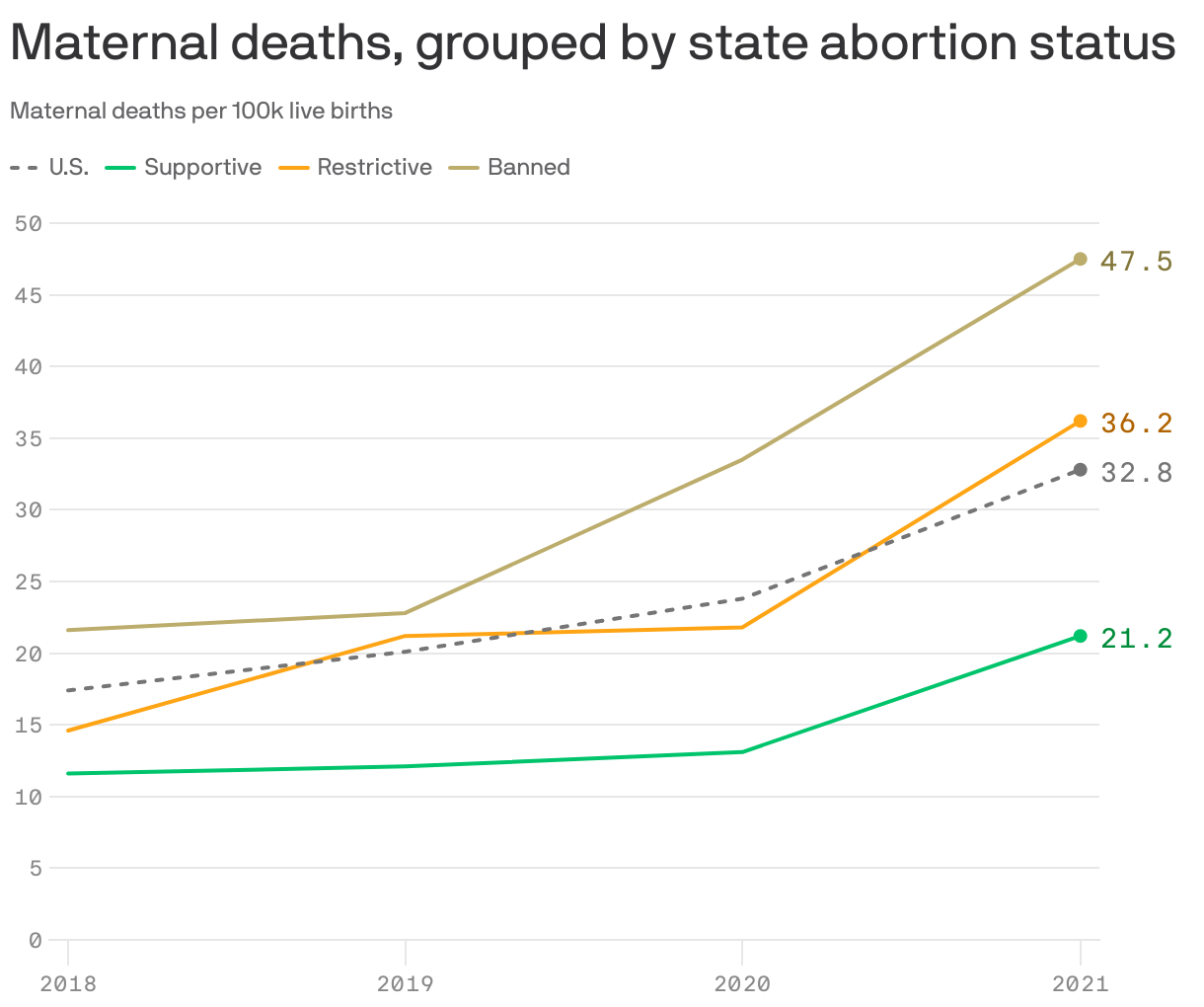
Women in states with abortion bans are nearly three times more likely to die during pregnancy, childbirth or soon after giving birth, according to a report from the Gender Equity Policy Institute shared first with Axios.
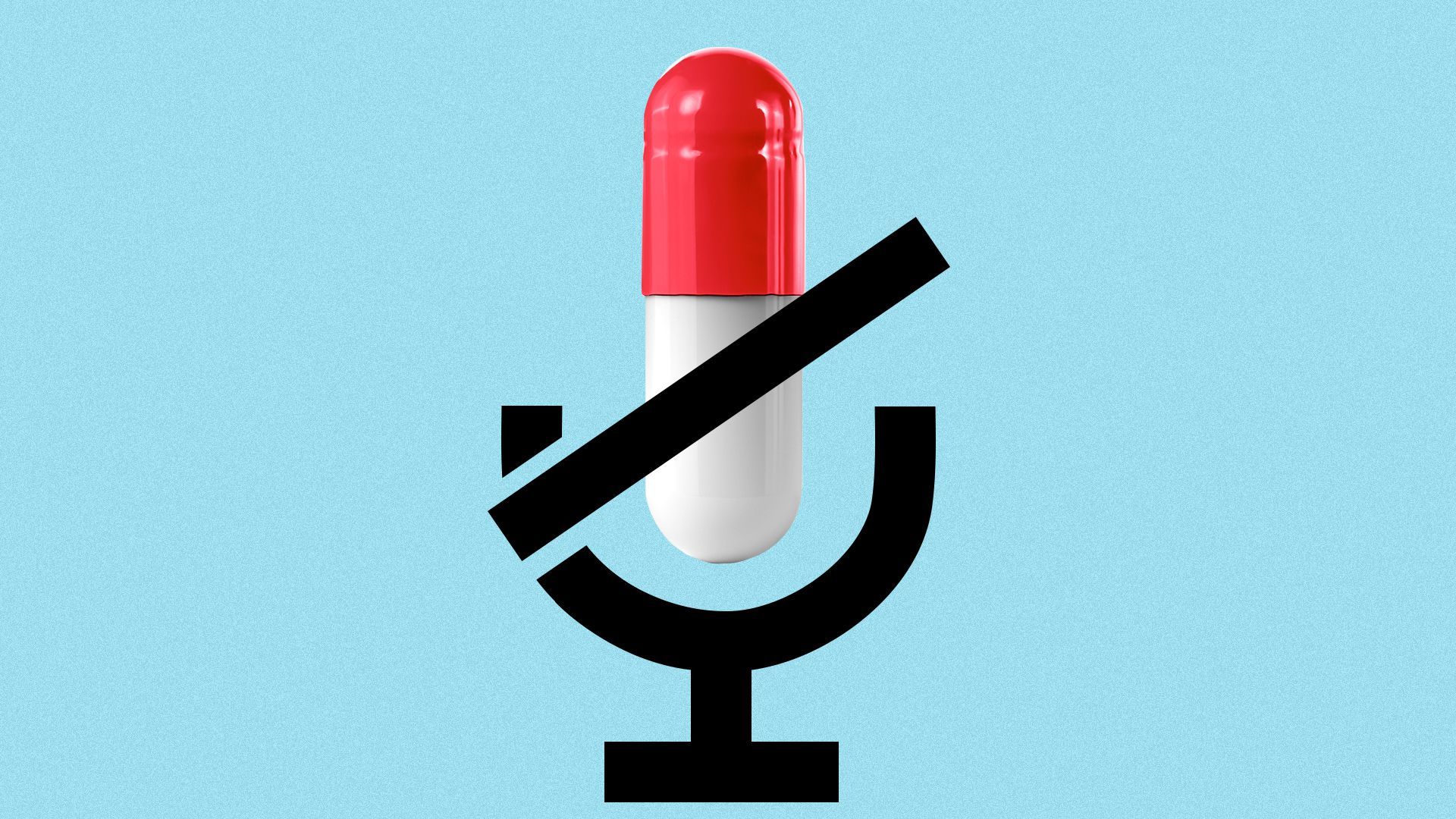
The anticipated end of the COVID public health emergency will bring a massive change in how patients receive prescriptions for drugs like Adderall, Xanax and hormone therapies, by requiring them to see a doctor in person.
Why it matters: The pandemic-fueled explosion in telehealth — and policies to enable it — removed such requirements, and providers warn that an abrupt return to the old way of dispensing controlled substances with medical uses could be hugely disruptive.
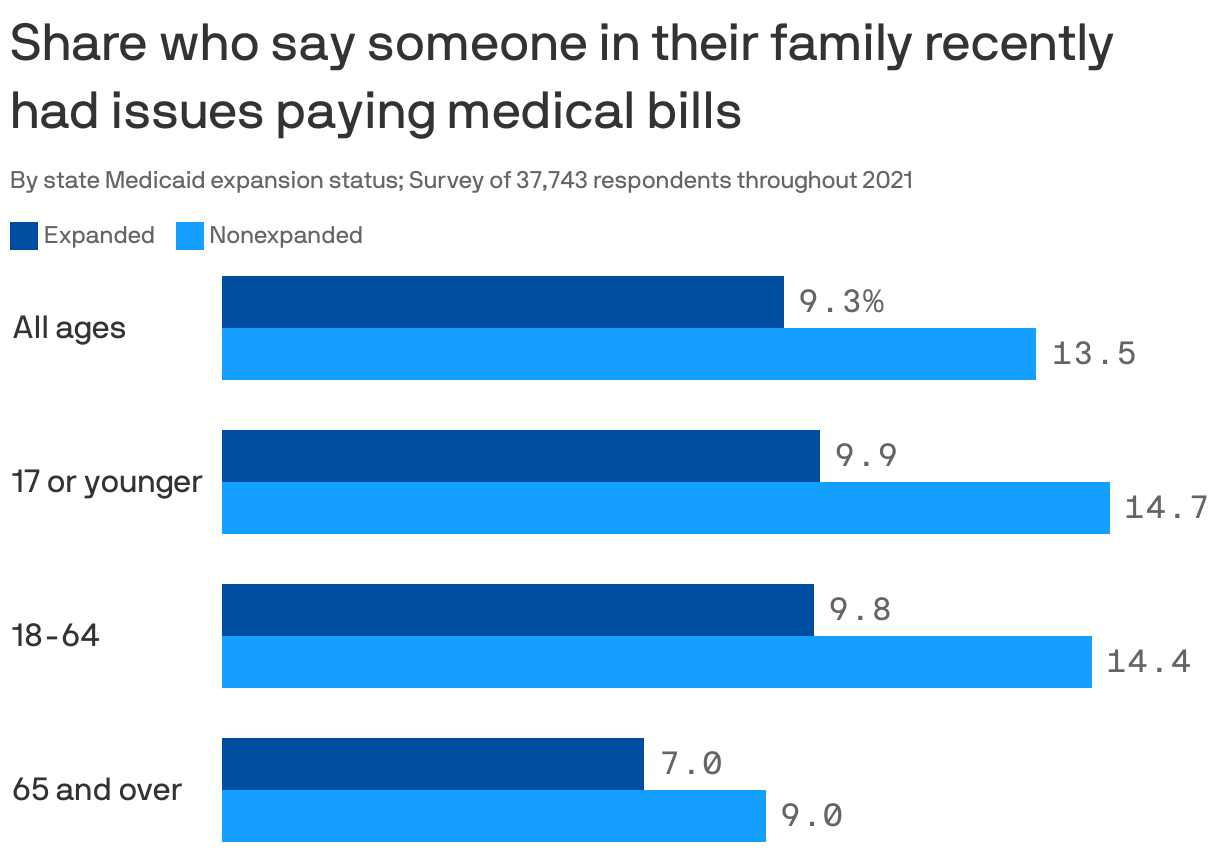
Data: National Center for Health Statistics; Note: "Recent" applies to any time in the last 12 months; Chart: Madison Dong/Axios Visuals
Medical debt may still plague millions of American families, but the pandemic years brought a marked decline in the number of people struggling to cover their health costs, the Centers for Disease Control and Prevention reported today.
By the numbers: 10.5 million fewer people were in families having problems paying medical bills in 2021 than in 2019 — amounting to a 3.2 percentage point decline, according to National Health Interview Surveys.