The anticipated end of the COVID public health emergency will bring a massive change in how patients receive prescriptions for drugs like Adderall, Xanax and hormone therapies, by requiring them to see a doctor in person.
Why it matters: The pandemic-fueled explosion in telehealth — and policies to enable it — removed such requirements, and providers warn that an abrupt return to the old way of dispensing controlled substances with medical uses could be hugely disruptive.
Data: National Center for Health Statistics; Note: "Recent" applies to any time in the last 12 months; Chart: Madison Dong/Axios Visuals
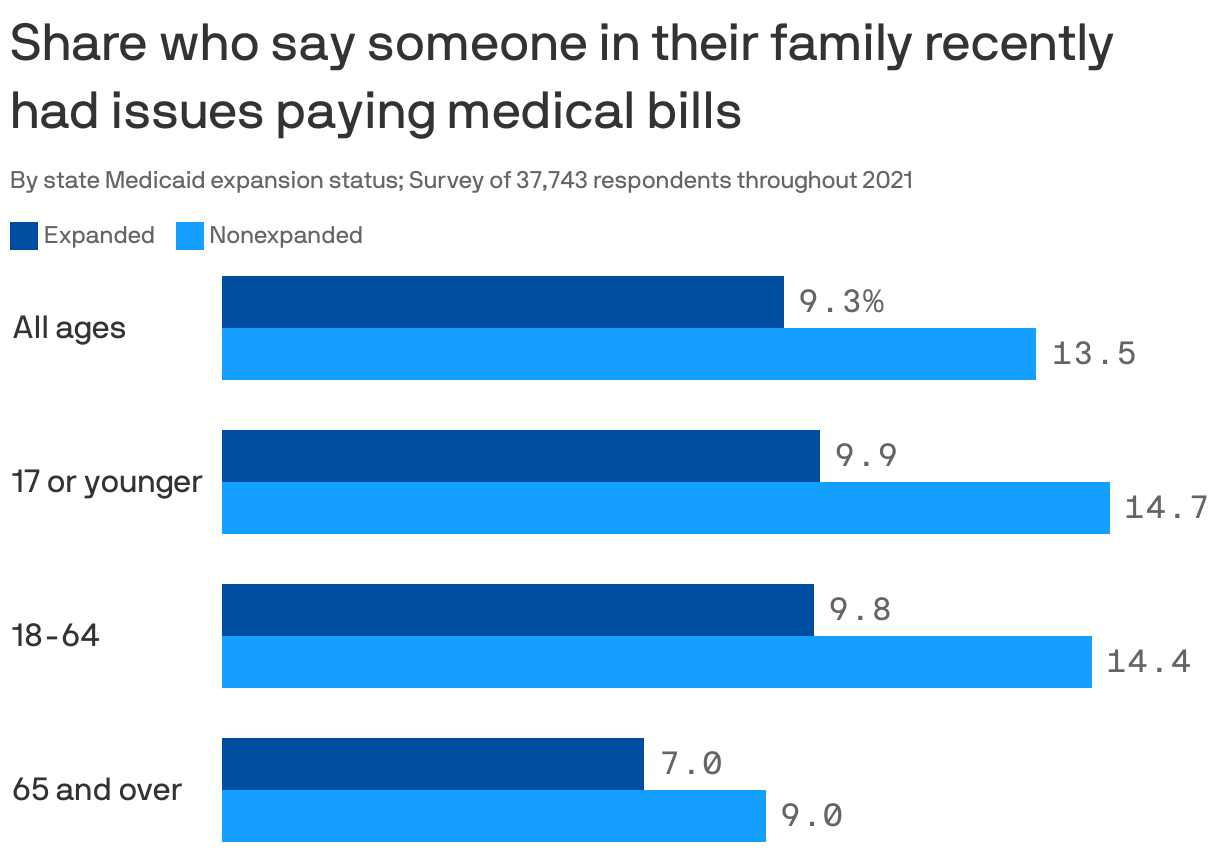
Medical debt may still plague millions of American families, but the pandemic years brought a marked decline in the number of people struggling to cover their health costs, the Centers for Disease Control and Prevention reported today.
By the numbers: 10.5 million fewer people were in families having problems paying medical bills in 2021 than in 2019 — amounting to a 3.2 percentage point decline, according to National Health Interview Surveys.
This article originally appeared in Axios Finish Line, our nightly newsletter on life, leadership and wellness.Sign up here.
Clutter in our homes, offices and cars is something many of us are drowning in — but clearing it out can seem like a gargantuan task.
Why it matters: A messy environment infects the mind. It can make us anxious and hurt our ability to relax, focus or sleep.
"It just makes life harder," says Susan Whitbourne, a psychologist at UMass Amherst. "Things take longer to do, you lose things, you break things, you're slowed down."
Then there's the emotional distress. "You're constantly faced with reminders of your messiness, which doesn't conform to your identity as someone who has their act together."
Case in point: Arecent study — reported in the journal Environment and Behavior tested — the effect of mess on behavior by placing subjects in normal versus chaotic kitchens. Those in the messy kitchens tended to overindulge in less healthy snacks like cookies more than their counterparts.
The solution is seemingly simple. Clear out the clutter and clean up the mess.
But the very anxiety the mess is causing can make it difficult to face it and clean up, Whitbourne says.
Here are a few tips, culled from experts, on how to get started if you're staring down a stress-inducing mess:
Don't set an unreasonable goal. If an entire room has gotten cluttered, you might tell yourself you want to clean it in one go. But you likely won't be able to — and that'll stress you out even more, Whitbourne says.
Instead, make small changes in small doses. Start with one side of a closet or one cabinet in the kitchen. You'll accomplish your goal, and that'll be fuel to keep going.
Ask for help. When our spaces get messy, we often want to keep people out. But if you've got a friend or family member willing to help without judgment, let 'em.
Reward yourself! Whitbourne suggests putting on your favorite album or podcast while you clean and organize.
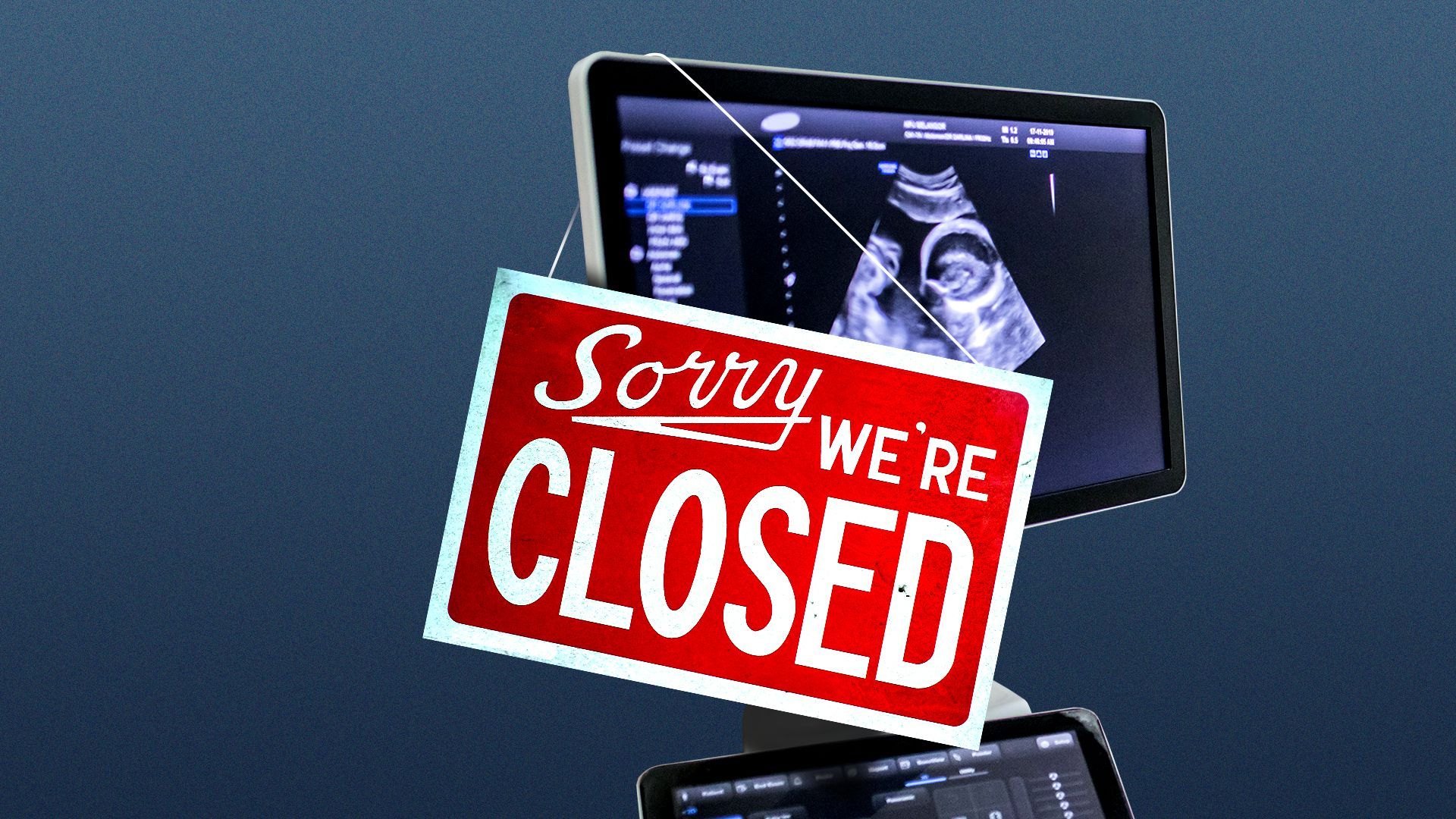
Hospitals trying to shed unprofitable business lines are increasingly scaling back or halting maternity services, adding new stresses to the reproductive care landscape.
Why it matters: Obstetric unit closures predate the pandemic but are drawing more concern with pregnancy-related deaths on the rise and an increased need for obstetrics care as more states restrict abortion.
China reported Tuesday its first population decline since 1961, as the world's most populous country faces a demographic crisis.
By the numbers: There were 1.41175 billion people living in China at the end of 2022 — a drop of about 850,000 compared to the previous year's end, according to data from Beijing's National Bureau of Statistics Tuesday.