Elizabeth Holmes on Friday was sentenced by a California judge to 11 years and three months in prison for defrauding investors in her failed blood-testing company, Theranos.
Why it matters: This is the end of a years-long saga that saw the celebrated startup founder become a cautionary tale of Silicon Valley's "fake it 'til you make it" culture.
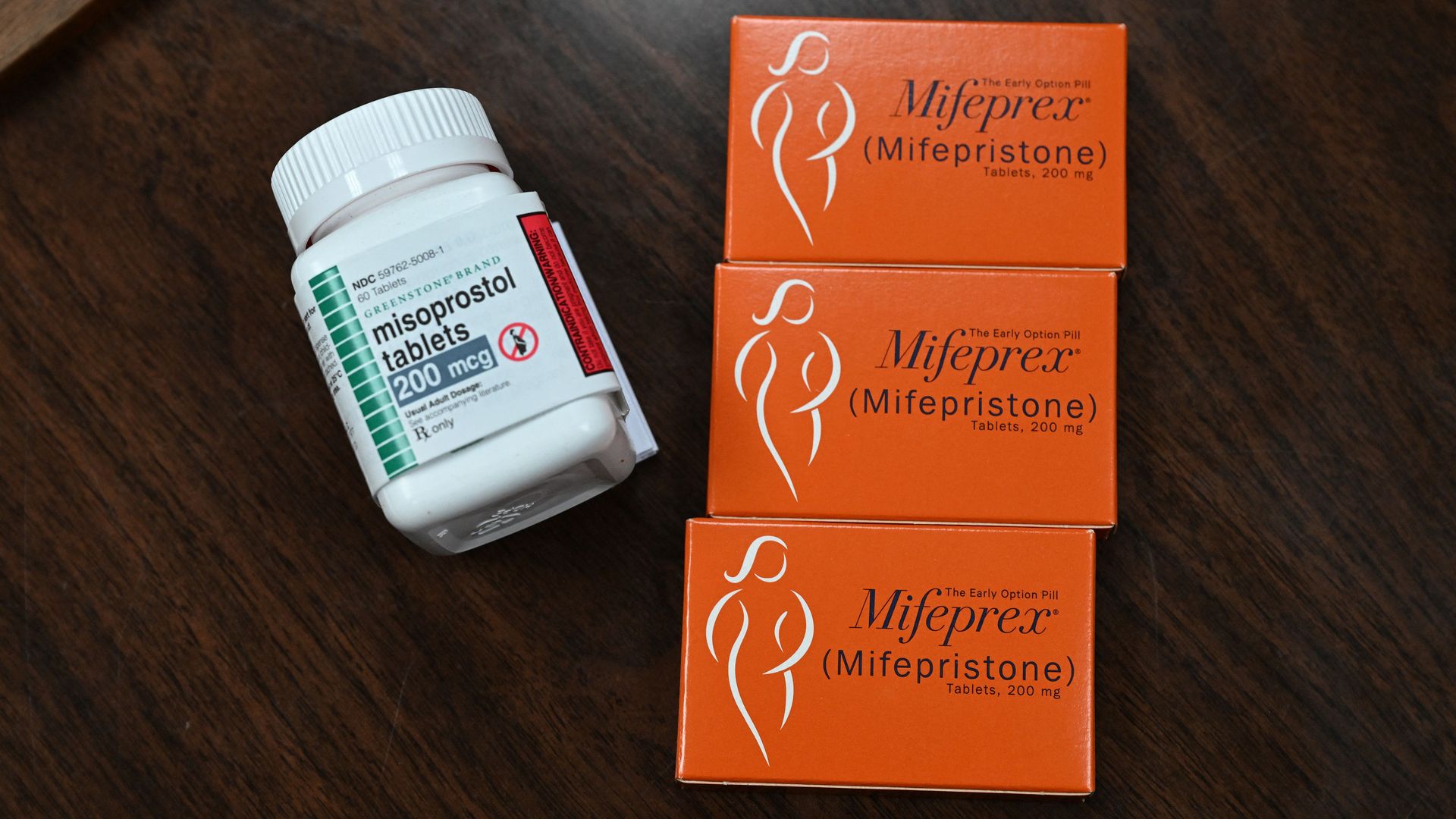
The Alliance of Hippocratic Medicine, an anti-abortion group, on Friday filed a lawsuit against the Food and Drug Administration to overturn the agency's approval of abortion pills.
Why it matters: It's the latest effort from an anti-abortion group to curtail access to abortion in the post-Dobbs era.
The Food and Drug Administration on Thursday approved the first treatment that can delay the onset of Type 1 diabetes.
Why it matters: The new drug, called Tzield (teplizumab-mzwv), can delay the onset of stage 3 Type 1 diabetes in adults, and in pediatric patients 8 years and older who have stage 2 Type 1 diabetes, per the FDA.
Cancer screening rates and diagnoses had yet to bounce back to pre-pandemic levels by the end of 2021, a new analysis published in JAMA Oncology shows.
👀 What they found: Using a set of nationally representative, all-payer data claims from analytics company Trilliant Health, researchers found that "screening quickly rebounded after the initial stages of the pandemic; however, the longer follow-up time reveals that gaps in preventive cancer screening returned and worsened."
The study adds data to provider anecdotes about patients being diagnosed with later-stage cancers after putting off screening during lockdowns.
They've also seen that patients have been slow to return to regular cancer screenings and check-ups as the pandemic has eased.
The pandemic caused a 30-year high in U.S. births at home in 2021 as people avoided hospitals that were being swamped with COVID-19 cases, the Centers for Disease Control reported on Thursday.
Why it matters: The findings offered another view of the pandemic’s effects on maternal health and how, of the nearly 52,000 home births recorded last year, the greatest increases were among Black and Hispanic women.
An effort to lower the cost of insulin for privately insured patients faces long odds in the lame duck session, Axios' Peter Sullivan reports.
Why it matters: More than 1 million Americans have to ration insulin because of the cost, according to an October study in the Annals of Internal Medicine.
Hundreds of millions of people around the world lack reliable access to safe water — an escalating crisis with a potentially profound impact on their mental health.
Elizabeth Holmes on Friday will learn her punishment for defrauding investors in her failed blood-testing company, Theranos.
Why it matters: This will be the culmination of a legal case that began more than four years ago, putting Silicon Valley's "fake it 'til you make it" culture on trial.
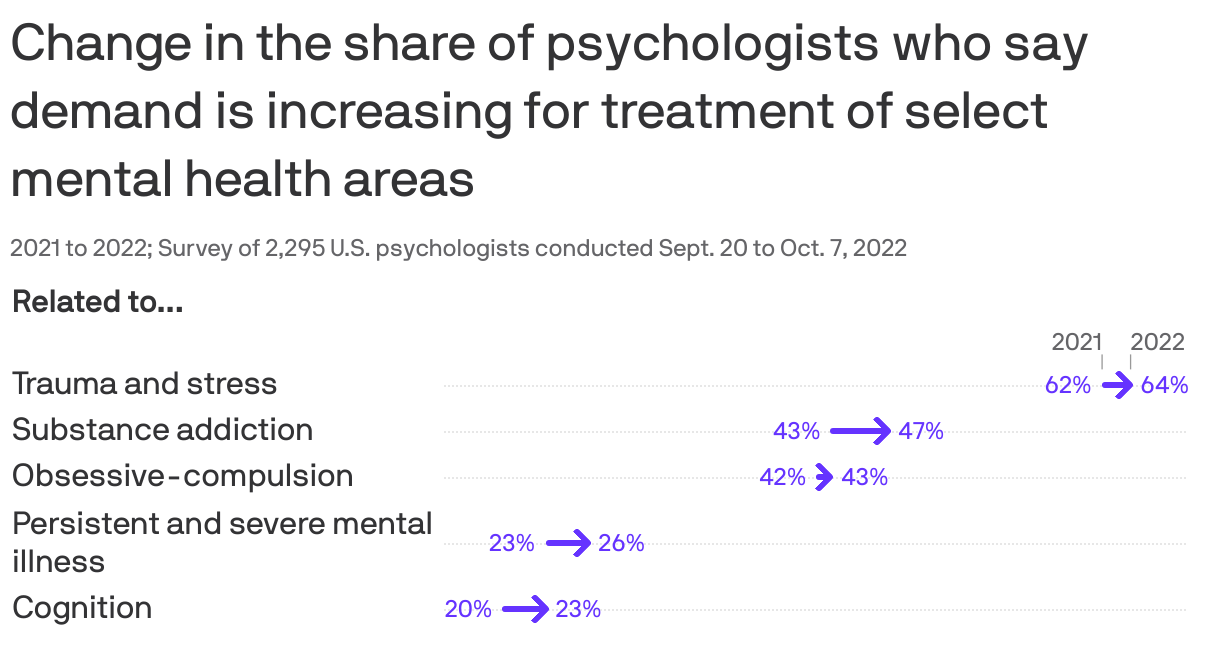
Data: American Psychological Association; Chart: Alice Feng/Axios
Nearly three years into the pandemic, demand for mental health services is swamping the psychology profession, according to a new report from the American Psychological Association.
By the numbers: Nearly half of 2,300 psychologists surveyed said they were unable to meet demand for treatment, while 60% said they have no more openings for new patients.
Since 2020, diagnoses of trauma, obsessive-compulsive, substance-related and cognitive disorders continue to increase year over year, with more than a quarter of psychologists reporting an increase of patients experiencing persistent and severe mental illness.
More than a third noted increases among patients who are transgender or have chronic illnesses. Close to 50% reported a jump in teenagers seeking mental health care.
Millions of Medicaid recipients are unaware that states will redetermine their eligibility for the program when the COVID-19 public health emergency ends — and fewer than one third know what other coverage options exist, according to an Urban Institute policy brief.
The big picture: Researchers say the onus is on state Medicaid agencies to increase outreach and simplify renewal processes to avoid unnecessary coverage losses.
Be smart: Temporary pandemic-era reforms that Congress passed in 2020 increased the share of federal Medicaid spending if states offered continuous coverage to enrollees, suspending the program's usual churn.
Those policies will end when the public health emergency expires, as soon as April, potentially ushering in a spike in the uninsured rate.
The loss of Medicaid coverage qualifies people to enroll in the federal marketplace for 2023 coverage past the Jan. 15 deadline.
But an August report from HHS found most Medicaid enrollees who get stuck in the churn aren't able to enter the marketplace or get employer-based insurance.
Nearly 80% of respondents the Urban Institute surveyed said they weren't told how to navigate the process.
More than 60% overall had heard "nothing at all" about the Medicaid redeterminations.
The most common sources of information were news outlets or social media — not Medicaid agencies.
By the numbers: Close to 90 million people are enrolled in Medicaid and CHIP in the U.S., per CMS’ latest numbers. The Kaiser Family Foundation projects up to 15 million could lose coverage upon the emergency ending, regardless of eligibility.
Less than a third of those projected to lose eligibility could qualify for marketplace premium tax credits, per HHS.
Latinos are expected to incur the greatest loss, according to the HHS report, with nearly a third of Latino kids and young adults enrolled in Medicaid or CHIP slated to lose coverage.
Virtual reality is becoming a real-world health tool for everything from chronic pain and behavioral health problems on Earth to medical training for astronauts in space.
What's happening: Like the entire VR industry, health care's version has made significant strides in recent years.
Data: The Commonwealth Fund; Chart: Alice Feng/Axios
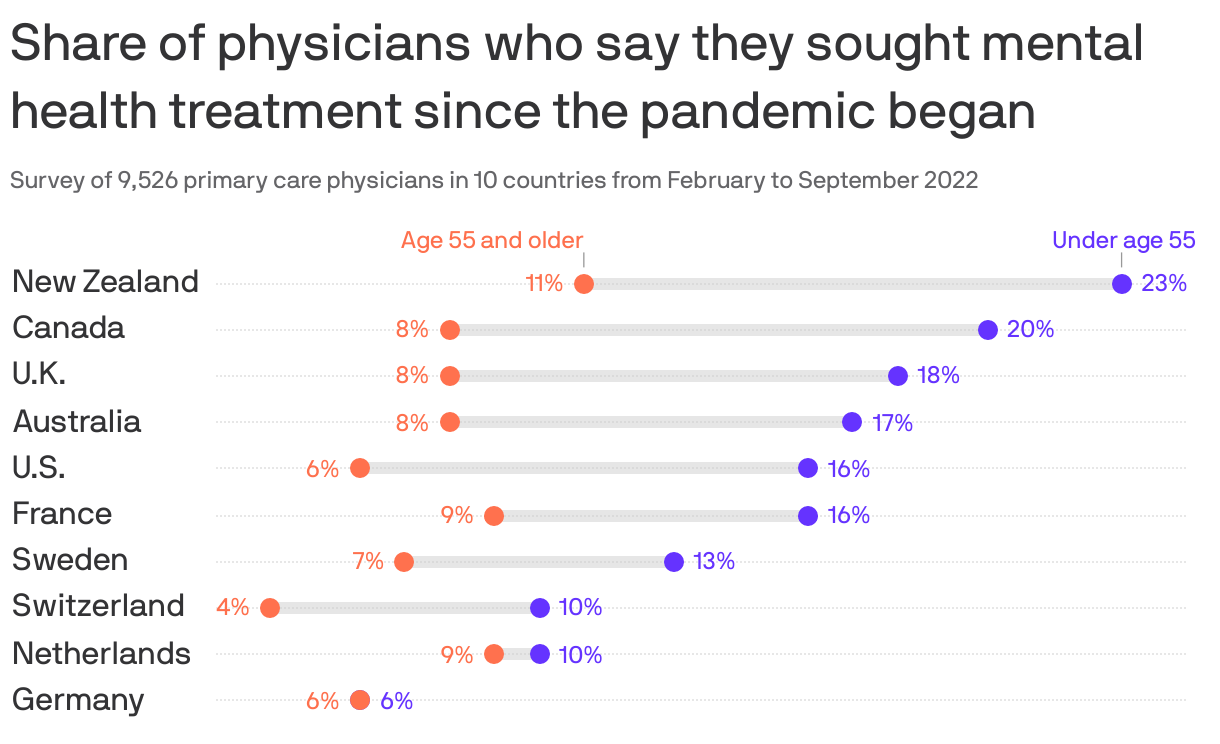
Half of U.S. primary care physicians under the age of 55 say they're burned out and some anticipate leaving the profession in the next three years, per a new survey from the Commonwealth Fund.
Why it matters: It's the latest evidence of doctor shortages that could hamper efforts to reduce health disparities and fill gaps in care as the nation emerges from the pandemic.
What they found: Nearly two-thirds of young clinicians reported higher rates of emotional distress, but few of them are seeking out help or support.
Just 16% of clinicians under the age of 55 reported seeking help, while 6% of primary care physicians over the age of 55 sought support.
"Physicians often feel they are the ones who have to show strength in crisis and though they will tell their patients it's not a weakness to seek support, it's not always clear that they feel permission to do that themselves," said David Blumenthal, president of the Commonwealth Fund.
Go deeper: Burnout isn't limited to primary care physicians: A new report from the American Federation of Teachers, which represents nearly 200,000 health care workers, shows how staffing shortages are weighing on nurses and medical workers.
There were 55,000 fewer nurses working in 2021 than 2020, according to Bureau of Labor Statistics data cited in the report.
"The staffing shortages put a tremendous amount of strain on tired and overworked bedside caregivers," the report states.
The union recommends safe staffing requirements for nurses, investment in financial aid and scholarships for health workers and raising entry-level salaries to attract workers.
The Commonwealth Fund survey recommends increasing Medicare and Medicaid reimbursement for primary care services.
What's next: Provider groups are asking Congress for financial relief in the lame duck session, but it's unclear which requests will be accommodated.
ZAATARI REFUGEE CAMP, JORDAN — A whole generation of Syrian refugees are living out their lives — working, getting married, having children — in a camp that was supposed to be a temporary refuge while they fled their country’s civil war.
Why it matters: This camp is not a sustainable long-term option. It was never designed to be one, and the makeshift facilities here are nearing the end of their lifespan — but there are still roughly 80,000 Syrians with nowhere else to call home.