The Centers for Disease Control and Prevention released new COVID-19 guidance Thursday, loosening recommendations that have been in place since the onset of the pandemic.
Why it matters: The shift marks a significant change in how the nation deals with COVID-19 more than two years after the pandemic began. A majority of Americans are now fully vaccinated against the virus or have been exposed to it.
When a case of poliovirus was recently detected in New York, health department officials immediately had a tool at their disposal to check for disease transmission: wastewater collected for COVID sampling.
Why it matters: It's an example of a silver lining from the COVID-19 pandemic, augmenting the existing surveillance system for infectious diseases, including polio and monkeypox.
What they're saying: "COVID-19 was a paradigm shift in the way I thought about wastewater surveillance," said David Larsen, an environmental epidemiologist at Syracuse University, which was contracted by New York officials to expand wastewater surveillance to every county in the state.
He told Axios hadn't really thought about using the tool beyond pathogens like norovirus to diseases transmitted via respiratory droplets like COVID or the flu.
"It was a eureka moment," he said. "That's been a driving realization that 'Yeah, we need to have a system that improves our public health and needs to be operating continuously so we can respond."
Virus levels in wastewater typically rise several days before an area sees an increase in clinical cases, providing a harbinger of disease spread.
But since the sludge can't be used to pinpoint individual cases, it isn't viewed as a replacement for test-and-trace and other public health tools.
The big picture: While there was some level of wastewater surveillance before the pandemic, COVID supercharged it by prompting the creation of the National Wastewater Surveillance System.
There were also a number of universities that banded together to create their own networks of wastewater testing such as the WastewaterSCAN, or Sewer Coronavirus Alert Network.
The WastewaterSCAN initiative, co-led by Stanford researcher Ali Boehm, has found that detecting COVID in wastewater samples correlates very well to the number of cases increasing in the community and has expanded its work to other viruses like influenza A, respiratory syncytial virus (RSV) and now, monkeypox.
"This system is set up for pandemic or outbreak response because it's easy to pivot and add an assay for a different target," Boehm told Axios.
Additionally, it takes a broad sample size from a community, pointing public health agencies where to target communication, testing and outreach.
"We're still really on the front end in terms of discovering the potential here," Heather Bischel, an assistant professor in civil and environmental engineering at the University of California Davis told NPR.
Be smart: Wastewater can tell public health officials three important pieces of information starting with whether or not a particular pathogen is detected, Larsen said.
It can also tell investigators how intense transmission is through genetic sequencing. "Is it a single genetic strain, which would indicate very limited transmission, or is it 50 genetic strains?" Larsen said.
And, in a best case scenario, wastewater surveillance can offer a bit of closure. "It's also a tool to confirm it's gone," Larsen said.
Yes, but: Wastewater sampling, while an effective new tool, is not perfect.
The size of the sewershed that samples are drawn from matters.
In Los Angeles County, monkeypox wasn't detected at first through the SCAN initiative, Boehm told Axios, even though there were confirmed cases.
"The larger the sewershed, the more diluted the results will be," Boehm said.
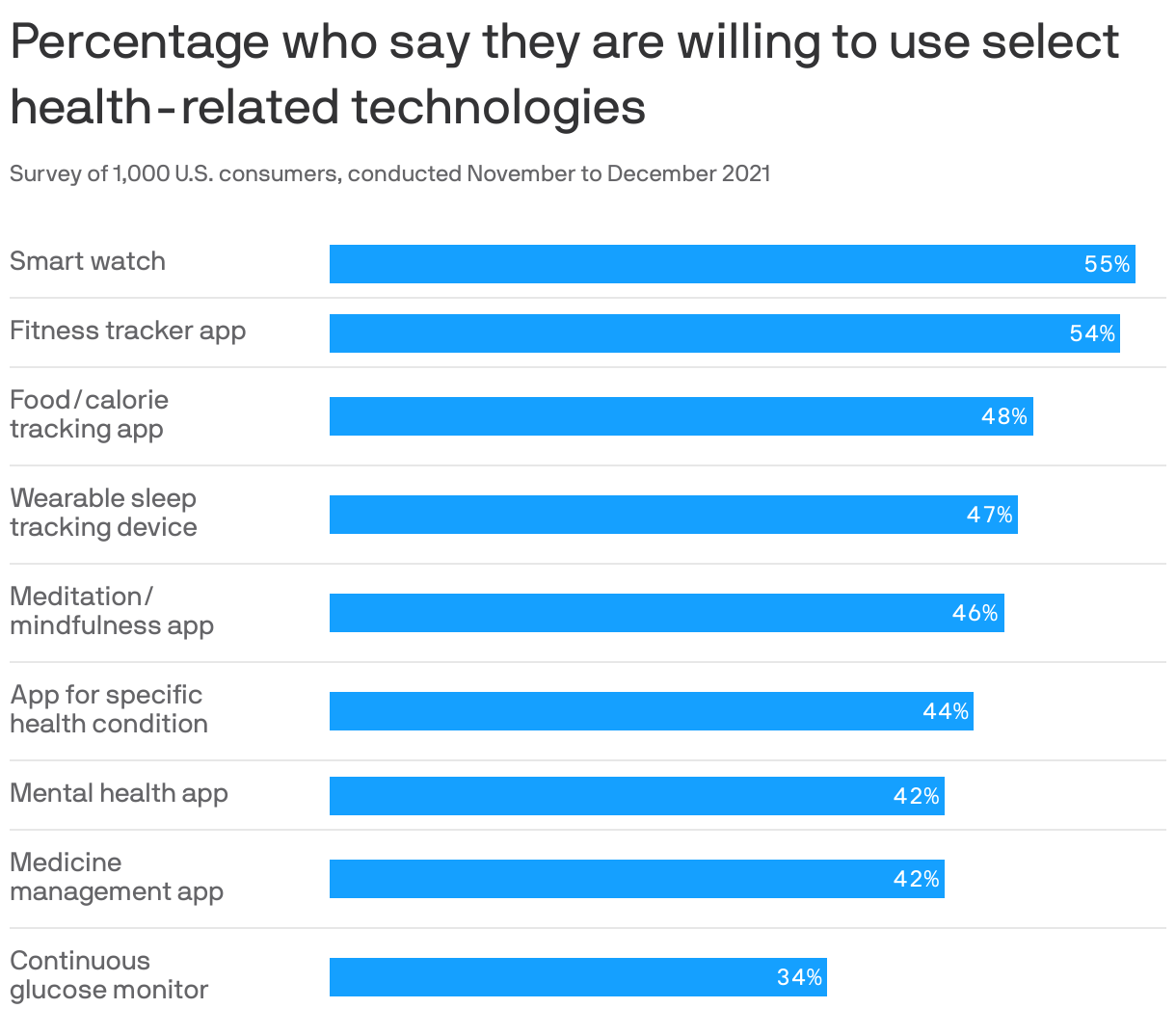
Note: Percentage includes those who say they are somewhat or very willing; Data: Healthcare Information and Management Systems Society; Axios Visuals
Nearly half of U.S. consumers are largely willing to don fitness trackers or punch meals into calorie-counting apps — though they're cooler to using digital tools for mental health or medication monitoring, the Healthcare Information and Management Systems Society reports.
The big picture: That was one of the findings on digital health in the years ahead in HIMSS 2022 Future of Healthcare Report.
Africa's public health agency said the continent is in "very advanced discussions" with at least two partners to get monkeypox vaccines, AP reports.
Why it matters: The continent of 1.3 billion people, where more monkeypox deaths have been reported this year than anywhere else in the world, does not yet have a single dose of the vaccine.
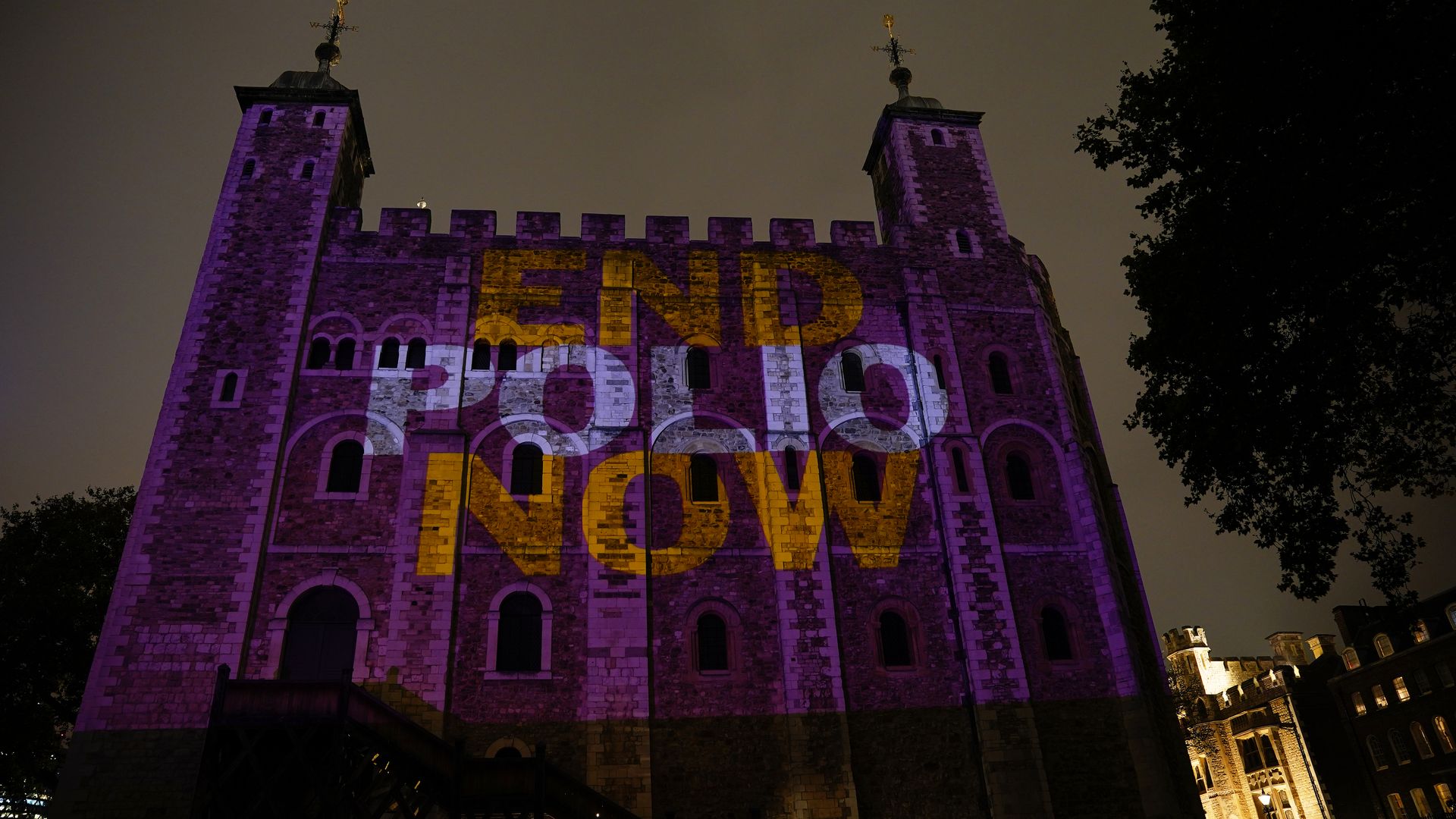
The detection of poliovirus in wastewater samples in London and New York state is providing another stark reminder of the importance of vaccination and new forms of surveillance, public health experts say.
Why it matters: A pandemic-weary public already facing the uncontrolled spread of COVID-19 and monkeypox is feeling jittery about the resurgence of a dreaded disease that was thought to be largely eradicated.
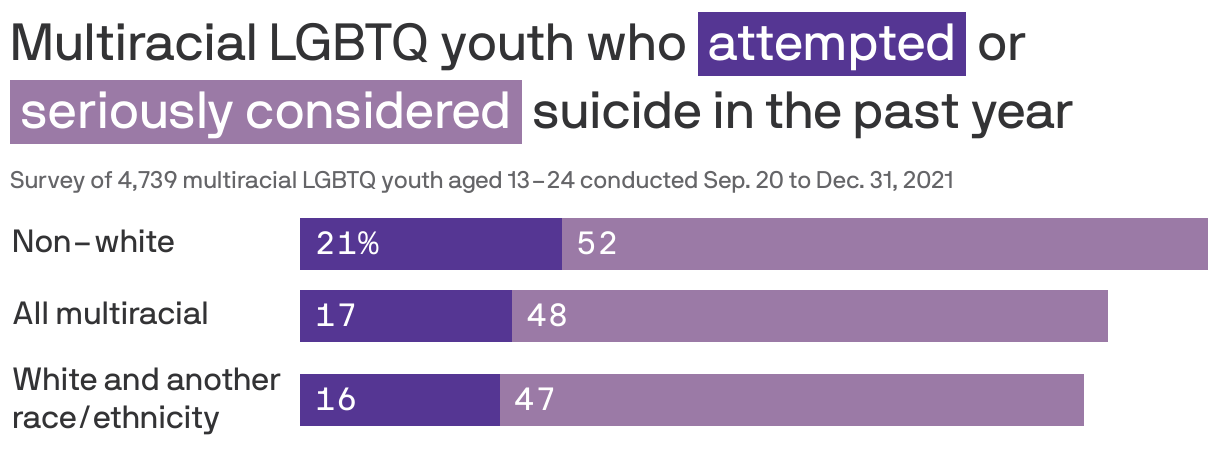
Data: The Trevor Project; Chart: Nicki Camberg/Axios
Nearly half of multiracial LGBTQ youths"seriously considered" suicide in 2021, according to a new report from The Trevor Project provided to Axios.
Why it matters: Over 40 million LGBTQ young people seriously consider suicide each year, according to rough estimates from the group, and the report examines the "unique convergence of stressors experienced by holding a multiracial identity and an LGBTQ identity."
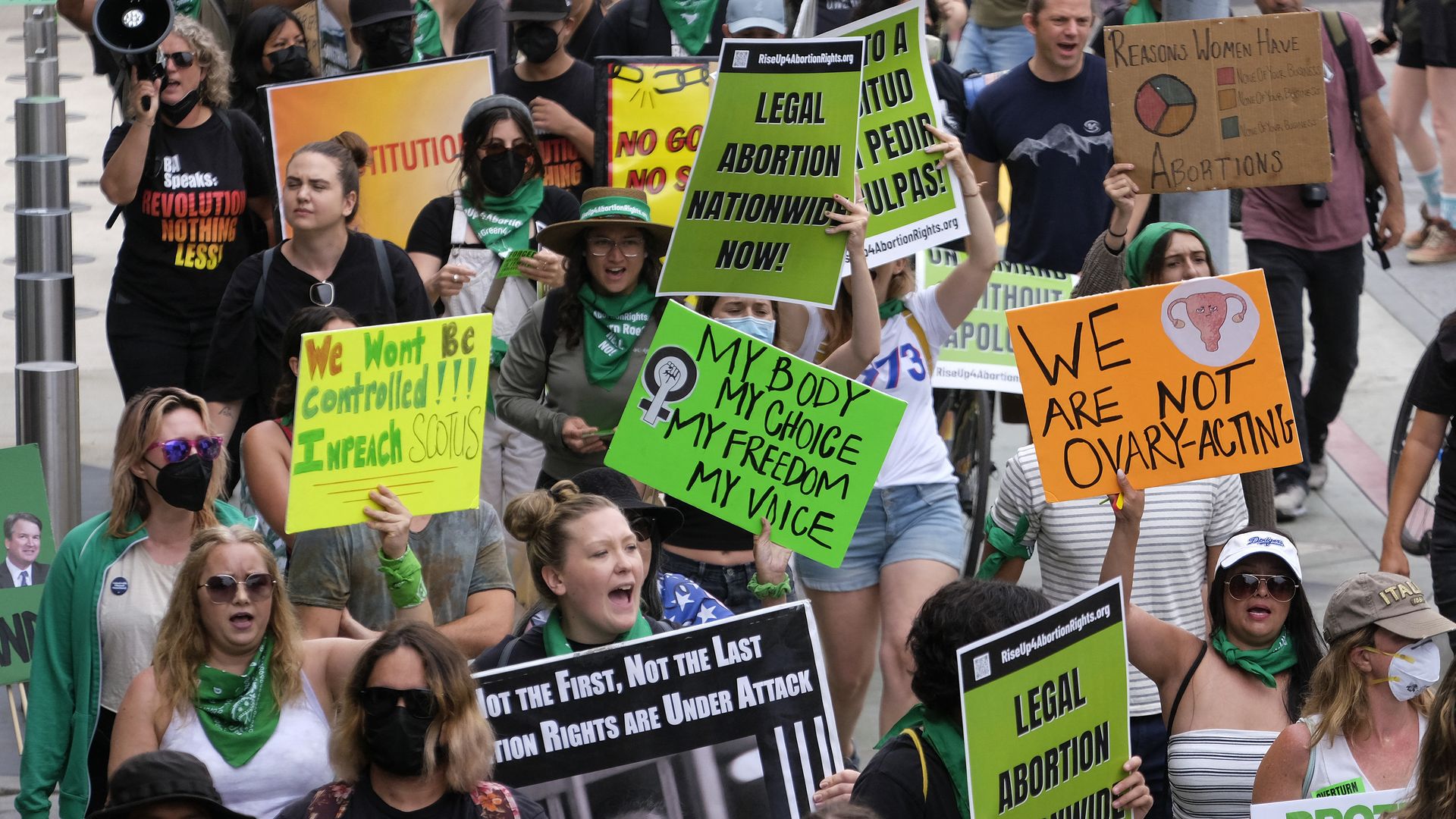
Seven in 10 Americans, regardless of party affiliation, want to be able to vote on an abortion measure on their state ballot, according to a new Ipsos/USA Today poll released Wednesday.
Driving the news: The poll was conducted after Kansas became the first state in the post-Roe era in which U.S. voters cast a ballot on abortion — they decided last week to reject an amendment that would have gotten rid of abortion protections in the state's Constitution.
Children in London were offered booster doses of the polio vaccine Wednesday after British health authorities discovered more virus samples throughout the city.
The big picture: Poliovirus has been recently detected in multiple countries , prompting health officials to act in order to curb the spread.
Data: University of Michigan; Chart: Kavya Beheraj/Axios
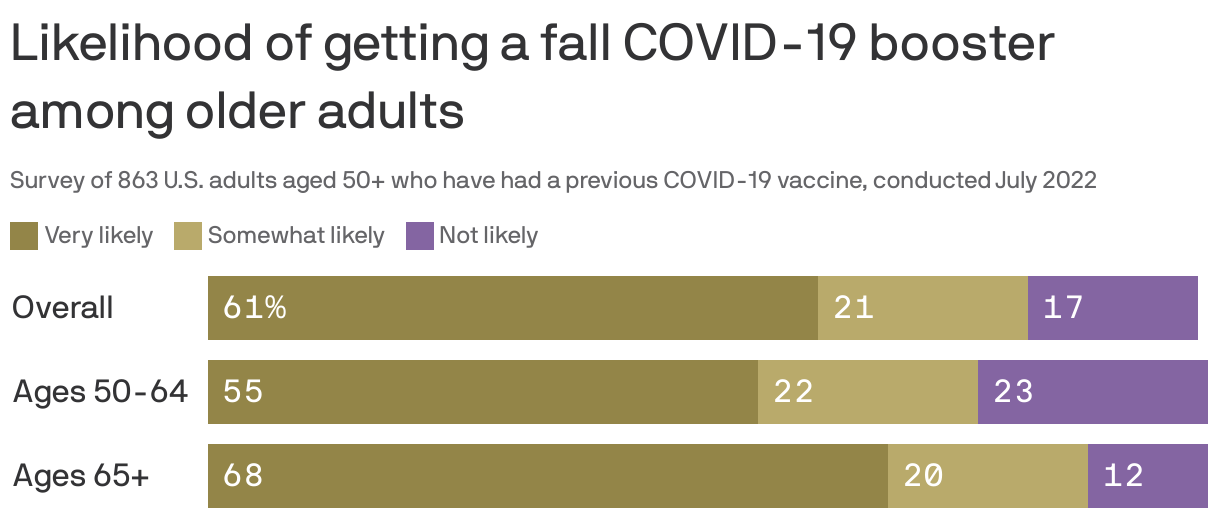
Most people older than 50 who've already gotten at least one COVID shot plan to get an updated booster if they're released as expected this fall, according to the latest University of Michigan National Poll on Healthy Aging.
Why it matters: The findings offer a hint at the potential uptake for reformulated shots that better protect against the Omicron variant — at least among older adults.
There are 26 clinical trials underway to find an effective treatment for long COVID, but many of them are too small or lack the necessary control groups to give clear results, according to Nature.
What they're saying: "If you look at long COVID at this moment in time, I'd paint a slightly 'Wild West' and desperate picture really," says immunologist Danny Altmann at Imperial College London, per Nature.
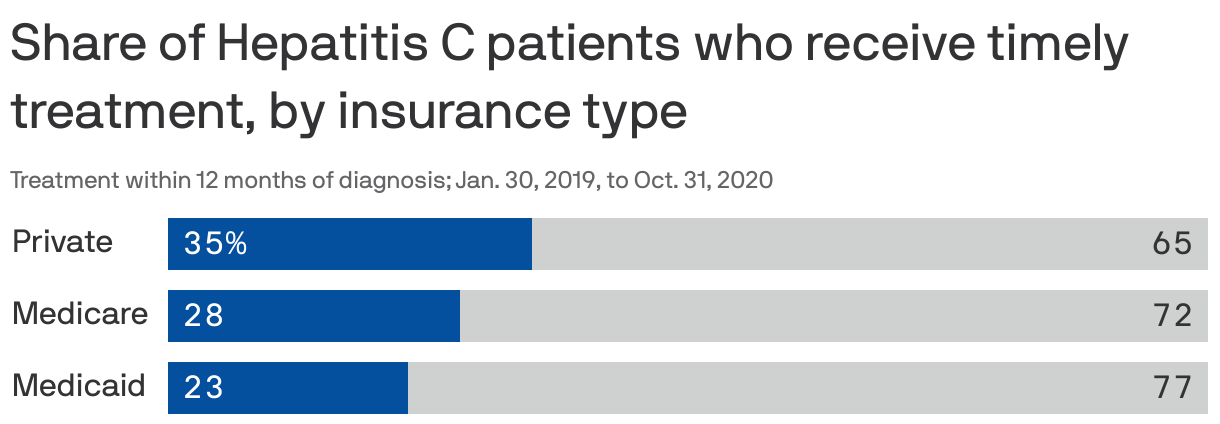
Only a fraction of the more than 2 million American adults with Hepatitis C are getting antiviral treatments, even when their insurance will pay for it, the Centers for Disease Control said in a report out Tuesday.
Why it matters: Hepatitis contributes to about 14,000 U.S. deaths a year, and the opioid crisis and the unsanitary use of needles by drug users has driven a spike in cases.
Doctors are weighing the legal risks of turning over ultrasounds and other personal health records if prosecutors or law enforcement demand the information to enforce state abortion bans.
Why it matters: The new post-Roe landscape is testing the suitability of the Health Insurance Portability and Accountability Act, or HIPAA.






/2022/08/08/1659993209503.gif?w=3840)